

Confirmation bias is the habit of favoring information that backs what you already believe, and you can learn to catch it before it steers your next decision. Noticing the habit gives us a chance to test our thinking, rather than simply follow a familiar hunch.
You might spot it while studying, scrolling through social media, or talking with someone you disagree with. Perhaps one source supports your answer, so you stop looking. Or a comment from a friend seems to prove a point you already hold.
These moments do not mean you are careless or closed-minded. They are common parts of thinking, and we can practice noticing them without turning every choice into a courtroom trial. We’ll look at clear ways to check a belief and make room for new information.
A belief can be a starting point for investigation, not the final answer.
Key Takeaways
- Confirmation bias favors information that fits what we already believe.
- It can affect what we search for, how we read evidence, and what we recall.
- A first hunch can shape choices in school, relationships, and work.
- Looking for disconfirming evidence can help us test an idea.
- Writing down a prediction makes it easier to compare our belief with later evidence.
- Changing your mind after learning more can be a sign of good thinking.
What does confirmation bias look like in everyday thinking?
Confirmation bias is the tendency to seek, interpret, and remember information in ways that support an existing belief. The American Psychological Association describes it as favoring information that fits what we already believe.
It is one kind of cognitive bias, a predictable pattern in thinking that can lead us to interpret information in a slanted way. Confirmation bias can shape the information we seek, how we read mixed evidence, and what we later recall.
It usually happens automatically, not through deliberate lying or a lack of intelligence. Say you think a classmate is unfriendly. You may notice their short replies and miss the times they greet you warmly.
Before trusting a belief, ask whether you have seen the whole picture or only the part that fits.
That first impression may have some support. The trouble starts when we treat a few details as the entire story. People often make sense of new information through what they already expect.
This pattern can also affect how we talk with others. If someone disagrees, we might search for a flaw in their point while barely examining our own assumptions. The same habit can shape what we remember afterward.
The useful first move is to ask whether we have seen the whole picture or only the part that fits.
Confirmation bias in psychology: its three stages
Confirmation bias can slip into the search for information, the reading of evidence, and the memories we carry away. It is a pattern, not one single move, and each stage can tilt our view.
We can check a conclusion by asking how we gathered, read, and remembered its evidence. The same belief may shape all three steps, even when we are trying to be fair.
Biased search favors evidence that fits
Biased search means we look for information that supports a belief more readily than information that could challenge it. In Snyder and Swann’s 1978 interview task, participants asked questions to test whether someone was an extrovert.
For example, they might ask how the person would liven up a party. That question invites an answer that could support the extrovert idea. A question about enjoying a quiet evening could test a different side.
Biased interpretation tilts mixed evidence
Biased interpretation happens when we give belief-friendly evidence more weight. Imagine a report with mixed results about a study method. A student may call the good results proof, then dismiss the weak results as bad luck.
Biased recall brings belief-friendly details to mind
Biased recall means supporting details may come to mind more easily later. If you believe a group project partner does little work, unfinished tasks may stand out. Their helpful work may be harder to recall.
| Stage | What a person does | A study-related example | A useful countercheck |
|---|---|---|---|
| Search | Looks for belief-friendly evidence | Reads only articles that support an answer | Searches for a strong counterexample |
| Interpreting | Weights mixed evidence unevenly | Explains away weak study results | Uses the same standard for both sides |
| Recall | Recalls details that fit the belief | Remembers only successful quiz scores | Checks notes for the full record |
The difference between confirmation bias and cognitive bias is that cognitive bias is the broad category, while confirmation bias is one specific pattern within it. A 2024 study of 200 participants found that bias scores converged more across tasks measuring the same component.
That study also separated testing our own prior views from testing a hypothesis someone else gave us. Before trusting a conclusion, check whether the evidence was gathered, read, and remembered in a balanced way.
Why does confirmation bias happen?
Our brains like an efficient shortcut, especially when a belief feels familiar or important. A quick explanation can feel good enough when time and attention are limited.
Fast thinking saves effort, but it can cause us to miss other explanations. We use what we know to sort new information, then may move on before checking whether that first story fits.
Mental shortcuts save effort, but can miss alternatives
Humans cannot examine every detail at once. When we process information, a familiar idea can seem easier to use than a new one. That can help us act quickly, but speed may leave gaps.
Daniel Kahneman’s 2011 book Thinking, Fast and Slow offers one useful way to picture this. System 1 describes fast reactions, while System 2 describes slower checking. The model helps explain some thinking, not every case.
Protecting a cherished belief can feel easier than revising it
Changing a belief tied to identity or self-esteem can feel uncomfortable. A belief about being a good student, for instance, may be hard to revise after a poor result.
Cognitive dissonance is the discomfort we feel when two beliefs or actions conflict. Leon Festinger’s 1957 work is closely linked to the idea. We may ease that discomfort by explaining away new information instead of changing our view.
In 1620, Francis Bacon described how people can protect beliefs from facts that challenge them. We still see that pull today, even when we care about being accurate.
A strong emotional reaction to contrary evidence is a cue to slow down, not proof that the evidence is wrong.
What is a confirmation bias example?
Jane’s coffee shop is losing sales, and she first blames the staff’s effort. She believes hard work leads to success, so the falling sales seem like proof that workers need to try harder.
Jane adds staff, which pushes the shop over budget, while the real problem remains. The shop’s less-visible location is a stronger explanation, but it does not occur to her at first.
Jane learns more by talking with other local business owners. They help her notice how few people pass the shop. Her first idea was possible, but she treated it as the only likely answer.
Here is a hypothetical student example. A student finds one source that supports an answer and stops before checking counterexamples. The answer may be right, but the student has not tested it well.
These clues can help you notice a similar pattern in your own decisions:
- An early hunch becomes a firm conclusion.
- Supporting evidence gets extra attention.
- Contrary evidence gets explained away.
- Other possible explanations go unchecked.
Each clue points to a moment when assumptions may be doing more work than evidence. The list is not a scorecard for judging yourself or anyone else. It is a way to pause and inspect the decision.
When a fix seems obvious, check whether you have tested another explanation first.
How confirmation bias shapes decision-making
An early hunch can quietly become the filter we use to judge every option that follows. One good result can feel like a clear sign, even when the full pattern is mixed.
Decisions get weaker when we give more weight to evidence that backs our first idea. Warnings and other options may still be present, but they can seem less important.
Early hunches can narrow the evidence we consider
Imagine a student tries a new study strategy and gets a high score on one quiz. They decide the method works, then keep using it while overlooking several weaker results.
Their early success shapes what they notice next. They may focus on the one strong score and blame later results on a hard test or a busy week. Those details might matter, but the student has not checked the full record.
One-sided evidence can harden a belief
Belief perseverance means a belief can persist after its supporting evidence has been challenged. Attitude polarization is different: people who disagree can grow more extreme, even after seeing the same evidence.
Biased search, interpretation, and recall have been used to explain both patterns. They can also help explain irrational primacy and illusory correlation. These related effects show how first impressions may hang on.
New information does not always change a choice if we keep judging it through an old assumption. That matters in everyday decisions, from choosing a study plan to judging whether a claim deserves trust.
Before committing, write down what evidence would make you change your mind.
How does confirmation bias affect relationships?
One awkward first meeting can become the lens through which we interpret every later conversation. A first impression can guide what we notice about someone, even when they show us something different.
Expectations can shape which questions we ask and which behaviors stand out. If we decide a roommate is careless, laundry on the floor may catch our eye, while their tidy moments fade.
Positive assumptions can also hide important details. We may think someone is thoughtful and overlook ways our needs or habits do not fit. A warm impression is useful, but it does not tell us everything.
The behavioral confirmation effect is related, but different. Our expectations can affect how we act toward someone, which may influence how they respond to us.
For instance, we may speak sharply to a roommate we expect to be difficult. They may respond with frustration, which seems to confirm our first view. Our behavior helped shape the exchange.
That does not mean every conflict is caused by our expectations. People have their own choices and reasons. Still, noticing our part in a pattern can make a tense conversation easier to understand.
When a relationship feels stuck, name one detail that does not fit your current story about the person.
How do social media and filter bubbles reinforce confirmation bias?
A feed can feel like a window on the world while quietly acting more like a mirror. Personalized feeds can show us more of the content a platform thinks we want.
A filter bubble is an online information environment shaped by a platform’s assumptions about what you want to see. Eli Pariser popularized the term in a 2011 TED Talk.
Personalized feeds can narrow what we encounter
Platforms may use click behavior, browsing history, search history, and location to personalize content. These signals can help shape what appears in your feed, but each person’s feed can differ.
A personalized feed can contribute to a filter bubble. That does not mean every recommendation is false or every user sees the same information. We may simply see fewer viewpoints than we expect.
Familiar viewpoints can feel more credible through repetition
Clicking on familiar content can lead to more material with a similar view. Repeated claims may start to feel reliable, even when we have not checked their evidence.
The missing viewpoints can be hard to notice because they are not in front of us. We can widen a feed with a few small habits:
- Follow a credible source with a different viewpoint.
- Search beyond the headline.
- Check the original evidence.
- Pause before sharing a claim.
These steps do not require us to distrust every post. They give us a better chance to see what a feed leaves out, and to judge claims with more than one view.
Before sharing a surprising claim, check its original source and look for independent confirmation.
How can confirmation bias affect the law?
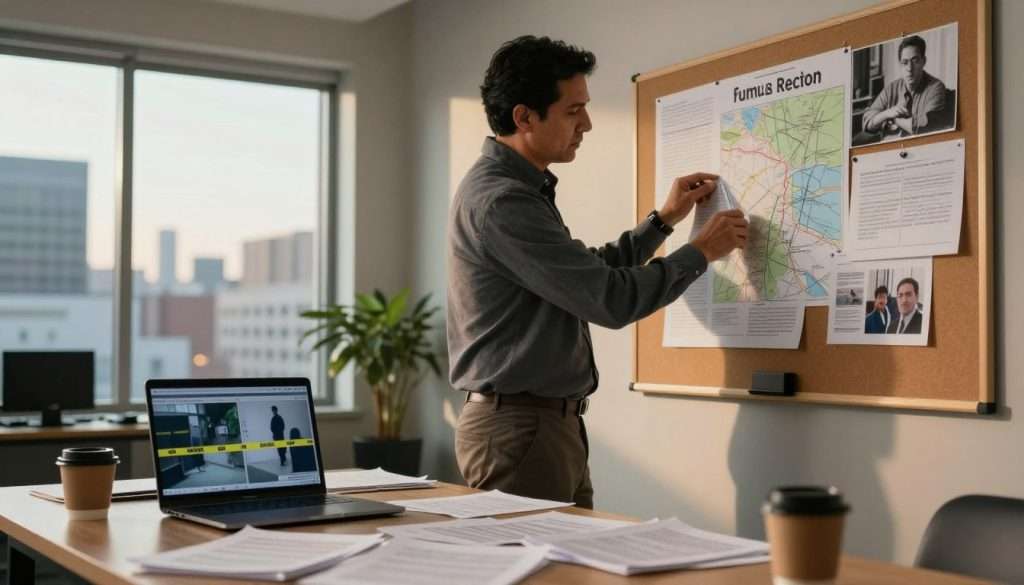
A detective who settles on a suspect too soon may start asking questions that only point one way. An early theory can shape which leads investigators follow and how they read unclear evidence.
Evidence that points away from guilt deserves attention, even when a suspect seems likely. Exculpatory evidence means information that points away from guilt. Investigators may discount it or explain it to fit the leading theory.
Judges and jurors also need to weigh evidence as a whole. An early view may form before every part of a trial has been heard. That is a risk in reasoning, not proof that a particular verdict is wrong.
Legal teams can use simple checks to keep alternatives in view:
- Preserve other possible explanations.
- Record evidence that cuts against the first theory.
- Revisit the theory when new evidence arrives.
These checks do not decide a case by themselves. They can help keep assumptions separate from facts and make room for information that does not fit the first account.
In a legal investigation, evidence that challenges the leading theory deserves a careful look, not a quick dismissal.
How does confirmation bias affect professional decisions?
Expertise helps us make informed decisions, but it does not make us immune to a leading hunch. High-stakes choices can still be shaped by what we expect to find.
A professional decision is stronger when we consider information that could change the first impression. The risk can look different in medicine, research, finance, and hiring.
Medical hunches can narrow diagnosis
A preliminary diagnosis can steer what a clinician asks or checks next. One study of diagnostic information seeking found confirmation bias in 13% of psychiatrists and 25% of students after a preliminary diagnosis.
A diagnostic test is designed to distinguish between competing explanations. When a first diagnosis leads the search, other possible causes may get less attention. The test and the questions still need to fit the case.
Research and finance need checks on favored explanations
A researcher who favors one explanation could collect only results that support it. A stronger test also checks what would count against the idea. In finance, the same care matters when judging a plan or an investment.
A 2022 review examined professional decisions in management, finance, medicine, and law. It found that evidence for bias effects varied across fields, so one field’s results do not settle the question for all.
Hiring decisions can reflect first impressions
An interviewer’s first impression can shape follow-up questions and the way answers are read. A confident opening may make later gaps seem small, while a nervous start may hide a candidate’s skills.
That can obscure a person’s actual qualifications. Interviewers can keep the role’s needs in view and compare answers against the same standards for each candidate.
| Setting | Early assumption | Information at risk of being missed | Practical safeguard |
|---|---|---|---|
| Medicine | First diagnosis is correct | Signs of another condition | Use a diagnostic test for competing explanations |
| Research or finance | Favored idea will hold | Results that challenge the idea | Plan tests for supportive and contrary results |
| Hiring | First impression reflects ability | Evidence of actual qualifications | Compare answers with shared role criteria |
In any high-stakes decision, make space for evidence that could change the first impression.
What do classic confirmation bias experiments show?
In Peter Wason’s famous 2-4-6 task, people had to uncover a rule by proposing number sequences. The challenge was not to guess quickly, but to test what made the hidden rule work.
These tasks show how people may test a guess, not how every person reasons every time. A lab puzzle can reveal a pattern in testing without explaining every real-world choice.
Wason’s number task rewarded testing a rule
In the 1960 experiment, participants proposed number triples to find a hidden rule. Many suggested sequences that fit their first guess, rather than trying examples that might disprove it.
Of 29 college students, 23 failed to discover the rule, even after proposing many sequences. The task’s broad rule made it possible to test lots of guesses, but people often stayed close to their first idea.
The card task tested whether people would seek a contradiction
Wason’s selection task gave people a rule: “if a vowel, then an even number.” Participants saw cards marked with letters or numbers and had to decide which cards to turn over.
The correct cards were the 8 and the red card. Fewer than 10% of subjects chose both. The red card could reveal a violation, since it would break the rule if its other side showed a vowel.
| Task | What participants did | Central finding | What the task illustrates |
|---|---|---|---|
| 2-4-6 | Proposed number triples | 23 of 29 missed the rule | Guesses can be tested too narrowly |
| Selection task | Chose cards to test a rule | Fewer than 10% chose both correct cards | People may miss a possible contradiction |
| 2024 nine-task study | Completed adapted behavioral tasks | Measured nine tasks with 200 participants | Bias scores can depend on the component tested |
Wason’s 2-4-6 results show how a test can reward trying examples that challenge a guess. A 2024 study measured 200 participants across nine behavioral tasks adapted from the selection, 2-4-6, and interviewee tasks.
These experiments do not prove that every person always seeks confirming evidence. They show patterns in how people approach particular tasks. The key lesson is to test what could disprove a guess, not only what could make it look right.
How does confirmation bias affect memory?
Two people can read the same profile and later remember different details because they were looking for different things. Expectations can guide which parts stand out when we first take in information.
Memory is not a perfect recording of everything we see. Our current beliefs can affect which details come to mind, without anyone choosing to change a memory.
Expectations can shape which details we recall
In a profile study linked to Snyder and Cantor’s 1979 work, participants read about the same woman. Some assessed her for a librarian job, while others considered her for real-estate sales.
Those who assessed her for the librarian job later recalled more introverted behavior. Those who assessed her for real-estate sales recalled more extroverted behavior. Their different expectations were associated with different memories of the same profile.
A memory can feel certain without being complete
A vivid detail can feel like the whole story, especially when it matches what we already believe. Yet a strong sense of certainty does not mean we recall every part of an event.
When a memory seems to settle an argument, check whether you also remember details that cut against your view.
Is confirmation bias a logical fallacy?
Confirmation bias is a thinking tendency, not a logical fallacy by itself. It can lead to a fallacy when someone builds an argument from selected evidence.
Cherry-picking evidence is a reasoning error that can result from confirmation bias. A person may favor information that supports a belief and ignore relevant facts that challenge it.
Circular reasoning can also appear when a claim is used to prove itself. For example, someone might say a rule is fair because it is the right rule, without offering an independent reason.
The phrase confirmation bias first appeared in a 1977 paper on scientific inference. That fact does not mean Peter Wason coined the phrase.
A bias describes a tendency in thinking. A fallacy describes a problem in an argument. Look at the argument’s evidence and structure to identify a fallacy, rather than using the bias label as a shortcut.
How can you avoid confirmation bias?
The most useful question is not “How can I prove this right?” but “What would make me change my mind?” That shift sends us toward evidence that could show a belief is wrong.
Looking for disconfirming evidence can make a belief easier to test. It will not remove every bias, but it can keep one early idea from doing all the work.
Ask what would prove your first idea wrong
Before settling on an answer, name a result that would count against it. Then look for that result, rather than waiting for it to appear by chance.
Set evidence standards before choosing
Decide what would count as good evidence before reading claims or judging people. Neutral questions can also help us compare views with the same standard.
Invite a thoughtful challenge
Ask a classmate or trusted person to name the strongest counterargument. The goal is not to win a debate. It is to find a gap we might have missed.
Here are three practices to try at a useful moment:
- Seek disconfirming evidence when an idea feels settled.
- Set criteria in advance before reviewing a claim or person.
- Invite a challenge when a decision has real stakes.
| Practice | What to do | What it checks | Useful moment |
|---|---|---|---|
| Seek disconfirming evidence | Find a result that could prove the idea wrong | Whether the idea survives a fair test | When one answer feels obvious |
| Set criteria in advance | Choose standards before reviewing evidence | Whether both sides face the same test | Before comparing claims or people |
| Invite a challenge | Ask for the strongest counterargument | What your own view may overlook | Before a high-stakes choice |
Research by Lord, Lepper, and Preston found that asking people to consider the opposite reduced biased assimilation. A generic instruction to be unbiased did not work as well.
The HPRC’s 10-step roadmap for informed decisions also stresses checking sources and hearing different views. A good challenge should test the idea, not turn the conversation into a contest.
How can you check your assumptions while studying?
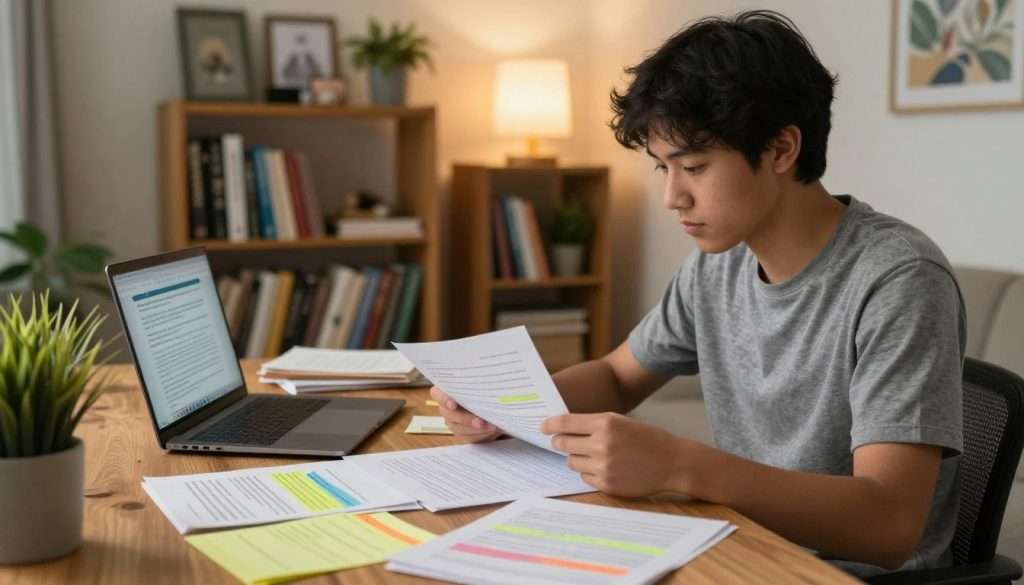
Before we start researching a question for class, we can write down what we currently think and what might change our minds. A short prediction gives us something concrete to compare with later evidence.
Write your first answer before opening sources, then name what evidence could change it. This small habit can make it easier to spot when information supports an early belief but leaves other facts out.
Before research, write down your first answer
Put your answer or prediction in a notebook before you start searching. Add one or two kinds of evidence that could show it is wrong. For a history question, that might be a primary document with a different account.
During study, look for evidence that could overturn it
Use more than one credible source, and check the original material behind an important claim. A summary may leave out a detail that changes how the evidence reads.
Two columns can keep the evidence visible: “supports my first answer” and “challenges my first answer.” Add facts to both as you study. If one side stays empty, ask whether your search has been too narrow.
Try this four-step routine during your next study session:
- Write your first answer.
- Name what could disprove it.
- Gather evidence from more than one credible source.
- Review the evidence and revise your conclusion.
Want to go deeper? If this article resonated with you, my free book How to Become the Smartest Student in the Classroom gives you a full system, including memory techniques, study routines, and strategies that actually stick. No cost, no catch. Grab your free copy here: https://www.studyingmachine.com/free-books/.
Treat a changed answer as evidence that your study process worked, not as proof that you failed.
What are the limits of confirmation bias research?
A preference for confirming evidence can be a warning sign, but it is not automatically proof of irrational thinking. Some tests make confirmation-seeking look more harmful than it would be in a real setting.
We need to judge both the test and the situation where someone uses it. A useful search for expected results may be sensible when it helps answer a focused question.
A useful test may look like confirmation seeking
In some settings, checking cases that should support a hypothesis is an efficient way to test it. The key is whether the test could also reveal that the idea is wrong.
The 2-4-6 task is a special case because its hidden rule allows a broad range of sequences. That can make it harder to guess through ordinary examples alone.
Lab tasks do not capture every real decision
A written vignette cannot recreate every detail of a workplace or a professional choice. Real decisions may include time limits, changing facts, and responsibilities that a short lab task cannot match.
A 2022 review of management, finance, medicine, and law found that evidence for effects on professional decisions varied across fields. It also named the ecological validity of vignette studies as a research gap.
A lab result can reveal a pattern without showing exactly how a real professional will decide.
That limit does not make research useless. It reminds us to match a claim to the kind of test that supports it.
Treat an early hypothesis as provisional, while judging the quality of the test in the setting where it is used.
Conclusion
We do not have to be perfectly neutral to think more carefully. We need to leave room for evidence that could change a belief, even when that evidence feels inconvenient.
That practice can make learning stronger. A first answer is useful when it helps us start asking better questions, not when it keeps us from hearing new information.
Choose one belief about a current class topic and write down one observation that would challenge it. Pick one belief you are studying today, write down what could prove it wrong, and see what the evidence says.