

Do you ever struggle to remember important stuff or learn new things? Boosting your cognitive function is simpler than you might think. The Mayo Clinic says simple habits like regular exercise, socializing, and enough sleep can greatly help your brain stay healthy.
We all wish we could soak up new info like a sponge and remember it easily. In this article, we’ll look at some effective ways to enhance your memory and improve cognitive function. By adding these simple steps to your daily life, you’ll be on your way to sharpening your mind and reaching your goals.
Key Takeaways
- Simple habits like exercise and sleep can boost cognitive function
- Effective techniques can enhance memory and improve recall
- Incorporating these strategies into daily routine can lead to significant improvements
- A healthy brain is essential for learning new skills and remembering important information
- Practical tips and techniques can make a significant difference in memory enhancement
The Science of Memory: How Your Brain Stores Information
Understanding how our brains store information is key to improving our memory. Our brains are complex, and memory is one of their most fascinating functions. We’ll explore the science behind memory, including how it’s formed, what affects it, and how it changes over time.
The Three Stages of Memory Formation
Memory formation has three stages: encoding, storage, and retrieval. Encoding is getting new information, storage is keeping it over time, and retrieval is recalling it when needed. For example, remembering a new phone number involves encoding, storing, and retrieving it.
Common Causes of Forgetfulness
Forgetfulness can come from many sources, like lack of sleep, stress, and medical conditions. Sleep helps our brains solidify memories, but without it, remembering things is harder. Stress can also hurt memory by affecting the hippocampus, a key area for memory.
How Memory Changes Throughout Life
Memory changes as we age. Kids’ brains are very flexible, making learning new things easier. As we get older, our brains naturally change, which can affect memory. But, there are ways to keep our brains healthy and slow down memory loss.
| Age Group | Memory Characteristics | Strategies for Improvement |
|---|---|---|
| Children | Highly plastic brains, easy to learn | Engage in play-based learning, use visual aids |
| Adults | Stable memory, but can be affected by stress | Practice stress-reducing techniques, exercise regularly |
| Older Adults | May experience decline in memory | Stay mentally active, use memory aids, exercise regularly |
Lifestyle Foundations to Improve Your Memory
A well-rounded lifestyle is key to better memory and learning. Simple daily changes can greatly improve your mental fitness and brain health.
Optimizing Sleep for Memory Consolidation
Sleep is vital for memory. It helps your brain turn short-term memories into long-term ones. Most adults need 7-9 hours of sleep each night. Keeping a regular sleep schedule improves sleep quality.
“Sleep is the best meditation.” – Dalai Lama XIV
Brain-Boosting Foods and Supplements
Your diet affects your brain health. Eating foods rich in antioxidants and omega-3 fatty acids boosts cognitive function. Include leafy greens, fatty fish, nuts, and seeds in your diet. Try adding spinach to omelets or snacking on walnuts.
| Food | Nutrient | Benefit |
|---|---|---|
| Leafy Greens | Antioxidants | Reduces oxidative stress |
| Fatty Fish | Omega-3 fatty acids | Supports brain cell structure |
| Nuts and Seeds | Vitamin E | Protects against cognitive decline |
Physical Exercise Routines for Cognitive Enhancement
Exercise is good for both body and brain. It improves cognitive function and memory. There are many exercises that benefit brain health.
Aerobic Exercise Benefits
Aerobic exercises like running or swimming boost brain oxygen flow. They promote neuroplasticity, helping the brain make new connections.
Strength Training for Brain Health
Strength training also benefits the brain. It improves health and reduces cognitive decline risk. Try weights, resistance bands, or bodyweight exercises for strength training.
Optimizing sleep, diet, and exercise improves memory and mental fitness. Start with small daily changes to see cognitive benefits.
Mindfulness Practices for Enhanced Focus and Recall
Mindfulness is more than a practice; it’s a way to boost your memory and brain health. It helps you focus better and remember things more clearly.
10-Minute Daily Meditation Routine
Starting your day with a 10-minute meditation can make a big difference. Just sit comfortably, breathe deeply, and let go of thoughts that distract you.
Breathing Techniques to Sharpen Attention
Deep breathing can help you stay focused. Try breathing in for four counts, holding for four, and breathing out for four. This simple trick can calm your mind and improve your attention span.
Mindful Learning: Being Present While Studying
It’s easy to get sidetracked when studying. Mindful learning means staying fully present and focused. Try to avoid distractions, take breaks, and practice mindfulness to enhance your recall.
| Mindfulness Practice | Benefit |
|---|---|
| Daily Meditation | Improves focus and cognitive function |
| Breathing Techniques | Sharpens attention and reduces stress |
| Mindful Learning | Enhances recall and engagement |
Adding these mindfulness practices to your daily life can significantly enhance your recall and boost your brain power.
Powerful Mnemonic Devices Anyone Can Master
Unlock your memory’s full potential with powerful mnemonic devices. These techniques help you remember better by linking new info to something familiar. This could be a word, image, or action.
Building Your First Memory Palace
A memory palace, or method of loci, uses a place you know well. Imagine your home and link items to spots in it. Start by picturing a place you know. Then, pick spots to ‘store’ the info you want to remember.
Creating Effective Acronyms and Acrostics
Acronyms and acrostics are easy yet effective. An acronym is a word from the first letters of words. An acrostic is a sentence where the first letter of each word spells out what you want to remember. For example, “ROY G BIV” stands for the colors of the rainbow.
Chunking Information for Better Retention
Chunking breaks down big info into smaller bits. It’s great for remembering numbers like phone numbers or passwords. Grouping info into chunks makes it easier to recall.
Visualization Exercises for Abstract Concepts
Visualizing abstract ideas makes them stickier. Link complex ideas to images or scenarios that show them. For example, imagine a scene that represents a philosophical concept. The more vivid and odd the image, the better it’ll stay in your memory.
Using these mnemonic devices daily will boost your memory. Try different methods to see what works for you. Watch your memory grow!
Spaced Repetition: The Scientific Approach to Long-Term Memory
Spaced repetition is a proven method for better long-term memory. It involves reviewing material at longer intervals. This helps you keep information in your memory for longer.
Setting Up Your Spaced Repetition Schedule
Start by making a schedule that fits your life. Begin with short intervals, like a few hours or a day. Then, increase the time between reviews. For example, review a new word the same day, then a week later, and after a month.
| Review Interval | Example Schedule |
|---|---|
| Initial Review | Same Day |
| First Repeat | 1 Week Later |
| Second Repeat | 1 Month Later |
Digital Apps and Tools for Automated Practice
Use technology to make spaced repetition easier. Apps like Anki and Quizlet help you create digital flashcards. They automate your review schedule, saving you time and keeping you consistent.
Combining Spaced Repetition with Daily Routines
Make spaced repetition a daily habit. Use your commute or work breaks to review your material. This way, you’re learning without adding extra work to your day.
By adding spaced repetition to your daily routine, you’ll remember information better. This method, supported by science, is great for anyone wanting to improve their long-term memory.
Active Recall: Transform Passive Learning into Memory Mastery
Active recall is a game-changer for boosting your memory. It changes how you learn. By actively recalling information, you improve retention and understanding. Researchers Grüdtner Buratto and Klier found that active recall is key, even under stress.
Creating effective self-testing systems is key to active recall. This means setting up regular quizzes to reinforce learning. You can use flashcards, online tools, or create your own tests.
Creating Effective Self-Testing Systems
To start, identify key concepts you want to remember. Then, create questions to test your understanding. For example, use the flashcard technique with questions on one side and answers on the other.
Question Formulation Techniques
Creating effective questions is crucial. Make them challenging but answerable. Use open-ended questions or mnemonics to aid in remembering.

Implementing Active Recall in Professional Settings
Active recall isn’t just for students. It’s valuable in professional settings too. Use it to improve memory of business processes, trends, or technical skills. It keeps you updated and boosts performance.
As you practice active recall, retaining and recalling information becomes easier. With regular practice, you’ll see your learning and memory improve. You’ll achieve mastery and confidence.
Multi-Sensory Learning: Engage Your Brain Fully
Using multiple senses is crucial for boosting your brain’s memory power. Learning through a mix of sight, sound, and touch helps you remember better. This approach makes learning more fun and effective.
Creating Mind Maps and Visual Notes
Visual learning is a strong tool for improving memory. Making mind maps and visual notes helps you organize and remember information. Add colors, symbols, and images to make your notes stand out and stick in your mind.
Auditory Reinforcement Techniques
Auditory learning uses sound to help you remember. Try recording lectures or study materials and listen to them over and over. Or, use music and rhymes to help you remember things.
Kinesthetic Learning Activities
Kinesthetic learning uses movement to improve memory. This includes hand gestures, acting out concepts, and more.
Hand Movements and Gestures
Hand movements and gestures can link to memories or ideas. For example, a certain gesture can remind you of a formula or a date.
Physical Enactment of Concepts
Acting out information makes it stick in your memory. Try acting out a historical event or a scientific process to better understand and remember it.
| Learning Technique | Description | Example |
|---|---|---|
| Visual | Using images and visual notes | Creating mind maps |
| Auditory | Using sound to reinforce memory | Recording lectures |
| Kinesthetic | Using physical movement to enhance memory | Acting out historical events |
By adding these multi-sensory learning methods to your study routine, you can greatly enhance your memory and brain function. Try out different techniques to see what works best for you.
Daily Habits and Exercises to Strengthen Memory
Boosting your memory is easy with a few daily habits. Making small changes and doing specific exercises can greatly improve your brain health.
5-Minute Brain Training Games
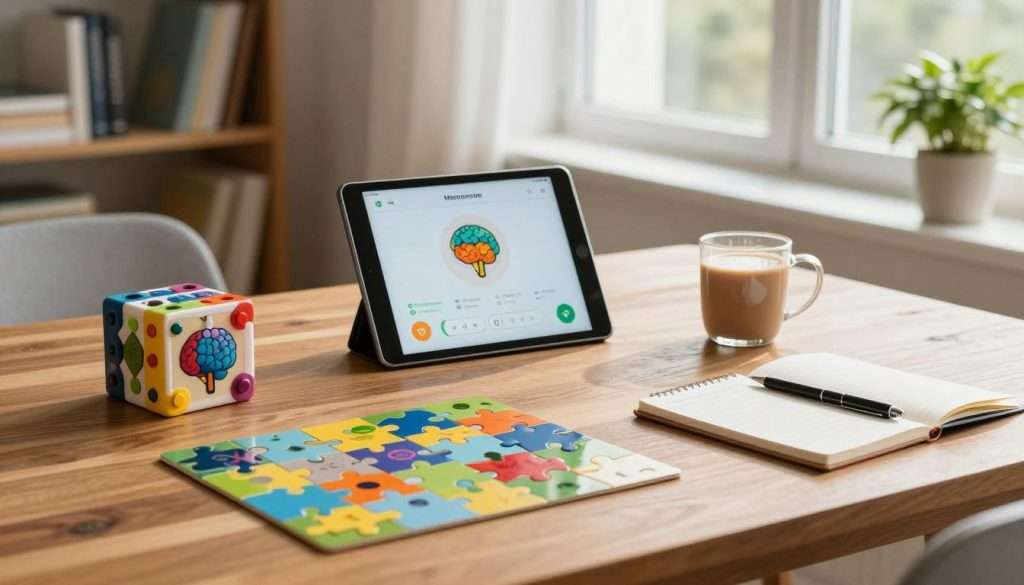
Brain training games are great for challenging your brain and boosting memory. You can try puzzles, memory games, or apps for cognitive training. For example, solve a crossword or play Sudoku on your commute.
Learning New Skills to Build Cognitive Reserve
Learning new skills is a powerful way to keep your brain sharp. It can protect against age-related memory loss. Learning a new language, playing a musical instrument, or a craft all stimulate your brain.
“The brain is a muscle that needs to be exercised to stay healthy.” – Anonymous
Social Interaction as Memory Enhancement
Talking to others and joining in activities keeps your brain active. It helps improve memory and keeps your mind sharp.
Stress Management Techniques for Cognitive Protection
Too much stress can hurt your memory and brain function. Using stress management like meditation, deep breathing, or yoga can help protect your brain.
| Daily Habit | Benefit |
|---|---|
| Brain Training Games | Improves cognitive function and memory |
| Learning New Skills | Builds cognitive reserve |
| Social Interaction | Maintains cognitive health |
| Stress Management | Protects cognitive function |
Adding these habits and exercises to your daily routine can help strengthen your memory. It also improves your brain health.
Conclusion: Creating Your Personalized Memory Improvement Plan
We’ve looked at many ways to boost your memory. Now, it’s time to make a plan that fits your life and goals. By using the tips from this article, you can get better at remembering things and think more clearly.
First, pick the methods that you like best. Maybe it’s mindfulness, mnemonic devices, or spaced repetition. Try out different ones to see what works for you. Remember, improving your memory takes time and effort.
Make improving your memory a regular part of your day. If you’re a student or just someone who loves to learn, these tips can help. Stick to your plan and you’ll see your memory and thinking skills get better.