
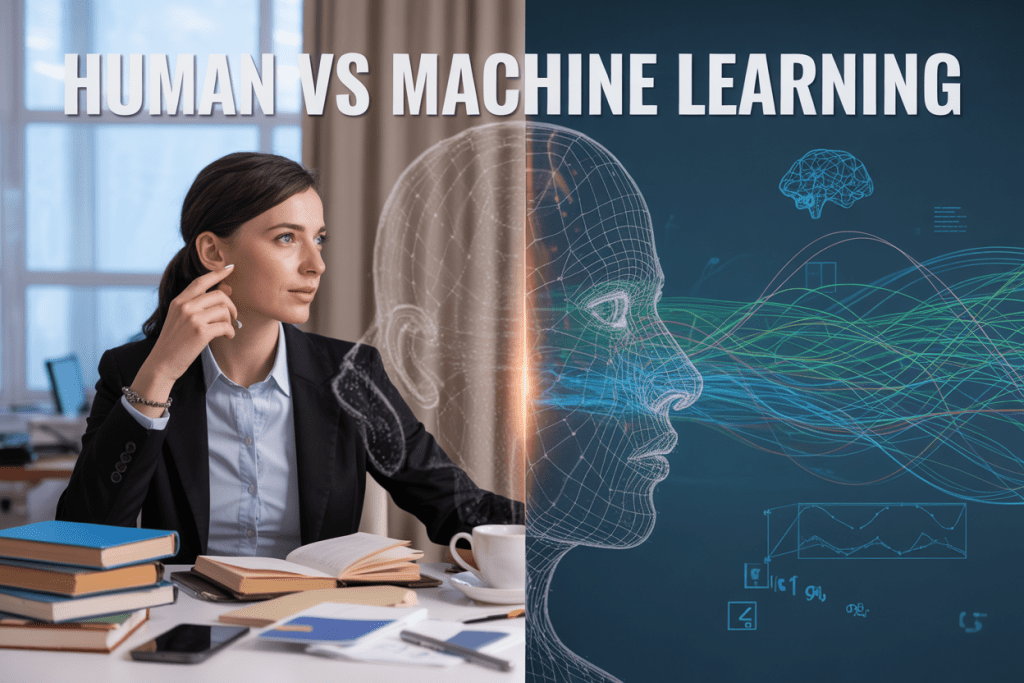
The human brain and machine learning algorithms both process inputs to generate outputs, but they do it in completely different ways. Human learning vs. machine learning represents one of today’s most fascinating intersections of psychology and technology.
This guide is for educators, business leaders, data professionals, and anyone curious about how our minds compare to the AI systems reshaping our world. You don’t need a PhD in neuroscience or computer science to understand these concepts.
We’ll break down the fundamental differences between how humans and machines process information. First, we’ll examine the complexity of human decision-making, where emotions, past experiences, and even hunger can completely change our responses to the same situation. Then we’ll decode how machine learning models generate their outputs through structured data processing and mathematical calculations.
Finally, we’ll explore where human and machine learning work best together. While machines excel at memorizing vast amounts of information and finding patterns in data, humans bring creativity, intuition, and the ability to make judgments based on values and context. Understanding these strengths helps us figure out how to combine both types of intelligence for better results in everything from healthcare to education to business decisions.
The goal isn’t to determine which type of learning is “better” – it’s to understand how they complement each other and what we can learn from algorithms to improve our own growth.
Understanding the Fundamental Differences Between Human and Machine Learning

How motivation drives human learning versus algorithmic processing
The fundamental distinction between human and machine learning begins with the driving forces behind each process. Human learning operates through a complex motivational framework that fundamentally shapes how we acquire and process information. This motivation can be categorized into two primary types: intrinsic and extrinsic motivation.
Intrinsic motivation stems from internal satisfaction, encompassing our natural enjoyment and genuine interest in learning new concepts. When humans are intrinsically motivated, they engage with material because it brings personal fulfillment or satisfies curiosity. This type of motivation often leads to deeper, more meaningful learning experiences that extend beyond immediate requirements.
Conversely, extrinsic motivation relies on external factors such as rewards, recognition, or the desire to avoid negative consequences. This form of motivation frequently manifests in formal educational settings where grades, certifications, or employment prospects drive the learning process. The coupling of extrinsic motivation with structured educational environments creates a unique dynamic that doesn’t exist in algorithmic processing.
Machine learning algorithms, by contrast, operate without any motivational framework. They process data through mathematical computations and statistical patterns, lacking the emotional and psychological drivers that characterize human learning. This absence of motivation means algorithms approach information processing with consistent efficiency, uninfluenced by interest levels, mood, or external pressures.
The role of formal versus informal learning environments
Human learning occurs across a spectrum of environments, each offering distinct advantages and challenges. Formal education represents the structured approach to knowledge transfer, specifically designed to efficiently convey information that meets employment requirements and societal standards. These formal systems draw heavily from brain research and psychological principles to optimize learning outcomes within institutional frameworks.
The formal educational model emphasizes systematic curriculum delivery, standardized assessments, and progressive skill development. This approach ensures comprehensive coverage of essential knowledge areas while maintaining consistency across different learners and institutions. The structured nature of formal education allows for measurable progress tracking and certification of competencies.
However, human learning extends far beyond formal classroom settings. Informal learning encompasses a vast array of real-world experiences including on-the-job training, experimental learning, observational learning, and trial-and-error testing. These informal scenarios often provide practical application opportunities that complement theoretical knowledge gained through formal channels.
The informal learning environment allows for immediate application of concepts, personalized pacing, and contextual understanding that may be difficult to achieve in structured settings. This type of learning often occurs naturally through workplace challenges, personal projects, or social interactions, creating organic knowledge acquisition processes.
Hierarchical learning models and cognitive development stages
Benjamin Bloom’s Taxonomy provides a foundational framework for understanding human cognitive learning through its hierarchical model. This systematic approach identifies six distinct levels of cognitive development: Remembering/Memorizing, Understanding, Applying, Analyzing, Evaluating, and Creating. Each level represents increasingly complex cognitive processes that build upon previous stages.
The hierarchical nature of this model establishes that mastery of lower levels serves as a prerequisite for advancing to higher cognitive functions. This sequential development pattern reflects the natural progression of human learning, where foundational knowledge must be solidified before more sophisticated thinking processes can emerge.
At the foundational level, Remembering and Memorizing involve the basic recall of facts and information. Understanding builds upon this by requiring comprehension of meaning and relationships. The Applying level demonstrates practical use of learned concepts in new situations, while Analyzing involves breaking down complex information into component parts.
The higher-order thinking skills of Evaluating and Creating represent the pinnacle of cognitive development within this framework. Evaluating requires critical assessment and judgment of information quality and validity. Creating involves synthesizing knowledge to generate original ideas, solutions, or products.
This hierarchical progression differs significantly from machine learning approaches, which may process complex patterns without necessarily mastering foundational concepts in the sequential manner characteristic of human cognitive development.
Exploring the Complexity of Human Decision-Making
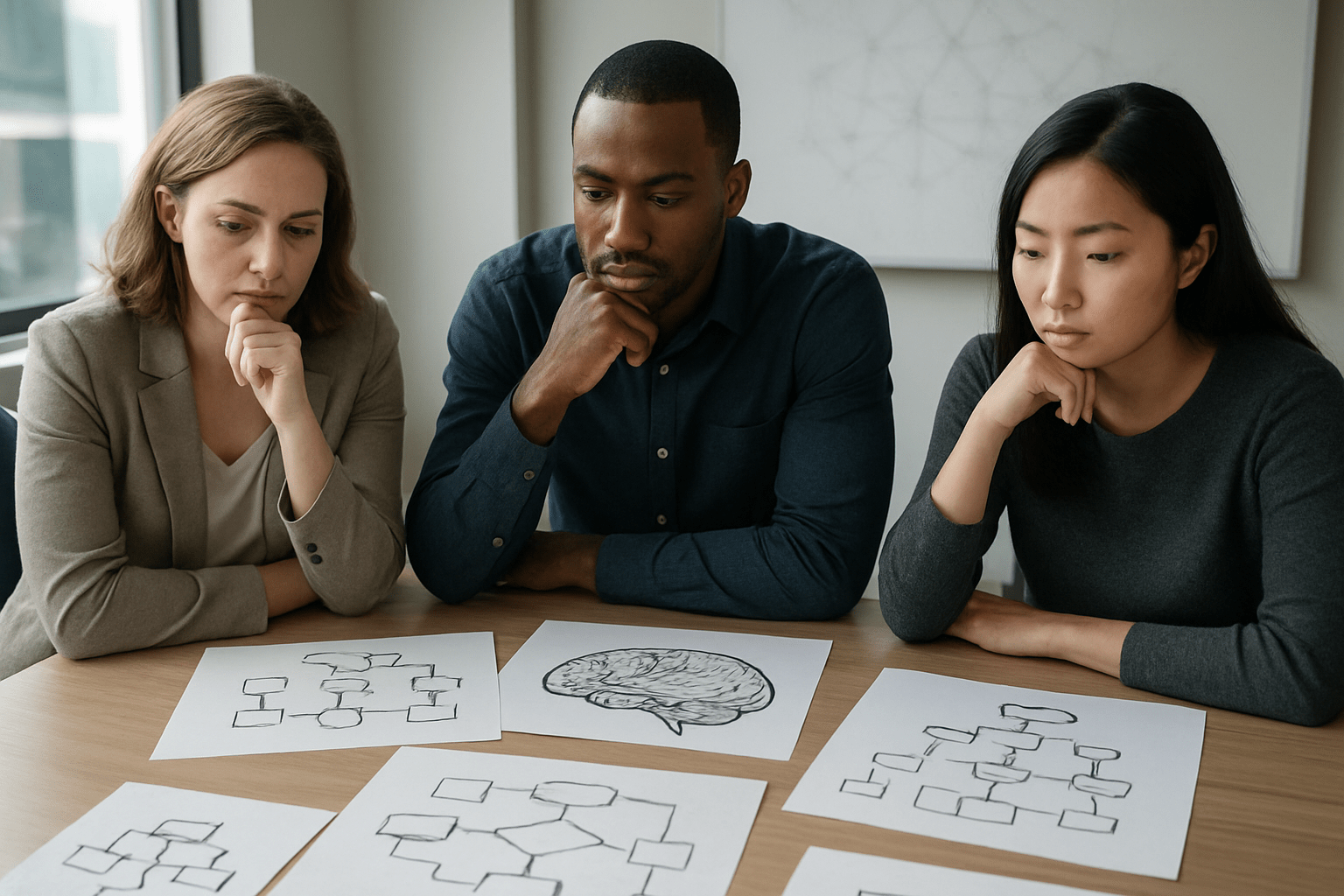
Ten interconnected factors that influence human outputs
Human decision-making operates through a complex web of at least ten interconnected factors that continuously shape our choices and behaviors. Intelligence (IQ) provides the cognitive foundation for processing information and analyzing situations. Emotional intelligence (EQ) governs how we understand and manage our feelings while navigating interpersonal relationships. The conscious world encompasses our learned values, accumulated experiences, and defined sense of purpose that guide deliberate choices.
Beneath the surface, the unconscious and subconscious world harbors repressed memories, deeply embedded values, forgotten experiences, and underlying purposes that influence decisions without our awareness. Genetic predispositions create inherent tendencies and behavioral patterns that emerge across various situations. Our environment—encompassing social, cultural, and physical contexts—continuously shapes how we perceive and respond to circumstances.
Physiological needs, as outlined in Maslow’s Hierarchy, create powerful motivational forces that can override other considerations. Hormonal and physiological status directly impacts mood, energy levels, and cognitive capacity. The decision-making centers, conceptualized through Freud’s Id, Ego, and Superego framework, represent the interplay between primitive desires, rational thought, and moral considerations. Finally, intuition and creativity provide access to insights and solutions that transcend logical analysis, enabling innovative approaches to complex challenges.
The dynamic reordering of factor importance in real-time
Unlike static systems, human decision-making operates through an internal algorithm that dynamically rearranges the importance of these ten factors in real-time. This fluid prioritization system ensures that the most relevant factor for any given moment leads the decision process, creating adaptive responses to changing circumstances.
The dominance hierarchy shifts continuously based on situational demands and internal states. For instance, when physiological needs like hunger become pressing, they can significantly alter decision outputs, overriding previously important considerations such as long-term goals or social expectations. A hungry individual might choose immediate food gratification over planned dietary restrictions, demonstrating how basic needs can temporarily reorganize decision priorities.
This dynamic reordering mechanism explains why humans can make seemingly inconsistent choices across different contexts. The same person might display high emotional intelligence in one situation while being dominated by impulsive reactions in another, depending on which factors are most activated at that moment. Environmental pressures, hormonal fluctuations, or triggered memories can instantly shift the internal ranking system, leading to decisions that reflect the current dominant factor rather than a fixed personality trait.
Conscious versus subconscious processing mechanisms
Human processing operates through two distinct yet interconnected mechanisms: conscious and subconscious pathways. Conscious mechanisms encompass our deliberate mental processes, including learned values, accumulated experiences, and clearly defined purpose. These represent the aspects of decision-making we can actively monitor, analyze, and direct through intentional effort.
Subconscious mechanisms operate beneath our awareness, encompassing repressed learnings, both short-term and long-term memory, and underlying values that influence actions and behaviors without conscious recognition. These hidden processes draw from past experiences, childhood conditioning, and embedded belief systems that continue shaping decisions even when we’re unaware of their influence.
The interplay between conscious and subconscious processing creates the full spectrum of human behavior. While we may consciously decide to pursue a particular career path based on logical analysis and stated values, subconscious factors such as childhood experiences with authority figures or repressed fears of failure may simultaneously influence how we approach that career. Both mechanisms contribute essential information to the decision-making process, with conscious processing providing deliberate direction and subconscious processing offering intuitive wisdom and emotional intelligence that rational analysis alone cannot provide.
Decoding How Machine Learning Models Generate Outputs
Data as the Core Input for Machine Learning Systems
Machine learning models fundamentally depend on data as their primary fuel, distinguishing them from traditional programming approaches. These systems utilize three distinct types of data: structured, semi-structured, and unstructured data, each contributing to the model’s learning capacity. Unlike human learning that can occur through observation, intuition, or single experiences, machine learning systems require substantial data volumes to identify patterns and make predictions or decisions without explicit programming.
The quality of input data serves as the cornerstone for reliable model outcomes. Poor data quality directly translates to compromised model performance, making data integrity a critical consideration throughout the development process. This dependency on data quality creates a fundamental difference from human learning, where individuals can often make accurate decisions even with incomplete or imperfect information.
The Training and Testing Phases of Model Development
Model development follows a systematic two-phase approach that ensures both learning and validation. During the training phase, machine learning models examine labeled data to identify underlying patterns and relationships. This process allows the system to build internal representations of how different inputs correlate with desired outputs.
The testing phase serves as the critical validation step, where the model’s ability to generalize its learning is evaluated using new, unseen data. This evaluation reveals whether the model can apply its learned patterns to novel situations, similar to how humans demonstrate understanding by applying knowledge to unfamiliar scenarios. Based on testing performance, developers make necessary adjustments to improve the model’s accuracy and reliability.
Imbalanced datasets present particular challenges during these phases, requiring special handling techniques to ensure the model doesn’t develop biases toward overrepresented data categories. This careful attention to data balance reflects the nuanced approach needed for effective machine learning development.
Feature Engineering and Weight Assignments in Algorithmic Processing
The most labor-intensive aspect of machine learning development involves feature engineering and weight assignments, consuming 50-70% of data professionals’ time and effort. This extensive preparation process includes filtering raw data, preprocessing information, handling anomalies, and creating or refining features that will best represent the underlying patterns for the model to learn.
Feature engineering requires careful selection and transformation of input variables to maximize the model’s learning potential. Data professionals must identify which aspects of the raw data are most relevant and how to present them in formats that algorithms can effectively process.
Weight assignments represent the mathematical foundation of how models prioritize different inputs, creating a sophisticated system of importance rankings. Through this “tuning” process, models learn to assign varying degrees of significance to different features, remarkably similar to how humans naturally adjust the importance they place on different factors when making decisions. These mathematical weightings allow the algorithm to develop nuanced decision-making capabilities that can adapt to complex, multi-variable scenarios.
Comparing Learning Retention and Knowledge Application
Human retention rates across different learning methods
Research has established varying retention rates across different human learning methodologies, revealing the critical importance of foundational memorization skills. These studies emphasize that humans must maintain strong memorizing abilities, corresponding to Bloom’s Level 1 of cognitive learning, as this forms the essential foundation for all subsequent learning activities and higher-level knowledge comprehension.
The data demonstrates that without solid memorization capabilities, humans struggle to progress through more complex cognitive processes such as analysis, synthesis, and evaluation. This foundational requirement creates inherent limitations in how quickly and effectively humans can absorb and retain new information across various learning contexts.
Machine learning’s advantage in memorization and recall
Machine learning systems demonstrate a remarkable and significant advantage when it comes to memorization and recall capabilities. These systems excel particularly at Bloom’s Levels 1 (memorizing) and 2 (understanding), where machine-based knowledge capacity vastly exceeds what the human brain can accommodate.
This superiority manifests in several key areas:
- Storage capacity: Machine learning models can store virtually unlimited amounts of information without degradation
- Retrieval speed: Instant access to any piece of stored information without the cognitive delays humans experience
- Accuracy: Perfect recall without the distortions and modifications that characterize human memory
The permanence of digital knowledge versus human memory decay
Digital knowledge stored within machine learning systems offers a fundamental advantage through its permanence. This information remains consistently accessible “on-line” without experiencing retention problems that plague human cognition. Machine learning systems maintain their knowledge base indefinitely, ensuring that learned information stays intact and immediately retrievable.
In stark contrast, human memory operates under constant threat of decay. Our biological memory systems require continuous effort and reinforcement to maintain stored information. Without regular practice, review, or application, human knowledge degrades over time, creating gaps that must be actively addressed through ongoing learning initiatives. This decay represents a significant limitation in human learning efficiency compared to the stable, permanent nature of machine-stored knowledge.
Identifying Optimal Collaboration Opportunities

Lower-level tasks where machines excel beyond human capacity
Machine learning demonstrates remarkable superiority in lower-level cognitive tasks, particularly those corresponding to Bloom’s taxonomy levels 1 and 2 – memorization and understanding. These foundational cognitive processes represent areas where artificial intelligence has definitively surpassed human capacity. The ability of machines to process and retain vast amounts of information without fatigue or degradation makes them invaluable for tasks requiring extensive data storage and retrieval.
Beyond basic memorization, machine learning systems excel at processing enormous data pools for knowledge generation. This capability extends their effectiveness to tasks reaching Bloom’s Level 4, where they can analyze complex patterns and relationships within datasets that would overwhelm human cognitive capacity. The speed and accuracy with which machines handle simple decisions and routine processing tasks create opportunities for humans to focus their cognitive resources on more complex challenges.
Higher-level cognitive functions that remain uniquely human
Despite significant advances in artificial intelligence, higher-level cognitive functions continue to represent distinctly human domains. Tasks involving judging and evaluating – corresponding to Bloom’s Level 5 – remain uniquely human because they require sophisticated cognitive processes that current machine learning cannot replicate. These evaluation processes depend heavily on intuition, consciousness, and awareness – qualities that emerge from human experience and cannot yet be programmed into artificial systems.
The highest level of cognitive function, Level 6, encompasses creating and problem-solving capabilities that draw upon uniquely human attributes. These functions rely on cross-links to social and value systems that are deeply embedded in human experience and culture. The integration of emotional intelligence, ethical reasoning, and creative thinking represents a complex web of cognitive processes that current machine learning approaches cannot adequately replicate or replace.
Strategic combinations for enhanced problem-solving capabilities
Now that we have covered the distinct strengths of both human and machine learning, optimal collaboration emerges through strategic combinations that leverage each system’s unique advantages. This collaborative approach proves particularly effective in applying and analyzing tasks that fall within Bloom’s Levels 3 and 4, where the complementary strengths of both systems create enhanced problem-solving capabilities.
The medical field provides an excellent example of this strategic combination in action. Machine learning systems can analyze complex medical records, identifying patterns and correlations across vast datasets that would be impossible for human practitioners to process comprehensively. However, humans retain the critical decision-making authority for determining final treatment approaches and cures. This division of cognitive labor allows machines to handle the intensive data analysis while preserving human judgment for the nuanced decisions that require ethical consideration, patient interaction, and creative problem-solving.
This collaborative model represents the future of human-machine interaction, where neither system attempts to replace the other entirely. Instead, strategic combinations recognize that enhanced problem-solving emerges when machine precision in data processing combines with human expertise in evaluation, creativity, and ethical decision-making.
Leveraging Cross-Domain Insights for Personal Growth

Applying Machine Learning Principles to Improve Human Learning
Drawing from the systematic approach of machine learning algorithms, humans can significantly enhance their learning capacity by consciously “thickening” or adjusting key influencing factors. Just as machine learning models optimize parameters for better performance, we can tune our personal learning systems by targeting specific variables that impact cognitive function.
The most effective strategies mirror the iterative refinement process found in machine learning:
- Interactive brain-training exercises that challenge neural pathways
- Regular physical activity to optimize brain chemistry and circulation
- Nutritionally balanced diets that support cognitive function
- Structured reading habits that expand knowledge networks
- Meditation practices that enhance focus and mental clarity
These approaches work by addressing fundamental factors such as physiological needs, hormonal status, and deeply rooted beliefs that influence our learning capacity. By systematically adjusting these parameters, we create an optimized environment for knowledge acquisition and retention.
Using Psychological Insights to Enhance AI Model Development
The relationship between human cognition research and artificial intelligence development represents a powerful feedback loop. Psychological insights, particularly those derived from brain research and human cognition models, serve as crucial foundations for advancing AI capabilities.
These psychological principles directly influence:
- Artificial neural network architecture design
- Algorithm optimization strategies
- Model training methodologies
However, human oversight remains indispensable in the AI development process. Experts must actively participate in data cleaning, model fine-tuning, and creating feedback loops that drive continuous machine improvement. This human-AI collaboration ensures that psychological understanding guides technological advancement.
Practical Strategies for Optimizing Your Personal Learning Factors
With this understanding of cross-domain insights, implementing practical optimization strategies becomes essential for maximizing learning potential. The key lies in actively working to control learning outputs by strengthening desired factors while mitigating limiting ones.
Core optimization approaches include:
| Factor Category | Optimization Strategy |
|---|---|
| Hormonal Regulation | Maintain consistent sleep schedules, manage stress levels |
| Fear Management | Address limiting beliefs through gradual exposure and reframing |
| Belief Systems | Challenge and adjust counterproductive thought patterns |
| Physical Health | Prioritize nutrition, exercise, and recovery |
Maintaining robust memorization skills through healthy lifestyle choices forms the foundation for engaging in higher-level cognitive functions. This systematic approach to personal learning optimization creates sustainable improvements in knowledge acquisition, retention, and application across various domains.
Preparing for the Future of Human-AI Integration
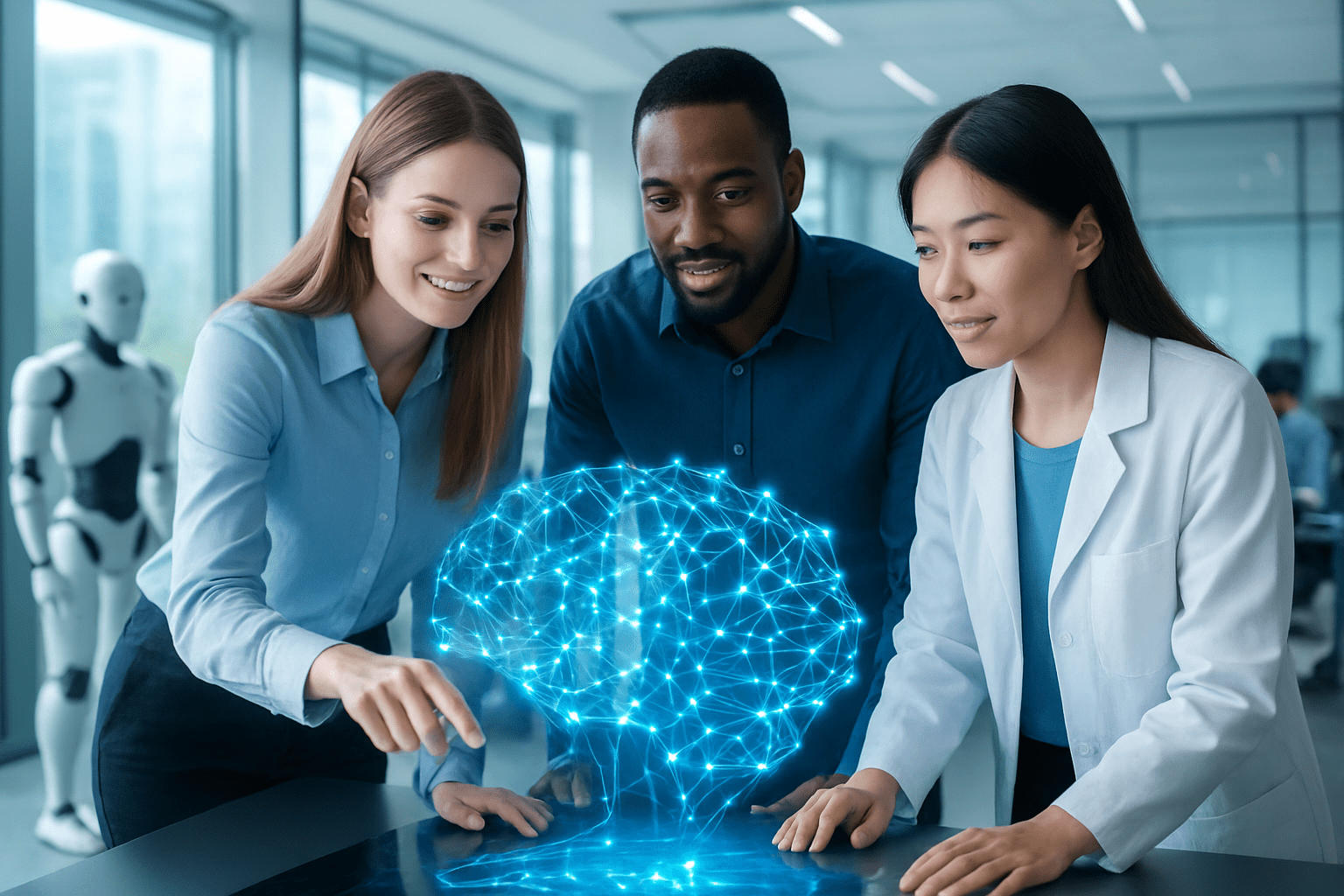
Educational implications and policy considerations
With this in mind, the integration of machine learning into educational systems presents transformative opportunities that require careful consideration from both educators and policymakers. Leveraging machine learning to enhance learning capacity offers unprecedented potential for personalized education and adaptive learning experiences. Interactive computer-based courses represent just the beginning of this technological revolution, demonstrating how AI can create dynamic, responsive educational environments that adapt to individual student needs and learning patterns.
Policymakers must engage in comprehensive discussions regarding the optimal integration of machine learning with traditional human learning methodologies. This involves developing frameworks that harness the computational power and pattern recognition capabilities of ML systems while preserving the critical thinking, creativity, and emotional intelligence that define human cognition. Educational institutions need strategic guidelines for implementing these technologies in ways that complement rather than replace fundamental human learning processes.
The policy landscape must address questions of accessibility, ensuring that ML-enhanced educational tools are available across diverse socioeconomic backgrounds and geographic regions. Furthermore, educators require professional development programs to effectively utilize these emerging technologies, understanding both their capabilities and limitations in fostering meaningful learning experiences.
Ethical responsibilities in balancing human and machine knowledge
Previously, we’ve established that machine learning models are not infallible systems, making ethical considerations paramount when balancing human and machine knowledge. The potential for bias and errors in ML models carries significant real-world consequences, particularly when these systems influence decisions that affect human lives and opportunities. Discriminatory outcomes can emerge when algorithms perpetuate historical biases present in training data, leading to unfair treatment in areas such as hiring, lending, and educational opportunities.
The conscious application of machine learning in an “ethically responsible way” demands rigorous oversight and continuous evaluation of system outputs. This responsibility extends beyond technical accuracy to encompass fairness, transparency, and accountability in algorithmic decision-making. Organizations and individuals implementing ML systems must establish robust governance frameworks that include diverse perspectives in the development and deployment processes.
Human judgment remains crucial in interpreting and contextualizing machine-generated insights, particularly in situations requiring nuanced understanding of social, cultural, and ethical implications. The balance between leveraging ML’s analytical capabilities while maintaining human oversight ensures that technological advancement serves humanity’s broader interests rather than creating new forms of inequality or discrimination.
The potential evolution of artificial general intelligence and human cognition
Now that we have covered the immediate challenges, the future landscape presents even more profound questions about the evolution of Artificial General Intelligence (AGI) and its relationship with human cognition. The potential development of AGI raises fundamental questions about whether artificial intelligence might develop human-like traits such as emotions, unpredictability, or even conflicting memories that characterize human experience.
This evolution prompts serious contemplation about the co-evolution of human cognition alongside advancing AI capabilities. As machine learning systems become more sophisticated, they may influence how humans process information, make decisions, and even conceptualize learning itself. The bidirectional relationship between human and artificial intelligence suggests that our cognitive processes may adapt and evolve in response to our increasing collaboration with AI systems.
Continuous brain research holds significant implications for machine learning advancements, as deeper understanding of neural processes could inform more sophisticated AI architectures. This symbiotic relationship between neuroscience and AI development may accelerate both fields, potentially leading to hybrid cognitive systems that combine the best aspects of human intuition and machine precision. The future may witness unprecedented forms of augmented human intelligence, where biological and artificial cognitive processes seamlessly integrate to enhance human potential while preserving the essential qualities that define human consciousness and creativity.

The parallels between human and machine learning reveal profound insights about growth and adaptation. While humans navigate complex webs of emotions, experiences, and subconscious factors, machine learning models process data through structured algorithms and weighted parameters. Both systems share fundamental similarities—they learn from past inputs, adjust their internal processes, and generate outputs that evolve over time. The key difference lies in predictability: machines follow trackable, parameterized pathways, while humans blend logic with intuition, creating outcomes that can be both rational and surprisingly creative.
As we advance toward greater human-AI integration, the most promising opportunities emerge from combining our respective strengths. Machines excel at processing vast amounts of information without retention decay, handling levels 1-2 of Bloom’s Taxonomy with superior capacity. Humans remain essential for higher-order thinking—evaluation, creativity, and problem-solving that requires cross-domain intuition and consciousness. Rather than viewing this as a competition, we should focus on leveraging machine learning to augment our cognitive abilities while maintaining our uniquely human capacity for growth, adaptation, and meaningful decision-making. The future belongs to those who can harness both forms of intelligence, using algorithms to enhance rather than replace the irreplaceable complexity of human learning.