

We often see failure as a negative experience, something we try to avoid. But what if we told you that failure is actually a valuable learning opportunity? By embracing mistakes, we can gain insights and improve our skills.
Amy Edmondson’s work on psychological safety shows how important it is to feel safe sharing mistakes. When we feel safe, we’re more likely to speak up and learn from our errors.
By changing our mindset and seeing mistakes as feedback, we can start learning from our failures. This change helps us grow and improve, rather than just dwelling on our mistakes.
Key Takeaways
- Embracing failure as a learning opportunity is crucial for growth.
- Creating a psychologically safe environment encourages individuals to share their mistakes.
- Viewing mistakes as feedback helps us learn and improve.
- A positive mindset shift can help us overcome the fear of failure.
- Learning from mistakes is essential for personal and professional development.
The Paradox of Failure in Success Stories
The path to success is often filled with failures. Yet, it’s in these moments that we find the greatest opportunities for growth. Many successful people have faced big setbacks. But they’ve turned these failures into valuable lessons.
Famous Failures That Led to Extraordinary Success
Thomas Edison made 10,000 attempts before perfecting the light bulb. His story shows the power of learning from mistakes. Arianna Huffington faced 36 rejections before publishing her book. Her story shows that failure can lead to success.
The Hidden Connection Between Failure Rate and Achievement
There’s a hidden link between failure rate and achievement. By seeing failure as a chance to grow, we can develop a growth mindset. This mindset helps us learn from mistakes and aim for excellence.
Understanding the paradox of failure in success stories helps us see our own failures as growth opportunities. This way, we can turn setbacks into steps towards success.
Reframing Failure: From Setback to Feedback Loop
Seeing failure as a chance to grow opens up its true value as feedback. This new view changes how we see mistakes. It turns fear into a tool for self-improvement.
Our brains naturally fear failure, which can stop us from learning from mistakes. But, by seeing failure as constructive criticism, we can change this. This helps us grow more.
The Psychology Behind Our Fear of Failure
The fear of failure comes from our deep-seated need to avoid pain and seek pleasure. When we fail, our brain sees it as a threat. This makes us release stress hormones like cortisol.
This response is meant to protect us. But it can also stop us from taking risks and trying new things.
- Fear of loss: The fear of losing something can be overwhelming.
- Fear of judgment: The fear of what others think can make us fear failure more.
- Past experiences: Bad experiences with failure can make us fear it even more.
Transforming Your Relationship with Mistakes
To change how you see mistakes, first accept that failure is part of learning. Then, start seeing failure as a chance to learn and grow. Think about what went wrong and how to do better next time.
With this mindset, you’ll be ready to face setbacks. You’ll use them as chances to grow and self-improve.
Why Failure Is the Best Feedback: Learning to Love Your Mistakes
The path to success is rarely straight. It’s through our failures that we learn the most. Leah JM Dean says, “failure is really the best type of performance feedback.” By seeing failure as a chance to grow, we open up to new learning experiences.
Embracing this view helps us tackle challenges differently. It makes us more resilient when we face setbacks.
The Unfiltered Truth Only Failure Can Provide
Failure gives us a clear view of our actions and decisions. Unlike success, which can hide problems, failure shows us what went wrong. This honest look is crucial for spotting and fixing weaknesses.
For example, when a project fails, we can figure out why. Was it a lack of resources, poor planning, or too high expectations? By looking at these reasons, we learn what to improve next time.
How Failure Reveals Your Blind Spots
Failure is great for uncovering our blind spots. These are areas where we’re not fully aware, leading to surprises. When we fail, we face these blind spots head-on and find ways to avoid them later.
| Blind Spot | How Failure Reveals It | Strategy for Improvement |
|---|---|---|
| Overestimating Resources | Project delays or failures due to insufficient resources | Conduct thorough resource assessments before project initiation |
| Underestimating Complexity | Repeated failures in complex tasks due to oversimplification | Break down complex tasks into manageable components |
| Lack of Contingency Planning | Failure to adapt to unexpected changes or setbacks | Develop comprehensive contingency plans for potential risks |
The Emotional Intelligence of Embracing Failure
Learning to accept failure boosts our emotional intelligence. It helps us become more resilient, self-aware, and empathetic. These traits are key for personal and professional growth, helping us build better relationships and make smarter choices.
When we start to love our mistakes, we see them as stepping stones, not hurdles. This new way of thinking lets us face challenges with a positive attitude. It encourages a culture of trying new things and always getting better.
The Neuroscience of Learning Through Failure
Our brains are designed to learn from mistakes. This makes failure key to learning. When we fail, our brains don’t just feel sad. They work hard to figure out what went wrong and how to do better.
How Mistakes Rewire Your Brain for Growth
Studies show that mistakes can rewire our brains for growth. This helps us learn and adapt better. It’s all thanks to neuroplasticity, the brain’s ability to make new connections.
- Mistakes release dopamine, a key player in learning and memory.
- The brain builds new paths as it deals with failures, boosting problem-solving.
- Trying again and again, even after failing, makes those neural connections stronger.
The Retention Power of Failure-Based Learning
Failure-based learning is more than just making mistakes. It’s about learning from them. Research finds that learners who face failure during learning hold onto information better.
- Failure pushes us to learn actively, not just passively.
- The emotions we feel when we fail help solidify memories.
- Looking into failures helps us understand and apply what we’ve learned.
By seeing failure as a learning tool, we can use it to improve how well we remember and understand new things.
Developing a Growth Mindset: The Foundation for Learning from Mistakes
A growth mindset is more than just being tough. It’s about learning from every experience, even failures. Carol Dweck’s idea has changed how we face challenges and setbacks. It shows us that our skills can grow, making failure a chance to learn.
Fixed vs. Growth Mindset in Facing Failure
People with a fixed mindset think their talents are set in stone. On the other hand, those with a growth mindset see challenges as chances to grow. When they fail, a fixed mindset makes them defensive and stuck. But a growth mindset pushes them to explore and learn.
| Characteristics | Fixed Mindset | Growth Mindset |
|---|---|---|
| View of Failure | Sees failure as a threat to ego | Sees failure as a learning opportunity |
| Response to Challenges | Avoids challenges | Embraces challenges |
Practical Exercises to Cultivate a Growth Mindset
To grow your mindset, try these exercises:
- Think about a recent failure. What can you learn from it?
- Take on a task you’re not great at. See it as a chance to grow.
- Speak positively about your abilities and challenges.
By adopting a growth mindset, we can change how we see failure. It becomes a force that helps us move forward.
The Feedback Analysis Method: Extracting Wisdom from Failures
Failure can teach us a lot, but only if we learn from it. By understanding our mistakes, we can move forward and succeed.
Step-by-Step Process for Failure Analysis
To learn from failures, we need a clear plan. Here’s how to do it:
- Identify the failure: Clearly define what went wrong.
- Gather data: Collect relevant information about the failure.
- Analyze the data: Look for patterns and root causes.
- Draw conclusions: Summarize what you’ve learned.
- Plan next steps: Decide how to apply your insights.
Turning Insights into Actionable Improvements
After analyzing your failure, it’s time to act. Create a plan to change and check if it works.
Creating Your Personal Failure Journal
Keeping a failure journal helps track your progress. Record each failure, analyze it, and note the lessons.
Implementing Feedback Loops in Your Routine
Feedback loops are key for getting better. Regularly check your progress, adjust, and apply new knowledge to challenges.
| Step | Action | Outcome |
|---|---|---|
| 1 | Identify Failure | Clear understanding of what went wrong |
| 2 | Analyze Data | Insights into root causes |
| 3 | Plan Next Steps | Actionable improvements |
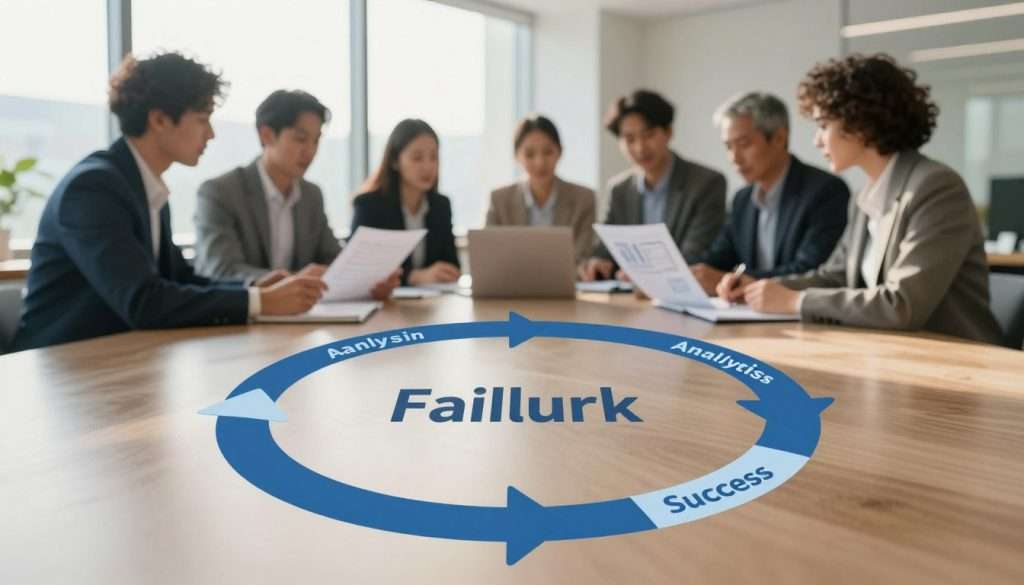
By using this method, you can turn failures into learning experiences. This builds a culture of growth and self-improvement.
Building Resilience: Bouncing Back Stronger After Setbacks
Failure is a part of life, but how we bounce back matters. When we fail, we might want to hide or quit. But resilience is the key to not just bouncing back but emerging stronger. Studies show that resilience helps us grow and learn from our mistakes.
The Resilience Muscle: How Failure Strengthens Your Ability to Persist
Just like muscles grow with exercise, our resilience gets stronger with each challenge. Every failure is an opportunity to flex our resilience muscle. It teaches us to adapt, keep going, and overcome obstacles. By seeing failure as a chance to learn, we grow and improve ourselves.
Techniques for Emotional Recovery After Failure
Getting over emotional failure takes effort. Here are some ways to bounce back:
- Acknowledge Your Feelings: Recognize and accept your emotions, rather than suppressing them.
- Practice Self-Compassion: Treat yourself with kindness and understanding, just as you would a friend.
- Reframe Failure: View failure as a learning opportunity, focusing on what you can gain rather than what you’ve lost.
| Technique | Description | Benefit |
|---|---|---|
| Acknowledging Feelings | Accepting emotions | Reduces emotional burden |
| Self-Compassion | Treating oneself kindly | Enhances emotional well-being |
| Reframing Failure | Viewing failure as a lesson | Fosters a growth mindset |
“The greatest glory in living lies not in never falling, but in rising every time we fall.”
By using these techniques, we not only get over failure but also become more resilient. We’re ready to face future challenges with confidence and a positive attitude.
Failure as Innovation’s Best Friend: Creative Benefits of Mistakes
The journey to innovation is often filled with mistakes. It’s time to start seeing them as opportunities. When we view failure as a chance to grow, we unlock a world of creative possibilities.
How Failure Sparks Creative Problem-Solving
Failure makes us think differently and find new solutions. By accepting failure, we unlock our creative potential. This leads to innovative solutions that might not have been thought of before.
When we fail, we must figure out what went wrong and how to do better. This analysis and improvement are key to solving problems creatively. It helps us refine our ideas until we succeed.
The “Fail Forward” Approach in Product Development
Many successful products and services were made using the “fail forward” method. Each failure is seen as a step towards success. This mindset encourages innovation and experimentation, leading to breakthroughs.
Thomas Edison’s story with the light bulb is a great example. His refusal to give up, despite many failures, led to a groundbreaking invention.
By using this approach, we can turn our failures into lessons that drive innovation and growth.
Constructive Criticism: Leveraging External Feedback on Your Failures
Embracing constructive criticism is key to learning from failures. When we fail, it’s natural to feel defensive or dismissive. But, this can stop us from getting the insights we need to grow.
To really benefit from feedback, we must learn to seek and receive it well. This means creating a space where feedback is valued and used. Here are some strategies to help:
- Be specific about what you want feedback on to ensure relevant insights.
- Listen actively and avoid becoming defensive to fully absorb the feedback.
- Ask follow-up questions to clarify any points you’re unsure about.
How to Seek and Receive Criticism Effectively
Seeking criticism well means being proactive. Identify areas for improvement and ask trusted people for feedback. When you get feedback, keep an open mind and focus on the message, not how it’s delivered.
Separating Useful Feedback from Noise
Not all feedback is the same. To tell useful feedback from noise, look for common themes. If many people mention the same issue, it’s probably something to work on. Also, think about who’s giving the feedback and their knowledge in the area.

By using constructive criticism and creating a feedback loop, we can learn faster from our mistakes. The goal is not to be flawless but to grow and learn from our experiences.
Creating a Failure-Friendly Environment: At Work and Home
A failure-friendly environment is crucial for growth and learning. It allows us to take risks and innovate. This mindset is important in both our personal and professional lives.
Leadership Strategies That Embrace Learning from Mistakes
Leaders are key in creating a culture that embraces failure as feedback. They promote a growth mindset. This means their teams see mistakes as chances to learn, not failures.
They create a safe space where everyone can share their mistakes. This way, everyone learns from each other’s failures.
Teaching Children the Value of Productive Failure
Teaching kids about failure is vital for their growth and success. We should encourage them to take risks and see failures as growth chances. This helps them become resilient and positive about challenges.
This approach helps them grow personally and prepares them for the real world’s complexities.
By using these strategies, we can make our work and home environments more supportive and innovative. This supports self-improvement and progress.
Overcoming Perfectionism: When the Fear of Failure Becomes the Failure
In our quest for perfection, we might miss the value of ‘good enough.’ Perfectionism can block us from embracing failure and learning from mistakes. Striving for perfection sets us up for unrealistic success expectations. This fear can be very limiting.
Recognizing Perfectionist Tendencies
To beat perfectionism, first spot its signs. Do you often criticize your work too much? Are you scared to share your ideas because they’re not perfect? These habits stop you from taking risks and learning from errors.
Let’s look at some common traits of perfectionists:
| Trait | Description | Impact |
|---|---|---|
| Excessive Self-Criticism | Being overly critical of one’s own work | Leads to decreased self-esteem and motivation |
| Fear of Sharing Ideas | Hesitant to share work due to fear of not being perfect | Missed opportunities for feedback and growth |
| Unrealistic Expectations | Setting unachievable standards for oneself | Results in disappointment and frustration |
Practical Steps to Embrace “Good Enough” and Keep Moving
After spotting your perfectionist traits, it’s time to act. Start by setting achievable goals and celebrating small victories. Practice kindness to yourself by knowing mistakes are part of learning.
Accepting “good enough” doesn’t mean you’re settling for less. It means you value progress over perfection. This approach makes you more open to learning from mistakes and more resilient when facing challenges.
Remember, the secret to beating perfectionism is to focus on self-improvement rather than self-perfection. This mindset helps you handle constructive criticism better and use it for growth.
Conclusion: Embracing Failure as Your Greatest Teacher
Mistakes are key to growing. By learning from them, we can tackle challenges better and become more resilient. Amy Edmondson says “intelligent failures are good for us because they bring us knowledge, value, and insight.” This shows how failure can teach us a lot.
Seeing failure as a chance to learn changes how we think. It helps us focus on what we can gain from mistakes. This way, we can overcome our fear of failure and grow from it.
Let’s keep seeing failure as a chance to learn and grow. By doing this, we can reach our full potential and succeed more.