

Have you ever thought about why learning outside school is more fun than in class? Prof. Susan Blum’s insight that “Most people don’t learn as well in school as they do outside school” resonates with many. We’re here to dive into this and make studying fun and effective.
Imagine being able to overcome your aversion to school and find motivation for studying. It’s not just a dream; with the right approach, you can enjoy studying and reach your academic goals.
Key Takeaways
- Discover the reasons behind the aversion to traditional schooling.
- Learn strategies to make studying more enjoyable and effective.
- Understand how to cultivate a positive mindset towards learning.
- Explore practical tips to stay motivated and engaged in your studies.
- Transform your study routine into a rewarding experience.
Why Most People Struggle with Studying
Many people struggle with studying, but it’s not because they don’t want to learn. Often, it’s because they don’t like how learning is done in school. As Prof. Blum says in “I Love Learning; I Hate School,” there’s a big difference between learning and schooling.
The Psychology Behind Study Aversion
Study aversion comes from many sources, like past experiences, fear of failure, and lack of motivation. When we face challenges or get negative feedback, it can make us think we’re not cut out for a subject.
Common Misconceptions About Learning
Some think that intelligence is fixed or that learning is boring. But, our brains can change and adapt, making learning fun and rewarding if done right.
How School Experiences Shape Our Attitudes
School experiences greatly influence how we feel about studying. Bad experiences, like being forced to learn in a way that doesn’t fit us, can make us hate studying. But, good experiences can make us love learning forever.
The Mindset Shift: Studying as Discovery, Not Drudgery
Let’s change how we see studying. Instead of a chore, it can be an exciting journey of discovery. When we see learning as an adventure, everything changes. We’re not just memorizing facts; we’re finding new ideas and perspectives that can make our lives richer.
Reframing Your Relationship with Learning
Changing how we see learning is all about perspective. Instead of seeing studying as a necessary evil, try to see it as a chance to explore new subjects. This new way of thinking can greatly change how you study.
The Growth Mindset Approach to Studies
Adopting a growth mindset is key in this change. This idea, developed by educational psychologists, says our abilities can grow with hard work and dedication. By embracing this mindset, we become more resilient and motivated in our learning journey.
The growth mindset approach sees challenges as chances to grow, not threats to our ego. It helps us love learning and stay resilient, which is crucial for reaching our goals.
Curiosity as Your Greatest Learning Tool
Curiosity is a powerful tool in learning. When we’re curious, we’re more engaged and motivated to learn. Cultivating curiosity means asking questions, seeking new experiences, and exploring topics that interest us.
| Mindset Shift | Traditional Studying | Discovery-Based Learning |
|---|---|---|
| Perception | Studying is a chore | Learning is an adventure |
| Approach | Focus on memorization | Emphasis on understanding and application |
| Motivation | External rewards or pressure | Intrinsic curiosity and interest |
By seeing studying as a journey of discovery, we can make learning more fun and effective. Embracing a growth mindset and cultivating curiosity are essential steps in this journey.
How to Train Your Brain to Enjoy Studying (Even If You Hate School)
You can make studying enjoyable by using neuroplasticity and positive feedback. Our brains can change and adapt, thanks to neuroplasticity.
Neuroplasticity: Your Brain’s Ability to Change
Neuroplasticity lets us create new brain connections. This means we can change how we feel about studying by making positive connections.
Creating Positive Associations with Study Materials
To make studying positive, try new things. Study in different places or at different times. Reward yourself when you hit study goals.
Dopamine and Learning: The Reward Connection
Dopamine helps us feel motivated and happy. By setting small goals or enjoying learning, you can make studying fun.
| Strategy | Description | Benefit |
|---|---|---|
| Change Study Environment | Study in different locations or at different times | Reduces boredom and increases focus |
| Reward System | Set small goals and reward yourself upon achievement | Boosts motivation and dopamine release |
| Make it Fun | Incorporate games, puzzles, or interactive elements into study sessions | Increases enjoyment and engagement |
By using these tips and understanding your brain, studying can become more fun and rewarding.
Finding Your Personal Learning Style
Discovering your personal learning style can change how you study. We all learn in our own way. Finding yours can make a big difference in your learning journey.
Visual, Auditory, Reading/Writing, and Kinesthetic Approaches
There are four main learning styles: visual, auditory, reading/writing, and kinesthetic. Visual learners do well with images, diagrams, and videos. Auditory learners like listening to lectures or audio recordings. Those who prefer reading/writing learn best from written materials and taking notes. Kinesthetic learners do best in hands-on environments, doing practical activities.
Knowing these categories helps you find your preferred learning style. You might find you’re a mix of two or more styles, which is okay.
Customizing Study Methods to Your Preferences
After finding your learning style, you can adjust your study methods. For example, if you’re a visual learner, use mind maps and infographics. Auditory learners can record lectures and listen to them later.
Experimenting with Mixed Learning Styles
Even if you have a main learning style, trying mixed methods is good. Mixing visual aids with kinesthetic activities can help you understand and remember better. Don’t be afraid to try different ways until you find what works best for you.
The Environment Factor: Creating Your Ideal Study Space
Creating the perfect study space is more than just finding a quiet spot. It’s about making an environment that helps you learn. Your study space greatly affects how well you focus and learn.
Physical Setup for Maximum Focus
A well-organized study space can really help you focus. Here are some tips to make your study area great:
- Choose a quiet, dedicated space for studying to minimize distractions.
- Ensure the area is well-lit, preferably with natural light.
- Invest in a comfortable chair and a desk that are ergonomically designed.
- Keep your study space organized and clutter-free.
Ambiance Elements That Enhance Learning
The feel of your study space can really affect your mood and how productive you are. Think about these elements to make a positive atmosphere:
“A cluttered space reflects a cluttered mind. Simplifying your environment can simplify your learning process.”
- Use calming colors on your walls and decor to reduce stress.
- Play soft, instrumental music in the background to aid concentration.
- Maintain a comfortable temperature to avoid distractions.
- Consider using aromatherapy with scents like lavender or peppermint to enhance focus.
| Ambiance Element | Benefit |
|---|---|
| Calming Colors | Reduces stress and promotes relaxation |
| Soft Music | Aids concentration and improves mood |
| Comfortable Temperature | Prevents physical discomfort and distractions |
| Aromatherapy | Enhances focus and mental clarity |
Minimizing Distractions Without Creating Boredom
It’s important to find a balance between avoiding distractions and keeping study sessions interesting. Here are some strategies:
- Use tools or apps that block social media and other distracting websites.
- Create a study schedule with regular breaks to avoid burnout.
- Incorporate different study techniques, such as the Pomodoro Technique, to keep study sessions interesting.
- Make sure your study space is not too monotonous; add some personal touches or plants.
By designing your study environment carefully, you can greatly improve your learning experience. It makes studying more enjoyable.
Gamification: Turning Study Sessions into Challenges
Imagine making your study sessions into a game. Every challenge you beat gets you rewards and recognition. By adding game design to your study routine, you can make learning more fun and engaging.
Point Systems and Rewards That Actually Motivate
Point systems and rewards are key in gamification. You earn points for different study tasks. For instance, you get points for finishing a tough chapter or joining a study group.
These points can be traded for fun rewards. You might get to watch your favorite TV show, enjoy a meal, or just relax. It’s a great way to stay motivated.
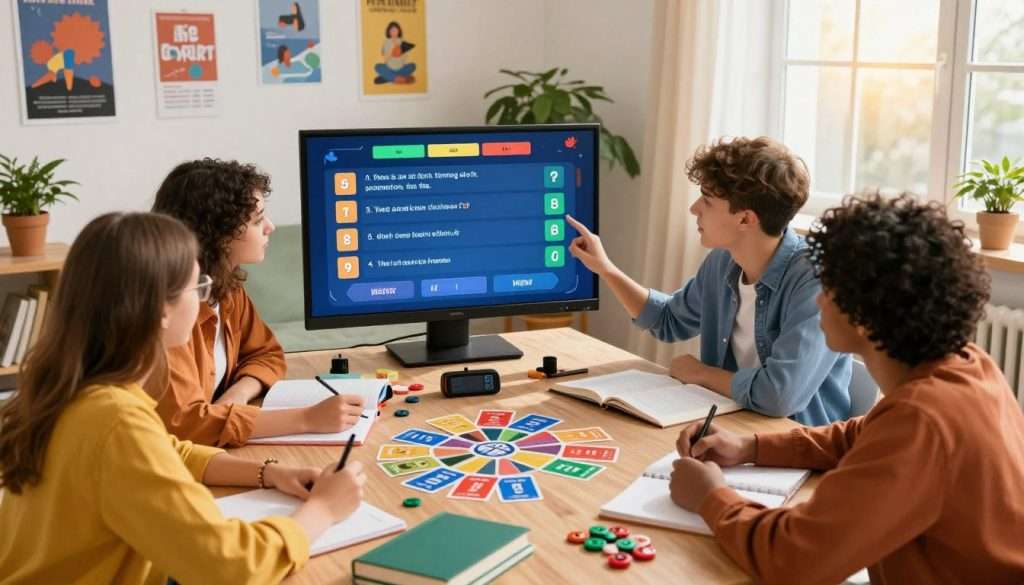
Competitive and Collaborative Learning Games
Gamification also includes competitive and team-based learning games. You can challenge yourself or others to reach study goals. This creates a friendly competition.
Working together with friends on study projects can also boost learning. It’s a chance to share knowledge and work as a team.
Digital Badges and Achievement Tracking
Digital badges are another part of gamification. They show your achievements and progress. By earning badges for study tasks, you can see how far you’ve come.
Many digital tools and apps have badge systems. They make it easy to add these elements to your study routine.
| Gamification Element | Description | Example |
|---|---|---|
| Point Systems | Earning points for study activities | 100 points for completing a chapter |
| Digital Badges | Visual representation of achievements | A “Mastery” badge for completing a difficult task |
| Competitive Learning | Challenging oneself or others | A study group competition to see who can score the highest on a test |
Technology Tools That Make Learning More Engaging
In today’s world, technology has changed how we learn. It makes learning fun and interactive. We now have many tools to make studying exciting.
Apps and Platforms for Interactive Learning
Interactive learning apps have changed studying. Apps like Duolingo for languages and Khan Academy for many subjects offer gamified learning experiences. They make studying fun by using interactive quizzes, games, and challenges.
Digital Organization Systems for Stress-Free Studying
Staying organized is key for good learning. Tools like Evernote and Trello help keep our study materials and schedules in order. They have features like note-taking, task management, and reminders to help us stay on track without feeling stressed.
Virtual Reality and Immersive Learning Experiences
Virtual Reality (VR) is taking learning to new heights with immersive experiences. It lets us explore historical sites and understand complex science in a hands-on way. VR is not just for fun; it’s a valuable tool in education.
By using these technology tools, we can enjoy and improve our learning. Whether it’s through apps, digital organization, or VR, technology is making our learning journey exciting.
The Power of Connection: Social Learning Strategies
Connecting with others can really help us understand and remember study materials better. Learning with friends or classmates lets us share ideas, clear up any confusion, and stay motivated.
Study Groups That Actually Work
To make a study group effective, setting clear goals and expectations is key. Regular meetings and active participation are crucial for success.
| Member | Role | Task |
|---|---|---|
| John | Leader | Organize meetings |
| Emma | Note-taker | Take notes |
| Michael | Researcher | Research topics |
Teaching Others as a Learning Enhancement
Teaching others is a great way to strengthen your own learning. When you teach, you solidify your understanding and discover new things. Try explaining a concept to a friend or family member to see how it works.
Finding Online Learning Communities
Sites like Reddit, Discord, and special forums can connect you with like-minded people.
Using these social learning strategies can make studying more fun and effective. Whether through study groups, teaching others, or joining online communities, connecting with others can change how you learn.
Breaking the Monotony: Varied Study Techniques
If you’re tired of studying the same way every day, you’re in luck because we’re about to shake things up. To keep your study sessions fresh and engaging, it’s essential to mix things up with varied study techniques.
The Pomodoro Technique and Time Management
The Pomodoro Technique is a game-changer for maintaining focus. This technique involves studying in focused 25-minute increments, followed by a 5-minute break. After four cycles, take a longer break of 15-30 minutes. This technique helps you stay on track and avoid burnout.
Multi-Modal Learning Approaches
Using multi-modal learning approaches can also enhance your study sessions. This involves incorporating different senses (sight, sound, touch) into your learning. For example, watch a video on a topic, then summarize it in your own words, and create a diagram to illustrate the concept.
Movement and Physical Activity During Study Sessions
Incorporating movement and physical activity during study sessions can boost your productivity. Try using a standing desk or pacing while you read. You can also use active recall techniques like creating flashcards and testing yourself on the go.

By incorporating these varied study techniques into your routine, you’ll be able to stay engaged and retain information more effectively.
Overcoming Study Blocks and Procrastination
We’ve all delayed studying until the last minute. But what if you could stop procrastinating for good? Procrastination is a big challenge for many students. It often comes from deeper psychological barriers.
Psychological Barriers and How to Dismantle Them
Fear is a major psychological barrier to studying. It might be fear of failure, not being good enough, or the unknown. To beat this, we need to change how we think. Instead of seeing studying as a task, view it as a chance to learn and grow.
By changing our mindset, we can start to break down these barriers. This helps us move forward.
Starting Rituals That Bypass Resistance
Starting a ritual can signal to your brain that it’s time to study. It could be making coffee, playing a certain song, or doing a quick exercise. The goal is to create a consistent ritual that quickly gets you ready to study.
This way, you can avoid the initial resistance that often leads to procrastination.
Micro-Commitments: The 5-Minute Rule
The 5-minute rule is a great way to beat procrastination. It means committing to study for just 5 minutes. Often, the hardest part is starting. Once you start, it gets easier to keep going.
This small commitment can help you build momentum. It makes studying a habit.
By understanding the psychological barriers to studying and using strategies like starting rituals and micro-commitments, you can beat procrastination. This makes studying more enjoyable and effective.
Connecting Studies to Real-World Applications
When you link what you’re studying to real life, it becomes more meaningful. This connection can turn studying from a dull task into an exciting journey. It shows how things work in our world.
Finding Relevance in Seemingly Irrelevant Subjects
It’s common to wonder why you’re studying something that seems irrelevant. But, many subjects have hidden connections to real-world issues. For example, learning about history can help you understand today’s social problems. Think about how the subject relates to your interests or current events.
Project-Based Learning for Practical Application
Project-based learning is a great way to connect studies to real life. It involves working on projects that apply what you’ve learned to solve problems or create something new. For example, if you’re studying environmental science, you could work on a project to reduce waste in your community.
Creating Personal Challenges Related to Study Topics
Setting personal challenges can make studying more fun. For instance, if you’re learning a new language, try to hold a 10-minute conversation with a native speaker. This method not only makes learning enjoyable but also helps you remember information better.
| Study Topic | Real-World Application | Personal Challenge |
|---|---|---|
| Environmental Science | Reducing community waste | Create a zero-waste plan for your household |
| Language Learning | Communicating with native speakers | Hold a 10-minute conversation in the target language |
| History | Understanding current events | Analyze how historical events influence today’s society |
By making these connections, studying becomes more enjoyable and rewarding. As Albert Einstein said, “Education is not the learning of facts, but the training of the mind to think.”
“The beautiful thing about learning is that no one can take it away from you.” –
Conclusion: Your Journey to Becoming a Passionate Learner
As we finish our look at making studying fun, it’s clear that becoming a passionate learner is a journey. It’s not just a goal to reach. By changing how you think about learning, finding what works best for you, and using the right tools, you can make studying enjoyable.
We’ve talked about how to make learning more fun. This includes changing how you see learning, making study sessions more like games, and setting up the perfect study space. It’s also important to keep growing and learning in today’s fast world.
Now, it’s your turn to start this journey. Try out the ideas that sound good to you and don’t be scared to try new things. As you keep going, you’ll get more confident and start to love learning more.
Your journey to becoming a passionate learner is just starting. The world of knowledge is ready for you to discover it.