
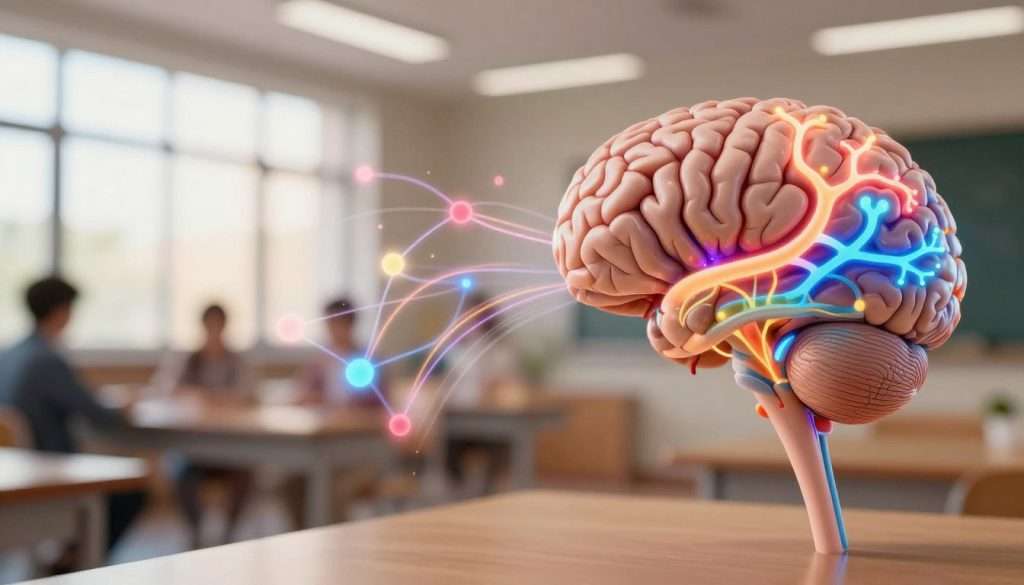
Imagine making learning a fun and rewarding experience. Understanding how our brains work can make this happen. Jo Boaler’s book, Limitless Mind: Learn, Lead, and Live Without Barriers, shows how a growth mindset can change our learning.
Our brains can grow and change, unlike what we once thought. This idea challenges the old view of intelligence as fixed. By using our brain’s adaptability, we can reach our full potential and enjoy learning. It’s not just about doing well in school; it’s about improving our thinking skills and enjoying the journey.
Key Takeaways
- Understanding brain function can improve learning experiences.
- A growth mindset is crucial for cognitive development.
- Our brains are capable of change and adaptation.
- Embracing this concept can lead to more effective learning.
- Learning is not just about academics; it’s about overall cognitive benefits.
The Neuroscience of Learning
Learning something new sparks a complex process in our brain. It shapes our understanding and memory. The learning process uses many brain areas and pathways together. Knowing how our brains handle new info is key to better learning.
How Your Brain Processes New Information
Our brains are always getting and processing info from around us. New data first goes to our working memory. This is a temporary spot where info is processed and either kept or thrown away.
The Role of Working Memory
Working memory is like a mental “sticky note” for info. It can only hold a little info at a time. Tricks like chunking and repeating help us manage it better.
Long-term Potentiation Explained
Long-term potentiation (LTP) makes it easier to remember info by strengthening neural connections. LTP is key to learning and memory. When we practice or review info, the brain’s pathways get stronger, making recall easier.
Neural Pathways and Memory Formation
Learning creates new or strengthens existing neural pathways. This is at the heart of neuroplasticity, the brain’s ability to change and adapt.
Synaptic Connections and Learning
Learning happens at the level of synaptic connections between neurons. The strength of these connections affects how well we remember info. Repeated practice or exposure strengthens these connections, improving recall.
The Consolidation Process
After we learn something, it goes through a consolidation process. This moves it from short-term to long-term memory. This can happen during sleep or through active recall and practice.
| Process | Description | Role in Learning |
|---|---|---|
| Working Memory | Temporary holding area for information | Initial processing and filtering of information |
| Long-term Potentiation (LTP) | Strengthening of neural connections | Enhances memory retention and recall |
| Synaptic Connections | Communication between neurons | Foundation for learning and memory formation |
| Consolidation | Transfer of information to long-term storage | Stabilizes learning over time |
Your Brain on Learning: Why This Feels So Good
When we learn something new, our brain’s reward system kicks in. It releases dopamine, making learning feel good. This makes us want to keep learning and getting better at new things.
The Reward System Activation
The brain’s reward circuitry is quite complex. It involves many pathways and neurotransmitters. Dopamine neurons are key in motivating us and rewarding us for our efforts.
Understanding the Brain’s Reward Circuitry
The brain’s reward system is all about responding to new and challenging things. When we learn something new, it sets off a chain of neural activities. This chain ends with the release of dopamine.
How Learning Triggers Pleasure Centers
Learning activates the brain’s pleasure centers by releasing dopamine. This neurotransmitter is linked to pleasure, motivation, and rewarding certain behaviors.
Natural High: Learning as a Source of Pleasure
Learning can give us a natural high, just like other rewards. It’s good for us because it makes us want to learn more and get better at things.
The Evolutionary Advantage of Enjoying Learning
Learning for pleasure has evolutionary benefits. It helps us get better at things we need to survive and adapt.
Comparing Learning Pleasure to Other Natural Rewards
| Activity | Dopamine Release | Pleasure Level |
|---|---|---|
| Learning | High | 8/10 |
| Exercise | Moderate | 7/10 |
| Socializing | Variable | 9/10 |
The table shows learning is linked to a lot of dopamine release and a lot of pleasure. This makes learning a valuable and enjoyable experience.
“The joy of learning is a fundamental aspect of human nature, and it’s what drives us to continue growing and developing throughout our lives.”
The Dopamine Effect: Learning as a Natural High
Learning sets off a chain of chemical reactions in our brain, with dopamine at the center. This neurotransmitter is key for motivation and pleasure. It makes learning fun and rewarding.
The Chemistry of Reward
Dopamine is called the “feel-good” neurotransmitter because it’s linked to pleasure and reward. When we learn something new, dopamine is released. This motivates us to keep learning.
Dopamine’s Role in Learning Motivation
Dopamine release is tied to our motivation to learn. It makes us want to learn more by linking it to pleasure.
Other Neurotransmitters Involved in Learning Pleasure
While dopamine is important, endorphins and serotonin also play a part in learning’s pleasure. Together, they make learning a positive experience.
Why Some Learning Experiences Feel Better Than Others
The satisfaction we get from learning can differ a lot. Two main factors are the challenge level and how relevant the material is to us.
The Impact of Challenge Level on Satisfaction
Learning that’s just the right challenge is more satisfying. When we’re learning something a bit beyond our current level, we get a big dopamine boost. This makes the experience more enjoyable.
Personal Relevance and Dopamine Release
When we learn something that’s personally relevant, we get a bigger dopamine release. This is because we’re more likely to remember and use this information. It makes learning more rewarding.
| Factor | Impact on Dopamine Release | Effect on Learning Experience |
|---|---|---|
| Appropriate Challenge Level | High | Increases satisfaction and enjoyment |
| Personal Relevance | High | Enhances motivation and engagement |
| Low Challenge Level | Low | May lead to boredom and disengagement |
| Irrelevant Material | Low | Reduces motivation and interest |
Neuroplasticity: How Learning Reshapes Your Brain
Our brains are not fixed; they change with every new experience. This idea, called neuroplasticity, lets our brains adapt and grow throughout life. It shows that our brains can change, even as we age.
The Brain’s Remarkable Ability to Change
Neuroplasticity makes our brains flexible. They can change based on new experiences and learning. This flexibility is key for learning and remembering things.
Physical Changes in Brain Structure During Learning
Learning changes our brain physically. It creates new connections and even grows new neurons in some areas.
How Repetition Strengthens Neural Connections
Repeating what we learn strengthens these connections. This makes it easier to remember and do things over time.
Age and Neuroplasticity: It’s Never Too Late
Neuroplasticity is exciting because it works at any age. Our brains can still change and adapt, no matter how old we get.
Debunking the “Old Dogs, New Tricks” Myth
Studies prove older adults can learn new things just as well as younger people. They just need the right motivation and practice.
How Learning Keeps Your Brain Young
Staying curious and learning new things keeps our minds sharp. It also helps our brain health, which can lower the risk of cognitive decline as we age.
The Flow State: When Learning Becomes Effortless
Imagine being fully absorbed in learning, where challenges and skills match perfectly. This makes the experience both fun and rewarding. Psychologists call this the “flow state” – a state of complete focus and engagement.
Characteristics of Flow During Learning
The flow state has key elements that make learning more effective and enjoyable. Two main characteristics are complete immersion and time distortion.
The Psychology of Complete Immersion
In a flow state, you’re fully focused on the task. Distractions disappear, and your mind is on the learning. Mihaly Csikszentmihalyi, who coined the term, says, “The best moments are when we’re stretched to our limits, trying to accomplish something difficult.”
Time Distortion and Focus Enhancement
Time seems to warp in the flow state. Hours can feel like minutes, making learning feel effortless. This focus isn’t just about speed; it’s about the quality of learning.
How to Trigger Flow More Often
While flow can happen naturally, you can also trigger it. Here are some strategies for your learning sessions.
Finding Your Optimal Challenge Level
Finding the right challenge level is crucial. If it’s too easy, you’ll get bored. If it’s too hard, you’ll get frustrated. The ideal is when the challenge is high but achievable with your skills. “Flow: The Psychology of Optimal Experience” by Mihaly Csikszentmihalyi emphasizes this balance.
“The best moments usually occur when a person’s body or mind is stretched to its limits in a voluntary effort to accomplish something difficult and worthwhile.”
Environmental Factors That Promote Flow
Your learning environment also affects flow. Minimize distractions, set clear goals, and get immediate feedback. These factors can help you achieve flow. A good learning environment can make a big difference.
By understanding flow and how to achieve it, you can make learning more enjoyable and productive.
The Social Dimension of Learning Pleasure
Learning isn’t just about studying alone; it’s also about being with others. Social interactions make learning more fun and effective. When we learn together, our brains work in new ways.
Learning in Groups vs. Solo Learning
Learning alone lets us set our own pace and focus. But learning with others adds a social twist. This can make us more motivated and engaged.
The Oxytocin Connection in Collaborative Learning
Learning together releases oxytocin, known as the “trust hormone.” Oxytocin helps us feel more connected and trusting in groups. This hormone makes learning more enjoyable and encourages us to join in.
Competition vs. Cooperation: Different Pleasure Pathways
In group settings, competition and cooperation affect our enjoyment differently. Cooperation tends to make learning more enjoyable and lasting. It builds a sense of community and support.
The Mirror Neuron System and Observational Learning
Our brains have a mirror neuron system for learning by watching. When we see others act, our neurons act as if we’re doing it too. This lets us learn by observing and imitating.
How We Learn by Watching Others
Learning by watching is very powerful. We can pick up new skills and knowledge without doing them ourselves. This is key in both school and everyday learning.
The Satisfaction of Teaching and Sharing Knowledge
Teaching others is very rewarding. It helps us solidify our own knowledge and gives us a sense of fulfillment. This feeling comes from our brain’s reward system, releasing dopamine.
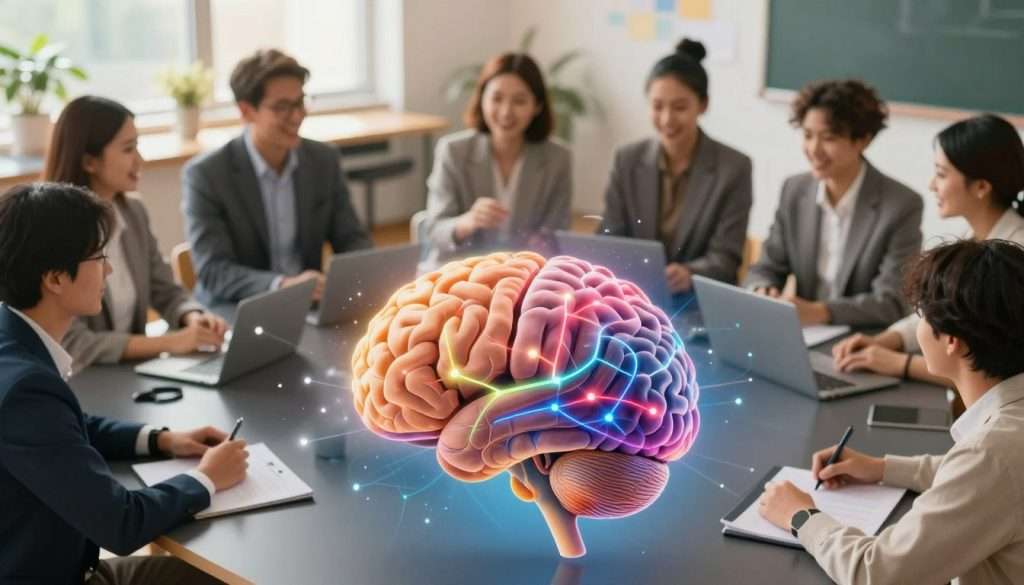
Grasping the social side of learning pleasure helps us learn better. By using group learning, observing, and teaching, we can make learning more fun and effective.
Overcoming Learning Plateaus and Frustrations
Learning is complex, and we all hit roadblocks. It’s normal to feel like learning is a chore sometimes. But it should be exciting and challenging.
Why Learning Sometimes Feels Bad
Understanding why we get frustrated with learning helps us deal with it better. Let’s explore the science behind these feelings.
The Neuroscience of Learning Frustration
Learning frustration comes from our brain’s reaction to tough challenges. When we face hard information, our brain gets stressed. This stress makes learning feel bad and even painful.
Cognitive Load and Mental Fatigue
Cognitive load is the mental effort our brain uses. Too much load can make us tired and feel like learning is a burden. Breaking down hard topics into smaller parts helps a lot.
Strategies to Restore the Joy of Learning
There are ways to beat learning frustrations and make learning fun again.
Micro-Learning and Spaced Repetition Benefits
Micro-learning breaks learning into short, focused bits. Adding spaced repetition helps us remember better. This makes learning feel less scary and more doable.
The Power of Small Wins in Learning Motivation
Winning small battles in learning boosts our motivation. Celebrating small wins makes learning feel rewarding. It helps us see learning as a positive experience.
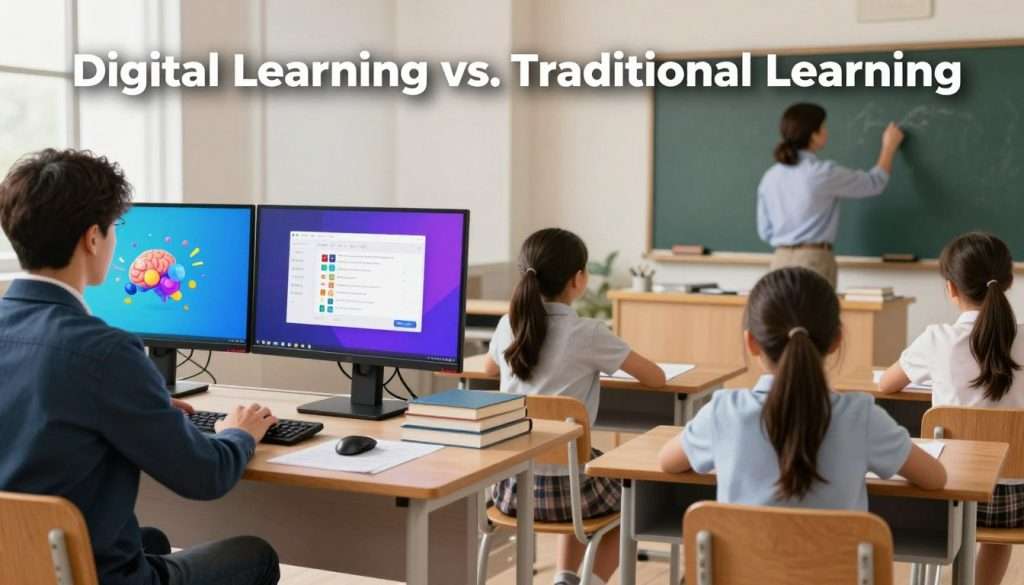
Digital Learning vs. Traditional Learning: Impact on Brain Satisfaction
In today’s world, we’re debating digital vs. traditional learning. This debate is crucial for understanding how our brains react. We’ll look into how technology changes learning and its effects on our brain’s happiness.
How Technology Changes Learning Experiences
Technology has changed learning, making it more interactive and immersive. But, we must think about the impact of too much screen time on our brains.
Screen Time Effects on Dopamine Regulation
Too much screen time can mess with dopamine, leading to less motivation and happiness. It’s important to find a balance between digital learning and other activities to keep dopamine levels healthy.
Gamification and Learning Rewards
Gamification is a big deal in digital learning, offering rewards to keep learners engaged. By using gamification elements, learners can feel more motivated and satisfied.
Finding the Right Balance for Your Brain
So, how do we mix digital and traditional learning for better brain satisfaction? The answer is to use the best of both worlds.
Multisensory Learning Advantages
Multisensory learning, which uses more than one sense, boosts retention and satisfaction. Adding multisensory elements to our learning makes it more engaging and effective.
Combining Digital and Analog Learning Methods
Mixing digital tools with traditional methods creates a hybrid approach. This balanced method can make learning more satisfying and improve results.
Practical Applications: Enhancing Your Learning Experience
Now that we’ve looked at the science of learning, let’s talk about how to improve your learning. By using these tips, you can learn better, enjoy it more, and feel good about it.
Optimizing Your Learning Environment
Your surroundings are key to learning well. Let’s explore what affects your brain’s function.
Physical Settings That Boost Cognitive Function
Having a good learning space is more than a clean desk. Natural light, comfy seating, and few distractions help your brain learn better. Try a standing desk or an ergonomic chair for better posture and less tiredness.
The Impact of Light, Sound, and Comfort
Light, sound, and comfort are vital for a great learning spot. Soft, ambient music can help you focus, and natural light boosts mood and energy. Make sure your space is comfy and well-ventilated to avoid distractions.
Learning Techniques That Maximize Pleasure
Using the right learning methods can greatly improve your experience.
The Pomodoro Method and Brain Chemistry
The Pomodoro Method is about focused 25-minute work sessions with 5-minute breaks. It keeps you sharp and avoids burnout by giving your brain breaks. As one expert says, “The secret to being productive is not working longer, but smarter and resting more.”
“The secret to being productive is not working longer, but smarter and resting more.”
Active Learning Strategies That Feel Rewarding
Active learning, like summarizing in your own words or teaching others, makes learning fun and engaging. These methods strengthen your understanding and add an interactive, enjoyable twist to learning.
By using these practical tips, you can improve your learning experience. It becomes more effective and enjoyable. The goal is to make learning a rewarding and ongoing part of your life.
Conclusion: Embracing the Joy of Lifelong Learning
Learning is closely tied to our brain’s reward system. It releases dopamine, giving us a natural high. This joy motivates us to keep learning and growing.
By embracing lifelong learning, we gain many cognitive benefits. Our brains become more adaptable and open to new information. This leads to personal growth and a more fulfilling life.
To enhance your learning, optimize your environment and use effective techniques. Balance digital and traditional learning methods. This will help you enjoy a lifetime of cognitive benefits and a love for learning.
We urge you to keep exploring and learning. The journey of lifelong learning is rewarding and brings joy and satisfaction. It’s a path that enriches our lives.