
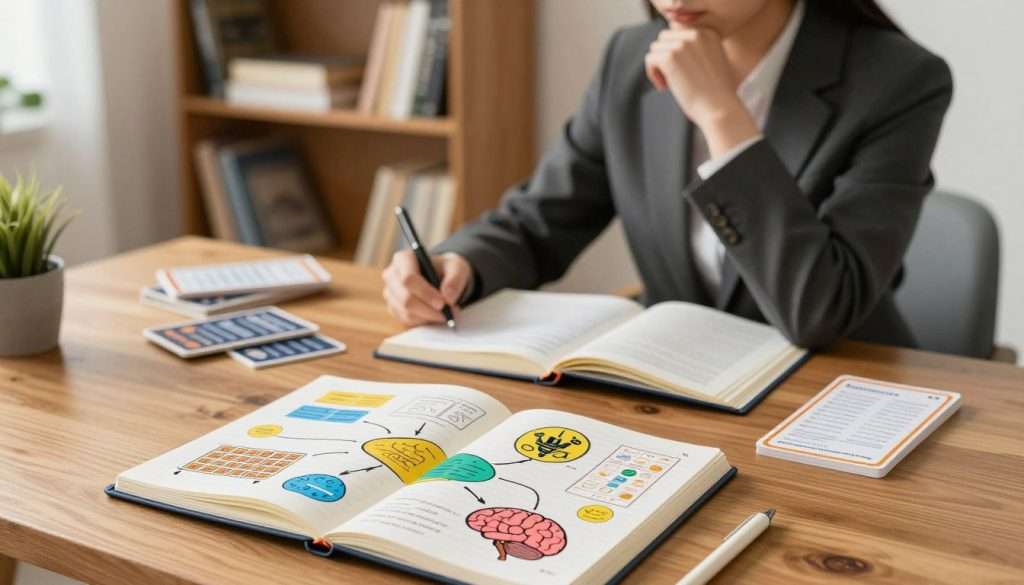
Ever struggled to remember something important? You’re not alone! We all deal with memory issues at some time. But what if you could supercharge it to reach your goals?
We’ve gathered the best tips from “The Master Guides: Supercharge Your Memory” by Shortform and other top sources. This guide is your ultimate guide to memory hacks. We’ll show you the top memory improvement techniques to remember anything you need.
Key Takeaways
- Discover the most effective memory improvement techniques
- Learn how to supercharge your memory for better recall
- Understand the science behind memory and how to apply it
- Explore practical strategies for improving memory
- Unlock your full potential with our comprehensive guide
Understanding the Science of Memory
To supercharge your memory, you first need to understand its underlying mechanisms. Your brain is a complex organ, and memory is one of its most intricate functions. By grasping how memories are formed, stored, and retrieved, you’ll be better equipped to apply effective memory improvement techniques and boost memory retention.
How Your Brain Forms and Stores Memories
When you encounter new information, your brain processes it through a series of complex neural connections. This process involves creating new pathways between brain cells, or neurons, and strengthening existing ones. The more you practice recalling this information, the stronger these pathways become, making it easier to remember in the future. Here are the key factors that influence memory formation:
- Attention: Focusing on the information you want to remember.
- Emotional Connection: Associating memories with emotions enhances retention.
- Repetition: Repeating information helps solidify it in your long-term memory.
The Three Stages of Memory: Encoding, Storage, and Retrieval
Memory involves three critical stages: encoding, storage, and retrieval. Encoding is the process of converting information into a format that your brain can store. Storage refers to retaining this information over time. Lastly, retrieval is the ability to access and recall stored information when needed. Understanding these stages can help you identify where your memory might be failing and how to improve it.
By recognizing the importance of each stage, you can develop targeted strategies to enhance your memory. For instance, improving encoding techniques can help you better absorb new information, while enhancing retrieval skills can make it easier to recall it when needed.
Why Most People Struggle with Memory (and How to Fix It)
Today, we’re bombarded with information. Our brains work hard to keep up, but it’s tough. We struggle to remember what matters most.
Common Memory Obstacles in the Digital Age
Jim Kwik in “Limitless” points out a big problem: digital distractions. Our devices grab our attention, making it hard to focus. Jade Bowler in “The Only Study Guide You’ll Ever Need” also notes that bad learning strategies hurt our memory.
The Attention-Memory Connection
Attention and memory are closely linked. When we focus, we remember better. But today, distractions pull us in many directions. Improving our focus can boost our memory.
Setting the Foundation for Memory Enhancement
So, how do we get better at remembering? Start with memory enhancement strategies like exercise, sleep, and a healthy diet. These habits help our brains work better. Also, being smart about tech use and reducing distractions can help.
| Memory Enhancement Strategy | Benefit |
|---|---|
| Regular Exercise | Improves blood flow to the brain |
| Sufficient Sleep | Enhances memory consolidation |
| Balanced Diet | Provides essential nutrients for brain health |
By facing these challenges and using these strategies, we can start improving our memory. This will help our brains work better overall.
The Ultimate Guide to Memory Hacks: Remember Anything 3X Faster
Learn how to remember things faster with our top memory hacks. We’ll show you powerful strategies to recall information quickly and easily.
The Spacing Effect: How to Schedule Your Learning Sessions
The spacing effect is a great way to remember things. It involves reviewing material at longer intervals to solidify it in your memory. By planning your learning sessions well, you can keep information better.
Creating Your Optimal Spaced Repetition Schedule
To use spaced repetition, first pick what you want to learn. Then, make a schedule for reviewing it at the best times. For example, review a new concept once a day, then a week later, and after a month.
Tools and Apps for Implementing Spaced Repetition
There are many tools and apps to help with spaced repetition. Anki, Quizlet, and SuperMemo are popular choices. They let you make digital flashcards and set up review sessions easily.
| Tool/App | Features | Platform |
|---|---|---|
| Anki | Digital flashcards, spaced repetition | Web, iOS, Android |
| Quizlet | Digital flashcards, tests, study games | Web, iOS, Android |
| SuperMemo | Spaced repetition, incremental reading | Web, Windows |
Active Recall: Implementing the Testing Effect
Active recall means actively recalling information instead of just re-reading it. This strengthens your memory and makes it easier to recall information when needed.
Practice Techniques for Active Recall
To practice active recall, try summarizing information in your own words. You can also create concept maps or take practice quizzes. These activities help you understand and remember better.
Combining Active Recall with Other Memory Methods
Using active recall with other techniques like spaced repetition can improve your memory even more. Try different combinations to see what works best for you.
Chunking: Breaking Down Complex Information
Chunking breaks down complex information into smaller parts. This makes it easier to remember and reduces mental overload.
By using these memory hacks every day, you can remember things faster and more efficiently.
Mastering the Memory Palace Technique
Imagine recalling lots of information easily with the Memory Palace technique. This method, also known as the “method of loci,” has helped memory champions and others for centuries. We’ll show you how to create your own Memory Palace, fill it with images, and store complex info.
Step-by-Step Guide to Creating Your First Memory Palace
Building a Memory Palace is simple but needs focus and creativity. Here’s how to start:
- Choose a place you know well, like your home or school.
- Picture a path through this place, noting key features.
- Decide how many “stations” or “loci” you want in your palace.
- Remember the path and stations in order.
Joshua Foer in “Moonwalking with Einstein” says make your Memory Palace vivid and personal. The more meaningful the location, the better it will stick in your memory.

How to Populate Your Palace with Memorable Images
After setting up your Memory Palace, fill it with images that represent what you want to remember. The goal is to create vivid, unusual, and personal associations. For example, link historical dates to memorable events or images that mean something to you.
| Information Type | Memorable Image | Association |
|---|---|---|
| Historical Date | A significant event | Link the date to the event |
| Shopping List | An item on the list | Visualize the item in your palace |
| Speech Points | A key phrase or idea | Associate the phrase with a location |
Advanced Memory Palace Strategies for Complex Information
For complex info, use advanced Memory Palace strategies. You can create multiple palaces or use different paths in one palace. This flexibility makes the Memory Palace technique very powerful.
Mastering the Memory Palace technique boosts your memory and helps with learning and growth. It’s useful for students, professionals, or anyone wanting to improve their memory.
Mnemonic Systems for Different Types of Information
Improving memory means using the right strategy for each type of information. We’ve looked at many ways to remember things. Now, let’s explore mnemonic systems.
Mnemonic systems are great for remembering numbers, lists, and complex ideas. Let’s check out some top systems.
The Major System: Converting Numbers to Memorable Images
The Major System turns numbers into images you can remember. It links numbers to sounds and then to words. For example, the number 1 might sound like “t” or “d”.
For the number 12, you might think of “ton” or “done”. Visualizing a ton of something helps you remember it.
The Peg System: How to Remember Ordered Lists Effortlessly
The Peg System is great for remembering lists in order. It uses words or images linked to numbers. For instance, “one is a bun, two is a shoe” helps create pegs.
- Create a list of pegs that are associated with numbers.
- Visualize an image that links the peg to the item on your list.
- Recall the list by remembering the pegs and associated images.
Creating Powerful Acronyms and Acrostics
Acronyms and acrostics are simple but effective for remembering lots of things. An acronym is a word from the first letters of a phrase. An acrostic is a sentence or poem where the first letter of each line spells out a word or phrase.
For example, “ROY G BIV” helps remember the colors of the rainbow. Or, “Please Excuse My Dear Aunt Sally” helps remember the order of operations in math.
The Link Method: Connecting Ideas into Memorable Stories
The Link Method makes a story that links items you want to remember. It’s great for lists or sequences. A story that connects the items makes it easier to recall.
For a shopping list, imagine cooking a meal and needing ingredients. Visualize each item as you go.
Using these systems can boost your memory for different types of information. Whether it’s numbers, lists, or complex ideas, there’s a system to help.
Nutrition and Lifestyle Factors That Boost Memory
Improving your memory is not just about techniques. It also involves eating the right foods and living a healthy lifestyle. We’ll look at how nutrition and lifestyle can help your brain stay sharp.
Top 10 Brain-Boosting Foods and Supplements
Eating the right foods can really help your memory. Jim Kwik, from “Limitless,” says certain foods can make your brain work better. Foods like fatty fish, nuts, and leafy greens are great for your brain.
Adding supplements like omega-3s, vitamin D, and B vitamins can also help. These can fill in any gaps in your diet.
Here are some top foods and supplements for your brain:
- Fatty fish (salmon, sardines)
- Nuts and seeds (walnuts, chia seeds)
- Leafy greens (spinach, kale)
- Omega-3 supplements
- Vitamin D
- B vitamins
Optimizing Sleep for Maximum Memory Consolidation
Sleep is key for memory. It helps move information from short-term to long-term memory. This makes it easier to remember things later.
To sleep better for memory, aim for 7-9 hours each night. Keep a regular sleep schedule and make your bedroom sleep-friendly.
Tips for better sleep: Don’t drink caffeine or use screens before bed. Keep your room cool and dark. Also, have a calming bedtime routine.
The Exercise-Memory Connection: Workout Plan for Your Brain
Exercise is good for both your body and brain. It boosts memory and thinking skills by improving blood flow and growing new brain cells. Aim for 30 minutes of moderate exercise daily.
Include cardio, strength training, and flexibility exercises. This keeps your brain and body healthy.
By eating right, sleeping well, and exercising, you can improve your memory and brain health. Start these changes today and see your memory get better!
Daily Practices to Strengthen Your Memory Muscle
To boost your memory, add simple exercises to your daily routine. Just a few minutes each day can greatly enhance your brain power.
5-Minute Memory Games and Exercises You Can Do Anywhere
Memory games and exercises are fun and effective. They can be done anywhere, fitting into even the busiest schedules.
Digital Memory Training Apps Worth Trying
Many digital apps can help improve your memory. Lumosity, Peak, and BrainHQ are popular choices. They offer games and exercises for different brain functions.
Offline Memory Exercises for Daily Practice
Offline activities are also great for memory. Try memorizing a short poem or a list without writing it down. Playing games like Concentration or Memory Match with loved ones is also fun.
Meditation and Mindfulness Techniques for Enhanced Focus
Meditation and mindfulness boost memory by improving focus and reducing stress. Regular practice can help solidify and retrieve memories better.
Start with a simple mindfulness exercise. Focus on your breath for five minutes a day. Notice the air going in and out of your nostrils. If your mind drifts, gently bring it back to your breath.
How to Create a Memory-Friendly Environment
Your surroundings affect your memory. A messy space can make your mind cluttered. To improve your memory, start decluttering your living and work areas.
Organize your things in a logical way. Use calendars and to-do lists to remember appointments and tasks. A tidy environment helps improve your memory recall by reducing distractions and aiding focus.
Real-World Applications: Step-by-Step Memory Techniques
Now, let’s put memory techniques to the test in real life. You might wonder how to remember names at events, memorize speeches, or learn new languages fast. We’ll show you how to use these techniques every day.

Never Forget a Name or Face Again: A 3-Step Method
Forgetting names is common, but our 3-step method can help. First, focus intently on the person introducing themselves. Second, associate their name with something memorable. Third, repeat their name in conversation.
For example, if someone says “Max,” think of a maximum sign. Then, say “Nice to meet you, Max!”
How to Memorize Speeches and Presentations Without Notes
Memorizing speeches can seem tough, but it’s doable. Start by breaking down your speech into smaller parts. Then, create a mental image for each part. Link them together in a story. Practice your speech, visualizing the images and recalling the content.
Accelerated Language Learning Using Memory Techniques
Learning a new language can be faster with memory techniques like the Link Method or Mnemonics. For example, to remember “chat” in French, imagine a cat on the phone. Such associations help you remember words better. Also, spaced repetition helps solidify new words in your memory.
By using these memory techniques, you can remember anything quickly. They’re great for remembering names, speeches, or learning languages. These techniques will be very useful in your daily life.
Conclusion: Your Roadmap to an Exceptional Memory
Enhancing your memory is a journey that needs practice, patience, and persistence. By learning about memory science and using effective strategies, you can remember more. This guide has shown you how.
We’ve talked about many techniques, like the Memory Palace and mnemonic systems. We also highlighted the role of nutrition, lifestyle, and daily habits in improving memory. The most important thing is to find what works for you and make it a habit.
To keep improving your memory, check out the resources we mentioned. With regular practice and a desire to learn, you’ll see amazing results. Begin your journey today and unlock the power of a supercharged memory!