

Are you tired of cramming information into your brain, only to forget it soon after? Spaced repetition is here to change that. This evidence-based learning technique helps you retain information more effectively. It’s a game-changer for students and lifelong learners.
By leveraging the psychological spacing effect, spaced repetition optimizes the review process. It shows you new and difficult material more often. At the same time, it reviews older and easier content less frequently. This technique is usually performed with flashcards, making it a simple yet powerful tool.
Key Takeaways
- Spaced repetition is a scientifically-backed method for improving memory retention.
- This technique is effective when used with flashcards.
- It optimizes the review process to help you retain information more efficiently.
- It’s a simple yet powerful tool for students and lifelong learners.
- Spaced repetition can be a game-changer for those looking to improve their learning outcomes.
The Memory Problem: Why We Forget
Forgetting is a natural part of life. But have you ever wondered why we forget things so easily? We all experience memory lapses, like forgetting a password or a significant event from the past. Understanding why this happens is crucial to improving our memory retention.
The Forgetting Curve Explained
The forgetting curve is a psychological concept that shows how our memory fades over time. It’s a key idea in cognitive science that explains why we forget.
Ebbinghaus’s Pioneering Research
Hermann Ebbinghaus, a German psychologist, was a pioneer in studying memory and forgetting. He memorized lists of words and tracked how much he remembered over time. Ebbinghaus found that forgetting isn’t linear; it drops sharply at first and then levels off.
Memory decay happens when we don’t actively recall information. The more time passes, the harder it is to remember. Our brains are wired to eliminate unnecessary information to make room for new data. But with the right techniques, we can fight memory decay and keep information better.
By understanding how memory works and why we forget, we can start improving our memory retention. This knowledge will help us explore strategies like spaced repetition to keep our memories sharp.
What Is Spaced Repetition?
Spaced repetition is a simple yet powerful way to remember what you learn. It involves reviewing information at longer and longer intervals. This helps solidify it in your long-term memory.
By using spaced repetition, you tap into your brain’s natural ability to remember. It’s all about reviewing information at the right times.
Definition and Core Principles
Spaced repetition is built on two key ideas: the spacing effect and retrieval practice.
The Spacing Effect Defined
The spacing effect shows that learning in bits over time works better than cramming. It’s about reviewing material over time, not all at once.
Retrieval Practice as a Key Component
Retrieval practice means actively recalling information from memory. It’s about testing your understanding, not just re-reading. Spaced repetition combines these two to make a strong study method.
As
“The key to learning is not to memorize, but to understand and recall.”
Spaced repetition helps you do just that. It makes sure you’re not just reading notes passively. You’re actively engaging with the material.
Adding spaced repetition to your study routine boosts your memory. It’s not just about memorizing. It’s about truly understanding and applying what you’ve learned.
Spaced Repetition: The Scientific Secret to Never Forgetting What You Learn
Spaced repetition is more than a study trick. It’s a science-backed way to keep learning in your mind. By using what cognitive psychology and neuroscience teach us, we can make sure we remember everything we learn.
The Neuroscience Behind Spaced Repetition
Studies in neuroscience show that spaced repetition makes our brain’s connections stronger. This makes it easier to remember things. It’s key to learning well.
How Neurons Form Stronger Connections
When we first learn something, our brain makes new paths. Repeating what we learn at the right times makes these paths stronger. This is why spaced repetition works so well – it keeps learning in our minds by making connections last.
Sleep is important for moving information from short-term to long-term memory. While we sleep, our brain goes over what we learned and makes these connections even stronger. So, getting enough sleep is key for learning and remembering.
Knowing how spaced repetition works can help us learn better. It’s not just about reviewing at the right times. It’s also about sleeping enough to let our brain solidify what we’ve learned.
Using spaced repetition can really help you remember things and learn new skills. It’s not just about memorizing. It’s about understanding deeply and keeping that understanding forever.
How Spaced Repetition Works in Practice
Let’s explore how spaced repetition can change your learning. It helps you get better at remembering things. This way, you can learn more efficiently.
The Optimal Spacing Effect
Finding the right time to review material is key. It’s about not reviewing too soon or too late.
Determining Your Ideal Intervals
Begin by reviewing what you’ve learned right after. Then, increase the time between reviews. This method strengthens your memory over time.
Expanding vs. Equal Intervals
Studies show expanding intervals work better than equal ones. For example, review a word one day, then three days later, and a week after that. This method boosts your learning and memory.
Using spaced repetition wisely can greatly improve your study time. You’ll see better memory and learning results.
The Benefits of Spaced Repetition Beyond Memory
Spaced repetition does more than just help you remember things. It also makes learning more efficient and effective.
Time Efficiency in Learning
Spaced repetition is not just about keeping information in your head. It’s about making learning faster and more productive. By spacing out study sessions, you can learn more in less time.
Reducing Total Study Time
Using spaced repetition helps you study less overall. This is because you review material at the best times. So, you don’t have to keep re-studying the same stuff over and over.
Maximizing Return on Learning Investment
Spaced repetition helps you get the most out of your study time. It means you can reach your learning goals without spending too much time studying.
Adding spaced repetition to your study routine brings big benefits. It makes learning more efficient and effective, not just about remembering things.
Implementing Spaced Repetition in Your Study Routine
To never forget, spaced repetition is key. It’s backed by science and boosts your memory. It makes sure you remember what you learn for good.
Creating an Effective Study Schedule
Creating a study schedule with spaced repetition needs thought. You must mix new and review sessions for best results. Let’s look at how to make a schedule that fits you.
Daily Practice vs. Periodic Review
The debate on daily vs. periodic review is ongoing. Daily practice keeps info fresh. Periodic review, a core of spaced repetition, boosts retention by reviewing at the right times.
Balancing New and Review Material
It’s important to balance new and review material. Too much new can overwhelm, while too much review can slow learning. Aim to spend 60% of your time on new material and 40% on review.
| Study Session | New Material | Review Material |
|---|---|---|
| Monday | New Topic A (60%) | Review Topic X (40%) |
| Wednesday | New Topic B (60%) | Review Topics X, A (40%) |
| Friday | New Topic C (60%) | Review Topics X, A, B (40%) |
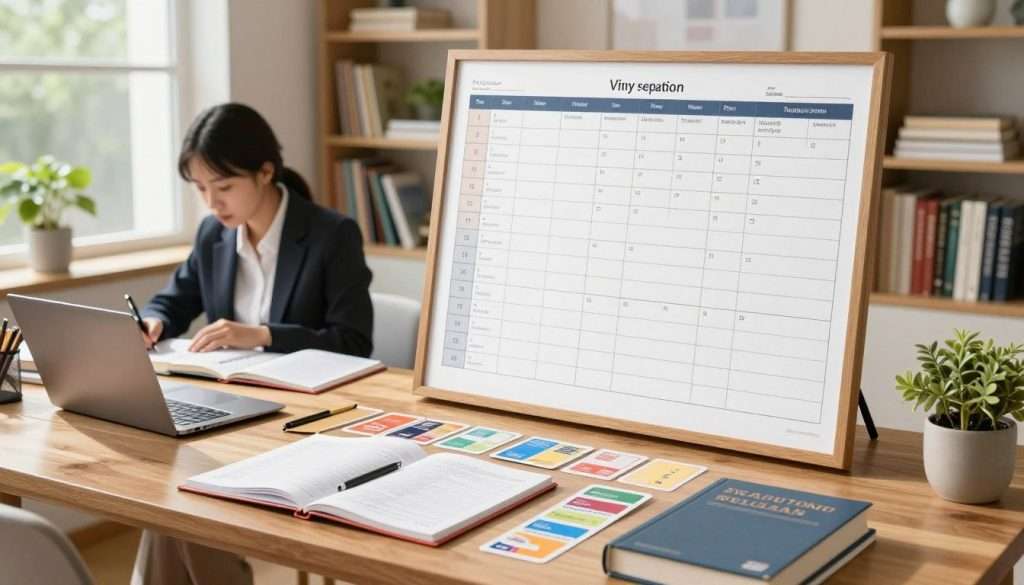
Use a table like the one above to plan your study schedule. It helps you balance new and review material. Remember, consistency and flexibility are crucial for spaced repetition success.
Digital Tools and Apps for Spaced Repetition
In today’s digital world, spaced repetition is easier than ever. Many apps and tools help you retain information. They make studying more efficient and effective.
Digital tools offer a big advantage: they let you tailor your study method to your learning style. Anki is a top choice among these tools.
Anki: The Gold Standard
Anki is a flashcard app that uses spaced repetition. It’s popular for its flexibility and customization options.
Setting Up Your First Anki Deck
To start with Anki, create a deck. Here’s how:
- Download and install Anki from the official website.
- Create a new deck by clicking on “Create Deck” and naming it.
- Add cards to your deck, either manually or by importing pre-made decks.
- Start reviewing your cards, and let Anki’s algorithm do the rest.
Customizing Algorithms for Personal Learning
Anki lets you customize its algorithms to fit your learning pace. You can adjust card intervals to learn at your own speed.
Using digital tools like Anki can boost your study routine. They make learning more efficient and effective. Whether you’re a student or a lifelong learner, these tools help you retain information and reach your goals.
Common Challenges and How to Overcome Them
Starting your spaced repetition journey can be tough. You’ll face challenges that test your willpower. It’s key to keep going and stay motivated.
Maintaining Consistency and Motivation
To start a consistent habit, begin small. Pick a review schedule you can handle. Then, slowly increase how often you review as you get used to it.
Building Habits Around Spaced Repetition
Creating habits for spaced repetition needs dedication and a plan. Here are some tips to help you stay on track:
- Set aside a dedicated time each day for review
- Use a planner or app to track your progress
- Reward yourself for milestones achieved
Dealing with Review Backlog
A big review backlog can feel overwhelming. But, you can handle it. Focus on cards that are almost due. You can also adjust your schedule to catch up.
| Card Status | Action |
|---|---|
| Overdue | Review immediately |
| Due soon | Review within the next 24 hours |
| Not due | Keep in regular review schedule |

Understanding these challenges and finding ways to beat them can help you master spaced repetition. Stay consistent, stay motivated, and you’ll get better at recall mastery. You’ll be on your way to effective learning.
Real-World Applications of Spaced Repetition
Spaced repetition is key in language learning. It boosts memory and helps keep information for a long time. This method is great for learning new words and improving grammar.
Language Learning
Spaced repetition is a big help in learning new words and grammar. It makes sure you review what you’ve learned at the best times. This strengthens your memory and fights off forgetting.
Vocabulary Acquisition Strategies
To learn new words, use flashcards. Write down new words and their meanings on them. Then, review them at longer and longer intervals to make them stick in your memory.
Grammar and Sentence Patterns
For grammar and sentence patterns, spaced repetition works well. Review grammar rules and example sentences regularly. This will help you understand and use them better.
| Language Learning Aspect | Spaced Repetition Technique |
|---|---|
| Vocabulary Acquisition | Flashcards with new words and meanings |
| Grammar and Sentence Patterns | Reviewing grammar rules and example sentences |
Adding spaced repetition to your language learning can really improve your memory. You’ll find it easier to remember new language skills.
Conclusion: Making Spaced Repetition a Lifelong Learning Habit
Adding spaced repetition to your study routine can be a game-changer. It boosts memory retention, helping you remember things easily and accurately.
Spaced repetition uses the psychological spacing effect to improve memory. It involves reviewing material at the right times. This way, you lock it into your long-term memory, making recall simpler.
To make spaced repetition a habit, start small. Use digital tools like Anki for flashcards and set review times. With regular use, you’ll see better retention and enjoy learning more.
By making spaced repetition a part of your learning, you’ll remember things better. And learning will become more fun. We encourage you to try it out and see the difference for yourself!