
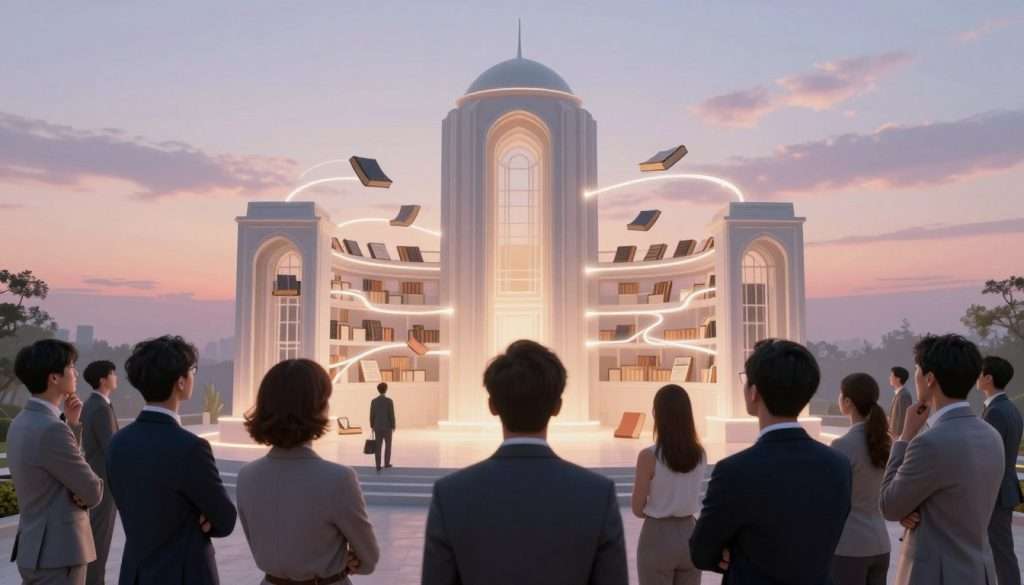
Imagine having a mental file cabinet that holds vast amounts of information at your fingertips! We’re excited to introduce you to the Memory Palace technique. It’s an ancient method used by world champions to achieve amazing memory feats.
This mnemonic device has been boosting memory for centuries. It uses your brain’s ability to link memories with places. This way, you can unlock your full potential and become a memory master.
We’re here to help you learn this technique. It’s easy to understand and use in your daily life. Get ready to unlock your mental powers and see the amazing benefits of the Memory Palace!
Key Takeaways
- Discover the basics of the Memory Palace technique and its significance in memory improvement.
- Learn how to associate memories with specific locations to enhance recall.
- Understand how this ancient method has been used by world champions to achieve remarkable memory feats.
- Get started with practical tips on applying the Memory Palace technique in your daily life.
- Unlock your full potential and become a master of recall with this powerful mnemonic device.
What Is a Memory Palace and Why Does It Work?
The Memory Palace technique is an ancient method that uses your spatial memory to help you remember better. It works by linking things you want to remember to specific places in your mind. This creates a mental map that makes it easier to recall information.
This technique taps into your brain’s ability to remember places better than abstract information. Our brains are wired to recall vivid, spatial information more effectively than abstract data. By turning the information you want to remember into vivid mental images and linking them to places, you can remember it better.
- You identify a familiar place, like your home or school, which will serve as your Memory Palace.
- You visualize a route through this space, noting distinct locations or stations along the way.
- You associate the information you want to remember with these locations, creating vivid mental images.
The more absurd or striking the image, the better it sticks in your memory. This is because our brains are more likely to remember information that stands out.
For example, if you’re trying to remember a shopping list, you might imagine your front door with a giant carton of milk on it, or your living room filled with the scent of fresh bread. As you mentally walk through your Memory Palace, you’ll recall these images and the information associated with them.
This technique is not just for memory athletes; it’s a powerful tool for anyone looking to improve their memory. Whether you’re a student trying to remember historical dates, a professional looking to recall key information, or just someone who wants to sharpen their mind, the Memory Palace technique can be incredibly effective.
Memory Palace for Beginners: The Ancient Technique Used by World Champions
The Memory Palace comes from ancient Greece and Rome. It’s now a key method for memory training, used by top athletes. This old technique is supported by science, making it a strong tool for better memory.
From Ancient Greek Orators to Modern Memory Athletes
The Memory Palace has a long history. Ancient Greeks and Romans used it to remember speeches and debates. It’s amazing to see how this old method is used by today’s memory athletes.
These athletes can recall many digits, card orders, and lists of words or names. The technique works because our brains are good at remembering places. By using this, people can improve their memory a lot.
The Science Behind Spatial Memory
Our brains are better at remembering places than other things. This is because remembering places is linked to the hippocampus, a key part of the brain for making new memories. The Memory Palace uses this by linking information to places in a space we know well.
Studies show that using the Memory Palace boosts brain activity in areas for spatial memory. This not only helps remember specific things but also improves thinking skills overall.
The Benefits of Building Your Own Memory Palace
Creating a Memory Palace does more than just improve memory. It boosts your brain’s performance overall. By making and using a Memory Palace, you enhance your memory and improve your brain’s function.
Enhanced Academic and Professional Performance
Using a Memory Palace can greatly improve your academic and professional life. It helps you remember and recall information better. This skill is useful for studying, giving presentations, and remembering client details.
Many successful people, like world memory champions, owe their success to Memory Palaces. Joshua Foer, for example, used it to win the U.S. Memory Championship. His story shows how powerful Memory Palaces can be.
Improved Cognitive Function and Brain Health
Building a Memory Palace also improves your brain’s health and function. Studies show it can boost your brain’s spatial memory. This can lead to better cognitive flexibility and even protect your brain.
Neuroscience research supports this, saying it can lower cognitive decline risk in older age. So, Memory Palaces are not just for memory. They’re also good for your brain’s health.
Adding Memory Palaces to your daily routine can be rewarding. It’s great for students, professionals, or anyone wanting a healthy brain. Building your own Memory Palace is a fulfilling experience.
Choosing the Right Location for Your First Memory Palace
Finding the right spot for your first memory palace is key. It’s where your memory journey starts. Choose a place that’s familiar and holds meaning for you.
Using Your Own Home as a Starting Point
For beginners, starting at home is often best. Your home is full of memories and details you know well. Using your home as a memory palace can make your system strong and effective.
Begin by imagining your home’s layout. Think about the entrance, rooms, and what’s inside them. This mental map will be the foundation of your memory palace.
Alternative Locations That Work Well for Beginners
If home isn’t right for you, don’t worry. Other places can work great too. Think about places you often visit or have strong feelings about, like work, school, or a favorite park.
The goal is to pick a place you can picture well and that means something to you. Consider a childhood home, a friend’s place, or a regular route. The more personal it is, the easier it will be for your brain to navigate.
Key Characteristics of an Effective Memory Palace
Every memory palace needs certain qualities, no matter where it is. It should be easy to picture, with clear features and landmarks. It also needs to be big enough for the info you want to store, possibly using several areas.
Most importantly, it should be meaningful or emotionally significant to you. This will help you remember the info better. By picking the right location and understanding its qualities, you’ll create a strong memory palace.
Step 1: Map Out Your Physical Space in Detail
Imagine walking through a place you know well. This is the start of your Memory Palace. The first step is to map out a space in detail. It’s not just about the layout; it’s about seeing every part clearly.
Creating a Mental Walkthrough
Begin by closing your eyes and walking through the space in your mind. It could be your home, a favorite vacation spot, or a regular route. As you imagine this space, notice the order of rooms and their unique features. Make sure you can vividly picture the space to build a strong Memory Palace.
Identifying Distinct Stations or Loci
As you walk through your space, find clear spots to place your memories. These spots should be easy to remember and in order. For example, your home’s front door, living room sofa, and kitchen counter are good choices. The key is to create a mental map that’s both detailed and easy to navigate.
Establishing a Consistent Route
After picking your stations, make a consistent path through your Memory Palace. This path should be straightforward and easy to follow. Consistency is key because it strengthens the memory of each station.
By carefully mapping your space, creating a mental walkthrough, and setting up clear stations and a path, you’re setting up a powerful memorization technique. This step is essential for a successful Memory Palace.
Step 2: Create Vivid and Memorable Mental Images
Creating vivid mental images is key to improving memory. We must turn information into pictures that are not just memorable but also fun. This is essential for a successful memory palace.
So, how do we make these images stand out? There are several techniques to explore.
The Power of Exaggeration and Absurdity
Using exaggeration and absurdity is a great way to make images memorable. The more outrageous your image, the easier it is to remember. For example, imagine the first item on your list as gigantic or acting strangely.
Let’s say you’re trying to remember a shopping list starting with “eggs.” Picture a giant egg rolling down the street, breaking into pieces, and tiny egg creatures running around. This image is both funny and unforgettable.
Engaging Multiple Senses in Your Imagery
Another technique is to engage multiple senses in your images. The more senses you use, the more vivid and memorable your image will be. Try to include sights, sounds, smells, tastes, and textures in your images.
- Visualize the item: What does it look like?
- Associate a sound with it: What noise does it make?
- Link a smell to it: Does it have a distinct scent?
- Imagine the taste: Is it sweet, sour, salty, or bitter?
- Feel the texture: Is it rough, smooth, soft, or hard?
Making Emotional Connections to Information
Making an emotional connection to the information you’re trying to memorize can greatly improve recall. When you link an image to an emotion, it becomes more memorable.
For example, if you’re trying to remember a historical date, imagine a significant personal event happening on that date. This links the historical information to a personal experience or emotion.
Practical Examples of Converting Data into Images
Let’s apply these techniques with examples. Suppose you’re trying to memorize a list of historical figures. Create vivid images for each figure by linking them to distinctive characteristics or events.
- Imagine Albert Einstein with a wild hairdo, surrounded by complex mathematical equations that are morphing into colorful, swirling patterns.
- Picture Marie Curie with a glowing radium symbol on her lab coat, surrounded by beakers that are emitting soft, luminescent light.
By turning abstract information into vivid, memorable images, you make it easier to store and retrieve. This is key to a successful memory palace.
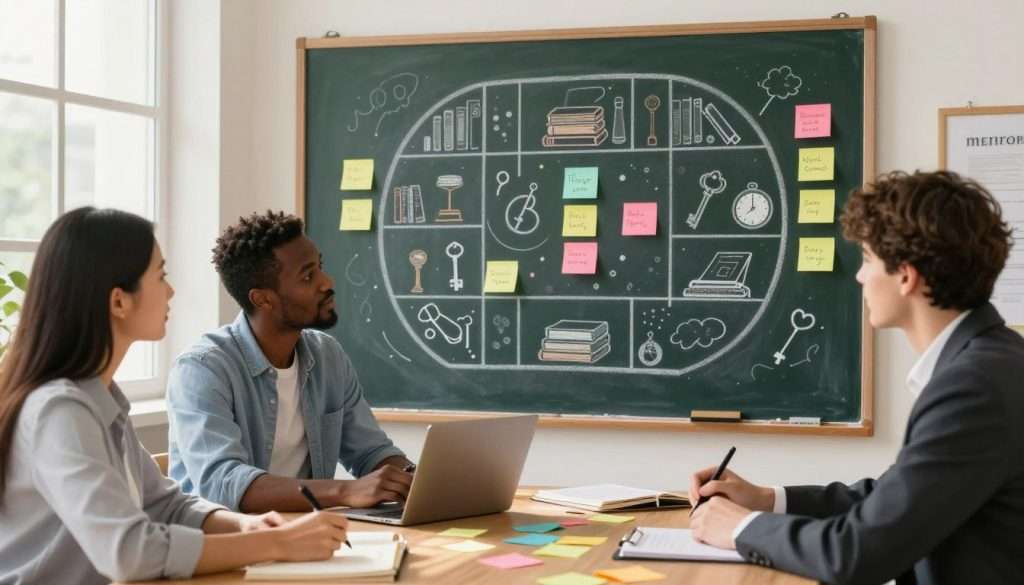
As you practice creating these mental images, you’ll get better at using them to improve your memory. The goal is to make your images as vivid, absurd, and emotionally engaging as possible.
Step 3: Place Your Images Along Your Memory Route
Now that your Memory Palace route is set, it’s time to place your mental images. This step is key to improving your memory. It’s where the real magic happens.
Positioning Techniques for Maximum Recall
To boost recall, position your images wisely in your Memory Palace. Choose spots that are easy to picture and remember. For example, use your living room. Place an image on the sofa or near the bookshelf. The goal is to create a clear mental image linked to the information you want to remember.
Follow the natural flow of your route when placing images. If walking through your house, arrange images in the order you see them. This makes a story your brain can follow, improving recall.
One Item Per Location Rule
For clarity, stick to the one item per location rule. Each spot in your Memory Palace should have only one piece of information or image. This rule helps avoid confusion and makes recalling easier.
- Identify distinct stations or loci within your Memory Palace.
- Assign one image or piece of information per station.
- Ensure each image is vivid and memorable.
Creating Interactive Scenes
Interactive scenes in your Memory Palace boost memorability. By making your images interact, you create a more engaging experience. For example, imagine the first item on your list doing something funny with the second.
This method not only makes information stick better but also makes recalling it fun. Try different scenarios to find what works best for you.
By using these steps and techniques, you’ll enhance your ability to recall information. Remember, practice is key. Keep refining your method as you improve.
Step 4: Practice Your Journey to Solidify Memories
Now that you’ve set up your Memory Palace, it’s time to practice. This is how you make those memories stick. Without regular practice, the information might stay hidden.
To get the most from your Memory Palace, revisit the information you’ve stored. A good review schedule is key. Studies show that reviewing information at different times helps keep it in your memory. Here’s a simple schedule to follow:
The Optimal Review Schedule
- Review the information within 24 hours of initial memorization.
- Review again after a week.
- Lastly, review the information after a month.
This schedule helps solidify information in your long-term memory. Consistency is key to making this work.
Forward and Backward Retrieval Practice
Another great technique is to practice recalling information in both forward and backward order. For example, if you’re memorizing a list, recall it from start to finish (forward) and then from finish to start (backward). This makes your memory stronger and more flexible.
Let’s say you’re memorizing a shopping list. First, visualize walking through your palace, recalling each item in order (forward retrieval). Then, practice recalling the list in reverse order, starting from the last item and moving backward to the first (backward retrieval).
| Retrieval Practice | Description | Benefit |
|---|---|---|
| Forward Retrieval | Recalling information in the original order. | Enhances sequential memory. |
| Backward Retrieval | Recalling information in reverse order. | Improves flexibility and recall from different angles. |
As Joshua Foer, a renowned memory expert, once said, “The more you practice, the more you’ll realize that memory is a muscle that can be developed over time.” Regular practice with your Memory Palace will improve your memory and boost your confidence.
“Practice isn’t the thing you do once you’re good. It’s the thing you do that makes you good.”
To enhance your practice, use different senses in your visualizations. The more vivid and engaging your mental images are, the better they’ll stick in your memory.
By combining an optimal review schedule with forward and backward retrieval practice, you’ll master the Memory Palace technique. Remember, the goal is to make practice a habit. Try to include it in your daily routine.
Practical Applications: What You Can Memorize with a Memory Palace
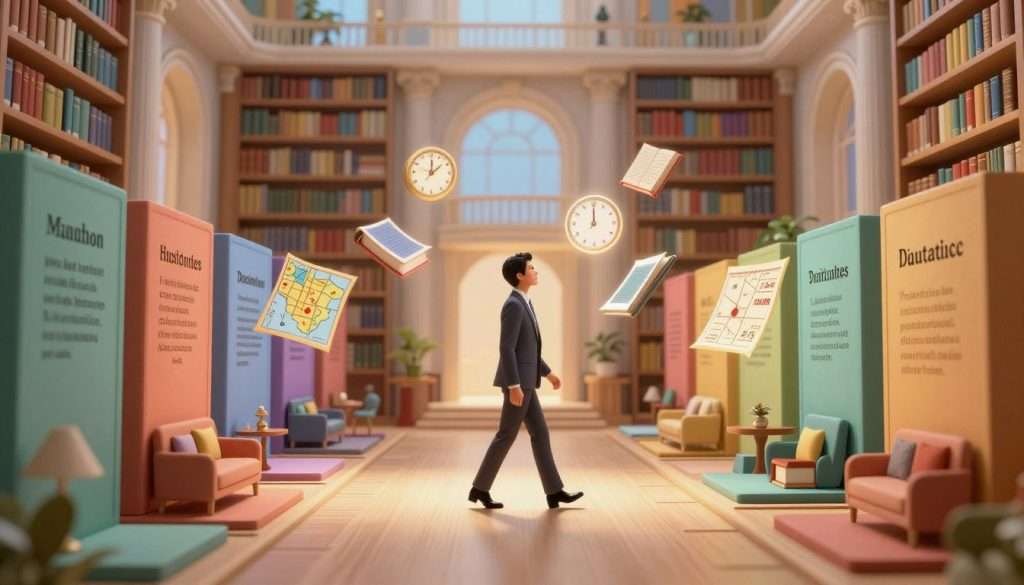
You can memorize almost anything with the Memory Palace technique. It’s great for speeches, shopping lists, and more. This method is flexible and helps with both school and personal tasks.
Speeches and Presentations
Memorizing speeches can be tough, but a Memory Palace makes it easier. You can recall key points and give a perfect presentation. Just link your speech to your Memory Palace locations.
- Create a Memory Palace that represents your presentation’s key points.
- Associate each point with a vivid image at a specific location.
- Practice walking through your Memory Palace to recall your speech.
Foreign Language Vocabulary
Learning a new language is tough, but vocabulary is easier with a Memory Palace. Link words to their meanings with vivid images. This way, you can quickly learn new words.
- Choose a list of vocabulary words you want to memorize.
- Create vivid images that represent each word and its meaning.
- Place these images in your Memory Palace, associating them with specific locations.
Shopping Lists and Daily Tasks
The Memory Palace is great for everyday tasks, like shopping lists. Use a familiar place to remember what you need to buy.
For example, link each item on your list to a spot in your home. This makes it easy to remember what to get.
Study Material and Exam Preparation
Students can use a Memory Palace to memorize study material. It helps with dates, formulas, and more. Organize your notes into a mental map for better exam prep.
“The art of memory is the art of attention.” – Samuel Johnson
Focus on what you want to remember and use a Memory Palace. This boosts your ability to recall important details.
Common Mistakes Beginners Make and How to Avoid Them
Starting with the Memory Palace technique can lead to common traps. Knowing these can save you time and frustration. We’ll look at common mistakes and how to avoid them, helping you use this memorization technique effectively.
Choosing Locations That Are Too Complex
Choosing a complex or cluttered location is a common mistake. It might seem like using a familiar place like your home is a good idea. But, too many details can be distracting. Instead, pick a simple location to visualize, like a single room or a short route.
Creating Boring or Forgettable Images
Another mistake is making images too mundane or boring. The Memory Palace technique needs vivid, memorable images. Make your images absurd, exaggerated, or emotionally charged. For example, imagine each item in a ridiculous or dramatic scenario to make it stick in your mind.
Skipping the Practice Phase
Many beginners don’t realize how important practice is. Like any skill, the Memory Palace technique needs regular practice. Set aside time each day to review and practice recalling information. Start with short sessions and increase the time as you get better.
By avoiding these common mistakes, you can improve your chances of success with the Memory Palace technique. Remember, consistent practice and adapting your approach are key to effective memory improvement.
Expanding Your Memory Palace System
As you get better at the Memory Palace technique, you’ll want to grow your system. This growth lets you handle more complex tasks and remember more information.
Building Multiple Palaces for Different Topics
Creating multiple palaces is a great way to expand your system. You can have one for historical dates, another for foreign language words, and a third for science formulas. This keeps your information organized and makes it easier to remember.
Here’s a table showing how different Memory Palaces can be used for different subjects:
| Memory Palace | Topic | Example Information |
|---|---|---|
| History Palace | Historical Dates | Dates of significant battles, birthdates of historical figures |
| Language Palace | Foreign Language Vocabulary | Words and phrases in Spanish, French, or Mandarin |
| Science Palace | Scientific Formulas | Physics equations, chemical reactions, mathematical theorems |
Creating Larger Palace Networks
Another way to grow your Memory Palace system is to build larger networks. You can link many Memory Palaces together, creating a big mental map. Start with a “master palace” that links to other palaces.
Imagine a main Memory Palace that looks like your home. Each room can lead to a different palace. This way, you can store lots of information in a structured way.
“The art of memory is the art of attention.” – Samuel Johnson
Advanced Techniques for Experienced Users
If you’re already good at Memory Palaces, try some advanced techniques. One is using mnemonic devices to help remember new information. These devices make it easier to recall by linking new info to something familiar.
Another technique is to use multiple senses in your Memory Palace. This means adding sounds, smells, or textures to your visual scenes. For example, you might imagine a scene and also think of a specific sound or smell.
Practicing forward and backward retrieval can also improve your Memory Palace. This means recalling information in the right order and then reversing it. It makes your memory stronger and helps you remember under different conditions.
Conclusion
The Memory Palace is a powerful tool for improving your memory. It uses your spatial memory to remember lots of things. This includes speeches, presentations, foreign words, and study materials.
We’ve talked about how to start with a Memory Palace. This includes picking a location, mapping it out, making vivid images, and practicing. By doing these steps and avoiding mistakes, you can make the most of this ancient method.
Now, it’s your turn to try it out! Create your own Memory Palace today. You’ll see how it boosts your memory and brain function. As you get better, you’ll be amazed at how it changes your life.
So, what are you waiting for? Start using the Memory Palace to improve your memory. Watch your mental abilities grow!