

Do you ever feel like your brain is a pinball bouncing wildly between endless notifications and urgent tasks? We have all been there. It is easy to lose your rhythm when your phone buzzes every few seconds.
Learning how to stay focused in a world designed to distract you is not just a productivity hack; it is a form of self-care. We want to help you reclaim your energy and turn your workday into something you actually enjoy.
By applying proven strategies, you can navigate the digital noise with ease. You deserve to feel in control of your attention. Let’s dive into the simple steps that will help you find more joy in your daily accomplishments.
Key Takeaways
- Recognize that your attention is a valuable resource that needs protection.
- Small, consistent habits often beat massive, one-time changes.
- Digital boundaries are essential for maintaining mental clarity.
- Focusing on one task at a time reduces stress and boosts output.
- You have the power to reclaim your workday from constant interruptions.
Understanding the Modern Attention Economy
Your attention is the most valuable thing today. Apps, websites, and notifications all aim to capture your focus. This is why you feel tired after scrolling for hours. You’re up against systems made by top engineers.
When we talk about the attention economy, we mean your time is sold to advertisers. Understanding this game is key to taking back your day. You’re not failing at focus; the game is rigged against you.
The Psychology of Constant Connectivity
Why do we instantly check our phones when they buzz? It’s our need for social connection and validation. Digital platforms use this to create a constant feedback loop.
This constant connection creates a false sense of urgency. You might feel like you’re missing out if you don’t check messages right away. This fear of missing out keeps your brain on high alert, making focused work hard.
Why Your Brain Craves Novelty
Your brain loves new things. This helped us survive in the past. But now, it works against us. Every new notification or headline gives you a dopamine hit.
This reward makes you seek out more information, even if it’s not useful. We often think this constant stimulation is productive, but it’s just distraction. Knowing this can help you break free from endless scrolling.
| Trigger Type | Psychological Driver | Impact on Focus |
|---|---|---|
| Social Notifications | Need for Belonging | High Distraction |
| Breaking News | Survival Instinct | Moderate Distraction |
| Infinite Scrolling | Dopamine Seeking | Severe Distraction |
| Email Alerts | Sense of Urgency | High Distraction |
How to Stay Focused in a World Designed to Distract You
Finding focus today is like trying to read in a rock concert. Every app and notification is made to grab your attention. It is not your fault if you feel scattered. But you can take back control.
By using better focus strategies, you can make a peaceful space for your brain. You don’t need to be a monk to find calm. Just be intentional about your surroundings. Let’s explore how to win the battle for your mind.
Identifying Your Personal Distraction Triggers
The first step in avoiding distractions is knowing what distracts you. For some, it’s a phone’s constant ping. For others, it’s the need to check email every few minutes.
Try keeping a “distraction log” for a day. Write down what makes you want to leave your task. You’ll likely spot a pattern that you can change.
The Cost of Context Switching
Many of us think we’re good at multitasking, but our brains aren’t. Switching tasks costs a lot of mental energy. This makes staying on task harder than it should be.
It’s like trying to build a sandcastle while the tide comes in. You keep losing your work because your focus is constantly broken. The table below shows why focusing on one thing is better for your mind.
| Feature | Multitasking | Deep Focus |
|---|---|---|
| Mental Energy | Rapidly Depleted | Sustained |
| Work Quality | Low to Average | High |
| Stress Levels | High | Low |
| Task Completion | Slow | Fast |
Optimizing Your Physical Workspace for Deep Work
Your desk is more than just a piece of furniture; it is the command center for your brain. When you sit down in a specific spot, you are sending a powerful signal to your mind that it is time to shift gears. These concentration tips start with how you curate your immediate surroundings to block out the chaos of the outside world.
Ergonomics and Environmental Control
Physical comfort is the foundation of maintaining focus for long periods. If your back hurts or your wrists feel strained, your brain will constantly divert energy to those discomforts instead of your tasks. Investing in an adjustable chair or a simple laptop stand can make a world of difference in your daily output.
Beyond gear, keep your desk clear of unnecessary items. A clean surface helps you think clearly and prevents your eyes from wandering to random objects. Try to keep only the essentials within arm’s reach to minimize distractions.
The Role of Lighting and Soundscapes
Lighting changes the entire mood of your workspace. Whenever possible, position your desk near a window to soak up natural light, which helps regulate your energy levels. If you work late, use a warm desk lamp to create a cozy, focused glow that keeps you alert without straining your eyes.
Sound is just as important as sight when you are trying to stay in the zone. Many people find that white noise or instrumental soundscapes help mask background chatter and keep them grounded. Experiment with different audio environments to see what helps you stay locked into your work.
“The environment you create is a reflection of the focus you intend to cultivate. Your space should be a sanctuary, not a source of stress.”
To help you decide how to set up your area, consider the following comparison of common workspace elements and their impact on your productivity:
| Element | Distracting Option | Focus-Friendly Option |
|---|---|---|
| Lighting | Harsh overhead fluorescent | Soft, natural, or warm task light |
| Sound | Busy coffee shop chatter | Lo-fi beats or white noise |
| Surface | Cluttered with papers | Minimalist, clear desk space |
| Seating | Couch or soft armchair | Ergonomic chair with support |
By applying these simple concentration tips, you can turn any corner of your home into a high-performance zone. Remember that maintaining focus is a skill you build, and your environment is the best tool you have to support that journey.
Digital Minimalism and Managing Device Notifications
We often treat our digital devices like needy pets that demand attention every few seconds. These little gremlins steal your focus away from what’s important. By embracing digital minimalism, you can make sure technology helps you, not controls your day. This is key for avoiding distractions.
Curating Your Digital Environment
Your digital space should be a place for deep work, not a mess of icons and alerts. Begin by checking your home screen and removing apps that make you scroll without thinking. Less is truly more for your mental clarity.
Turn off all non-essential notifications right away. If an app doesn’t help with your current task, it shouldn’t be in your notification center. This simple step is a big help in preventing distractions that stop you from moving forward.
Strategies for App and Email Management
Email is often the biggest distraction. Try checking it only at specific times instead of keeping it open all day. This batching method lets you handle emails all at once, not interrupting your work.
For apps, use the “Do Not Disturb” feature to block times when you’re unreachable. You’ll be amazed at how much you can do without constant interruptions. Taking control of your digital space helps you find the peace needed to do your best work.
Implementing Time-Blocking and Task Batching
Think of your calendar as a sacred document that guards your most precious asset: your time. By treating your schedule as a promise, you take control of your day. These productivity hacks help you create time for deep work. This keeps your mind sharp and ready for any challenge.
Structuring Your Day for Maximum Output
The key to doing more is task batching. Instead of switching between emails, writing, and meetings, group similar tasks together. Doing all your admin tasks at once saves your brain from the stress of constant switching.
Block out specific hours for deep, focused work. Turn off your notifications and focus on one goal during these times. This is a top focus strategy for keeping your energy up all afternoon.
Prioritizing High-Impact Tasks
Not every task is equal. Identify your “big rocks”—the tasks that really matter for your long-term goals. Schedule these during your best energy hours to stay staying on task with what’s important.
If you’re putting things off, break big tasks into smaller steps. Focus on one small step at a time. This builds your confidence and keeps you in the flow. The aim is to work smarter, not harder, by aligning your daily tasks with your biggest dreams.
The Science of Cognitive Endurance and Breaks
Ever felt like your brain hits a wall around the ninety-minute mark? It’s not laziness or losing interest. Your body has a natural clock that tells you when to work best and when to rest.
Working with these natural cycles helps you stay focused all day. This is key to avoiding distractions and keeping your mind sharp.
Understanding the Ultradian Rhythm
Your brain works in cycles called ultradian rhythms. These cycles last about 90 to 120 minutes, where you’re most focused. When they end, your body signals it’s time for a break to rebalance.
Trying to ignore these signals can make you feel drained. Ignoring these signals is the quickest way to lose mental energy. Instead, see these breaks as a necessary part of your work.
Effective Rest Strategies
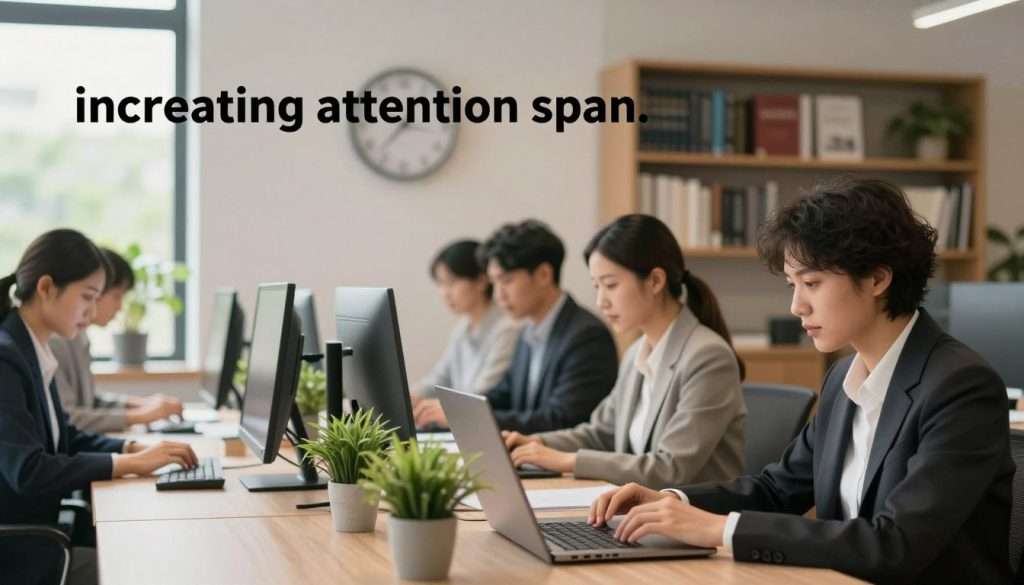
The quality of your breaks is just as important as your work. To really boost your increasing attention span, take a break from screens. A short walk, some stretching, or just closing your eyes can refresh your mind.
When you get back to work, you’ll find it easier to stay focused. This habit helps avoid distractions by preventing mental fatigue. Remember, rest is essential for top performance, not just a reward for hard work.
Here’s a simple guide to pick the right break for you:
| Break Type | Activity | Primary Benefit |
|---|---|---|
| Physical Reset | Stretching or walking | Improves blood flow |
| Sensory Reset | Closing eyes or quiet | Reduces eye strain |
| Mental Reset | Deep breathing | Lowers stress levels |
| Creative Reset | Doodling or listening | Boosts problem solving |
By taking these short, focused breaks, you’re improving your attention span over time. Soon, your work sessions will feel more productive and less like a task.
Mindfulness Techniques to Reclaim Your Attention
Ever feel like your brain is a browser with fifty tabs open at once? It’s a common problem in our fast world. But, you can take back control. Mindfulness techniques are not just for yoga; they’re tools for focus at your desk.
Meditation for Concentration
You don’t need to sit in silence for hours to see benefits. Simple concentration tips like box breathing or a quick body scan can reset your mind in minutes. When your mind wanders, try focusing on your breath.
This practice is like a brain workout. By bringing your focus back to your breath, you’re increasing attention span. This builds mental strength for staying focused on important tasks.
Single-Tasking as a Daily Practice
We often think multitasking is a sign of productivity, but it’s actually a killer. To really succeed, focus on one thing at a time. This lets your brain enter a state of deep flow, where your best work is done.
Begin by turning off your phone and closing tabs before starting a project. If your mind jumps to another task, acknowledge it and let it go. Then, focus on your current goal. This habit is key for anyone wanting to improve their output.
| Feature | Multitasking | Single-Tasking |
|---|---|---|
| Mental Energy | Rapidly Depleted | Conserved |
| Task Quality | Often Lower | High Precision |
| Stress Levels | Significantly Higher | Calm and Controlled |
| Completion Rate | Slow Progress | Efficient Completion |
Nutritional and Lifestyle Habits for Mental Clarity
Ever felt like your focus is a flickering light after a bad night’s sleep? Your brain is a high-performance machine that needs care to work its best. While mindfulness techniques help us stay focused, our diet and lifestyle are key to keeping our minds sharp.
The Impact of Sleep on Focus
Sleep is more than just rest; it’s when your brain clears out mental junk. Not getting enough sleep makes it hard to focus, even on simple tasks. Quality sleep is like a reset for your brain.
Try a regular bedtime routine to tell your body it’s time to sleep. Even small changes, like dimming lights before bed, can help. A well-rested mind can better handle daily distractions.
Brain-Boosting Nutrition
What you eat affects your focus all day. Eating whole foods gives your brain steady energy. Drinking enough water is also key, as dehydration can mess with your thinking.
Adding mindfulness techniques to your eating can boost digestion and energy. Eating healthy fats, proteins, and carbs gives your brain what it needs to perform well. Making small diet changes can greatly improve your mental clarity over time.
| Habit | Primary Benefit | Actionable Step |
|---|---|---|
| Consistent Sleep | Cognitive Recovery | Set a fixed wake-up time |
| Hydration | Mental Sharpness | Drink water every hour |
| Balanced Diet | Steady Energy | Prioritize whole foods |
| Mindful Eating | Reduced Stress | Eat without digital devices |
Overcoming Procrastination and Perfectionism
Ever noticed how big tasks seem to grow when you avoid them? We often get stuck because we want to do a perfect job. This makes staying on task hard, like climbing a steep hill.

Breaking Tasks into Manageable Steps
When a project seems huge, focus on the next step. Break it down into small actions. This helps you effectively preventing distractions caused by feeling overwhelmed.
Try the “five-minute rule” to start. Say you’ll work for just five minutes, then you can stop. Often, the hardest part is beginning. Once you start, you’ll keep going.
Reframing Failure and Progress
Perfectionism is fear in disguise. We fear not being perfect. But, true progress comes from trying and learning, even if it’s imperfect.
Focus on the journey, not just the end result. Every small step is a success. Remember, consistency beats intensity when you work.
| Feature | Perfectionist Approach | Progress-Oriented Approach |
|---|---|---|
| Primary Goal | Flawless execution | Consistent movement |
| Reaction to Error | Self-criticism | Learning opportunity |
| Task Size | Large, intimidating | Small, actionable |
| Mindset | All-or-nothing | Growth-focused |
Leveraging Productivity Tools and Software
Technology can be a distraction, but it can also help us stay focused. When we can’t concentrate on our own, smart software can be a lifesaver. These productivity hacks block out online distractions, helping you stay on track.
Using Website Blockers Effectively
At times, we need help controlling our online habits. Tools like Freedom or Cold Turkey can set limits during focused work. They keep distracting websites out of sight, stopping the urge to scroll endlessly.
These tools are great concentration tips for those who get caught in the “just one more minute” cycle. You can block distracting sites during your most productive hours. This way, your browser stays a tool for work, not a source of distraction.
“The best way to predict the future is to create it, and the best way to stay focused is to design your environment so that distraction is impossible.”
Project Management Systems for Clarity
To stay motivated, you need a clear plan of your goals. Platforms like Notion, Trello, or Asana help break down big projects into smaller steps. Seeing your progress can boost your motivation to keep going.
These systems give you the structure to stay on track and complete tasks. By putting your to-do list in a reliable app, you clear your mind and reduce stress. Below is a table showing how different tools can help your workflow.
| Tool Category | Primary Benefit | Best For |
|---|---|---|
| Website Blockers | Eliminates digital noise | Deep work sessions |
| Project Managers | Organizes complex tasks | Long-term goal tracking |
| Note-Taking Apps | Captures fleeting ideas | Brainstorming and research |
Building Long-Term Focus Resilience
True mental clarity isn’t about one perfect day; it’s about showing up every day. Building a focused life is a marathon, not a sprint. It takes patience with yourself. By focusing on long-term resilience, you keep your priorities clear.
Developing a Growth Mindset
Many believe their focus is fixed. But your brain is very flexible, improving with practice. Adopting a growth mindset helps you see distractions as chances to get better.
“Success is the sum of small efforts, repeated day in and day out.”
Changing how you view distractions is key to improving focus. Instead of getting upset, just acknowledge and refocus. This is how you build the mental strength for deep work.
Consistency Over Intensity
We often think extreme effort is needed to be productive. But constant burnout is not sustainable. Aim for steady, manageable work that you can keep up indefinitely.
Think about how your daily routine affects your long-term output:
| Approach | Daily Effort | Sustainability |
|---|---|---|
| The Sprinter | High Intensity | Low |
| The Marathoner | Consistent Pace | High |
| The Procrastinator | Zero Focus | None |
Choosing consistency helps you improve focus without exhaustion. Your goal is to make your focus strategies second nature. Stay patient, keep showing up, and watch your focus grow stronger each week.
Conclusion
You now have the power to focus better in a world that always wants your attention. It’s time to make your study or work sessions enjoyable, not just tasks you dislike.
Creating these habits takes time. Be gentle with yourself as you try out these new ways. Even small changes help you get closer to a sharper mind.
You can change your daily life by making room for what’s important. Use tools like Forest or Notion to stay focused. The real change comes from your mindset.
Now, go out and make something amazing with your focused energy. Your potential is endless when you choose how to use your time. We can’t wait to see what you do next!