

Do you feel like you stare at your notes for hours without remembering anything? You’re not alone. Many students use old habits that lead to burnout, not success.
We want to change your academic life. It’s time to stop studying hard and start studying smart. By studying less, you can get better grades and have more free time.
We aim to teach you how to master your focus with proven methods. When you use learn more: the science-backed approach, studying becomes fun and effective. Let’s explore how to make learning a natural part of your life, not a burden.
Key Takeaways
- Ditch ineffective habits that lead to academic burnout.
- Prioritize quality of focus over the total number of hours spent.
- Use evidence-based techniques to improve memory retention.
- Transform your daily routine into an enjoyable learning process.
- Achieve higher grades while gaining more personal free time.
The Cognitive Science Behind Efficient Learning
Your brain is a complex machine, but most of us use the wrong manual. We think our minds are empty buckets waiting to be filled. But that’s not how memory works. By using cognitive science techniques, you can make studying a skill, not a chore.
Understanding how your brain works can help you focus better. We aim to teach you efficient learning. This way, you can enjoy your life more, not just study.
Understanding How the Brain Encodes Information
Research by Craik in 1972 changed how we view memory. He found that deeper processing helps students remember twice as much. Your brain needs to link new ideas to what you already know.
Think of your brain as a web, not a filing cabinet. Deep engagement creates more “hooks” for information. These study tips help you make those connections naturally:
- Elaboration: Explain the concept in your own words as if teaching a friend.
- Visualization: Create a mental image of the process you are studying.
- Application: Ask yourself how this information solves a real-world problem.
The Myth of Passive Reviewing
Many students fall into the trap of passive reviewing. Re-reading notes or highlighting textbooks might feel productive. But it creates a false sense of familiarity. You recognize the words, but your brain hasn’t actually stored the information.
Passive review is like watching someone else exercise and expecting to get fit. It feels like work but doesn’t build mental strength. To truly retain information, your brain must actively retrieve it from memory.
“Memory is the residue of thought.”
To see real results, move away from passive habits. Active engagement turns study sessions into powerful tools for success. The goal is not to study more, but to make every minute count with better cognitive science techniques.
Active Recall: The Gold Standard of Study Techniques
Most students spend hours re-reading notes, but there’s a smarter way to learn. Highlighting pages or scanning textbooks might feel productive, but it’s not enough. We aim to guide you toward effective study methods that really work.
By changing your approach, you can turn study sessions into brain workouts. Cognitive science techniques can save you time and reduce stress.
Why Testing Yourself Beats Re-reading
Re-reading material tricks your brain into thinking you know it. But true learning happens when you recall information without looking at the source.
The struggle to remember is key. It builds stronger neural pathways, making info easier to recall later. Think of it like weightlifting; if it’s too easy, you’re not building memory “muscle”.
Implementing Active Recall in Daily Routines
Wondering how to start using these study tips? It’s easier than you think, and you don’t need fancy tools. Here are a few ways to add these study hacks to your daily routine:
- Turn your notes into questions: Write questions that your notes answer instead of summaries.
- Use flashcards: Tools like Anki or physical index cards are great for quick tests.
- The “Blank Page” method: After reading, write down everything you remember on a blank sheet.
Consistent self-testing is a top effective study method. It might feel tough at first, but you’ll thank yourself when exams come and you remember everything easily.
Spaced Repetition and the Forgetting Curve
Ever felt like your brain is a sieve, losing all that hard-earned knowledge just days after a big exam? Cramming might help you recognize information for a few hours, but it rarely sticks for the long haul. This is where efficient learning comes into play by working with your biology rather than against it.
The “Forgetting Curve” shows that we lose most new information shortly after learning it unless we review it at specific intervals. By using cognitive science techniques, you can flatten this curve and keep facts fresh in your mind for months or even years. It is one of the most effective study hacks for anyone tired of the endless cycle of relearning the same material.
“Memory is the residue of thought.”
Optimizing Review Intervals for Long-Term Retention
To make information stick, you need to revisit it right before you are about to forget it. This creates a “desirable difficulty” that forces your brain to strengthen the neural pathways associated with that memory. Instead of reviewing everything every day, you should space your sessions out over days, weeks, and eventually months.
We recommend starting with a review one day after learning, then three days later, then a week later. This simple shift ensures that your study time is focused on what you actually need to practice. You will find that your efficient learning sessions become much shorter as you master the material.
Tools and Systems for Managing Spaced Repetition
You don’t need to track these intervals manually with a calendar. There are plenty of study hacks and digital tools designed to handle the heavy lifting for you. Apps like Anki or Quizlet use algorithms to show you the cards you struggle with most often, while pushing back the ones you already know well.
These cognitive science techniques take the guesswork out of your schedule. By letting a system manage your review queue, you can focus entirely on the content rather than worrying about when to study next. Check out the comparison below to see why this approach beats traditional methods.
| Feature | Cramming | Spaced Repetition |
|---|---|---|
| Retention Duration | Short-term | Long-term |
| Stress Levels | High | Low |
| Efficiency | Low | High |
| Effort Required | Intense bursts | Consistent, small habits |
Mastering Focus and Deep Work
Finding your flow state is more about design than willpower. When you control your space, you maximize learning potential by removing distractions. It’s time to treat study time like a high-performance sport.
Creating an Environment Free from Distractions
Your brain is always looking for new things to do, making your phone a big distraction. To stay sharp, you need to block your digital temptations. Try these simple productivity strategies to focus better:
- Keep your phone in another room or inside a drawer while you work.
- Use website blockers to silence social media notifications during your sessions.
- Clear your desk of everything except the materials you need for the current task.
“Deep work is the superpower of the 21st century.”
The Pomodoro Technique and Cognitive Stamina
Even the most disciplined students need breaks to avoid burnout. To maximize learning potential, respect your brain’s need for rest. The Pomodoro Technique is a great way to do this, breaking study time into 25-minute sprints with 5-minute breaks.
These short breaks are crucial for keeping your mind sharp. By using these productivity strategies, you’ll finish your day feeling accomplished, not exhausted.
Study Less, Learn More: The Science-Backed Approach to Note-Taking
Ever left a lecture with a notebook full of scribbles but nothing in your head? Many of us write down every word our professor says. We think this means we’re learning, but it’s not true. This way of studying is a big obstacle to using effective study methods.
“Learning is not a spectator sport. It requires active engagement to truly stick.”
Moving Beyond Transcription
Writing down every word puts your brain on autopilot. You’re acting like a human tape recorder, not a thinker. Try to catch the main ideas and write them in your own words instead.
This change makes your brain work harder. By summarizing ideas as you hear them, you strengthen your brain connections. You’re not just recording; you’re actively building knowledge.
The Cornell Method and Mind Mapping
To avoid just writing down words, you need a system that makes you think. The Cornell Method is great for organizing your thoughts. It divides your page into sections for cues, notes, and summaries, helping you review better.
If you like seeing things visually, mind mapping is a great choice. It shows how ideas are connected. Both methods make your notes a powerful tool for remembering things.
Forget about writing down every detail. Start focusing on the big picture. Using these methods, you’ll find you need to study less to learn more. Your notes will become your key to success in school.
The Role of Sleep and Physical Health in Memory
Think again about pulling all-nighters for better grades. Your brain disagrees. Lack of sleep hinders your learning efforts. True learning requires rest for your mind to process and store information.
Your brain is like a top-notch computer. Without saving or updates, it crashes. Taking care of your body keeps your memory sharp and thoughts clear.

Consolidation During REM Cycles
Sleep is more than just rest; it’s crucial for memory. During REM cycles, your brain sorts out the day’s info. It moves it from short-term to long-term memory, making it easier to remember later.
Short sleep cuts off this essential process. Studies show sleep loss hurts logical thinking and memory recall. To improve retention, try these:
- Go for 7-9 hours of sleep each night.
- Have a bedtime routine to signal sleep time.
- Stay off screens for at least thirty minutes before bed.
Exercise as a Cognitive Enhancer
Exercise doesn’t need to be extreme to boost your grades. Even a little movement can enhance your brain. Exercise increases blood flow to the brain, sharpening focus and mood.
It also releases chemicals that support brain health and flexibility. This helps you understand tough concepts better. Here’s how different activities can help:
| Activity Type | Primary Benefit | Recommended Duration |
|---|---|---|
| Brisk Walking | Boosts blood flow and mental clarity | 15-20 minutes |
| High-Intensity Intervals | Rapidly increases focus and alertness | 5-10 minutes |
| Stretching/Yoga | Reduces stress and physical tension | 10-15 minutes |
By adding these habits to your routine, you support your brain. Remember, your grades show not just how much you study, but how well you care for yourself.
Interleaving: Mixing Subjects for Better Mastery
Ever spent hours on one textbook, only to forget it all the next day? We often study one topic at a time. But this method can be misleading. To really maximize learning potential, it’s time to mix things up.
Why Blocking Subjects Hinders Deep Learning
Many students stick to “blocked practice,” studying one subject for hours. This might seem like a lot of work, but it’s actually a trap. Your brain gets too comfortable, making you think you know it all when you really just remember the current context.
Switching to a new subject makes your brain work harder. This effort strengthens your brain’s connections. By not sticking to one subject, your learning will last longer.
How to Structure Interleaved Study Sessions
To start interleaving, mix two or three subjects in one study block. For example, spend forty minutes on history, then take a break. Next, switch to chemistry or math. This keeps your mind active and prevents boredom.
You don’t have to get it right from the start. Begin by mixing related topics, like different physics problems. Then, move to completely different subjects. This simple change will make your study sessions more engaging and effective.
| Feature | Blocked Practice | Interleaved Practice |
|---|---|---|
| Focus | Single subject | Multiple subjects |
| Brain Effort | Low (Repetitive) | High (Active) |
| Retention | Short-term | Long-term |
| Difficulty | Feels easy | Feels challenging |
Metacognition: Thinking About Your Thinking
Ever felt like you know something until you take a test? This feeling often comes from confusing familiarity with true knowledge. By practicing metacognition, you can maximize learning potential and know what you really know.
Metacognition is about stepping back to watch your own thinking. It’s not just reading; it’s managing your brain. This change is key to going beyond just memorizing.
Self-Assessment and Identifying Knowledge Gaps
Hindsight bias is a big problem. It makes us think we knew something when we really didn’t. We only understand it when the answer is right there.
“The greatest enemy of knowledge is not ignorance, it is the illusion of knowledge.”
To overcome this, do honest self-assessments. Try explaining a concept out loud without notes. If you struggle or guess, you’ve found a genuine knowledge gap that needs work.
Adjusting Strategies Based on Performance
After finding where you struggle, it’s time to change. Many students keep using the same study methods even if they don’t work. If your method isn’t effective, it’s time to try something new.
Maybe you should switch from highlighting to making mind maps. Or trade quiet reading for active testing. By always checking your performance, you can maximize learning potential and make sure your study time is effective.
The goal is to study smarter, not harder. Treating your brain like a project lets you control your learning. Keep testing yourself, be honest about your progress, and watch your grades improve.
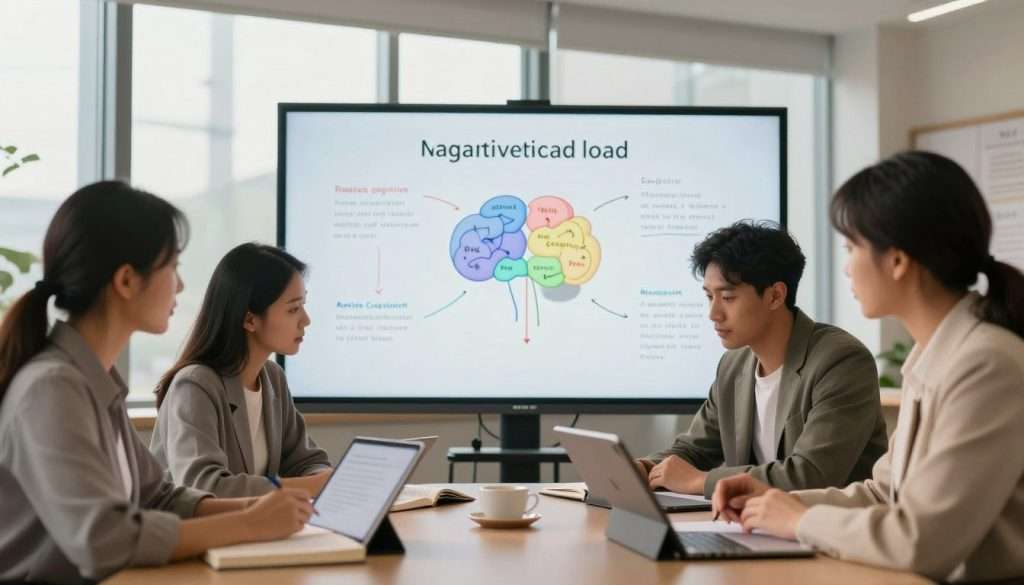
Managing Cognitive Load During Complex Tasks
Ever felt like your brain hits a wall with a tough subject? It’s common, but often caused by too much info at once. Learning efficiently can turn frustration into progress.
Breaking Down Difficult Concepts
When facing a huge topic, break it into smaller parts. It’s like eating a big meal; you wouldn’t swallow it all at once. You take it one bite at a time.
By breaking down complex ideas, you avoid brain overload. This lets you focus on one part at a time. It makes hard subjects seem easier.
Reducing Extraneous Processing
Extraneous processing wastes brain energy on non-essential things. This includes messy notes, phone alerts, or studying in noise. To learn efficiently, clear the clutter.
Focus on key concepts that matter. Removing distractions lets your brain process important info better. Staying focused on the essentials makes study time productive.
Overcoming Procrastination with Behavioral Science
If you find yourself avoiding work, you’re not alone. It’s not because you’re lazy. Often, it’s because you’re scared to start a tough task.
Looking at productivity strategies, we see that small changes are more important than how much you study. By understanding your brain, you can stop avoiding tasks before it starts.
The Psychology of Task Avoidance
Your brain wants to keep you safe from discomfort. When you face a hard assignment, it sees it as a threat. This makes you want to do something else instead.
Knowing this helps you use effective study methods better. You see that your brain is just trying to avoid discomfort. Then, you can calm that feeling instead of judging yourself.
Micro-Habits for Starting Difficult Assignments
To beat procrastination, make starting easy. Instead of writing a whole essay, start with one sentence. This micro-habit makes it easier to begin without feeling overwhelmed.
Breaking down big tasks into small steps makes them easier. These productivity strategies help you keep going without getting too tired. The hardest part is usually the first few minutes.
Success comes from small, consistent efforts, not huge study sessions. By showing up for just a few minutes, you build a path to success. These effective study methods keep your stress low and confidence high.
Advanced Resources for Academic Excellence
Achieving academic excellence is not about working harder. It’s about working smarter with the right systems. With the right tools, you can study less and remember more than your peers.
Accessing Professional Study Systems
Many students struggle with outdated methods that don’t work. To excel, adopt learn more: the science-backed approach to your daily routine. Joshua Foer, for example, improved his memory from average to world-class using specific techniques.
By using these professional systems, you stop guessing and start performing. We’ve gathered study hacks that bridge the gap between effort and results. These systems make complex subjects easier to navigate.
How to Become the Smartest Student in the Classroom
If this article resonated with you, we want to help you go deeper. My free book, How to Become the Smartest Student in the Classroom, offers a complete system for success. It covers advanced memory techniques and daily routines that stick.
There’s no cost or catch. We just want to give you the tools to master your education. Get your free copy here → https://www.studyingmachine.com/free-books/.
Download Your Free Guide to Memory Techniques
To start immediately, we’ve compared traditional methods to our recommended systems. This table shows why changing your strategy is key for growth.
| Feature | Traditional Method | Science-Backed System |
|---|---|---|
| Primary Focus | Rote Memorization | Active Recall |
| Study Hacks | Passive Re-reading | Spaced Repetition |
| Outcome | Short-term Cramming | Long-term Mastery |
| Efficiency | Low | High |
Conclusion
You now have the tools to make studying easier and more effective. Say goodbye to the stress of cramming all night. Small changes in your daily habits can lead to big improvements over time.
Start using these productivity tips right now. Try one new method during your next study session. You’ll see how much easier it is to remember things when you work with your brain.
These study tips will help you save time and improve your grades. You can start changing your academic life today. We’re excited to see you succeed in all your subjects.
What change will you make in your routine today? Share your progress with friends or keep a journal. Your journey to becoming a top learner is just beginning.