
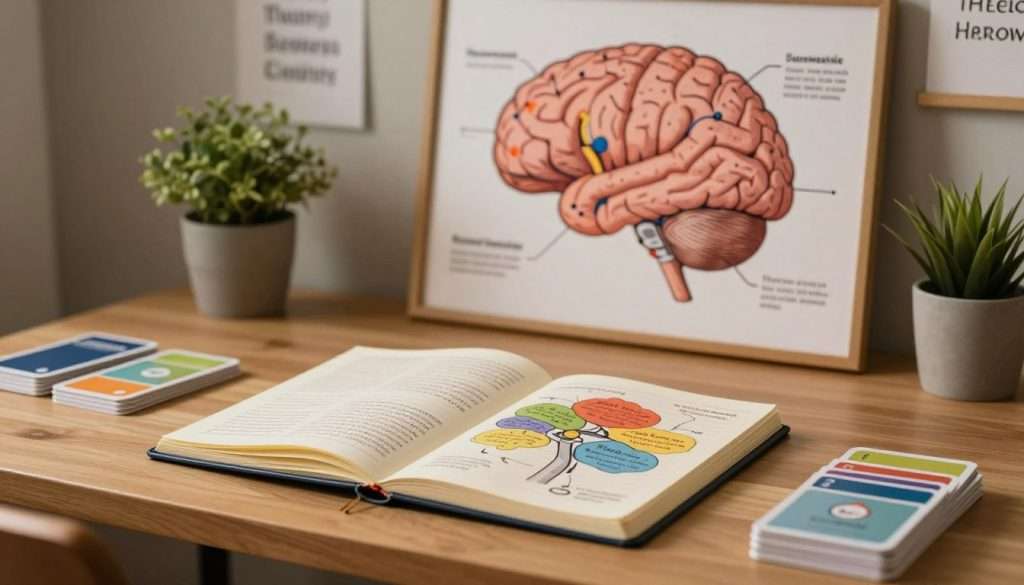
Ever feel like your brain is a leaky sieve? You are not alone. Many people think having a sharp mind is a fixed talent. But, we say recall is a practical skill you can improve over time.
This is the complete guide to memory improvement. We aim to show you that better habits lead to sharper focus and lasting knowledge. Whether you’re a student or a busy professional, mastering these memory improvement techniques will make your daily life easier.
You don’t need a photographic mind to succeed. Our approach is based on evidence, covering brain health, active learning, and clever mnemonics. Let’s make your study sessions enjoyable and effective!
Key Takeaways
- Memory is a skill you can develop, not just a fixed talent.
- Building consistent habits is the secret to better recall.
- Evidence-based strategies help you learn faster and retain more.
- Active learning and spaced review are essential for long-term success.
- You do not need a photographic memory to achieve your goals.
The Complete Guide to Memory Improvement
If you’re tired of feeling like your brain forgets everything, you’re in the right place. This guide will show you how to make information stick. It’s not about magic tricks, but understanding how your mind works.
What Memory Improvement Really Means
Many think memory improvement is just about repeating words until they seem familiar. But true mastery is about making information easier to encode, preserve, and retrieve. It’s about creating a mental map, not just staring at a page.
How Memory Encoding, Storage, and Retrieval Work
Your memory works in three parts. Encoding is when you first hear new information, like a phone number. Then, storage is when you save that info in your brain’s long-term memory.
Lastly, retrieval is when you recall that information when you need it. If you can’t remember something, it might be because one of these steps didn’t work right.
Why Forgetting Happens Even When You Studied
It’s frustrating when you study hard but forget things during a test. Often, it’s because you didn’t pay attention well when you first learned it. If the info didn’t mean much to you, your brain didn’t save it for long.
Another reason is if you studied in a way that doesn’t match the test. For example, if you only read your notes, you practiced recognition but not the retrieval needed for the exam. Your brain needs to practice the exact skill you’ll use later.
Setting Realistic Goals for Better Memory
Don’t chase promises to “never forget” anything. Instead, set measurable goals that show your progress. For example, aim to remember ten key terms after a week of study.
By setting these clear goals, you make memory improvement a habit. Celebrate your small wins along the way. That’s when the complete guide to memory improvement really works.
Build the Biological Foundation for Stronger Memory
Your brain is like a high-performance engine that needs the right fuel and maintenance. To boost memory power, you must focus on the physical aspects of learning. By changing your daily habits, you create a great environment for your mind to grow.
How Sleep Supports Memory Consolidation
Sleep is not just downtime; it’s when your brain organizes what you learned. During deep sleep, your brain moves information from short-term to long-term memory. If you don’t get enough sleep, you’re deleting your own progress.
Try to keep a consistent bedtime to help your internal clock stay on track. Even a small shift in your sleep schedule can make a big difference in how well you retain new facts.
Using Exercise to Improve Cognitive Function
Moving your body is a great memory enhancement strategy. Physical activity increases blood flow to the brain, improving cognitive function and keeping your mind sharp. You don’t need to run a marathon to see these benefits.
Try taking short, five-minute walking breaks between study sessions. This simple movement helps clear your head and prepares your brain for the next round of learning.
Eating and Hydrating for Reliable Mental Performance
Your brain consumes a lot of energy, so what you eat matters. Eat balanced meals that provide steady fuel, not sugar spikes that lead to a crash. Staying hydrated is also key, as even mild dehydration can make it harder to focus.
Managing Stress That Disrupts Recall
High stress levels release chemicals that can block your ability to retrieve information. When you feel overwhelmed, your brain goes into survival mode, not learning mode. Finding ways to stay calm is crucial for reliable memory.
Breathing and relaxation techniques for high-pressure situations
When stress rises, try deep, rhythmic breathing to signal safety to your nervous system. Taking just a few slow breaths can lower your heart rate and help you regain focus. These small moments of calm are powerful tools for anyone looking to boost memory power.
When persistent stress or sleep problems require professional support
Sometimes, no amount of lifestyle adjustment can fix a deeper issue. If your sleep is constantly disrupted or your stress feels unmanageable, it’s time to talk to a doctor. Seeking professional help is a smart move, not a sign of failure.
| Habit | Primary Benefit | Actionable Tip |
|---|---|---|
| Consistent Sleep | Memory Consolidation | Set a strict wake-up time |
| Daily Movement | Blood Flow | Walk for 5 minutes hourly |
| Hydration | Mental Clarity | Keep water at your desk |
| Deep Breathing | Stress Reduction | Use the 4-7-8 technique |
Use Active Learning to Encode Information More Effectively
Your brain is not a passive sponge, so stop treating it like one! When you simply slide your eyes across a page, you are barely scratching the surface of what your mind can actually do. To truly master memory improvement techniques, you must force your brain to engage with the material in a meaningful way.
Replace Passive Reading With Retrieval Practice
Most of us fall into the trap of rereading our notes until they feel familiar. Familiarity is not the same as mastery. Instead, try closing your book and writing down everything you remember. This act of pulling information out of your head—known as retrieval practice—is far more effective than reading the same paragraph five times.
Explain Difficult Ideas in Your Own Words
If you cannot explain a concept to a friend, you probably do not understand it as well as you think. Try summarizing complex topics using simple, everyday language. When you translate technical jargon into your own voice, you create a much stronger mental anchor for that information.
Connect New Knowledge to Existing Mental Models
Your brain loves to build bridges. When you learn something new, ask yourself how it fits into what you already know. By linking new facts to your existing experiences, you make the information stickier and easier to recall later.
Use Elaboration to Create More Retrieval Paths
Elaboration is the secret sauce of memory improvement techniques. It involves adding detail and context to the information you are trying to learn.
Ask why, how, and what-if questions
Don’t just accept facts at face value. Dig deeper by asking yourself why a process works or what would happen if you changed a variable. These questions force your brain to process the logic behind the facts.
Turn abstract concepts into concrete examples
Abstract ideas can be slippery. Whenever you encounter a complex theory, try to find a real-world example that illustrates it. This makes the information tangible and much easier to visualize.
| Method | Effort Level | Retention Quality |
|---|---|---|
| Passive Rereading | Low | Poor |
| Highlighting Text | Low | Low |
| Retrieval Practice | High | Excellent |
| Self-Explanation | High | Excellent |
Reduce Distractions Before They Weaken Encoding
Your focus is a limited resource. If you have your phone buzzing or social media tabs open, your brain cannot dedicate the energy needed for deep encoding. Clear your workspace, put your phone in another room, and give your brain the quiet space it needs to build lasting memories.
Master Spaced Repetition and Deliberate Review
Ever felt like your brain is a sieve, losing all that hard-earned knowledge? It’s a common problem, but there’s a simple fix. By timing your study sessions right, you can enhance memory retention without spending all night studying.

Why Spacing Beats Cramming for Long-Term Retention
Cramming is like trying to fill a bucket with a hole in the bottom. You might get a lot in fast, but it leaks out quickly. Spaced repetition makes your brain work harder to remember, strengthening your memory over time.
Create a Review Schedule That Matches Your Memory
A good schedule starts with a quick review on the same day you learn something. This tells your brain the info is key. Then, space out your reviews to once a week, then once a month, as you get more familiar with it.
Use Increasing Intervals Without Overloading Your Study Time
You don’t need to study everything every day. Focus on what you’re about to forget. By gradually increasing the time between reviews, you stay sharp while saving time for other activities.
Combine Flashcards With Active Recall
Flashcards are great, but only if used right. They should be a test, not just a read. To really enhance memory retention, make your brain come up with the answer on its own.
Write prompts that require complete answers
Avoid simple “yes” or “no” questions. Create prompts that need you to explain or list steps. This way, you’re really learning, not just guessing.
Separate recognition from genuine recall
Just because a card looks familiar doesn’t mean you’ve got it. Genuine recall means you can answer without looking at the card. If you see it and can’t explain it, you haven’t got it yet.
Adapt Reviews When You Keep Missing the Same Material
Sometimes, certain facts just won’t stick. If you keep missing the same info, don’t worry. Shorten the interval for those items and give them extra attention until they stick.
Apply Mnemonics to Remember Complex Information
Struggling to remember details? These clever memory tricks are here to help. Mnemonics act as mental hooks that keep information in your mind. They turn boring facts into memorable stories.
Build Memorable Associations With Imagery
Your brain loves pictures more than text. To remember a tough concept, imagine it as a bizarre or funny scene. The sillier the image, the easier it is to recall.
Use the Method of Loci for Ordered Information
This strategy places items on a familiar path, like your walk to work. As you “walk” through your home, you remember each item in order. It’s a top memory improvement exercise for keeping lists straight.
Create Acronyms, Acrostics, and Keyword Cues
A simple word or phrase can unlock complex sequences. Create an acronym from the first letter of each word. Or, use an acrostic to make funny sentences that help you remember.
Organize Lists With Chunking
Our brains can only hold so much data at once. By grouping related items into smaller chunks, you make them easier to handle. It’s like organizing a messy closet into labeled bins.
Remember Names, Faces, and Personal Details
Meeting new people can be tough, but remembering their names is key. Use simple habits to turn a brief introduction into a lasting memory.
Repeat a person’s name naturally in conversation
When you hear a name, say it back. For example, “It is great to meet you, Sarah!” This reinforces the sound in your mind and shows you’re listening.
Link distinctive visual details to the name
Find a unique feature about the person, like their bright glasses. Connect it to their name. Imagine Sarah wearing a giant, glowing “S” on her shirt. This visual anchor helps you remember her.
Choose Mnemonics That Support Understanding
Mnemonics are powerful tools, but they shouldn’t replace learning. Mnemonics should support your understanding of a topic. Use them to get facts into your head, but always learn the “why” behind them.
Improve Working Memory and Everyday Recall
Your working memory is like a busy desk in your mind. It’s where you keep information while you work. But, if it gets too messy, it’s hard to boost memory power.
Train Your Attention Before Trying to Memorize
Before you start memorizing, clear your mental desk. Attention is the gatekeeper of your memory. If you’re distracted, you can’t remember things well. Try to focus on one thing at a time to improve cognitive function.
Break Large Tasks Into Manageable Chunks
Big projects can overwhelm your brain. Break them down into smaller parts. This way, your brain can handle each piece without getting too tired.
Use External Supports Without Becoming Dependent on Them
Tools like calendars and apps are like extra brains. They help you remember things so you can think deeper.
Build a reliable calendar and note-taking system
Use a calendar or planner to stay on track. Keep your notes in one place, like a notebook or app. This keeps your mind free for other tasks.
Keep essential items in consistent locations
Looking for keys or chargers wastes brain power. Pick a spot for everything you use daily. Knowing where things are saves brain energy for more important things.
Remember Instructions, Appointments, and To-Do Lists
Use visual reminders or lists to stay organized. Writing things down helps your brain stay on track. It lets you focus on improving your memory naturally.
Practice Memory Improvement Exercises Responsibly
Memory games are fun, but don’t rely on them alone. See them as a brain warm-up, not a test of your smarts. Practice gradually, take breaks, and apply what you learn in real life.
Design a Study Routine That Makes Memory Stick
Let’s make your study sessions more effective. Instead of last-minute cramming, we can create a routine that helps you remember. These memory improvement tips fit into your busy life, making every study hour valuable.
Set a Specific Goal for Every Study Session
Don’t just study without a plan. Aim to master specific topics or summarize important chapters. This focused approach saves time and boosts your memory.
Use Focused Study Blocks and Planned Breaks
Your brain works best in cycles. Work in 25 to 50-minute blocks, then take a five-minute break. This keeps your mind sharp and prevents burnout.
Sequence Learning From Comprehension to Recall
First, understand the basics before memorizing. Knowing why something is important makes it easier to remember. This method strengthens your memory over time.
“The secret to mastery is not how much time you spend, but how you spend that time.”
Mix Subjects and Problem Types to Strengthen Retrieval
Vary your study topics and problem types. This forces your brain to work harder, improving your memory and mental agility.
End Each Session With a Quick Memory Check
Always test yourself at the end of each session. This final check solidifies your learning and shows what you still need to work on.
Record what you can recall without looking
Write down everything you remember without looking at your notes. This method is more effective than re-reading your notes.
Schedule the next review before you stop
Plan your next review session before you finish. This helps keep your knowledge fresh and strengthens your memory.
| Feature | Cramming | Strategic Routine |
|---|---|---|
| Goal Setting | Vague/None | Specific/Clear |
| Study Style | Passive Reading | Active Recall |
| Retention | Short-term | Long-term |
| Stress Level | High | Low |
Measure Progress and Fix Weak Memory Habits
It’s time to focus on results, not just hours spent studying. Many think sitting for four hours means they’ve learned that much. But, your brain needs active engagement to really learn.
Changing your approach can lead to better memory strategies. Let’s explore how to check your habits and improve your focus.

Track Recall Accuracy Instead of Time Spent Studying
Don’t judge your success by the clock. Instead, see how many facts you can recall without notes. If you can explain a topic clearly, you’re making progress.
Identify Whether Attention, Encoding, or Retrieval Is the Problem
When you miss a question, don’t get upset. Ask yourself where you went wrong. Was it during the lesson, or did you struggle to recall information?
Use Practice Tests to Find Knowledge Gaps
Practice tests reveal what you don’t know. They’re more useful than re-reading familiar material. Use them to pinpoint areas needing more practice.
Adjust Techniques That Create Familiarity Without Mastery
Don’t confuse familiarity with true understanding. Just because you recognize a page doesn’t mean you’ve learned it. If you can’t explain key concepts, try more challenging strategies like active recall.
Recognize When Memory Changes May Need Medical Attention
Most memory issues are just habits to fix. But, listen to your body. If memory problems worsen or disrupt your life, seek medical help. Stress, lack of sleep, medication side effects, or vision problems can affect your memory. Taking care of your health is key to improving your memory.
Memory Improvement Resources and a Practical Action Plan
Ready to make learning a daily habit? It’s time to move from theory to action. Use the right memory improvement resources to see real progress in your daily recall.
Choose Tools That Support Active Recall and Spaced Review
Don’t rely on passive tools like highlighters or re-reading notes. Instead, use tools that make your brain work. Digital flashcard apps like Anki or Quizlet are great for spaced repetition. For those who prefer paper, a simple notebook can be more effective than any software.
Build a Seven-Day Memory Improvement Routine
Consistency is key to better retention. Follow this simple structure to get started:
Day one: choose a target and establish a baseline
Pick a specific subject or skill you want to master. Take a quick, honest test to set your starting point.
Days two through six: practice, review, and adjust
Spend 20 minutes each day on active recall. If you struggle with a concept, break it down into simpler pieces.
Day seven: test retention and plan the next cycle
Re-test yourself on the material from the week. Use your error tracking to see where you need to focus next week.
Combine Memory Improvement Tips Into Sustainable Habits
Make these memory improvement tips a natural part of your life. Learning a challenging new skill is better for your brain than repeating familiar games. Focus on systems that reward effort, not just speed.
Want to Go Deeper?
Invite readers to get the free book How to Become the Smartest Student in the Classroom, covering memory techniques, study routines, and strategies that actually stick.
If this article resonated with you, our free book offers a full system for mastering studies. It covers advanced memory techniques and daily routines that make learning effortless. There’s no cost and no catch—just pure, actionable advice.
Include the call to action: “Grab your free copy here → https://www.studyingmachine.com/free-books/”
Ready to transform your learning experience? Grab your free copy here → https://www.studyingmachine.com/free-books/ and start your journey to becoming the smartest student in the classroom today!
Conclusion
Mastering your mind is a lifelong journey. Focus on attention, encoding, and retrieval practice to make learning a habit. Your brain stays adaptable, no matter your age.
Start with one technique today. See how much you can recall and build your confidence. You don’t need to change everything at once. Small steps lead to big results.
When studying feels tough, come back to our memory resources. Our plan is here to help you stay clear-headed. Try different tools to find what works for you. You can make every study session count.