

Do you feel like your brain is a browser with fifty tabs open? You’re not alone. We often think being productive means using every second of our day. But this leads to burnout.
Real focus is not about acting like a robot. It’s about saving your energy for what really matters.
This article is your practical plan to take back your time. We’ll help you identify your distractions and create study routines that work. Our aim is to make every minute count, giving you more time for learning, relationships, and rest.
If you want to dive deeper, my free book How to Become the Smartest Student in the Classroom offers a full system. It includes memory techniques and strategies that stick. No cost, no catch. Get your free copy here.
Key Takeaways
- Focus on meaningful work rather than just doing more tasks.
- Identify your personal triggers to stop interruptions before they start.
- Build sustainable study routines that prioritize your mental well-being.
- Protect your time for rest and relationships to avoid burnout.
- Use proven memory techniques to make your learning process stick.
Why Distractions Undermine Focus, Learning, and Productivity
Ever felt like your brain is a browser with too many tabs open? Every time you switch tasks, you pay a hidden mental tax. This makes deep, meaningful work hard to achieve.
Effective distractions management tips are not just about willpower. They help you understand how your brain works and why it loves constant stimulation.
How Attention Fragmentation Reduces the Quality of Your Work
Interrupting your work to check a notification doesn’t just cost a few seconds. It causes “attention residue,” where your brain stays on the old task while trying to start the new one.
This breaks the depth of your thinking. Your work becomes shallow, full of errors, and lacks creativity. This is because you’re not focusing long enough.
The Difference Between External Distractions and Internal Distractions
External distractions, like a buzzing phone or a noisy roommate, are obvious. But they’re only half the problem.
Internal distractions, like boredom, anxiety, or fear of failure, are more dangerous. They come from within. Knowing these internal states is key to managing distractions.
Why Procrastination Often Signals Unclear or Overwhelming Tasks
We often think we’re lazy when we procrastinate. But it’s usually because the task seems too big or unclear.
When a task seems too hard, your brain looks for an escape. Instead of blaming yourself, break the task into small steps. This makes it easier to start.
How Dopamine-Driven Habits Make Sustained Concentration More Difficult
Modern apps give you a quick dopamine hit for likes or notifications. This makes long-term focus seem dull by comparison.
To overcome this, you need to make a conscious effort. My free book How to Become the Smartest Student in the Classroom offers strategies to help. Get your free copy here → https://www.studyingmachine.com/free-books/
| Distraction Type | Primary Source | Impact Level | Management Strategy |
|---|---|---|---|
| External | Notifications/Noise | High | Block or Silence |
| Internal | Boredom/Anxiety | Very High | Mindfulness/Reframing |
| Task-Based | Unclear Goals | Medium | Break into Steps |
| Digital | Social Media | High | App Limits |
The Ultimate Guide to Beating Distractions Starts With an Attention Audit
You don’t need fancy apps to improve your focus. Start by paying attention to your attention. Before buying new desk gear or software, do a simple audit. This is the ultimate guide to beating distractions because it shows you the real issues, not just guesses.
Track When, Where, and Why Your Focus Breaks
Keep a notebook or digital document open while working. Write down every time your mind wanders or you reach for your phone. You want to know exactly when your focus slips.
Record the time of day and the task you were doing. This helps you see if your energy drops at certain times. You might find your focus breaks most after lunch or late afternoon.
Identify Your Most Common Digital, Environmental, and Emotional Triggers
Distractions are often right in front of you. You might get distracted by notifications, noise, or feeling bored. Knowing these patterns is key to managing distractions.
- Digital: Email alerts, social media pings, or browser tabs.
- Environmental: Clutter, noise, or people walking by.
- Emotional: Anxiety about a project, boredom, or feeling overwhelmed.
Separate Necessary Interruptions From Avoidable Distractions
Not all interruptions are bad. Sometimes, a teammate needs a quick answer, or a family member has a real emergency. You need to know the difference between these and distractions you can control.
If you’re constantly interrupted by non-urgent messages, set boundaries. This way, you don’t feel guilty about protecting your time. Clarity is key for long-term success.
Use a Distraction Log to Find Repeating Patterns
A log is your best tool for spotting habits. If the same trigger shows up every day, you’ve found a clear area for improvement. Here’s how to track your distractions:
What to Record During Each Focus Session
| Time | Task | Distraction | Emotional Cue |
|---|---|---|---|
| 10:15 AM | Writing Essay | Phone Notification | Boredom |
| 2:30 PM | Data Entry | Email Check | Anxiety |
How to Turn Audit Results Into Specific Changes
After a few days of tracking, look for patterns. If you always check your phone when bored, plan ahead. Move your toughest tasks to when you have the most energy.
If this article helped you, check out my free book How to Become the Smartest Student in the Classroom. It offers memory techniques, study routines, and strategies that work. No cost, no catch. Get your free copy here.
Design a Workspace That Makes Concentration Easier
Creating a space for deep work is a top productivity hack. Your environment can either help or hinder your focus. It’s crucial to choose wisely.
Remove Visual Clutter That Competes for Your Attention
Our brains are always on the lookout for new things. So, every item on your desk can distract you. Clear your desk of anything not needed for your task.
A clean desk tells your brain it’s time to focus. Without distractions, you can fully concentrate on your work.
Place Your Phone and Other Devices Outside Your Reach
It’s hard to ignore your phone by willpower alone. Use a Ulysses pact to put your phone away before starting work.
By making your phone hard to get to, you avoid the temptation. You won’t be tempted to check it because it’s out of reach.
Use Website and App Blockers During Deep-Work Sessions
Digital distractions can be a big problem. Tools like Freedom or Cold Turkey can block time-wasting sites.
These blockers keep you focused. They prevent you from getting sidetracked by social media or news.
Create Separate Work, Study, and Relaxation Zones
Your brain prefers a clear context. Studying in the same spot as playing games can confuse it.
Designate areas for different activities. Even a small change, like a different chair, can signal a new task.
Build a Low-Distraction Workspace at Home
At home, you can control everything. Invest in a good chair and lighting to make your space inviting.
If this helps, my free book How to Become the Smartest Student in the Classroom offers more tips. Get your free copy here → https://www.studyingmachine.com/free-books/
Adapt the Strategy for Libraries, Offices, and Shared Spaces
In public, you can’t control the whole room. But you can control your area. Use noise-canceling headphones to block out noise.
Face a wall or corner to reduce distractions. These productivity hacks help you stay focused, even in busy places.
Use Focus Techniques to Work With Your Brain Instead of Against It
Think of your brain as a high-performance engine. It needs the right fuel and timing to run smoothly. Instead of forcing yourself into rigid routines, use focus techniques that adapt to your natural rhythm. These methods are flexible tools designed to help you get more done with less stress.
Apply Time Blocking to Give Every Priority a Defined Place
Time blocking is a game-changer for anyone feeling overwhelmed. By assigning specific tasks to dedicated blocks of time, you stop guessing what to work on next. This simple shift creates a clear roadmap for your day, ensuring your most important goals get the attention they deserve.
Use the Pomodoro Method for Manageable Concentration Intervals
If you struggle to stay on task, the Pomodoro Method is a great productivity hack. You work for 25 minutes and then take a short break. This cycle keeps your mind fresh and prevents burnout from long study sessions.
Try Single-Tasking When Multitasking Feels Productive
We often think juggling three tasks at once makes us faster. But multitasking kills your quality of work and drains your mental battery. Single-tasking allows you to dive deep into one project, leading to better results and a calmer mind.
Plan Deep-Work Sessions Around Your Highest-Energy Hours
To find your peak performance window, track your alertness for three to seven days. You will likely notice specific hours where your brain feels sharpest. Use these high-energy blocks for your most demanding tasks to maximize your concentration strategies.
Use Implementation Intentions to Decide What You Will Do in Advance
An implementation intention is a way of saying, “If X happens, I will do Y.” By deciding your next move before you even sit down, you remove the friction of starting. This proactive approach keeps you moving forward even when your motivation dips.
Choose Session Lengths Based on Task Difficulty
Not every task requires the same amount of mental heavy lifting. For complex projects, give yourself longer, uninterrupted blocks of time. For smaller, administrative chores, shorter bursts are often enough to get the job done efficiently.
Schedule Breaks Without Turning Them Into Distraction Spirals
The goal of a break is to restore your focus, not to lose it in a sea of social media notifications. Instead of mindless scrolling, try stepping away from your screen, grabbing a glass of water, or doing a quick stretch. These intentional pauses keep your momentum alive without opening a trapdoor to endless distractions.
If this article resonated with you, my free book How to Become the Smartest Student in the Classroom gives you a full system. It includes memory techniques, study routines, and strategies that actually stick. No cost, no catch. Grab your free copy here → https://www.studyingmachine.com/free-books/
Control Digital Distractions Without Disconnecting From What Matters
To overcome distractions, you need to control your digital world. It’s not about hiding your phone forever. Instead, create a system where you choose when to use it. With these distractions management tips, you can stay connected with important people while focusing on your work.
Silence Nonessential Notifications on Your Phone and Computer
Your devices are made to grab your attention. But you can turn off the noise. Disable all non-urgent alerts, like social media updates. Keep only important alerts, like reminders or calls from family, during your focus hours.
Batch Email, Messaging, and Social Media Into Specific Check-In Windows
Checking your inbox all day can burn you out. Instead, check your messages twice a day for thirty minutes each. This “rocks and sand” method lets you focus on big tasks first.
Keep Only Task-Relevant Tabs and Applications Open
Too many tabs on your screen can distract you. If you’re writing, close your email and other apps. A clean digital space helps your brain stay focused.
Use Website Limits and Focus Modes With Clear Rules
Modern systems have tools to keep you on track. Use these to block distracting sites when you’re most productive. Setting clear rules for these modes helps your day flow smoothly.
Replace Automatic Scrolling With a More Intentional Digital Routine
We often scroll out of habit. When you feel like scrolling, pause and think if it’s necessary. Replacing that habit with a stretch or water can help a lot.
Set Boundaries for Work and Personal Messages
It’s important to tell friends and colleagues when you’re available. Let them know you’re not ignoring them, but focusing. Setting these expectations early helps avoid guilt when you’re offline.
Recover Quickly After an Unplanned Digital Detour
Getting distracted is okay. The key is to notice and gently get back to work without guilt. A quick reset, like deep breathing, can help you get back on track.
| Habit Type | Reactive Approach | Proactive Approach |
|---|---|---|
| Notifications | Always enabled | Only essential alerts |
| Communication | Instant replies | Scheduled windows |
| Browser Tabs | Unlimited open tabs | Task-specific windows |
| Digital Breaks | Mindless scrolling | Intentional rest |
If this article resonated with you, my free book How to Become the Smartest Student in the Classroom offers a full system. It includes memory techniques, study routines, and strategies that stick. No cost, no catch. Get your free copy here → https://www.studyingmachine.com/free-books/
Overcome Procrastination by Making the Next Action Obvious
Procrastination isn’t about being lazy. It’s often about not knowing what to do next. When a task seems huge, your brain might want to escape. But, seeing procrastination as a simple starting problem can help.
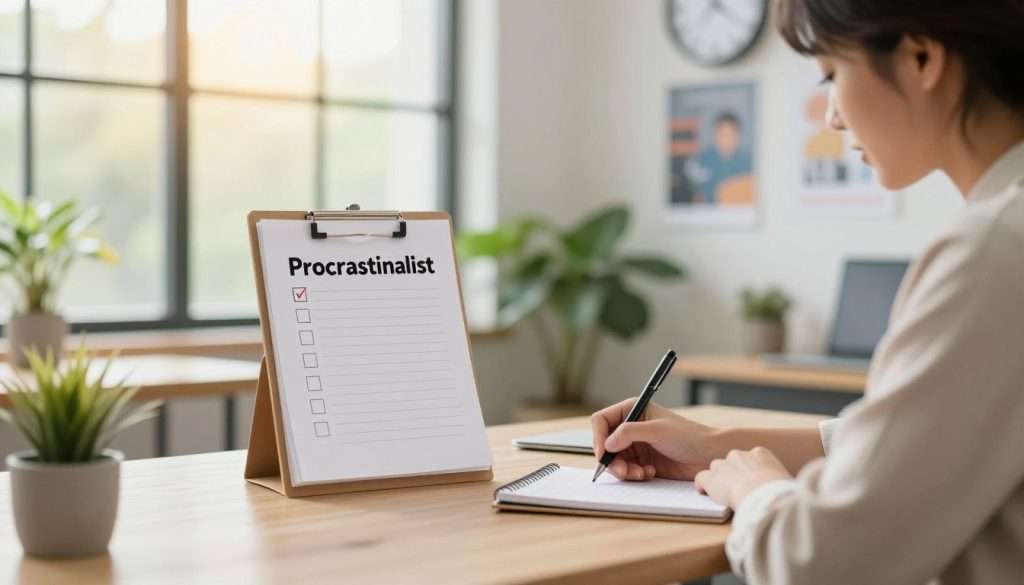
Break Large Projects Into Small, Visible Actions
Big goals can be scary. A vague to-do list, like “Write Research Paper,” can freeze you. Break it down into small steps like “Open document,” “Write title,” or “Find three sources.”
Start With a Two-Minute Action to Lower Resistance
The first few seconds of any task are the hardest. Try the two-minute rule to get started. Committing to just two minutes often makes the rest easier.
“Action is the foundational key to all success.”
Use Deadlines, Checklists, and Public Commitments Strategically
Working with a deadline can boost your productivity. Use checklists to track your progress, which can give you a dopamine boost. Telling a friend about your goal can also help you stay on track.
Address Perfectionism, Uncertainty, and Fear of Failure
Many avoid work because they fear it won’t be perfect. Remember, a messy first draft is better than nothing. Allow yourself to be imperfect to get the job done.
Build Momentum Before You Wait for Motivation
Waiting for the right mood can keep you stuck. Motivation is unpredictable, but momentum is within your control. Start with a small task to prove you can move forward.
Turn Vague Tasks Into Concrete Instructions
Vague goals confuse you, while clear instructions lead to success. Use this table to change your approach:
| Vague Task | Concrete Action |
|---|---|
| Study Biology | Read pages 40-45 |
| Clean Room | Clear off the desk |
| Write Essay | Draft the introduction |
Use a Restart Ritual When You Avoid Work
When you’re stuck on your phone instead of work, use a restart ritual. Stand up, stretch, and take a deep breath. This signals to your brain it’s time to work.
If this article helped you, check out my free book How to Become the Smartest Student in the Classroom. It offers memory techniques, study routines, and strategies that work. No cost, no catch. Get your free copy here → https://www.studyingmachine.com/free-books/
Strengthen Concentration Through Energy, Memory, and Study Habits
To master your output, start by caring for your brain. It’s like a high-performance engine that needs regular maintenance. This ensures you stay focused and perform well all day.
Protect Sleep, Movement, Hydration, and Nutrition That Support Focus
Your physical health is key to mental clarity. Lack of sleep makes it hard to focus. Your brain can’t filter out distractions.
Regular exercise and staying hydrated help reset your brain. Eating well gives you the energy to avoid afternoon slumps.
Use Active Recall Instead of Passive Rereading
Many students get stuck in a cycle of reading the same thing over and over. This method doesn’t help you understand or remember well.
Try active recall instead. Close your book and try to remember what you just read. This effort strengthens your brain’s pathways.
Apply Spaced Repetition to Make Learning More Durable
Our brains forget information we don’t use. Use spaced repetition to review material at longer intervals.
Reviewing material just before you forget it helps move it from short-term to long-term memory. This is a top concentration strategy for learning complex topics.
Combine Short Study Blocks With Deliberate Review
Long study sessions don’t always pay off. Break your work into short, intense bursts. Then, review what you learned.
This approach keeps your mind sharp and prevents boredom. It turns studying into a series of small victories.
Manage Mental Fatigue Before It Becomes a Distraction Trigger
If your brain feels stuck, don’t push through. A 15- to 30-minute nap can boost your productivity more than struggling.
Knowing when you’re mentally tired helps you take a break before losing focus. Taking a break is smart, not weak.
Match Memory Techniques to the Material You Need to Learn
Not all information needs the same approach. Use mnemonics for lists, mind maps for complex topics, and flashcards for vocabulary.
Choosing the right technique makes learning more enjoyable. It keeps you interested in the subject.
Use a Simple Study Routine You Can Repeat Consistently
Consistency is more important than intensity. Create a simple routine you can follow even when busy.
| Habit | Benefit | Frequency |
|---|---|---|
| Active Recall | Deepens Memory | Daily |
| Spaced Repetition | Prevents Forgetting | Weekly |
| Power Napping | Restores Energy | As Needed |
If this article resonated with you, check out my free book How to Become the Smartest Student in the Classroom. It offers memory techniques, study routines, and strategies that work. No cost, no catch. Get your free copy here → https://www.studyingmachine.com/free-books/
Stay on Track When Interruptions and Setbacks Happen
Life is messy, and sometimes your plans get derailed. You might have a great morning plan, but then a family emergency or a surprise meeting comes up. It happens to the best of us!
The goal is not to avoid surprises. Instead, build a system to help you stay on track when they happen. Treating interruptions as part of the process helps you regain control faster.

Create a Plan for Meetings, Family Needs, and Unexpected Requests
Don’t let requests control your day. Set specific “office hours” or availability windows. If you’re a student, tell your family or roommates when you’re focused and when you’re free to talk.
By setting boundaries, you reduce guilt when saying “not right now.” This is a key distractions management tip for staying focused.
Use a Capture List for Thoughts That Appear During Focus Time
Ever been in the zone and then remember you need to buy milk or email a professor? Instead of acting on these thoughts right away, jot them down in a notepad or app.
Writing them down clears your mind instantly. You can then tackle these tasks during your breaks, keeping your focus sharp.
Return to Work With a Clear Reentry Cue
When an interruption forces you to step away, you need a way to get back into the flow. A reentry cue is a simple ritual that signals to your brain it’s time to focus again.
It could be putting on noise-canceling headphones, clearing your desk, or reviewing your last sentence. These small actions help you stay on track without wasting energy on getting started.
Review Your Productivity System at the End of Each Day
Take five minutes each evening to review what worked and what didn’t. Did you get distracted by the same notification three times? Did a specific time of day prove too chaotic for deep work?
This daily review turns mistakes into data. It helps you refine your approach for a more efficient tomorrow.
Adjust Your Distractions Management Tips Instead of Abandoning Them
If your current plan feels too rigid, don’t give up. Many people abandon their systems after one messy afternoon, but that’s a mistake.
Instead, tweak your distractions management tips to fit your changing needs. For more on building a system that sticks, check out my free book, How to Become the Smartest Student in the Classroom. Grab your free copy here.
| Interruption Type | Immediate Action | Long-term Strategy |
|---|---|---|
| Family/Roommate Request | Polite “Not now” | Set clear office hours |
| Random Thought | Write on Capture List | Review list during breaks |
| Urgent Email | Close tab immediately | Batch check-in windows |
| Mental Fatigue | Take a short walk | Adjust study block length |
Conclusion
True productivity isn’t about forcing yourself through endless work. It’s about creating a life where distractions don’t get in the way.
Building real change means protecting your energy and knowing your next small step. Small habits win over big efforts every day. These tiny changes help you stay focused, even when life gets tough.
Try just one strategy from this guide today. See how your focus improves when you work with your brain, not against it. You can take back your attention and make studying enjoyable.
Want to dive deeper into these strategies? My free book, How to Become the Smartest Student in the Classroom, offers a full system for memory and study routines. It’s free, with no catch. Get your free copy at The Studying Machine to keep your goals on track all year.