
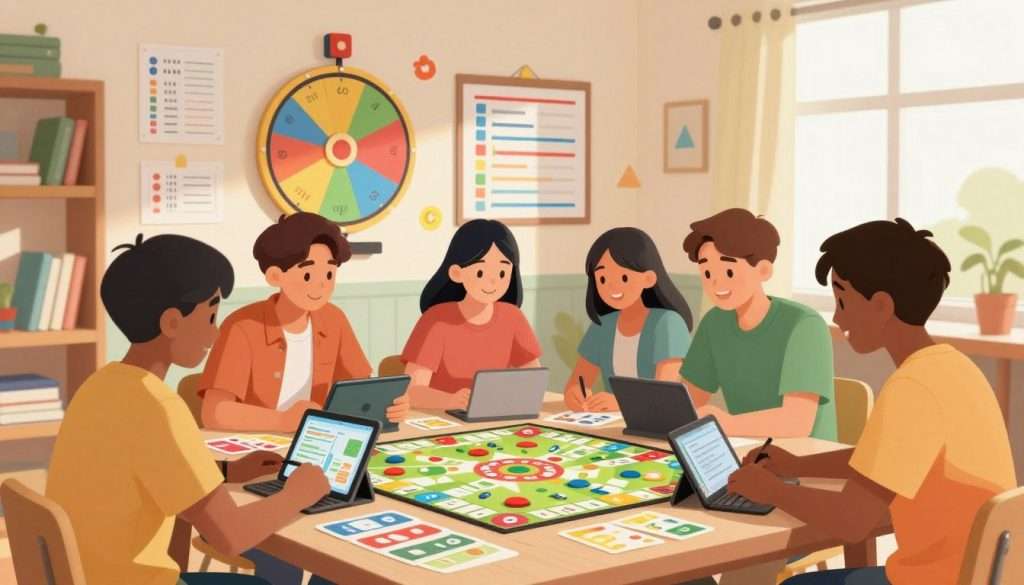
Ever feel like your textbooks just don’t care? We’ve all been there, looking at notes that seem like a never-ending task. It’s hard to stay motivated when it all feels so dull.
But here’s the bright side: you can improve your academic experience by adding some fun. By using gamification, you turn boring tasks into exciting challenges. And you don’t need a video game console to do it.
We’re not trying to make school seem silly. We aim to offer practical methods that keep you engaged and alert. Whether you like paper planners or digital apps, these tips will make learning a breeze.
Want more? My free book How to Become the Smartest Student in the Classroom has everything you need. It’s packed with memory tricks and strategies that stick, all for free. Get your copy here.
Key Takeaways
- Gamification turns boring academic tasks into rewarding, game-like challenges.
- You do not need expensive software to implement these playful strategies.
- Small, consistent changes help you maintain focus during long sessions.
- These methods work well for both solo work and group collaboration.
- The goal is to build a sustainable habit that feels less like a burden.
Why Gamification Can Make Studying More Effective
Ever wondered why video games are easier than textbooks? It’s because games are designed to keep us engaged. By using gamification in your studies, you can tap into those same hooks. This makes learning more effective and keeps you focused longer.
How game mechanics increase motivation and attention
Games succeed because they set clear goals and give instant feedback. This focus helps your brain stay on track. These engaging study methods rely on a few key elements:
- Clear Missions: Breaking big tasks into smaller steps.
- Instant Feedback: Knowing right away if you’re correct.
- Visible Progress: Seeing your progress keeps you going.
- Sense of Choice: Feeling in control of your learning.
The difference between meaningful practice and superficial rewards
It’s easy to get sidetracked by rewards like badges or points. But these are just tools. True interactive learning happens when those points mean real progress, like solving a tough math problem or learning a new language.
Use rewards to track your growth, not as the main goal. Prioritize meaningful practice to ensure your effort leads to real learning. Always check if your current game mechanic is helping you learn or just keeping you busy.
Using fun learning methods without losing academic rigor
We love making learning fun, but we must keep the study depth. Too many rewards can weaken your drive, and leaderboards can add stress. These systems should support your learning, not replace deep thinking.
For more, check out my free book How to Become the Smartest Student in the Classroom. It offers memory techniques, study routines, and strategies that stick. No cost, no catch. Get your free copy here.
5 Gamified Study Techniques to Make Learning Actually Fun
Think of your study materials as a toolkit. You pick the best gear for the job. You don’t need to use every strategy at once. Instead, treat these 5 gamified study techniques to make learning actually fun as a flexible menu. You can customize it to fit your unique needs.
Whether you’re tackling a dense history textbook or practicing complex math problems, there’s a method for you. By selecting the right tools, you can make your daily habits more rewarding.
How the five techniques turn ordinary studying into an interactive challenge
When you apply gamification to your routine, you shift your focus. You move from seeing studying as a burden to enjoying the process. These techniques turn passive reading into an interactive learning session where you’re the main character.
You start to see your progress in real-time. This keeps your brain alert and ready for the next task. By treating your notes like a quest, you naturally increase your focus.
You’re no longer just staring at a page; you’re actively engaging with the material. This shift makes fun learning feel like a natural part of your day. It’s no longer a forced obligation.
Choosing game elements that match your subject, schedule, and learning goals
Not every game mechanic works for every subject. For instance, a narrative-based approach might be perfect for history. While a point-based system works wonders for daily habit tracking. You should choose elements that align with your current energy levels and the time you have available.
If you’re short on time, focus on quick, timed sprints. If you have a long afternoon, you might prefer building a complex point system. Always prioritize the methods that help you reach your specific academic goals without feeling overwhelmed by the setup process.
Setting rules that encourage progress instead of creating unnecessary pressure
The most important rule is that your system must serve you, not the other way around. If your education games start to feel like a source of stress, it’s time to simplify your approach. The goal is to make useful work easier to begin and much easier to measure.
Keep your rules light and flexible so you can adjust them as you grow. If you want to go deeper into these systems, my free book How to Become the Smartest Student in the Classroom gives you a full system. It includes memory techniques, study routines, and strategies that actually stick. No cost, no catch. Grab your free copy here.
Build a Personal Study Quest With Missions and Milestones
Think of your next big research paper as an epic adventure game. Instead of staring at a blank screen in panic, you can break the project into smaller, manageable parts. By using these effective study strategies, you turn a mountain of work into a series of exciting challenges.
Breaking a large assignment into clear, achievable missions
Think of your assignment as a quest map. Start by defining your “boss” goal, such as finishing a final draft. Then, break that down into mini-missions like topic selection, gathering sources, outlining, and writing the first draft.
Each mission should feel like a win. When you finish one, you gain momentum for the next. This is one of the most powerful study techniques because it prevents you from feeling overwhelmed by the total workload.
Creating checkpoints for reading, practice, review, and testing
A good quest needs checkpoints to ensure you are actually learning. Don’t just track the time you spend sitting at your desk. Instead, set specific milestones for your progress:
- Reading: Complete one chapter or article and summarize it in three sentences.
- Practice: Solve five problems or draft one section of your outline.
- Review: Check your notes against the assignment rubric to ensure alignment.
- Testing: Take a quick practice quiz to verify your understanding of the core concepts.
Rewarding completed milestones without depending on constant treats
You do not need to rely on candy or expensive purchases to stay motivated. The best rewards are those that refresh your mind and body. Try these simple, healthy ways to celebrate your progress:
- Take a brisk, ten-minute walk outside to clear your head.
- Listen to your favorite upbeat song while you stretch.
- Enjoy fifteen minutes of guilt-free downtime with a hobby you love.
If this article resonated with you, my free book How to Become the Smartest Student in the Classroom gives you a full system — memory techniques, study routines, and strategies that actually stick. No cost, no catch. Grab your free copy here → https://www.studyingmachine.com/free-books/.
Turn Flashcards Into a Spaced-Repetition Battle
Let’s turn your index cards into a brain battle. Use effective study strategies to make review sessions exciting. See them as a journey to mastery.
Organizing cards by difficulty and mastery level
Keep your brain sharp by sorting cards by difficulty. This way, you avoid feeling overwhelmed by what you already know.
Using easy, medium, and difficult card decks
Split your cards into three piles. The easy deck is for quick recalls. The medium deck needs some thought. The difficult deck is for the tough stuff.
Increasing review frequency for concepts you miss
Focus more on what you struggle with. If you miss a card, move it to the difficult pile. Review it often to close your knowledge gaps.
| Mastery Level | Review Frequency | Action Required |
|---|---|---|
| Easy | Once a week | Quick scan |
| Medium | Every two days | Active recall |
| Difficult | Daily | Deep study |
Adding points, streaks, and accuracy targets to flashcard sessions
Make learning fun with gamification. Get points for correct answers and track your streaks. Aim for high accuracy to add excitement to your study routine.
“The art of teaching is the art of assisting discovery. When you actively engage with your material, you aren’t just memorizing; you are building a foundation for true understanding.”
Preventing memorization games from becoming passive recognition
Avoid just flipping cards and nodding. Make your brain work by explaining concepts or creating examples. If you can’t explain it, you haven’t mastered it.
If this article resonated with you, my free book How to Become the Smartest Student in the Classroom offers a full system. It includes memory techniques, study routines, and strategies that stick. No cost, no catch. Grab your free copy here → https://www.studyingmachine.com/free-books/.
Use Timed Study Sprints to Beat the Clock
Turn your study time into a fun race against the clock. By using short, intense study sessions, you keep your mind sharp. This approach prevents burnout from long study hours.
Designing focused rounds with realistic time limits
Set clear time limits for your study sessions. Think of them as mini-missions with a specific goal to achieve before time runs out.
Choosing sprint lengths for reading, problem-solving, and writing
Each task needs a different time frame. For reading, try a 25-minute sprint. Math problems might need 40 minutes. Writing works best in 20-minute bursts to keep ideas flowing.
Building short recovery breaks into the challenge
Give your brain a break after intense study. Always include a five-minute break to stretch, get water, or just breathe. These breaks keep you focused for the next study session.
Scoring progress by completed work rather than time spent
Don’t measure success by how long you study. Instead, score your progress by what you accomplish. This makes your achievements feel real and satisfying.
Adjusting the game when speed begins to reduce comprehension
Speed is important, but understanding is key. If you’re rushing to finish, slow down. Learning is the ultimate goal, not just speed.
If you liked this article, check out my free book How to Become the Smartest Student in the Classroom. It offers memory techniques, study routines, and strategies that work. No cost, no catch. Get your free copy here → https://www.studyingmachine.com/free-books/.
Create a Point System for Daily Study Habits
Imagine making your study time feel as exciting as leveling up in a game. By turning your desk into a scoreboard, you can change how you study. This method makes each study session feel like a step towards a goal, improving your learning experience.
Assigning points to high-value study behaviors
Not all study time is the same. Your point system should show that. Focus on activities that challenge your brain, as these are key for remembering things well.
Rewarding practice tests, active recall, and error correction
Give high points for tasks that really make you think. For example, doing a practice test or explaining a concept in your own words should get you lots of points. Correcting mistakes should get you extra points for your hard work.
Avoiding points for low-effort activities such as rereading alone
Don’t reward yourself for just reading the same thing over and over. It might feel like you’re learning, but it’s not really helping. Only give points for rereading if you’re actively using the information, like making flashcards.
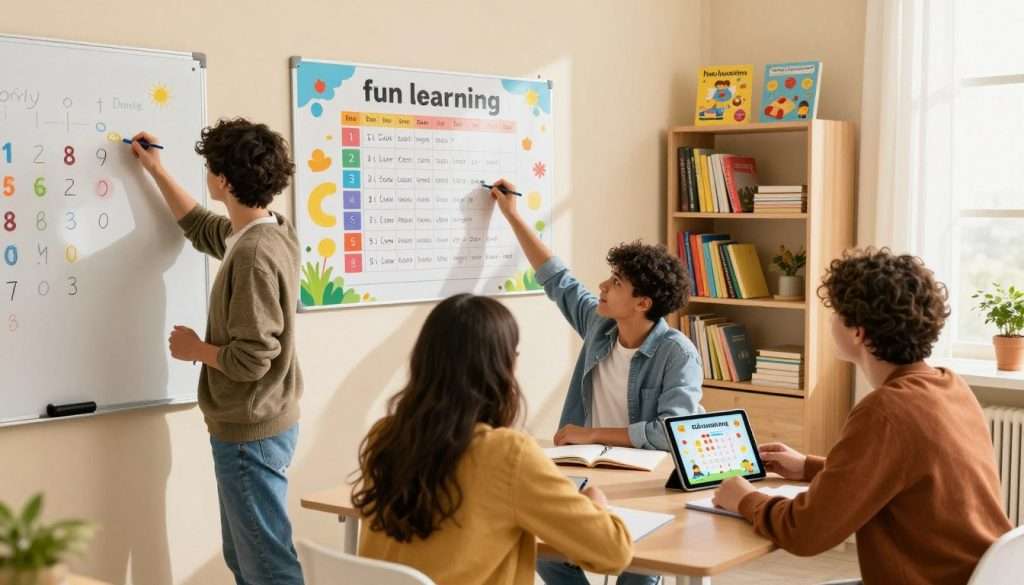
Tracking weekly totals with a simple paper or digital scoreboard
Keep your progress visible to stay motivated. Use a colorful calendar, a whiteboard, or a spreadsheet to track your points. Seeing your points grow is a great motivator and makes learning fun.
Using personal rewards that support—not replace—intrinsic motivation
Choose rewards that make you happy but don’t take away your desire to learn. A small treat or a break to do something you love can be a great reward after a hard week. Remember, the real reward is the confidence and understanding you gain.
If this article resonated with you, my free book How to Become the Smartest Student in the Classroom offers a full system. It includes memory techniques, study routines, and strategies that really work. No cost, no catch. Get your free copy here → https://www.studyingmachine.com/free-books/.
Make Review More Engaging With Quiz Games
Learning complex material can be fun if you make it interactive. Instead of just reading your textbook, turn your notes into quizzes. This way, you can find out what you don’t know before exams.
Turning notes and textbook chapters into question rounds
Look through your notes and textbook for important ideas. Make questions to test your understanding. Creating your own questions helps you learn more deeply.
Playing solo quiz games with multiple difficulty levels
Organize your questions into easy, medium, and hard levels. This keeps your studying interesting and builds your confidence.
Using confidence ratings before revealing each answer
Before checking the answer, rate how sure you are. This helps you know if you’re guessing or really know the answer.
Writing explanations for both correct and incorrect responses
Explain why an answer is right or wrong. This makes learning games more effective for remembering information.
Studying with classmates through team challenges and friendly competition
Working with friends can be fun. Set up team challenges to learn together. This way, you all understand the material better.
If you liked this article, check out my free book How to Become the Smartest Student in the Classroom. It has memory tips, study routines, and strategies that work. No cost, no catch. Get your free copy here.
Use Leveling and Boss Challenges to Master Difficult Topics
Think of your toughest subjects as a video game map waiting to be conquered. By breaking down complex information into clear stages, you can turn overwhelming study sessions into effective study strategies that actually work.
Defining beginner, intermediate, and advanced mastery levels
Start by mapping out your progress. A beginner level might focus on basic vocabulary or simple definitions. Intermediate levels involve applying those concepts to solve problems. Once you reach the advanced stage, you should be able to explain the material to someone else or synthesize multiple ideas.
This structure helps you see exactly how far you have come. It keeps you motivated because you are always working toward the next milestone rather than staring at a mountain of unorganized notes.
Building a final “boss challenge” from mixed skills and concepts
Every great game needs a final boss to test your skills. In your studies, this means creating a comprehensive review session that forces you to pull from everything you have learned so far.
Combining old material with new material
Exams rarely test topics in isolation. You should mix older concepts with your current lessons to ensure your brain stays sharp. This interleaving technique is one of the most powerful effective study strategies available to students.
Using timed, closed-note practice to simulate exam conditions
Set a strict timer and put your books away. This creates a high-stakes environment that mimics the pressure of a real test. It reveals exactly which areas you have mastered and which ones still need a bit more work.
Replacing failure language with feedback and a second-attempt strategy
If you stumble during a boss challenge, do not call it a failure. Instead, view it as valuable feedback that shows you where to focus your next round of practice.
“Success is not final, failure is not fatal: it is the courage to continue that counts.”
Give yourself a planned second attempt after you have reviewed your errors. Using these types of education games makes the learning process feel like a journey of growth rather than a series of tests.
If this article resonated with you, my free book How to Become the Smartest Student in the Classroom gives you a full system — memory techniques, study routines, and strategies that actually stick. No cost, no catch. Grab your free copy here → https://www.studyingmachine.com/free-books/.
Choose the Right Gamified Study Method for Your Learning Style
Finding the right study method isn’t about strict rules. It’s about finding engaging study methods that fit your brain. Tailoring your study approach can greatly improve learning experience without feeling forced.
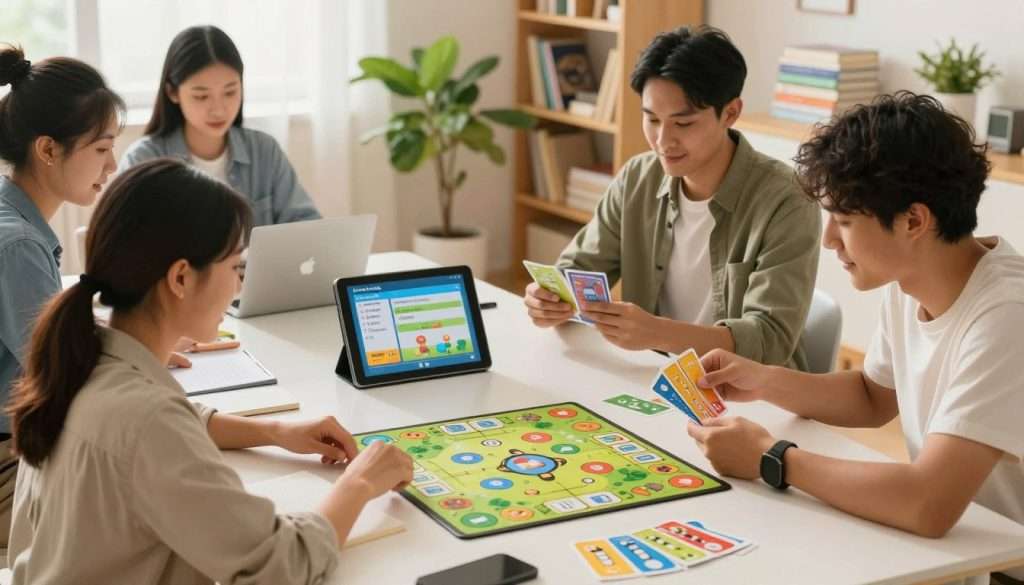
Matching visual learners with progress maps and color-coded levels
If you learn best through sight, turn your study into a visual journey. Create progress maps to show your journey from beginner to expert in a subject.
Use color-coded levels to mark your mastery of topics. Seeing a bright green section on your chart is a powerful visual reward that motivates you.
Using verbal challenges and teaching games for discussion-based learners
Do you learn better by talking? Use verbal challenges to make study sessions interactive debates or teaching simulations.
Try explaining a complex concept to an imaginary student or friend as if you’re the professor. This active recall method turns reading into a dynamic game of communication.
Adapting point systems for students who dislike competition
Not everyone loves competition. If you prefer a calm environment, adapt point systems to focus on personal growth.
Instead of competing, track your own streaks or set cooperative goals with a study partner. You can focus on your personal best to stay motivated without high pressure.
If this article resonated with you, my free book How to Become the Smartest Student in the Classroom offers a full system. It includes memory techniques, study routines, and strategies that stick. No cost, no catch. Grab your free copy here → https://www.studyingmachine.com/free-books/.
Tools and Materials for Building an Interactive Study System
Forget expensive software; your best tools for effective study strategies are likely already in your backpack. You don’t need a high-tech lab to make your study desk interactive. By focusing on interactive learning, you can make even boring subjects fun and rewarding.
Using index cards, a notebook, and a wall calendar without special technology
Start with the basics. A simple stack of index cards can become a deck of quest cards for your next review session. Use a physical notebook to track your “experience points” or mission logs manually.
A wall calendar is perfect for visualizing your progress. Mark off completed milestones with stickers or bold markers to see your streak grow in real-time. This tactile approach keeps you grounded and avoids the distraction of constant screen notifications.
Organizing digital study games with Google Sheets, Quizlet, and Anki
When you are ready to level up, digital tools can handle the heavy lifting. Google Sheets is fantastic for building custom scoreboards and tracking your long-term progress. It allows you to visualize your data without needing complex coding skills.
For active recall, platforms like Quizlet and Anki are industry standards. They automate your review schedule, ensuring you hit the right topics at the right time. These tools turn effective study strategies into a seamless, automated game.
Combining timers, checklists, and progress dashboards responsibly
It is easy to get carried away with too many apps. You want your tools to support your study sessions, not turn them into a second homework assignment. Use a simple kitchen timer for your sprints and keep your checklists short.
Your dashboard should be a quick reference guide, not a project in itself. If you spend more time setting up the game than actually studying, it is time to simplify your approach.
Keeping the system simple enough to use consistently
The best system is the one you actually use on a tired Tuesday night. Keep your rules clear and your rewards achievable. If your setup feels like a chore, strip away the extra layers until it feels fun again.
Want to go deeper? If this article resonated with you, my free book How to Become the Smartest Student in the Classroom gives you a full system — memory techniques, study routines, and strategies that actually stick. No cost, no catch. Grab your free copy here.
Make Gamified Study Habits Stick Beyond the First Week
The real challenge isn’t starting a new system, but keeping it alive after the initial excitement fades. To improve learning experience, you must treat your first week as a pilot program rather than a final setup.
Reviewing results and increasing difficulty gradually
After seven days, take a moment to look at your data. Check your accuracy rates, how much work you actually finished, and your personal stress levels. If you feel overwhelmed, simplify your goals. If you find the tasks too easy, it is time to increase the challenge to keep your brain engaged.
You can use the following table to evaluate your progress and adjust your effective study strategies:
| Metric | Low Performance | High Performance |
|---|---|---|
| Accuracy | Review basics | Increase difficulty |
| Stress Level | Simplify tasks | Maintain pace |
| Completion | Adjust schedule | Add new goals |
Balancing rewards with meaningful academic progress
It’s easy to get caught up in earning points, but remember, the goal is mastery. Make sure your rewards are tied to genuine understanding rather than just checking off boxes. If you find yourself rushing through material just to earn a digital badge, take a step back and refocus on the quality of your work.
Recognizing when a game mechanic is distracting from learning
Sometimes, a specific game element might become more of a chore than a help. If tracking your score creates more anxiety than motivation, drop that mechanic immediately. The best study techniques are the ones that support your growth without adding unnecessary pressure to your day.
Go Deeper With the Free Book How to Become the Smartest Student in the Classroom
Explore memory techniques, study routines, and strategies that actually stick
If this article resonated with you, my free book How to Become the Smartest Student in the Classroom gives you a full system to improve learning experience. It covers advanced memory techniques, sustainable study routines, and effective study strategies that actually stick.
Get the free copy at https://www.studyingmachine.com/free-books/
No cost, no catch. You can grab your free copy right here: https://www.studyingmachine.com/free-books/.
Conclusion
You now have the tools to turn your desk into a playground for your brain. By using these 5 gamified study techniques, you can make learning fun. This shift changes your mindset from dreading work to looking forward to the next challenge.
Whether you build study quests, battle flashcards, or do timed sprints, you control your progress. This means you can set your own goals and track your success.
Effective gamification is more than just earning points. It creates a structure that boosts your retention and keeps you motivated. This approach turns passive reading into an active, rewarding challenge that suits your style.
Try one small experiment this week. Turn a tough chapter into missions or challenge yourself in a closed-note boss round. Small changes can lead to big results if you stay consistent.
If you want to dive deeper, check out my free book, How to Become the Smartest Student in the Classroom. It offers memory techniques, study routines, and strategies that stick. There’s no cost and no catch. Get your free copy here at https://www.studyingmachine.com/free-books/ to master your academic journey today.
# 5 Gamified Study Techniques to Make Learning Actually Fun
Staring at a dry textbook can make studying feel like a desert. It’s hard to start and often feels repetitive. But, what if we told you that making learning fun is the secret to staying focused?
Enter gamification. It’s not about turning every lesson into a video game. It’s about using game elements like clear goals and visible progress in your schoolwork. We’ve got 5 gamified study techniques to make learning less of a chore and more rewarding.
## Why Gamification Can Make Studying More Effective
Games keep us engaged with a “just right” challenge. Adding these mechanics to studying creates a loop of motivation. Instead of vague goals, we set clear missions that trigger dopamine, making us feel we’re getting somewhere.
### The difference between meaningful practice and superficial rewards
A gold star is nice, but it doesn’t help you pass an exam. For gamification to work, the “points” and “badges” must represent real learning. We focus on tracking meaningful progress, not just time spent.
### Using fun learning methods without losing academic rigor
We’re not making school “childish.” We’re making it manageable. Game mechanics support us, helping us tackle tough material. Remember, if stress increases, it’s okay to adjust the rules!
## 5 Gamified Study Techniques to Make Learning Actually Fun
### How the five techniques turn ordinary studying into an interactive challenge
Think of these techniques as a flexible menu. You can pick what works best for you each day. These methods turn studying into an interactive experience where you’re the main character.
### Choosing game elements that match your subject, schedule, and learning goals
Not every subject fits the same game. Use the best parts of games in your schoolwork. Pick the mechanics that fit your current energy and goals.
### Setting rules that encourage progress instead of creating unnecessary pressure
The game should make starting work easier, not harder. Use these tools to measure your wins and find gaps. If it feels like a second job, scale it back.
## Build a Personal Study Quest With Missions and Milestones
### Breaking a large assignment into clear, achievable missions
A big assignment is intimidating. Break it into small missions. This clarity triggers dopamine, making you feel you’re getting somewhere.
### Creating checkpoints for reading, practice, review, and testing
Measure progress, not just time. Set checkpoints for understanding and mastering material. This ensures your quest improves learning, not just time spent.
### Rewarding completed milestones without depending on constant treats
Choose rewards that recharge you, not just snacks. Reach a milestone? Take a walk, listen to music, or relax. These rewards feel earned and keep motivation strong.
## Turn Flashcards Into a Spaced-Repetition Battle
### Organizing cards by difficulty and mastery level
Flashcards shouldn’t be stressful. Divide them into three decks: Easy, Medium, and Hard. This system helps focus on what you need to learn.
### Adding points, streaks, and accuracy targets to flashcard sessions
Make sessions a game by tracking accuracy. Aim for a 5-day streak or 90% accuracy. This makes repetition feel like a quest for mastery.
### Preventing memorization games from becoming passive recognition
Active recall is key. Explain concepts out loud or draw diagrams before checking answers. If you can’t explain it, you don’t get points!
## Use Timed Study Sprints to Beat the Clock
### Designing focused rounds with realistic time limits
A sprint is a short, focused work session. Choose different lengths for different tasks. The clock helps block distractions.
### Scoring progress by completed work rather than time spent
Count your “loot” at the end of a sprint. Measure output, not just time. This ensures you’re productive, not just busy.
### Adjusting the game when speed begins to reduce comprehension
Winning quickly isn’t everything. If you’re rushing, slow down. Comprehension is the ultimate prize.
## Create a Point System for Daily Study Habits
### Assigning points to high-value study behaviors
Not all study hours are equal. Active recall gets 10 points, while passive activities get 1 or 2. This encourages meaningful study techniques.
### Tracking weekly totals with a simple paper or digital scoreboard
Keep your progress visible. Use a whiteboard, notebook, or Google Sheets to log daily totals. Seeing points add up is satisfying.
### Using personal rewards that support—not replace—intrinsic motivation
Points should boost confidence, not be the prize. Set a weekly goal for a fun activity. This boosts motivation on tough nights.
## Make Review More Engaging With Quiz Games
### Turning notes and textbook chapters into question rounds
Make review interactive. Turn headings into questions. Explain concepts to friends or pets to beat the level.
### Playing solo quiz games with multiple difficulty levels
Rate your confidence before answering. If you’re unsure and get it right, that’s a big win! Immediate feedback makes games more effective.
### Studying with classmates through team challenges and friendly competition
Study groups can compete against material, not each other. See if the team can reach a combined score. This focuses on learning and explaining, not just winning.
## Use Leveling and Boss Challenges to Master Difficult Topics
### Defining beginner, intermediate, and advanced mastery levels
Think of your subject as a skill tree. Level 1 is basic vocabulary. Level 3 is applying concepts without help. Framing progress as “leveling up” makes learning exciting.
### Building a final “boss challenge” from mixed skills and concepts
Real exams mix topics and time limits. Use tools like Quizlet or Anki to create a final level of mastery.
### Replacing failure language with feedback and a second-attempt strategy
Don’t see wrong answers as failures. Use them as feedback and plan a second attempt. This approach helps tackle tough material.
## Choose the Right Gamified Study Method for Your Learning Style
### Matching visual learners with progress maps and color-coded levels
Visual learners can use progress maps and color-coded levels. Seeing your progress can be a huge motivator.
### Using verbal challenges and teaching games for discussion-based learners
Discussion-based learners can use “The Teacher Challenge.” Explain concepts to friends or pets as if you were the professor. This makes learning interactive.
### Adapting point systems for students who dislike competition
Not everyone wants a leaderboard. Focus on “Personal Bests” if competition stresses you out. Gamification should improve your experience, not just compete.
## Tools and Materials for Building an Interactive Study System
### Using index cards, a notebook, and a wall calendar without special technology
You don’t need fancy apps to start. A simple wall calendar and index cards can be powerful tools. They help you track progress and master material.
### Organizing digital study games with Google Sheets, Quizlet, and Anki
For digital tools, Quizlet is great for quick quizzes, and Anki handles leveling flashcards. Google Sheets is perfect for tracking points or creating a “Boss Challenge” dashboard.
### Combining timers, checklists, and progress dashboards responsibly
The best system is one you use. Pick a few tools, like a timer and checklist, and stick with them. Don’t let setup distract from actual studying.
### Keeping the system simple enough to use consistently
On tired nights, you won’t want complex systems. Keep your rules simple. The best techniques are quick to update.
## Make Gamified Study Habits Stick Beyond the First Week
### Reviewing results and increasing difficulty gradually
Check your “stats” once a week. If you’re finding the “Hard” deck too easy, increase the difficulty. This keeps you challenged but not overwhelmed.
### Balancing rewards with meaningful academic progress
Remember, points and badges are tools. The real reward is mastering material. Seeing grades improve is the ultimate high score.
### Recognizing when a game mechanic is distracting from learning
If you spend more time on decorations than studying, simplify. Gamification should fuel your learning, not be the focus.
### Go Deeper With the Free Book *How to Become the Smartest Student in the Classroom*
If you want to level up your learning, check out our book. It’s packed with strategies to help you succeed. No cost, no catch—just pure strategy to help you win at school.
Grab your copy here: [https://www.studyingmachine.com/free-books/](https://www.studyingmachine.com/free-books/)
## Conclusion
Studying doesn’t have to be a drag. Add game mechanics to make it engaging, measurable, and fun. Start small, pick one technique, and see how much easier it becomes to start studying. You’ve got this!
## FAQ
### Q: What exactly are gamified study techniques?
A: These are methods that use game-like elements like points and missions in academic tasks. They make learning fun and interactive.
### Q: Does gamification mean I just play video games instead of studying?
A: Not at all! Gamification uses game mechanics to support your real work. It makes studying more interactive and less of a chore.
### Q: Can these methods work for difficult subjects like Organic Chemistry or Calculus?
A: Absolutely. Gamified study techniques are great for complex subjects. They help break down tough material into manageable wins.
### Q: What if I’m not a “gamer”?
A: You don’t need to be! If you enjoy crossing things off lists or seeing progress bars, you already get gamification. These tools make your progress visible and goals clear.
### Q: Are digital tools like Anki or Quizlet necessary for this?
A: They are helpful but not required. You can create a great interactive system with just a notebook, index cards, and a timer. The strategy is key, not the software.
### Q: How can gamification improve the learning experience for someone who procrastinates?
A: Procrastination often stems from feeling overwhelmed. By turning assignments into missions with clear rewards, starting becomes easier and more rewarding.
### Q: Will using these engaging study methods take up more time?
A: Initially, setting up might take a few minutes. But in the long run, it saves time. You’ll focus better, finish faster, and remember more, reducing cramming.