

Do you ever feel butterflies in your stomach before a big test? You’re not alone. Feeling tense or worried is normal, but it can mess with your memory. We want to help you regain your focus and show off what you know.
We’re not aiming for a completely silent brain. Instead, we want you to be steady. With a few simple tools, you can handle your nerves well.
In this guide, we’ll show you how to beat exam anxiety with calming strategies. We’ll cover preparation, deep breathing, grounding, and positive self-talk. Let’s get you ready to face that test feeling calm and confident.
Key Takeaways
- Acknowledge that feeling nervous is a normal part of the learning process.
- Understand how intense worry impacts your memory and focus during assessments.
- Learn how to use breathing and grounding to stay present.
- Discover the power of positive self-talk to shift your mindset.
- Master simple planning habits to reduce your stress levels.
Why Exam Anxiety Happens Before Test Day
Ever wondered why your brain freaks out before you even see the first question? It’s normal to feel a bit of pressure when learning. This is a natural part of the process.
Most students feel normal test nerves at some point. It’s your body’s way of showing you care and want to do well.
The difference between normal nerves and overwhelming anxiety
There’s a thin line between feeling excited and being totally scared. Normal nerves are like a gentle push, keeping you alert and ready.
But when these feelings get too much, they stop helping. You might feel a racing heart, shallow breathing, or a dread that makes it hard to think.
How stress affects memory, focus, and physical comfort
Too much pressure can mess up your brain’s connection to stress and memory. High cortisol levels can block your memory, even after hours of studying.
You might also feel physical discomfort, like tense shoulders or a tight stomach. This is your body’s “fight or flight” system trying to protect you.
Why trying to eliminate every anxious feeling can backfire
It’s tempting to try and be perfectly calm, but it can actually make things worse. Fighting your feelings gives them more power.
Instead, try to notice your nerves without judging them. Accepting your nervousness can help those feelings fade faster.
| Feature | Normal Nerves | Overwhelming Anxiety |
|---|---|---|
| Mental State | Alert and focused | Distracted and foggy |
| Physical Feel | Mild butterflies | Tight chest or shaking |
| Impact on Test | Improves performance | Blocks recall |
| Duration | Short-lived | Persistent and draining |
Beat Exam Anxiety: Create a Practical Calm-Down Plan
Creating a calm-down plan is your secret weapon for staying cool under pressure. Instead of hoping for the best, you can build a roadmap that helps you beat exam anxiety before it takes hold. Think of this as your personal toolkit for those moments when the pressure starts to climb.
Identify your personal signs of pre-test anxiety
Everyone experiences stress differently, so the first step is knowing your own warning signs. You might notice yourself procrastinating on simple tasks, feeling a knot in your stomach, or experiencing restless energy. Paying attention to these signals early allows you to intervene before they spiral out of control.
Some students find that their internal dialogue turns negative, while others feel physically tense or scattered. Once you recognize your specific patterns, you can stop them in their tracks. This awareness is the foundation of effective pre-test anxiety relief.
Choose calming strategies you can use at home, at school, or at the testing center
It is tempting to collect a giant list of relaxation techniques, but that often leads to more confusion. Instead, pick two or three simple tools that you know work for you. You want strategies that are easy to use whether you are at your desk at home or sitting in the testing center.
“The goal is not to be fearless, but to be prepared to act despite the fear.”
Keep your choices simple. Whether it is a specific breathing pattern or a quick physical stretch, make sure you can perform it discreetly. Having a small, reliable menu of options keeps your focus on the task at hand rather than the stress itself.
Set a realistic goal for feeling prepared rather than perfectly calm
Many students make the mistake of trying to eliminate every single anxious feeling. Chasing perfect calm often creates an extra layer of pressure that makes you feel even more stressed. Aim for feeling prepared enough to act instead of trying to reach a state of total zen.
What to write in a short anxiety-management plan
Keep your anxiety-management plan brief and accessible. You can write these details on a small index card or a note on your phone to keep them handy:
- The Trigger: Identify the specific moment or task that usually sets off your nerves.
- The Physical Sign: Note how your body reacts, such as tight shoulders or a racing heart.
- The Chosen Response: List your two go-to calming tools.
- A Balanced Reminder: Write one encouraging, evidence-based statement to ground yourself.
By keeping this anxiety-management plan simple, you ensure that you can actually use it when you need it most. You are building a bridge between feeling overwhelmed and feeling ready to tackle your exam with confidence.
Use Slow Breathing to Reduce Nervousness Before an Exam
Did you know one steady breath can change everything? When you’re stressed, your breathing gets shallow and fast. This tells your brain you’re in danger. But, by using slow breathing for anxiety, you can stop this cycle and calm down.
Practice diaphragmatic breathing before test day
Diaphragmatic breathing, or belly breathing, is key to staying calm. Instead of raising your shoulders, expand your stomach as you breathe in deeply. This engages your diaphragm, helping you relax and reduce nervousness before exam day.
Try a simple inhale-and-exhale pattern when anxiety rises
When anxiety hits, try box breathing. Breathe in for four, hold for four, breathe out for four, and hold again for four. If holding your breath is hard, just focus on making your exhale longer. This is a top calming strategy.
Use breathing without making yourself feel pressured to relax immediately
Remember, you don’t need to be perfectly calm right away. If you’re still nervous, it’s okay. Consistency is more important than perfection when managing your nerves.
When to practice breathing during the final hour before bed
Practice these techniques in your last hour before sleep. This habit helps your body recognize the rhythm when you need it. Use the table below to see how different patterns can help you stay focused.
| Technique | Best For | Primary Benefit |
|---|---|---|
| Box Breathing | High-stress moments | Regulates heart rate |
| Belly Breathing | General preparation | Lowers physical tension |
| Extended Exhale | Immediate relief | Calms the nervous system |
Release Physical Tension With Movement and Grounding
Did you know your body holds stress your mind ignores? Feeling tight? You need a quick physical tension release to balance out. Moving helps your brain know you’re safe and ready.

Take a short walk to lower restlessness and mental overload
Feeling jittery? A short walk is your best ally. Just five minutes away from your desk can release pent-up energy. It gives your brain a clean break from frantic reviewing.
Walking clears mental fog, helping with pre-test anxiety relief. You’ll return to your work feeling refreshed and focused.
Relax your jaw, shoulders, hands, and stomach
Stress often hides in specific spots. Check your jaw; is it clenched? Gently drop it, letting your tongue relax.
Roll your shoulders back and down. Unclench your hands and soften your stomach. This physical tension release calms your nervous system instantly.
Use the five-senses grounding technique when anxious thoughts spiral
When your mind races, focus on the present. Grounding techniques are great for this. Try the 5-4-3-2-1 method:
- Acknowledge 5 things you see.
- Identify 4 things you can touch.
- Notice 3 things you hear.
- Recognize 2 things you can smell.
- Name 1 thing you can taste.
Adapt grounding techniques for a classroom or testing center
Worried about looking strange in a quiet exam room? You can be discreet. Press your feet into the floor and feel the chair against your back.
Focus on your pencil’s texture or your clothes’ feel. These actions provide pre-test anxiety relief without drawing attention. You’re in control, no matter where you are.
| Technique | Best For | Discretion Level |
|---|---|---|
| Short Walk | High restlessness | Low (Requires leaving) |
| Muscle Release | Tightness in jaw/shoulders | High (Invisible) |
| Five-Senses | Racing thoughts | High (Invisible) |
Reframe Catastrophic Thoughts Before They Take Over
Our brains often turn simple exams into big disasters. When you feel that knot in your stomach, you might think, “I will definitely fail,” or “One poor grade ruins everything.” This is called catastrophic thinking and makes tough moments seem impossible.
Recognize all-or-nothing thoughts about grades and failure
It’s easy to see things in black and white. You might think getting anything less than an A is a total failure. But learning is a journey, not a single event.
When you catch yourself thinking in extremes, call it a mental trap. Spotting these patterns is key to managing test anxiety. Naming the thought takes away its power over your feelings.
Replace frightening predictions with specific, evidence-based statements
Instead of letting your imagination run wild, look at the facts. Ask yourself, “What evidence do I have that I will fail?” Your past study sessions show you can succeed.
Replace scary predictions with realistic self-talk. Focus on what’s likely, not just possible. A balanced statement says the test might be tough, but you’re ready.
Separate your exam performance from your identity and long-term potential
Remember, one score doesn’t define you. It doesn’t measure your intelligence, character, or future success. You are more than a number on a page.
“Success is not final, failure is not fatal: it is the courage to continue that counts.”
Examples of helpful self-talk before a difficult test
When pressure builds, use these phrases to stay grounded:
- “I have prepared for this, and I will do my best with the knowledge I have.”
- “This test is challenging, but I can handle one question at a time.”
- “Even if I don’t get the grade I want, I will still have plenty of opportunities to grow.”
- “My worth is not tied to this exam result.”
Prepare Your Materials and Test Environment in Advance
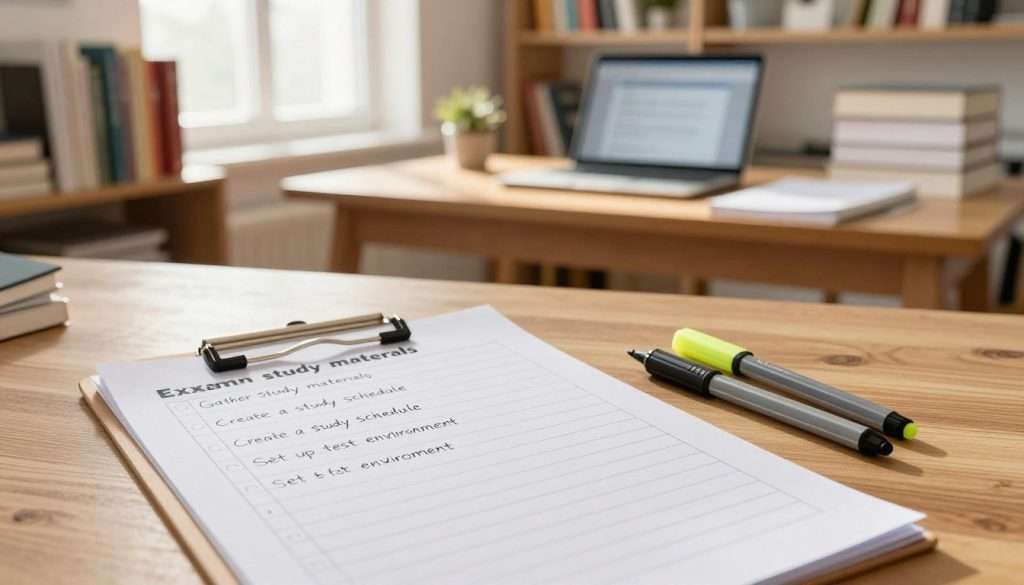
Think of your exam preparation checklist as your secret weapon for a smooth morning. Handling the logistics early frees up your mind for the test. This simple habit is one of the best test day tips to help you stay focused and calm.
Confirm the exam time, location, format, and rules
Before the night before, double-check the specific details for your exam. Know exactly where you need to be and what the format looks like. Understanding the rules—such as whether you can use a calculator or scratch paper—prevents unnecessary surprises.
Pack permitted supplies, identification, water, and comfort items
Gather everything you need in one spot. Having your ID, pencils, and water bottle ready means you won’t be scrambling at the last second. Being prepared gives you a sense of control that helps you avoid last-minute stress.
Plan transportation and arrival time to avoid last-minute stress
Aim to arrive at the testing center about 10 to 15 minutes early. This provides a nice buffer for traffic or parking issues without leaving you sitting in the lobby for too long. A little extra time allows you to settle in and breathe before the clock starts ticking.
Build a short checklist for in-person and online exams
Whether you are heading to a classroom or logging in from home, a quick list keeps you on track. Use these test day tips to organize your final preparations:
- For In-Person: Pack your ID, writing tools, and a light sweater in case the room is cold.
- For Online: Check your internet connection, ensure your device is fully charged, and clear your workspace of clutter.
- General: Review your exam preparation checklist one last time to ensure you haven’t missed any essential items.
Protect Sleep, Food, and Energy the Night Before
Your performance tomorrow depends on how you treat your body and mind tonight. It’s tempting to study late, but your brain needs rest. Prioritizing rest ensures you’ll be sharp tomorrow.
Use a realistic stopping time for late-night studying
Set a hard stop for studying at least two hours before bed. Trying to cram more info can make you tired. Closing your notes early lets your brain process what you’ve learned.
Choose familiar food and hydration instead of risky last-minute changes
For exam-day nutrition, stick to what you know. Avoid new foods or heavy meals. Keep your caffeine intake normal to avoid jitters.
Set up a low-stimulation bedtime routine
Dim the lights and put away screens. Reading or soft music can help you relax. This routine is key for good sleep before test day.
What to do if anxiety makes it difficult to fall asleep
If you can’t sleep, don’t stress. Getting up and doing something boring can help. Be kind to yourself; a little restlessness won’t hurt your performance.
Apply the Five Calming Strategies During the Final Hour
Your exam morning routine should be calm and relaxed. It’s not about rushing. By doing a series of actions, you can stay calm and feel ready for the test.
Start with breathing instead of frantic review
Don’t try to cram all your notes in the final hour before exam. Begin with four cycles of box breathing. This helps calm your heart and clears your mind.
Use movement and grounding to settle physical symptoms
If you’re feeling restless, take a short walk or stretch. You can also relax your jaw and shoulders. These calming strategies help keep your body calm when you’re anxious.
Repeat balanced self-talk and review only essential reminders
Change negative thoughts to positive ones, like “I’m well-prepared and ready to do my best.” Carry a small card with key formulas or concepts. This helps avoid feeling overwhelmed by too much information.
Follow your preparation checklist and leave enough time to arrive
Use a checklist to make sure you have everything you need. Give yourself plenty of time to get to the test site. Arriving early helps you stay calm and focused.
Use Test Day Tips When Anxiety Appears During the Exam
Even the best-prepared students can feel their minds go blank when the clock starts ticking. If you suddenly feel like your brain has hit a wall, do not panic. These test day tips are designed to help you regain your composure without losing precious time.
Pause briefly when your mind goes blank
When you feel that familiar surge of anxiety during exams, stop what you are doing immediately. Close your eyes for a second, take one deep, slow breath, and consciously relax your shoulders and jaw. Once you feel a bit more settled, read the question again with fresh eyes.
Begin with manageable questions to rebuild momentum
If a specific problem feels impossible, skip it for now. Focusing on a question you know how to solve is one of the most effective coping techniques for test anxiety. By answering the easy items first, you build confidence and momentum that will help you tackle the harder sections later.
Use discreet breathing and grounding without losing exam time
You do not need to make a scene to calm your nerves. Try the “five-senses” method by silently noting one thing you can see, hear, or feel in your immediate environment. This simple shift in focus keeps you grounded while you continue working through your paper.
When persistent anxiety may require support from a teacher, counselor, or healthcare professional
Sometimes, the stress feels too heavy to manage on your own. If you find that your anxiety during exams consistently prevents you from showing what you know, it is time to reach out. Talking to a trusted teacher, school counselor, or healthcare professional can provide you with the extra support and strategies you deserve to succeed.
Keep Building Confidence With a Complete Study System
True confidence isn’t about luck. It’s about having a reliable system that works every time. When you stop relying on emergency stress relief and start building a solid foundation, exams feel much less mysterious.
By focusing on long-term exam confidence, you transform your relationship with testing. You no longer have to fear the unknown because you have already mastered the material and the process.
How memory techniques can make preparation feel more manageable
Using the right memory techniques allows you to store information more effectively. Instead of cramming, you learn how to encode facts so they stick in your brain for the long haul.
This approach makes your study sessions feel lighter and more productive. When you trust your recall, you spend less time worrying about forgetting key details during the test.
Why consistent study routines reduce last-minute pressure
Adopting consistent study routines is the secret weapon for any successful student. When you study in small, regular chunks, you avoid the frantic energy that comes with last-minute panic.
This steady pace builds familiarity with the exam format and timing. You will find that your body and mind stay much calmer when you have practiced the process dozens of times before the big day.
| Feature | Emergency Stress | Systematic Confidence |
|---|---|---|
| Preparation | Last-minute cramming | Spaced repetition |
| Mindset | Fear of failure | Trust in the process |
| Outcome | High anxiety | Steady performance |
Get the free book How to Become the Smartest Student in the Classroom
If this resonated with you, we want to help you go even deeper. Our free book, How to Become the Smartest Student in the Classroom, gives you a full system for success.
It covers everything from advanced memory techniques to consistent study routines that actually stick. There is no cost and no catch—just pure, actionable advice to help you build long-term exam confidence.
Access the no-cost guide at https://www.studyingmachine.com/free-books/
Conclusion
Beating stress doesn’t mean you’ll never feel nervous again. It means you learn to notice and handle those feelings. Slow breathing, movement, and positive self-talk help you stay focused.
Regular habits make calm test prep a part of your life. Getting enough sleep and organizing early sets you up for success. This way, even tough moments seem easier.
You should feel prepared when you enter the exam room. Building confidence in taking tests is a skill you can improve with each exam. Keep practicing these steps to show your hard work.
Want to dive deeper into these strategies? My free book, How to Become the Smartest Student in the Classroom, offers memory techniques and study routines that work. It’s free with no catch. Get your copy here to enhance your study system and confidence.