

Does Sunday evening bring a sinking feeling? Monday is near, and your to-do list may feel like a mountain. Many students share this struggle, but constant academic panic is not necessary.
We believe the weekend study reset can make student life easier. It is not a huge project that ruins your free time. Small, planned actions can turn chaos into order.
Simple study preparation can help you regain peace of mind. Our goal is a stress-free week that protects your fun and sleep. This six-step plan covers planning, focus, and rest for a flawless week.
For deeper help, my free book, How to Become the Smartest Student in the Classroom, offers a complete system of memory techniques and routines. Grab your free copy here.
Key Takeaways
- Sunday anxiety is normal, but small habits can eliminate it.
- Effective planning prevents you from feeling reactive on Monday.
- You do not need to sacrifice rest to achieve academic success.
- A structured approach helps you maintain focus throughout your busy days.
- Protecting your sleep is a vital part of any high-performance routine.
What the Weekend Study Reset Can Do for Your Week
Most students see the weekend as time to escape. Yet the weekend study reset can become your secret weapon for academic success. It moves you from constant reaction to calm preparation with a clear map of your goals.
Define What a Flawless, Stress-Free Week Means for You
A flawless week does not mean controlling every surprise or finishing every task perfectly. Instead, you define success on your own terms. That may mean arriving prepared, knowing your next assignment, or feeling less rushed each morning.
When you define what a stress-free week looks like, you stop chasing impossible standards. You focus on small wins that move you forward. This clarity builds a sustainable academic life.
Identify the Schoolwork, Deadlines, and Decisions Creating Pressure
To clear your mind, try the mind-dump technique. Grab paper and list every school project, errand, worry, and decision filling your thoughts. Do not organize it yet; simply get everything out of your head.
After everything is on paper, you can see pressure points clearly. Writing down your stress helps you regain control. You may find your to-do list is more manageable than your anxiety suggested.
| Feature | Stressed Week | Reset Week |
|---|---|---|
| Monday Morning | Panic and confusion | Calm and prepared |
| Deadlines | Surprise arrivals | Anticipated and planned |
| Energy Levels | Exhausted by Wednesday | Consistent throughout |
| Decision Making | Reactive and impulsive | Proactive and focused |
Choose a Reset Window That Fits Your Weekend
Many students try an exhausting Sunday marathon to catch up on everything. Instead, choose a short, consistent window for the weekend study reset. It could be one hour Saturday morning or two hours Sunday afternoon, whenever your lifestyle allows.
Repeatable preparation works far better than sporadic, high-intensity cramming. To go deeper, read my free book How to Become the Smartest Student in the Classroom. It offers a full system of memory techniques, study routines, and strategies that stick. It costs nothing, has no catch, so grab your free copy here.
Step 1: Review Your Classes, Commitments, and Upcoming Deadlines
A stress-free week starts with an honest look at your workload. Effective study preparation means building awareness, not creating a rigid prison for your time. When you know what lies ahead, you stop guessing and start executing.
Gather Your Syllabi, Learning Management System Updates, and Notes
Start by gathering every item your professors have shared. Open your Learning Management System, check email for announcements, and find the physical syllabi on your desk. Everything you need to succeed is in these documents.
Check Assignments, Tests, Projects, and Due Dates
Scan these materials for major milestones. Find upcoming exams, major research papers, and group projects that need long-term effort. These tasks anchor your week, and spotting them early is one of the best study tips we can offer.
Separate Fixed Commitments From Flexible Study Time
Not all hours have the same purpose. Fixed commitments, such as class times, work shifts, or team practices, cannot move. Use flexible time for deep work or rest.
Record Every Deadline in One Reliable Calendar
Do not rely on memory to track your obligations. Put every deadline in one central digital or physical calendar, and check it daily. When everything is in one place, you gain a clear bird’s-eye view of your academic life.
Flag High-Stakes Tasks That Need Early Attention
Some assignments matter more than others. Use a highlighter or digital tag to mark high-stakes tasks needing extra focus.
If this approach to study preparation helps, use my free book. My free book How to Become the Smartest Student in the Classroom offers a full system: memory techniques and routines. You can grab your free copy here.
Step 2: Turn Your Weekly Responsibilities Into a Realistic Study Plan
Most students fail when they plan for a perfect world instead of real life. Turning a messy assignment list into a useful schedule creates a stress-free week. This system respects your actual capacity instead of relying on guesses.
Estimate the Time Each Assignment and Subject Requires
Stop assuming every task takes an hour. Use past experience to give each assignment a realistic time block. If a history paper usually takes three hours, schedule three hours, not one.
Break Large Projects Into Small, Scheduled Actions
Big projects are small tasks wearing a trench coat. Break them into steps like “outline introduction” or “find three sources.” This makes your time management easier throughout the week.
Plan Around Your Energy, Transportation, Meals, and Sleep
Your brain cannot run at 100% all day. Schedule hard work during peak energy hours, then save mindless tasks for tired periods. Also plan for your commute, meal prep, and a full night’s sleep.
Use Buffer Blocks for Unexpected Problems
Life happens, and plans rarely work perfectly. Leave a “buffer block” for emergencies or tasks that run over. This habit keeps a minor delay from ruining your entire schedule.
Limit Daily Priorities to What You Can Actually Complete
Trying to do everything at once can cause burnout. Pick your top three priorities and focus on them first. If you finish early, add more, but keep your list short.
| Planning Style | Expectation | Result |
|---|---|---|
| Optimistic | Everything goes perfectly | High stress and burnout |
| Realistic | Includes life’s interruptions | Consistent progress |
| Strategic | Prioritizes high-value tasks | Better grades, more free time |
If this article resonated with you, my free book How to Become the Smartest Student in the Classroom gives you a complete system. It includes memory techniques, study routines, and strategies that actually stick. There is no cost or catch; grab your free copy here → https://www.studyingmachine.com/free-books/.
Step 3: Reset Your Study Space and Eliminate Distractions
Your desk can support academic success or make schoolwork harder. See it as a friction-removal exercise, not a huge cleaning project. Clear it now to save mental energy for your next task.
Clear Your Desk of Everything Unrelated to the Next Task
A clear workspace tells your brain it is time to focus. Remove items unrelated to your subject, including old coffee mugs, loose papers, and other textbooks. Keeping only the essentials prevents wandering eyes and keeps your mind on the goal.
Prepare the Materials You Will Need for Each Class
Gather pens, highlighters, and specific notebooks before you begin. Ready materials prevent trips to find a stapler or charger. This habit is one of the most effective productivity hacks for maintaining momentum during a long study session.
Control Phone, Notification, and Website Distractions
Your phone can steal your attention. Move it to another room or use apps that block distracting websites. If it stays nearby, silence all notifications to protect your focus.
Create a Focus Setup for Deep Work
Deep work needs a dedicated space where you can enter a flow state easily. Close unnecessary browser tabs, just as you clear your physical desk. A tidy digital launch-pad helps you start tasks faster every time.
Keep Break Supplies Nearby Without Turning Them Into Distractions
Keep water or a healthy snack nearby so you can avoid constant trips. Do not let these items become reasons to procrastinate. Balance is key; simple supplies support your energy without breaking concentration.
| Feature | Distracted Setup | Optimized Setup |
|---|---|---|
| Phone Status | On desk, notifications on | In another room, silent |
| Desk Surface | Cluttered with old notes | Only current task materials |
| Browser Tabs | 20+ open tabs | Only relevant research sites |
| Break Supplies | Full meal, messy snacks | Water, simple healthy snack |
If you want more help, my free book How to Become the Smartest Student in the Classroom explains memory techniques and study routines. There is no cost and no catch. You can grab your free copy here → https://www.studyingmachine.com/free-books/.
Using these productivity hacks will change how you approach your entire week.
Step 4: Prepare Smarter Study Sessions for Every Subject
Your study routine works best when you use methods that help you remember information. Do not just count hours; make each minute support long-term memory.
Match the Study Method to the Type of Material
Each subject needs a different approach. Tailor your study preparation to the course material.
- Math and Science: Focus on solving problems and working through equations.
- History and Literature: Practice explaining concepts or themes in your own words.
- Languages: Use flashcards or speaking exercises to build fluency.
Use Active Recall Instead of Passive Rereading
Passive rereading can trick you into thinking you know the material. Active recall makes your brain retrieve information instead of viewing it on a page.
Testing yourself builds stronger neural pathways. This change to your study tips can save hours of wasted effort.
Schedule Spaced Review Before Tests and Quizzes
Cramming weakens deep learning. Review material over several days so your brain can store it more effectively.
Build a Short Retrieval Practice Set for Each Class
You need only a short time to see results. Create a five-minute retrieval set for each subject. These small, repeated actions make your study routine a reliable habit and keep you ahead.
Write Down Questions to Ask Before You Get Stuck
Confusion grows when you ignore gaps in your understanding. Keep a notepad nearby and write specific questions while you study. Answering them early keeps you from hitting a wall later in the week.
My free book How to Become the Smartest Student in the Classroom gives a full system of memory techniques, study routines, and strategies. These strategies actually stick, and it costs nothing; there is no catch. Grab your free copy here → https://www.studyingmachine.com/free-books/.
Step 5: Organize Notes, Assignments, and Digital Files Before Monday
Nothing ruins a Monday morning faster than searching for a missing assignment. A solid study routine covers more than reading; it also helps manage your workspace. Tidy files help your brain focus on learning, not searching.
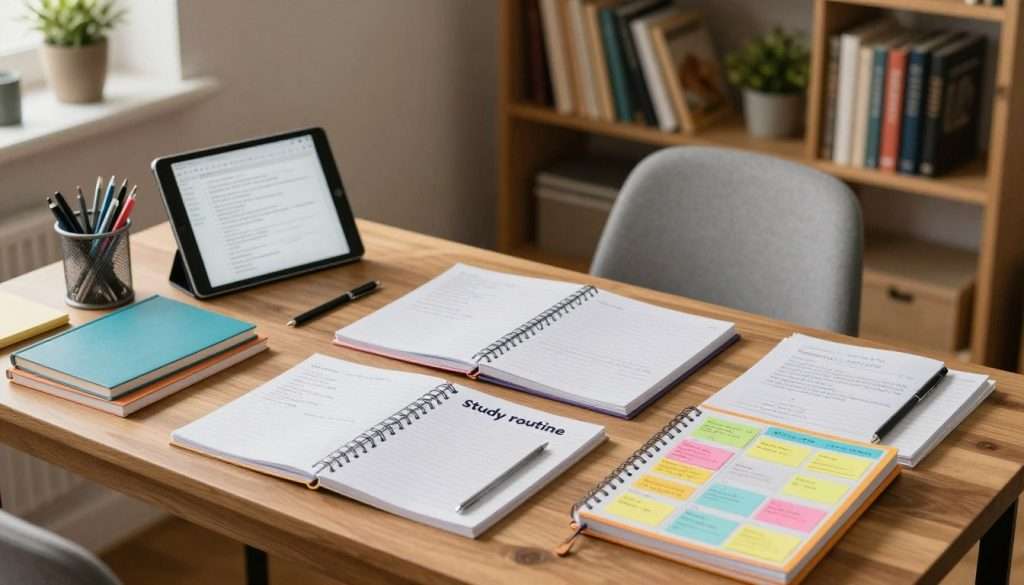
Sort Class Notes Into a Consistent Filing System
Gather your loose papers and digital scraps. Create a simple system where each class has its own space. Use binders or digital folders, and organize them by subject to save time.
Rename and Store Digital Documents So They Are Easy to Find
Do not let your downloads folder become a graveyard for important documents. To master your study routine, choose where you save each file. Move files into their proper folders right away, so you can find every syllabus or project draft.
Review Incomplete Work and Identify the Next Action
Review unfinished tasks and divide them into small, manageable steps. Instead of writing “History Project,” write “Draft the first paragraph of the intro.” This change turns a stressful task into a clear goal.
Use Descriptive File Names and Class-Specific Folders
Use clear, descriptive names for every file you save. A file named “History_Essay_Draft_Final.docx” is easier to find than “Document1.docx.” Label folders with the class name and semester to control your digital files.
Back Up Important Work Before the Week Begins
Do not assume your computer will always work. Back up essential files to a cloud service or external drive. Five minutes of syncing can keep a technical problem from disrupting your study routine.
For deeper guidance, my free book How to Become the Smartest Student in the Classroom offers a full system for memory and productivity. Grab your free copy here → https://www.studyingmachine.com/free-books/.
Step 6: Build a Monday-Ready Routine for Time Management and Productivity
Imagine waking Monday without the sinking feeling that you are behind. Build a proactive study routine that turns Sunday evening into a launchpad for success. This approach does not add work; it makes life easier for your future self.
Choose the First Three Academic Priorities for Monday
Skip the massive to-do list and choose three essential tasks. Naming your top priorities saves mental energy and shows you what to do next. Clarity is the ultimate productivity hack.
Prepare Your Bag, Clothes, Meals, and Morning Materials
Decision fatigue can strike before you leave home. Choose your outfit, pack your bag, and prepare lunch ahead of time. Ready materials save energy for learning and remove friction that can cause procrastination.
Set Start Times for Studying Instead of Relying on Motivation
Motivation changes, but a schedule stays reliable. Treat study sessions like appointments instead of waiting for the right mood. A specific start time removes guesswork from your day.
Use Short Focus Blocks When Your Schedule Is Full
If classes or commuting fill your day, use short, intense focus blocks. Even twenty minutes of deep work can improve your time management. These bursts stop tasks from piling up and keep your momentum alive.
Protect Your Sleep as Part of Your Study Routine
Your brain needs rest to store what you have learned. Sleep is not only healthy; it is a vital part of your productivity hacks. A rested student works more efficiently than one relying on caffeine and stress.
| Feature | Chaotic Monday | Prepared Monday |
|---|---|---|
| Morning Energy | Low (Decision Fatigue) | High (Ready to Start) |
| Focus Level | Scattered | Laser-Focused |
| Stress Levels | High | Low |
| Outcome | Reactive | Proactive |
If this article resonated with you, consider my free book How to Become the Smartest Student in the Classroom. It offers a full system with memory techniques, study routines, and strategies that actually stick. There is no cost or catch; grab your free copy here → https://www.studyingmachine.com/free-books/.
Step 7: Test the Plan and Adjust It Before the Week Starts
Even strong plans need a reality check before the week begins. You organized your materials, but now check whether your schedule is truly sustainable. A truly stress-free week requires honest goals for each day.

Compare Your Planned Workload With the Hours You Actually Have
Review your calendar and subtract fixed needs, such as classes, meals, and sleep. Students often overfill their free time. If planned study exceeds available hours, cut tasks at once.
Remove Low-Value Tasks and Reorder Urgent Work
Good time management means knowing what to skip. Find tasks that add little value to your academic goals. If a task is neither urgent nor important, delay or remove it.
| Task Type | Priority Level | Action Required |
|---|---|---|
| Exam Review | High | Keep in schedule |
| Optional Reading | Low | Move to weekend |
| Group Project | Medium | Schedule for Tuesday |
Create a Backup Plan for Missed Sessions or Unexpected Assignments
Life rarely follows a plan, so leave room for change. If an emergency makes you miss a session, set a catch-up window in advance. These study tips help you move forward when unexpected problems arise.
“Flexibility is the key to stability. When you plan for the unexpected, you stop fearing it.”
Use a Sunday Evening Checkpoint
Spend ten minutes Sunday night reviewing the week ahead. This final check should make your plan feel helpful, not overwhelming. If your list makes you anxious, simplify it before Monday morning.
Measure Progress by Completed Actions, Not Perfect Productivity
Remember, time management is a skill, not a perfection test. You can have a successful week without finishing every item. Complete your most important actions, and your stress-free week can become the new normal.
If this article resonated, my free book How to Become the Smartest Student in the Classroom offers a full system. It includes memory techniques, study routines, and strategies that actually stick. It costs nothing, has no catch, and you can grab your free copy here.
Conclusion
You now have a clear path to reclaim your schedule. Use the weekend study reset to turn Sunday into a secret weapon for academic success. This simple plan reviews your week, sets realistic work, clears distractions, and organizes materials for a flawless week.
Remember, you do not need to spend your entire weekend buried in books. Keep your preparation to about an hour or less to protect your recovery time. If your future self feels ready on Monday morning, you have done enough.
These productivity hacks make your life easier, not harder. Trust the process, and watch your daily routine become smoother. You deserve to feel prepared and in control of your goals.
Want to go deeper? If this article resonated, read my free book, How to Become the Smartest Student in the Classroom. It gives you a full system.
You will find memory techniques, study routines, and strategies that actually stick. There is no cost and no catch. Grab your free copy here at https://www.studyingmachine.com/free-books/ to take your learning to the next level.
# The Weekend Study Reset: Prep for a Flawless, Stress-Free Week
We’ve all been there. It’s Sunday afternoon, and the familiar knot in your stomach starts tightening. The Sunday Scaries feel real, and Monday looms like a final boss.
But a flawless week does not require working through your entire Saturday and Sunday.
The weekend study reset is not a productivity marathon that leaves you exhausted. It uses small, planned actions to make your week calmer and less reactive. This seven-step guide helps you plan, organize, and protect your sleep without giving up rest or fun.
## What the Weekend Study Reset Can Do for Your Week
### Define What a Flawless, Stress-Free Week Means for You
A flawless week does not mean completing every task with 100% perfection. Real life happens. Success means feeling prepared, not panicked, and knowing what is due next.
Your wins may include setting a study routine that requires no thought on Tuesday morning.
### Identify the Schoolwork, Deadlines, and Decisions Creating Pressure
Before fixing chaos, you must see it. Try a “mind-dump” on paper or in a fresh Notion page. Write down schoolwork, errands, worries, and small choices, such as what to wear.
Putting these thoughts on paper can lower pressure right away.
### Choose a Reset Window That Fits Your Weekend
Do not turn Sunday into a second Monday. Choose a 30- to 60-minute reset window that fits your schedule. A short, repeatable preparation burst beats an exhausting Sunday marathon.
## Step 1: Review Your Classes, Commitments, and Upcoming Deadlines
### Gather Your Syllabi, Learning Management System Updates, and Notes
Open Canvas, Blackboard, or Google Classroom. Gather your syllabi and recent announcements to see the full picture.
Check whether a professor moved a deadline or mentioned a surprise quiz in class notes. This prevents later “wait, that was due today?” moments.
### Check Assignments, Tests, Projects, and Due Dates
Put every deadline in one reliable place, such as Google Calendar or a physical planner. Highlight tests, major projects, and heavily weighted assignments. These “big rocks” need early attention.
### Separate Fixed Commitments From Flexible Study Time
Be honest about your time. Mark fixed blocks, including classes, your shift at Starbucks, and soccer practice. Use the remaining gaps as flexible study blocks.
This soft plan shows your available time without creating an unrealistic schedule.
## Step 2: Turn Your Weekly Responsibilities Into a Realistic Study Plan
### Estimate the Time Each Assignment and Subject Requires
Avoid “optimism bias.” A paper may seem like one hour of work but take four. Estimate each task’s actual size.
If a biology chapter has 40 pages, give it enough time. Honest estimates create a more stress-free week.
### Break Large Projects Into Small, Scheduled Actions
Do not write only “Research Paper” on your to-do list. Schedule actions such as “Find three sources on JSTOR” or “Draft the intro paragraph.” Small actions feel easier to start and harder to avoid.
### Plan Around Your Energy, Transportation, Meals, and Sleep
Respect your energy. If you have a long commute or post-lunch dip, avoid scheduling hard math problems then.
Use the “fridge reality check.” Preparing snacks or meals Sunday reduces decisions during the week and saves brainpower.
## Step 3: Reset Your Study Space and Eliminate Distractions
### Clear Your Desk of Everything Unrelated to the Next Task
Think of this as “friction removal.” You do not need to deep-clean your room. Clear your desk and leave Monday’s first-task materials there.
A clear space can support a clear mind.
### Prepare the Materials You Will Need for Each Class
Do not spend ten minutes searching for a highlighter or lab manual. Prepare your textbooks, notebooks, and pens ahead of time.
When focus time begins, you can start immediately.
### Control Phone, Notification, and Website Distractions
Your phone can pull you away from study tips. Silence notifications or move your phone to another room. Use Forest or Freedom to limit distracting websites.
These digital boundaries are useful productivity hacks.
## Step 4: Prepare Smarter Study Sessions for Every Subject
### Match the Study Method to the Type of Material
Different subjects need different methods. In math or physics at MIT, focus on solving problems. In biology or history at UC Berkeley, explain concepts aloud.
Match the method to the material for better results.
### Use Active Recall Instead of Passive Rereading
Passive rereading can make you feel familiar with information without learning it. Use active recall instead. Ask questions, use Anki flashcards, or summarize concepts from memory.
This harder work helps information stick.
### Schedule Spaced Review Before Tests and Quizzes
Do not cram. Use your weekend reset to schedule short “retrieval sets” for each class. Reviewing information over several days works better than one session before a test.
## Step 5: Organize Notes, Assignments, and Digital Files Before Monday
### Sort Class Notes Into a Consistent Filing System
Use physical folders or digital tools such as OneNote. Keep the system consistent, and sort notes by class and date.
This makes Tuesday’s lecture diagram easier to find later.
### Rename and Store Digital Documents So They Are Easy to Find
“Document1.pdf” makes organization harder. Rename files with clear titles, such as “Bio_LabReport_Draft1.”
Try a 27-tab digital tidy: close unneeded tabs and save the ones you need.
### Review Incomplete Work and Identify the Next Action
Review unfinished tasks from last week. Replace vague names with one clear “next action.”
Changing “Study History” to “Read pages 50-60 of the textbook” makes action more likely.
## Step 6: Build a Monday-Ready Routine for Time Management and Productivity
### Choose the First Three Academic Priorities for Monday
Do not begin Monday with twenty tasks. Choose your top three academic priorities. Completing them makes the day a win.
This keeps your attention on work that matters.
### Prepare Your Bag, Clothes, Meals, and Morning Materials
Make Monday morning require fewer decisions. Create a “launch-pad” with your packed bag, ready chargers, chosen clothes, and lunch in the fridge.
Save your mental energy for class, not mismatched socks.
### Set Start Times for Studying Instead of Relying on Motivation
Motivation changes often. Set a specific start time instead of waiting to feel ready.
Use short focus blocks, such as the Pomodoro Technique. Starting often creates momentum.
## Step 7: Test the Plan and Adjust It Before the Week Starts
### Compare Your Planned Workload With the Hours You Actually Have
Check your plan Sunday evening. Does it fit after sleep, meals, and travel?
If you planned 10 work hours for an 8-hour day, something must change.
### Remove Low-Value Tasks and Reorder Urgent Work
Be ruthless when you are overbooked. Remove low-value tasks that will not affect your grades or well-being.
Put urgent and important assignments first.
### Create a Backup Plan for Missed Sessions or Unexpected Assignments
Life happens. If a friend’s surprise visit or a technical glitch interrupts studying, use a flexible backup block later.
One problem does not have to ruin your week. Completed actions matter more than a perfect plan.
## Conclusion
Use a small weekend reset window to create a week that feels supportive instead of overwhelming. You have tools, a plan, and a mindset for sustainable study preparation.
Now enjoy the rest of Sunday—you’ve earned it.
## FAQ
### Q: What is the primary goal of the weekend study reset?
A: The goal is to organize your week through small, planned actions. This reduces the “Sunday Scaries” and supports stress-free study preparation.
### Q: How can I improve my time management during a busy school week?
A: Separate fixed commitments, such as classes, from flexible study blocks. Break large projects into small actions, and set start times instead of waiting for motivation.
### Q: What are some effective study tips for long-term retention?
A: Replace passive rereading with active recall and spaced review. Use Anki flashcards or explain concepts without notes to strengthen your study routine.
### Q: How does a “digital tidy” help with a flawless week?
A: A digital tidy closes extra tabs, renames unclear documents, and organizes files in Google Drive or Dropbox. It reduces digital friction, so you can find files and start faster.
### Q: What should I include in my Monday-ready routine?
A: Use “launch-pad” habits. Prepare your bag, chargers, and clothes, and choose your top three academic priorities.
This reduces decision fatigue and supports time management after you wake up.
### Q: Why is the “fridge reality check” mentioned in the study preparation process?
A: It reminds you to reduce daily choices, such as deciding what to eat for lunch. Preparing meals protects focus for demanding schoolwork and study routine sessions.