
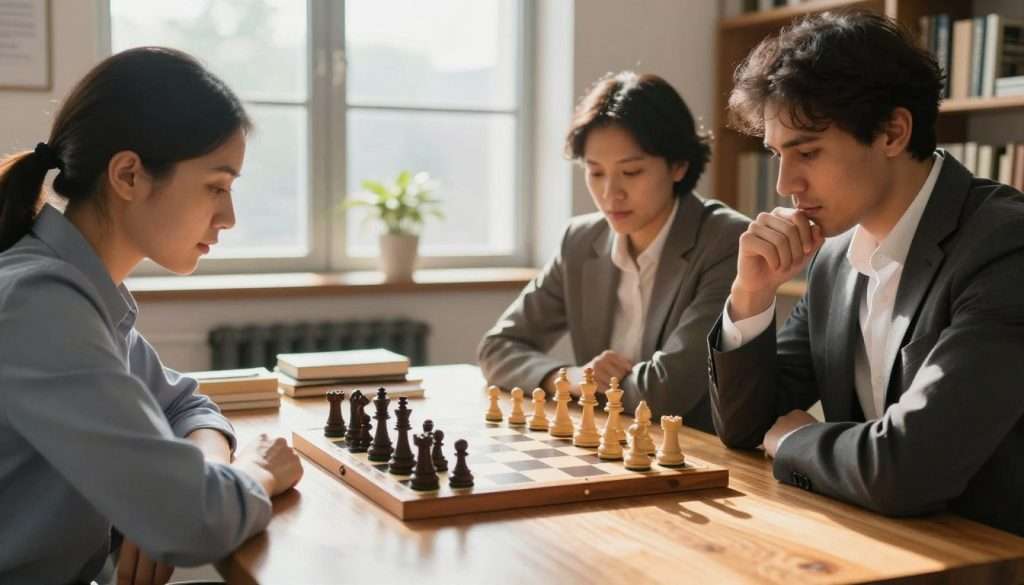
Two people sit across from each other, focused on sixty-four squares. The game looks quiet, but their minds perform a major workout. This shows how chess improves your brain: it builds memory, logic, and long-term planning.
Students often hear about the many chess benefits. Chess will not grant genius IQ or replace medical care. Instead, this classic game acts like a gym for your mind, supporting cognitive improvement through sharper focus and decision-making skills.
Prioritizing your brain health is a smart move for any lifelong learner. Dive deeper into these concepts with my free book, How to Become the Smartest Student in the Classroom. It gives a complete system to master your studies, and you can grab your free copy here while exploring seven practical strategies for becoming a more adaptable student.
Key Takeaways
- Chess functions as a rigorous mental workout for memory and logic.
- The game strengthens your ability to plan and make quick decisions.
- Consistent practice supports long-term focus and mental agility.
- It is a practical tool for students rather than a magic solution.
- Strategic thinking gained on the board translates to better study habits.
How Chess Improves Your Brain: A Practical Learning Advantage
To understand how chess improves your brain, look beyond the board. Chess is not only about moving pieces; it connects game skills with daily study habits. When you check moves during a match, you practice checking math work or an essay.
Connect chess benefits to everyday studying
We often view chess benefits as separate from school, but they matter most at your desk. Treat each study session like a complex position: weigh evidence and stay focused on your goal. Patience during a hard game builds stamina for tough assignments.
Set realistic expectations about cognitive improvement
Chess is a fantastic training ground, but it cannot instantly boost your IQ or guarantee perfect test scores. Research shows gains are often modest and gradual, shaped by steady effort rather than casual play. Treat it as a tool for intellectual development alongside other smart study habits.
Use deliberate practice instead of passive play
Playing game after game without thought brings little growth. You need to engage in deliberate practice: focus on specific weaknesses instead of hoping to win. This active method makes your brain work harder and builds stronger neural pathways for learning.
Track thinking habits, errors, and progress
To grow, keep a record of your journey by noticing mistakes during a match and asking why they happened. Tracking errors turns every loss into a valuable lesson that helps prevent repeated mistakes in your studies. My free book How to Become the Smartest Student in the Classroom offers a full roadmap to master these skills.
Step One: Strengthen Working Memory by Holding Positions in Mind
A sharper mind begins with one simple habit: holding complex information in your head. When you play, you do more than move plastic pieces. You use memory enhancement to picture the board before touching a piece.
Practice remembering pieces, threats, and candidate moves
To improve, learn to hold the entire game state in your mind. This chess strategy helps your brain track each piece and possible threats.
Start with short visual recall exercises
You do not need to be a grandmaster to begin. Study a board for ten seconds, close your eyes, and rebuild the position mentally. This small daily challenge works better than an exhausting study marathon.
Transfer chess memory techniques to schoolwork
This practice also supports your academic life. Training your brain to hold positions builds cognitive improvement across every subject you study.
Use chunking to remember formulas, vocabulary, and concepts
As you group chess pieces into patterns, group study materials through “chunking.” Break long word lists into small, meaningful groups. This makes complex formulas and vocabulary easier to recall during an exam.
Review mistakes without relying on the board
Analyzing games after they end helps you grow. Instead of letting the board guide you, reconstruct each position from memory.
Reconstruct the position and explain what changed
Recreating a mistake forces your brain to identify what changed in the position. This reflection supports cognitive improvement and helps prevent the same errors later.
| Memory Task | Chess Application | Academic Application |
|---|---|---|
| Visualization | Holding board positions | Recalling textbook diagrams |
| Chunking | Grouping tactical patterns | Organizing study notes |
| Reflection | Analyzing past mistakes | Reviewing exam errors |
If this article resonated with you, my free book How to Become the Smartest Student in the Classroom gives you a full system. It includes memory techniques, study routines, and strategies that actually stick. There is no cost or catch; grab your free copy here → https://www.studyingmachine.com/free-books/.
Step Two: Improve Concentration Through Focused Calculation
Many people think focus is a personality trait, but you can train it like a muscle. You do not need a “gift” for sitting still to gain real cognitive improvement each day. Treat your mind like an athlete treats their body, and build stamina for deep work.
Build a distraction-free chess practice routine
To stay on task, create an environment that supports your goals. Clear your desk of phones, tablets, and anything else that pulls your eyes from the board.
Use timed sessions that match your current attention span
Do not try to focus for an hour if you can manage only ten minutes. Start with short, intense bursts of play that match your current ability. As you get comfortable, slowly stretch these sessions to build endurance.
Calculate variations before moving a piece
The secret to better problem-solving abilities is learning to pause before you act. In chess, look at the board and play out the game in your head. Do this before touching a piece.
Ask what happens next, what the opponent threatens, and what changes
When you look at a position, force yourself to answer these three simple questions:
- What happens next if I make this move?
- What is my opponent threatening to do on their turn?
- How does the board state change after these exchanges?
These questions turn a chaotic game into a logical puzzle. They force your brain to slow down and prioritize brain health over impulsive reactions.
Apply sustained attention to difficult study tasks
You can apply this same logic to schoolwork. When you face a tough reading assignment or complex math problem, calculate your approach before writing.
Replace constant task-switching with focused work intervals
Stop jumping between your textbook, email, and social media apps. Instead, commit to one task for a set period, as you would during a chess match.
If you want to explore these methods, read my free book How to Become the Smartest Student in the Classroom. It gives you a full system for memory and study routines. You can grab your free copy here.
Step Three: Develop Critical Thinking Skills by Comparing Choices
Better decisions help you on the chessboard and in the classroom. People often grab the first idea that comes to mind, but it may not work best. Slowing down builds critical thinking skills that help you far beyond the game.
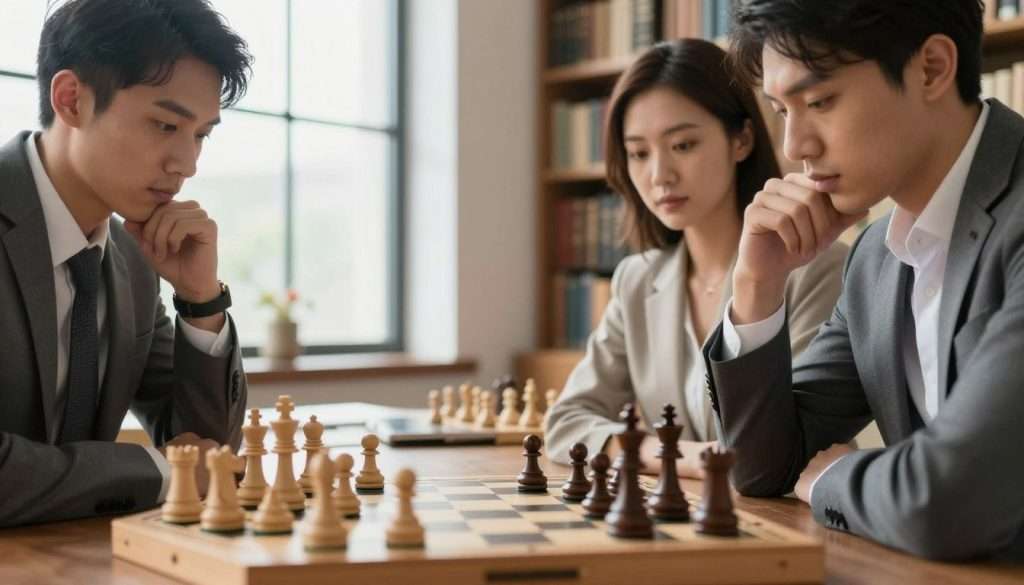
Generate multiple candidate moves before choosing one
When you play, find at least three different moves before touching a piece. This habit keeps you from choosing the first flashy option. It also helps you notice hidden opportunities.
Separate useful options from attractive but unsupported ideas
Not every move that looks good is strong. Some moves are traps that cause trouble later. Filter out “shiny” moves without substance, and choose moves that improve your position.
Evaluate decisions with concrete criteria
To make better choices, use a clear standard to judge your options. A consistent checklist replaces guessing with logical analysis. This process supports intellectual development by turning feelings into solid plans.
Compare safety, activity, material, space, and long-term consequences
When you analyze a position, use these five pillars of chess strategy to find the strongest move:
- Safety: Does this move keep my king secure?
- Activity: Are my pieces working together effectively?
- Material: Am I gaining or losing value on the board?
- Space: Does this move give me more room to maneuver?
- Consequences: What is my opponent likely to do next?
Use the same comparison process in academic work
You can use this same logic in your schoolwork. Whether you solve a math problem or write an essay, do not choose the first answer that feels right. Pause and compare your options with the evidence you gathered.
Evaluate evidence, methods, and possible answers before committing
Before writing a final answer, ask whether you considered all the facts. “Does this method actually solve the problem, or am I just hoping it works?” Treating your studies like a complex position builds discipline for academic success.
“The quality of your decisions determines the quality of your results. Slow down, compare your options, and choose with purpose.”
If you want to explore these systems, my free book How to Become the Smartest Student in the Classroom gives you a full system for memory and study routines. Get your free copy here → https://www.studyingmachine.com/free-books/.
Step Four: Build Problem-Solving Abilities With Chess Strategy
Think of chess as a tangled ball of headphones, with one knot to untangle at a time. Many students approach homework the same way and feel overwhelmed by a large task. Using chess strategy as a mental framework turns chaos into clear, manageable steps.
Identify the real problem before searching for a solution
Before making a move, pause and study the board. Figure out what is happening instead of reacting to the last piece moved.
Assess immediate threats, positional weaknesses, and available resources
Ask what your opponent wants to do right now. Find weak squares in their camp and see which pieces can join the action. This habit builds the problem-solving abilities needed for tough academic assignments.
Break complex positions into manageable questions
When a position looks impossible, do not solve everything at once. Break it into smaller pieces your brain can handle easily.
Use a repeatable scan for checks, captures, threats, and defensive moves
We recommend a consistent checklist whenever you face a difficult position. This exercise builds critical thinking skills and helps you avoid missing obvious moves:
- Are there any immediate checks I can give?
- Can I capture any unprotected pieces?
- What is the biggest threat my opponent is creating?
- Do I have a safe square to retreat to if I am attacked?
Learn from failed solutions instead of guessing repeatedly
Guessing when you are stuck rarely helps you grow. If you make a mistake, treat it as a data point, not a failure.
Classify errors as calculation, evaluation, planning, or time-management mistakes
When reviewing your games, identify why things went wrong. Did you miscalculate a sequence, or choose the wrong goal? Labeling errors helps you stop repeating them and build real critical thinking skills.
If this article resonated, try my free book How to Become the Smartest Student in the Classroom. It gives you a full system with memory techniques, study routines, and strategies that actually stick. No cost, no catch. Grab your free copy here → https://www.studyingmachine.com/free-books/.
Step Five: Improve Planning and Executive Function With Multi-Move Goals
Planning well supports intellectual development beyond the chessboard. Many players use old habits instead of studying the current position. Focusing on each moment can improve your brain health and decision-making speed.
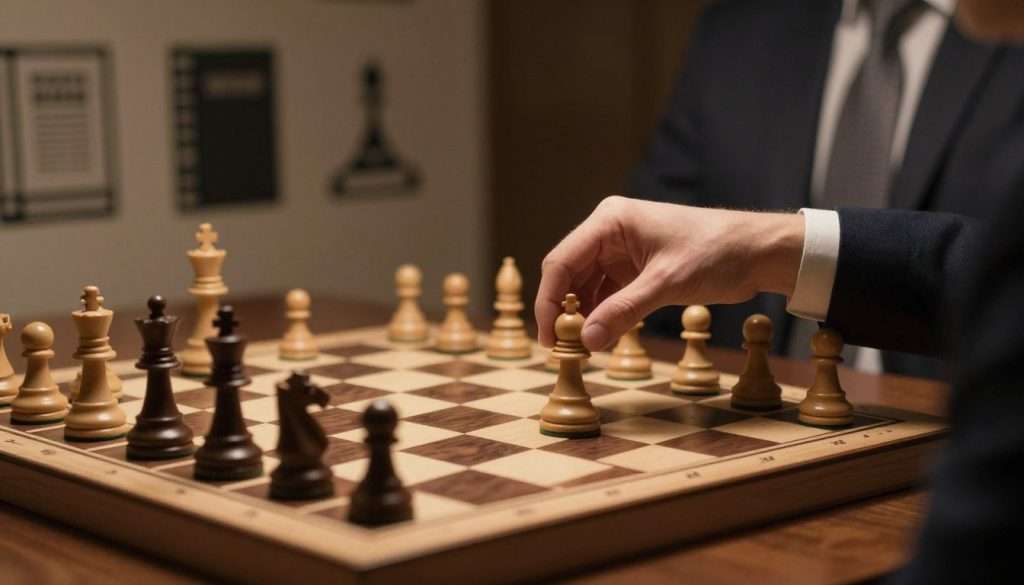
Create a plan based on the position rather than a favorite opening
A familiar opening may feel safe and comfortable. However, growth begins when you stop forcing memorized sequences. Study the board’s current features before choosing a move.
Match plans to pawn structure, piece placement, and king safety
Let the game’s position guide your plan. Study your pawn structure to decide whether to attack the wings or center. Check piece placement and king safety, because they shape the best chess strategy.
Balance immediate actions with long-term objectives
Life, like chess, requires balance between urgent problems and larger goals. You must answer immediate threats without reacting to every opponent move. Weighing short-term needs against long-term goals helps every student.
Decide when to calculate tactics and when to improve a piece
Sometimes, you must calculate a sharp tactic to survive. At other times, a quiet move improves your position and supports intellectual development.
Turn chess planning into a study-planning habit
Chess planning can guide your daily academic routine. Treat study sessions like complex positions, so you become proactive instead of reactive. This method keeps your mind engaged and organized for long-term brain health.
Choose priorities, sequence tasks, and review results each day
First, identify your most important tasks and order them logically. After working, review what went well and what needs improvement. This planning and reflection cycle supports steady progress.
| Planning Element | Chess Application | Study Application |
|---|---|---|
| Prioritization | Identifying key threats | Focusing on high-value assignments |
| Sequencing | Developing pieces in order | Breaking projects into steps |
| Review | Analyzing post-game errors | Checking completed work for accuracy |
If this article resonated with you, my free book How to Become the Smartest Student in the Classroom offers a full system. It includes memory techniques, study routines, and strategies that actually stick. There is no cost or catch; grab your free copy here → https://www.studyingmachine.com/free-books/.
Step Six: Enhance Learning and Recall Through Pattern Recognition
Imagine shoving random socks into a drawer instead of folding them neatly. This difference shows the gap between rote memorization and true pattern recognition. When you see a problem’s structure, you stop guessing and start understanding. That change strongly supports your intellectual development.
Learn recurring tactical and positional patterns
Chess has repeating themes that appear in game after game. Studying them builds a mental library of solutions you can access quickly.
Study forks, pins, skewers, discovered attacks, and overloaded defenders
These tactical motifs form the game’s building blocks. A fork happens when one piece attacks two targets at once, while a pin restricts an opponent’s movement. Spotting these conditions helps you respond with speed and precision.
Use meaningful patterns instead of memorizing isolated moves
Memorizing moves without context is like learning a language from a dictionary. It feels exhausting and rarely sticks. Instead, focus on the why behind every move.
Connect each pattern to the conditions that make it possible
Every tactical win depends on specific board conditions. Recognizing these triggers reveals the true chess benefits of the game. You begin to see relationships instead of just separate pieces.
Apply pattern recognition to reading and problem solving
You can use these skills far beyond the chessboard. Whether reading complex text or solving math, look for familiar structures.
Look for familiar structures, relationships, and solution methods
Practicing memory enhancement through pattern recognition trains your brain to sort information efficiently. This makes new subjects feel more natural.
| Approach | Method | Result |
|---|---|---|
| Rote Memorization | Isolated facts | High effort, low retention |
| Pattern Recognition | Structural relationships | Low effort, high retention |
| Strategic Application | Contextual analysis | Deep mastery |
If this article resonated with you, consider my free book: How to Become the Smartest Student in the Classroom. It offers a full system with memory techniques, study routines, and strategies that actually stick. There is no cost or catch; grab your free copy here → https://www.studyingmachine.com/free-books/.
Step Seven: Strengthen Emotional Control, Patience, and Adaptability
Have you ever felt your temper flare when a game goes sideways? We often see chess benefits as intellectual, but managing feelings is also a major part of the game. When frustration takes control, even a brilliant plan can fail.
Treating emotional control as a core study skill helps you stay sharp. Regulating your reactions supports brain health and keeps your focus on the task.
Pause before reacting to mistakes or surprising moves
It is tempting to lash out or quit when things go wrong. Instead, press pause. A few seconds of breathing lets your rational brain catch up with your emotions.
Use a reset routine after blunders and lost games
Build a short, reliable reset routine for mistakes. First, pause and take a deep breath. Next, name the mistake aloud and choose your next useful action.
“Patience is not simply the ability to wait – it’s how we behave while we are waiting.”
Practice patience when the best move is not obvious
Sometimes, the board looks messy, and no clear path appears. This is where patience becomes your greatest asset. Rushing to end the tension usually creates more trouble.
Delay impulsive decisions until threats and alternatives are checked
Before choosing a move, scan for threats. Ask whether your opponent has a hidden trap. Delaying your decision gives your mind space to find a better path.
Adapt when an original plan no longer works
Rigidity blocks progress. If the position changes, your old plan may fail. The ability to pivot shows a truly flexible mind.
Review changing conditions instead of defending a failed idea
Do not defend a bad move just because you spent time on it. Study the board as it is now, not as you hoped it would be. This change in perspective supports growth.
| Behavior | Impulsive Approach | Controlled Approach |
|---|---|---|
| Reaction to Blunder | Frustration and resignation | Pause, breathe, and analyze |
| Decision Making | Fast, emotional choices | Calculated, patient evaluation |
| Strategy | Sticking to a failing plan | Adapting to new conditions |
If this article resonated with you, get my free book How to Become the Smartest Student in the Classroom. It gives you a full system with memory techniques, study routines, and strategies that actually stick. There is no cost or catch; grab your free copy here → https://www.studyingmachine.com/free-books/.
Turn Chess Benefits Into a Weekly Learning System
You can turn chess practice into a strong system for academic growth. Replace endless blitz games with planned practice, and see how chess improves your brain.
Follow a practical chess-and-study routine
Use tactics, slow games, game analysis, and reflection across the week
Consistency beats intensity. Build a balanced weekly schedule with short tactical puzzles and longer, thoughtful games. Review your moves afterward because reflection creates real learning.
Pair each chess activity with a learning objective
Match memory drills to recall, calculation to problem solving, and analysis to self-correction
Give every session a clear purpose to gain the most from your chess benefits. Tactical puzzles strengthen your problem-solving abilities. Game reviews build critical thinking skills by showing where your logic failed.
- Memory enhancement: Use pattern recognition drills to sharpen your recall.
- Calculation: Practice deep analysis to boost your focus.
- Self-correction: Review your mistakes to build better habits.
Measure cognitive improvement without overclaiming
Track concentration time, planning quality, recall accuracy, and study consistency
Keep your expectations grounded. Track signs of cognitive improvement, such as focus during a hard position and accurate pattern recall. These measures show brain health more clearly than an abstract score.
Know when chess practice needs adjustment
Reduce difficulty, change time controls, or seek coaching when frustration blocks learning
If you feel stuck or frustrated, change your approach. A good routine should challenge you without draining motivation. My free book How to Become the Smartest Student in the Classroom offers a full system. It covers memory techniques, study routines, and strategies that stick, with no cost or catch; get your free copy here.
Conclusion
You now have a powerful toolkit for sharpening focus and memory. These habits show how chess improves your brain through steady, deliberate practice. These chess benefits act like a gym for your mind, helping you handle complex academic challenges.
Remember, intellectual development is a marathon, not a sprint. Chess trains patience and emotional control, but it is only one piece of a larger puzzle. True brain health comes from using these lessons in daily study and staying curious about how you learn best.
We want to help you take the next step in your journey. If you enjoyed these insights, my free book How to Become the Smartest Student in the Classroom offers a complete study system. You will find memory techniques and routines that actually stick.
There is no cost and no catch involved.
Grab your free copy at Studying Machine today. Start by playing one thoughtful game this week and reviewing a single decision you made. Use these tools to build a study system that works for you.