
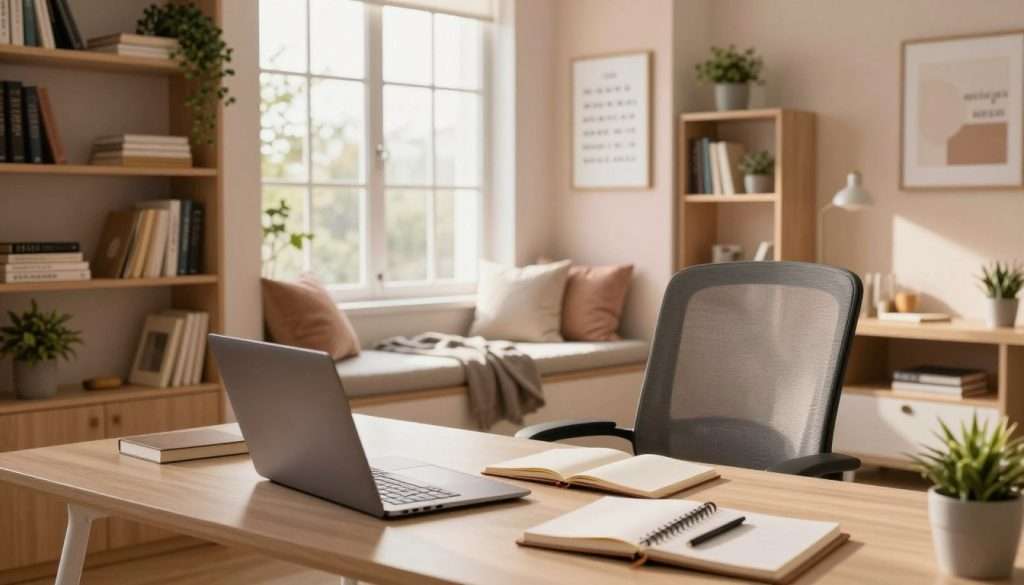
Ever feel like your desk works against your productivity? Your surroundings have hidden power; they draw focus inward or quietly encourage procrastination. Creating the ultimate study space setup builds a mental bridge from your chair to deep concentration.
Effective study environment design starts by removing clutter. Proper lighting protects your eyes during long reading sessions. We believe these small changes help information stick in your brain.
Ready for smarter routines? Grab our free book, How to Think Like a Mathematician. It offers practical steps for stronger memory retention and better habits.
Key Takeaways
- Dedicated zones build powerful mental associations with learning.
- Proper lighting reduces fatigue during intense focus sessions.
- Clutter-free areas minimize distractions and boost productivity.
- Strategic habits improve long-term knowledge retention significantly.
- Download our free guide for advanced cognitive techniques.
The Ultimate Study Space Setup: Design an Environment That Makes You Want to
Designing the ultimate study space setup creates a physical trigger that tells your brain it is time to work. Walking into a learning space flips a mental switch. This change turns studying from a chore into a reliable, effective habit.
Why Your Environment Shapes Attention, Energy, and Follow-Through
Your surroundings act as a silent partner in your academic journey. Using the same area for deep work helps your brain connect that place with focus. Libraries work well because they separate collaborative, quiet, and silent zones.
By shaping your space, you can recreate that focused energy at home. An organized area frees your mind to solve complex problems without clutter’s constant friction. This consistency helps knowledge stick and makes study sessions more rewarding.
What Makes a Study Area Feel Inviting Instead of Distracting
A great study environment design balances aesthetics with utility. You want a space that draws you in, not one that sends you toward the couch or phone. Consider the difference between a cozy coffee shop and a sterile, cold office.
The best spots feel warm and welcoming while keeping a clear boundary between “work” and “play.” Random items on your desk can make it harder to prioritize the task. Keep your area clean and intentional so your focus stays sharp.
How to Balance Comfort With Productive Pressure
It is easy to make your study area too comfortable. You need a supportive chair, but your desk should not become a lounge where productivity disappears. True comfort should support your posture, not encourage a nap.
Create “productive pressure” to stay alert and engaged. Keep your materials ready and tools nearby, so you have no reason to wander. Balancing physical ease with a professional atmosphere makes your study time worthwhile.
Choose the Right Location for Your Productive Study Area
You do not need a mansion to create an effective place for deep work. Whether you have a spare room or small nook, your study environment design affects how much work you finish. Let’s see how to choose the best spot for your needs.
Compare a Dedicated Room, Bedroom Corner, and Shared Space
A dedicated office is ideal because it offers privacy and a clear mental boundary. Yet most people must make the most of their available space.
- Bedroom Corner: This is convenient, but keep your desk away from your bed to avoid the urge to nap.
- Shared Space: Using a kitchen table or living room area requires strong communication with housemates about your schedule.
- Dedicated Room: If you have the luxury of a spare room, use it to keep all your materials organized and ready for action.
Use Natural Light Without Creating Glare
Natural light can improve your mood and energy. It makes a productive study area feel open and inviting instead of dark.
Be careful where you place your screen. If sunlight strikes your monitor, glare can cause eye strain. Always position your desk perpendicular to the window to enjoy the light without blinding reflections.
Separate Study Cues From Relaxation Cues
Your brain responds to patterns, so keep your study zone for work only. When you sit in that chair, your mind should enter “learning mode.”
Avoid gaming or watching movies in your study spot. Separate these zones to strengthen focus and make your study environment design work for you.
What to Do When You Have Very Limited Space
If you live in a tiny apartment, look for vertical solutions. A wall-mounted desk or folding table can save floor space and provide a stable laptop surface.
If your home feels too cramped, take your work elsewhere. A local library or quiet coffee shop can become your productive study area when you need to escape home clutter.
How to Handle Noise, Foot Traffic, and Household Interruptions
Noise can block deep concentration. If you live in a busy house, use noise-canceling headphones to create a quiet personal space.
You can also place a simple “do not disturb” sign on your door. If foot traffic remains heavy, study early mornings or late nights when the house is quieter.
Build an Ergonomic Desk and Chair Combination
If you want to study longer without feeling like a pretzel, rethink your desk and chair. Your ideal study setup should support your body, not simply look good on social media. It should help your brain focus instead of your aching back.
Select a Desk With Enough Room for Your Actual Work
Many students choose desks that are too small or cluttered with non-essential items. Choose enough surface space for textbooks, notebooks, and a laptop without feeling cramped. An ergonomic study desk should be deep enough for a comfortable screen distance.
Before you buy, consider how you study during each session. Math students need space for a large notepad and a calculator, while writers need room for a keyboard and reference materials.
Set Chair Height, Screen Position, and Keyboard Placement
Your study chair setup is the most critical part of your physical environment. Keep your feet flat on the floor, with your knees bent at a comfortable 90-degree angle. A chair set too high or low can cause strain within minutes.
Once your chair is set, focus on your screen and keyboard:
- Keep your monitor at eye level to avoid looking down.
- Position your keyboard so your elbows stay at a 90-degree angle.
- Ensure your wrists remain in a neutral, straight position while typing.
Prevent Neck, Wrist, and Back Strain During Long Sessions
Long study sessions can harm your body if you ignore your posture. Small adjustments can help prevent chronic pain. We recommend taking a quick break every hour to stretch your neck and shoulders and keep your blood flowing.
Desk Setup Adjustments for Laptop Users
Laptops can cause “tech neck” because their screens and keyboards are attached. Use a laptop stand to raise the screen to eye level. Then connect an external keyboard and mouse so your hands stay in a natural position.
When a Standing Desk or Footrest Is Worth Adding
Sometimes, sitting for hours may not suit your energy levels. A standing desk can help if you feel sleepy or restless. If you prefer sitting, a footrest helps maintain a 90-degree knee angle when your chair is too tall.
Design Lighting That Supports Focus and Reduces Eye Fatigue
Have you noticed how a dim room makes your eyelids feel heavy while studying? An ideal study setup needs more than a comfortable chair; it also needs well-placed light. Proper lighting keeps your brain alert and prevents the afternoon slump.
Layer Natural, Overhead, and Task Lighting
A balanced mix of light sources helps keep your eyes fresh. One bulb can create harsh contrast and cause eye fatigue while studying. Layer natural window light, a soft overhead fixture, and a dedicated desk lamp.
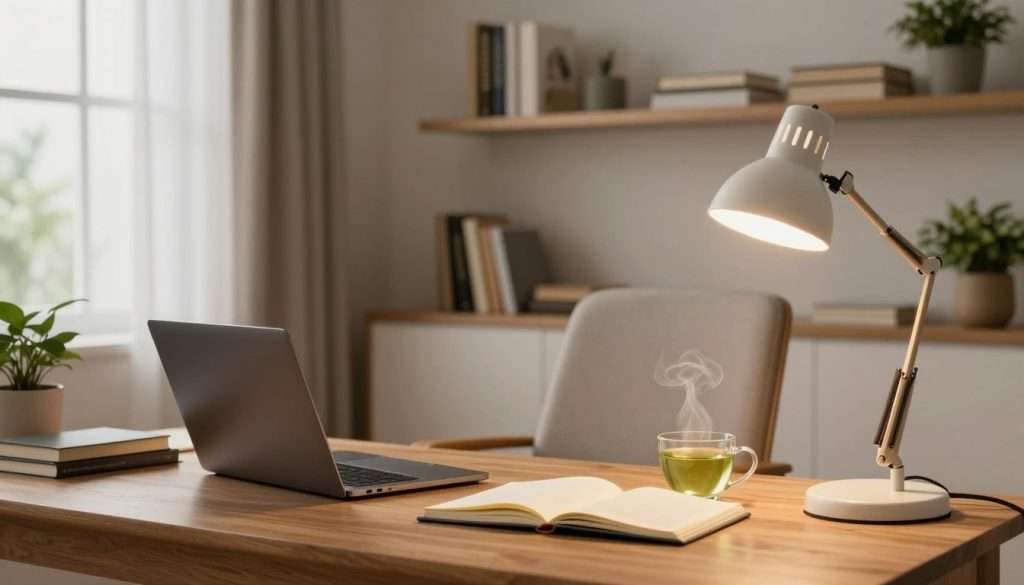
Natural light can lift your mood, but it can change quickly. Use sheer curtains to soften sunlight during the day. After sunset, overhead light forms a base, while your task lamp lights books and notes.
Position a Desk Lamp for Reading, Writing, and Screen Work
Lamp placement matters as much as bulb choice. If you are right-handed, place it left of your desk to prevent shadows while writing. If you are left-handed, move it to the right.
Keep the light source slightly out of your direct line of sight. This prevents glare from the bulb while keeping your workspace bright. Aim the light at your paper, not your eyes.
Choose Color Temperature for Different Study Tasks
Light color can affect how your brain works. Research suggests warm light, around 3000K, suits creative brainstorming and relaxed reading. For focused work, cooler 6000K light often works better.
Test both settings to find what helps you stay focused. A flexible LED lamp with adjustable color temperatures may suit your study lighting needs.
How to Reduce Screen Glare and Harsh Shadows
Screen glare can hurt productivity. Place your monitor so windows sit beside it, not behind or in front. If reflections appear, tilt your monitor slightly downward to redirect the light.
Lighting Adjustments for Early Mornings and Late-Night Study
Your lighting needs change throughout the day. In the early morning, use bright, cool light to help wake your brain. During late-night study, dim overhead lights and use a warmer task lamp to help your body wind down.
Organize Your Study Room Around Fast, Frictionless Access
Does your desk feel like a treasure hunt whenever you start studying? Searching ten minutes for a highlighter or charging cable can quickly drain your motivation. With study room organization, your tools stay ready before you sit down.
Keep Daily Essentials Within Reach
Your desk should launch your work, not store everything. Keep items you use every single day—your favorite pens, a notebook, and your laptop—within arm’s reach. This frictionless access lets you begin without breaking your focus.
Create Zones for Books, Writing Tools, Technology, and Reference Materials
A well-designed custom study space needs clear boundaries for your gear. Group items into zones, so your brain knows where to find each thing. Use one drawer for tech accessories, a shelf for textbooks, and a desktop tray for current writing tools.
Use Vertical Storage Without Making the Space Feel Crowded
When your desk feels cramped, look up. Wall-mounted shelves or pegboards can keep your floor and desk clear. They keep supplies visible and accessible while preserving a clean, airy atmosphere that limits visual overwhelm.
What Belongs on the Desktop
Keep only items essential for your current task on the desktop. This usually includes:
- Your computer or tablet.
- A single notebook or textbook.
- One or two writing instruments.
- A water bottle or coffee mug.
What Should Be Stored Out of Sight
Store everything else in a drawer or bin. This includes extra chargers, reference books you are not using today, and spare stationery. Clearing clutter creates a calm environment for deep, uninterrupted learning.
Choose Study Space Decor That Reinforces Your Goals
Your environment can act as a silent partner during your academic journey. Careful choices can turn a simple desk into a place where learning feels natural. Thoughtful study space decor gently reminds you to stay on track during long sessions.
Use Color, Texture, and Personal Items With Intention
Colors can affect your mood more than you might expect. Soft blues or greens often create calm, while yellow can spark creativity. Choose items that show your personality without overwhelming your senses.
Texture also affects how you feel at your desk. A soft felt desk mat or smooth wooden organizer can make your workspace feel grounded. These small choices help you connect emotionally with your work.

Add Motivation Without Creating Visual Clutter
Posters and trinkets can quickly take over. Too much visual noise can drain your mental energy. Keep your main workspace clear so your brain can focus on the task at hand.
If you need study space inspiration, choose one or two meaningful items. A single framed quote or small trophy can remind you of your progress. Keep the rest of your surface clean for a sharp, productive mindset.
Bring in Plants, Artwork, and Cozy Elements Strategically
A touch of nature can bring life to a stale room. A small succulent or low-maintenance plant adds a fresh feel to your desk. Choose simple, uplifting artwork that does not distract you.
A soft throw blanket on your chair can make long study hours more comfortable. Make sure these items support your work instead of inviting you to nap. Balance is the secret ingredient to a successful setup.
How to Create a Calm Study Space Without Making It Too Relaxing
The goal is to feel focused, not sleepy. Use lighting and scent to signal that it is time to work. A bright desk lamp and a crisp, clean scent like peppermint can keep your mind alert and ready for action.
Decor Choices That Commonly Become Distractions
Watch for items that demand too much attention. Fidget toys, busy patterns, or stacks of unrelated books can become unintended diversions. If you stare at an object instead of your notes, move it elsewhere in the room.
Set Up Technology for Learning Instead of Constant Interruption
If your desk feels like a digital playground, it is time to change it. We want to help you build a distraction-free study space where devices serve as assistants, not interruptions. With a few smart changes, you can end task-switching and help your knowledge stick.
Place Your Computer, Monitor, and Devices for Efficient Workflow
Your hardware should support your natural workflow, not create awkward positions. Place your monitor at eye level to support good posture and keep your mind alert. Keep your keyboard and mouse close, so you avoid stretching during long sessions.
Control Notifications, Website Access, and Phone Visibility
A single ping can easily derail an hour of deep work. Silence your phone or place it in another room. Use browser extensions to block distracting websites during study blocks and maintain a focused study environment.
Use Headphones, Speakers, and Background Sound Carefully
Sound can help you study, but use it with care. Classical music or ambient white noise often works better than lyrical songs, which compete with your brain’s language centers. If background chatter distracts you, a good pair of noise-canceling headphones can change your study experience.
Build a Simple Digital File and Charging System
Clutter can be physical or digital. Create a simple folder structure on your computer, so you can find notes in seconds. Keep chargers in one place, so you never hunt for power during a breakthrough.
Keep Entertainment Devices Outside Your Immediate Reach
If a gaming console or tablet is nearby, your brain may urge you to play. Keep these devices in another room or tucked away in a drawer. When your study technology setup has no entertainment temptations, staying focused becomes easier.
Make Your Custom Study Space Support Different Types of Learning
Designing a custom study space lets your room adapt to each academic need. Your setup can shift from reading a dense textbook to solving complex equations. Flexible design can make studying a fluid, engaging experience instead of a chore.
Adapt the Space for Reading and Memorization
For memorizing facts or reading for comprehension, keep your space calm and focused. Clear everything except current materials from your desk to reduce visual noise. Soft lighting and an upright, comfortable chair help you focus without falling asleep.
Prepare for Writing, Problem-Solving, and Practice Exercises
Writing and math need different energy and physical space. Use a clear, flat surface for notes, reference books, and scratch paper. Keep pens, calculators, and rulers nearby so you stay in the flow state without interruptions.
Create Room for Flashcards, Whiteboards, and Visual Review
Visual learners may use a whiteboard to brainstorm or map difficult concepts. Mounting a small board near your desk offers study space inspiration and room for diagrams or formulas. Use this vertical space to review flashcards quickly or track project progress.
Use a Mobile Study Kit When You Cannot Stay at the Desk
A change of scenery can help keep your brain sharp. A mobile study setup lets you take essential supplies to a library, coffee shop, or quiet living room corner. Pack a small tote with highlighters, index cards, and a portable charger for work on the go.
Adjust the Setup for Solo Work and Virtual Classes
Virtual classes need a different approach from solo deep work. Use a clear camera angle and tidy background so your mind stays on the lesson. Alone, you can spread out your gear; online, prioritize ergonomic comfort and clear audio to stay present.
Create Routines That Turn the Ideal Study Setup Into a Habit
Building a great space is only half the battle. Its value grows when you make it a daily habit. Effective study room organization means more than a clean desk; it creates a rhythm that signals work time.
Use a Consistent Start-of-Session Ritual
Treat study time like a professional athlete treats a game. Start each session with the same small actions, such as clearing your desk or playing a specific playlist. This predictable sequence tells your mind that distractions must stop.
Prepare Materials Before Your Planned Study Time
Nothing kills momentum faster than searching for a missing pen or lost textbook. Gather supplies the night before so your study routine starts without a hitch. When everything is ready, you can begin the deep work that matters most.
Reset the Space After Every Session
Always leave your desk ready for the next day. A quick reset means putting away books and clearing off scrap paper. Respecting your space keeps you from starting overwhelmed by the previous session’s mess.
“We are what we repeatedly do. Excellence, then, is not an act, but a habit.”
Use a Visible Checklist to Reduce Decision Fatigue
Decision fatigue is real, and it can drain your energy before you open a book. Keep a simple, visible checklist on your wall for daily tasks. It keeps you focused on the focused study methods you need, not on “what to do next.”
Pair the Space With Focused Study Methods
Your environment works best with proven techniques like the Pomodoro method. Try 30 to 60-minute blocks to keep your brain sharp and energized. Using these focused study methods in your dedicated space can help you retain information much longer.
| Action Item | Frequency | Benefit |
|---|---|---|
| Clear Desk Surface | Daily | Reduces visual clutter |
| Checklist Review | Before Session | Eliminates decision fatigue |
| Organize Supplies | After Session | Ensures readiness |
| Take Timed Breaks | Every 50 Minutes | Protects mental energy |
Complete a Study Space Makeover Without Overspending
Transforming your study area into a productive space does not have to cost much. Build a fantastic study space makeover by improving what supports your brain, not chasing trendy items.
Prioritize Ergonomics, Lighting, and Organization Before Decor
Before buying fancy study space decor, focus on the basics. Choose an ergonomic chair and set your screen at the right height for comfort and focus.
Good lighting comes next. After fixing comfort and lighting, organize supplies so you do not waste time searching for pens or notebooks.
Repurpose Items You Already Own
You may already have everything needed for a budget study space at home. Use sturdy boxes as drawer organizers or move a spare lamp to your desk.
Repurposing furniture saves money and creates a unique look. A simple kitchen chair can become a study seat with a small cushion for lumbar support.
Make Improvements in Small, High-Impact Stages
You do not need to finish your project in one weekend. Small, high-impact changes help you discover what works for your learning style.
Low-Cost Changes With Immediate Benefits
Clear your desk and add a simple desk lamp first. These changes improve focus and eye health without costing much.
When an Upgrade Is Actually Worth the Expense
Sometimes, spending a little extra makes sense. If chronic back pain or constant eye strain affects you, upgrade your chair or monitor for long-term health.
Go Deeper With the Free Book How to Think Like a Mathematician
If you enjoyed these tips, you will love my free book, How to Think Like a Mathematician. It offers a practical learning system, including proven strategies that help knowledge stick.
Learn Practical Memory Techniques and Smarter Study Routines
Inside, you will learn to master your study habits and improve retention. The approach helps you work smarter, reach academic goals, and avoid harder work.
Get the Free Copy at https://www.studyingmachine.com/free-books/
There is no cost and no catch to this offer. Get your free copy today at https://www.studyingmachine.com/free-books/ and start building your ideal budget study space today!
Conclusion
Building the perfect environment does not require expensive gear or a showroom. The best study space removes friction and makes you eager to work.
You now have tools to choose your location, lighting, and organization. Treat your setup as a living project that changes with your needs during your study space makeover.
Keep your routine simple by resetting your desk after each session. This habit prepares you to start quickly when you sit down again. Your environment should support your goals, not distract you.
Get your free copy of How to Think Like a Mathematician at https://www.studyingmachine.com/free-books/ to learn memory techniques and smarter routines. These ideas will help your knowledge last for the long haul.
Start small today. Your future self will value the effort you put into creating a space where learning feels natural each day.