

The first minute with a guitar can feel like a tangle of fingers; the tenth try may sound like a song. A new language can feel just as strange, until familiar words start coming to mind. Awkward beginnings do not mean you lack ability.
For adults, work, family, and daily tasks can leave little time to reach a goal. Still, a few steady attempts can make an unfamiliar task feel more manageable. You do not need to be naturally gifted to make progress.
We’ll explain why practice helps, what useful practice looks like, and how to fit it into your life. You can use these ideas for studying, music, a language, or another skill you want to build.
Key Takeaways
- Early struggle is a normal part of learning.
- Repeated practice can make basic steps feel more familiar.
- Recall, spacing, and feedback can help practice stick.
- Adults can keep learning at different stages of life.
- A small, repeatable goal is a good place to start.
Why Learning Something New Gets Easier With Practice
Each focused attempt gives the brain another chance to work with a task. Repeated effort helps parts of the task feel more familiar, so you spend less time figuring out every step.
Neuroplasticity is the brain’s ability to adjust and strengthen connections as we learn and practice. Practice gives the brain repeated chances to process information and use it. Useful connections can grow stronger as you return to an idea or action.
Practice gives the brain another chance to use a task, and useful connections can grow stronger over time.
That is why learning something new gets easier with practice for the brain: repeated attempts support familiarity and skill. A piano player may stop searching for each key and begin hearing how notes fit together.
The same idea applies to schoolwork. At first, a math problem may demand attention for every step; later, familiar steps leave room to spot a pattern or check an answer.
These ordinary changes do not mean practice guarantees a specific brain-health outcome. They describe how learning and use can shape connections as a person works on a skill.
Knowing that practice can help does not make the first attempt feel smooth. The early phase has its own hurdles, especially when you expect quick results.
Why Does Learning Feel Hard at First?
An adult may give themself ten minutes to learn a guitar chord, then feel defeated when the fingers will not cooperate. That pressure can make normal effort feel like failure.
New tasks take time, and busy adults often have less room to explore than they expect. Bills, full-time work, caregiving, and other responsibilities compete for attention. A person may try to learn between errands, then judge progress against an unrealistic deadline.
Adult schedules leave less room to explore
Children may get many chances to try, pause, and try again. One language-learning comparison gives babies about a year to produce a first word, while adults may expect to learn one in ten minutes.
That gap shows how differently people may give children and adults time to learn. Adults can be harder on themselves, even when a new thing demands repeated effort from anyone.
Early mistakes can feel like proof you cannot do it
A mistake can feel personal when you believe talent decides who can learn. But one rough attempt tells you little about what a person can do after practice.
Watch for these three beginner traps:
- Expecting quick mastery after only a few tries.
- Comparing your first attempt with someone’s polished performance.
- Treating one mistake as a verdict on your ability.
These habits make trying to learn feel harder than the task itself. Feeling awkward is a normal starting point, and repeated practice can change what feels familiar.
What Changes With Repeated Practice?
A new cook may stop checking a recipe after every basic step and focus on the heat instead. Familiar steps leave more attention for small choices.
As the basics become familiar, you can spend more effort on detail and adjustment. You may notice timing, accuracy, or a part that needs more care. That is one reason repeating things matters when learning a new skill.
Progress rarely moves in a straight line. One practice day may feel easy, while the next reveals a mistake you had not noticed before.
| Practice stage | What may feel different | Useful focus |
|---|---|---|
| First attempts | Unfamiliar and effortful | Learn the basic steps |
| Developing skill | More familiar, with mistakes still visible | Notice and correct one detail |
| More practiced | Some actions need less conscious attention | Refine accuracy or add a suitable challenge |
For example, a learner who draws a cup may first focus on its outline. Later, they can adjust the shape, shadows, and handle without starting from scratch.
Repetition alone does not promise improvement. If you repeat the same action without noticing its result, you may reinforce an error instead of correcting it.
Thoughtful repetition works better than piling up attempts. A few practical ways to practice can help each return count.
How Can You Practice So You Remember More?
Close your notes and explain the idea you just studied from memory. Trying to recall an answer before checking can show what you know and what needs another look.
Use recall, spaced sessions, and mixed practice to help learning stick. These methods can help you learn new facts or skills without treating a long study marathon as the best way.

Recall before you reread
Retrieval practice means bringing information to mind before you look at the answer. After a science lesson, you might name the steps in a process, then check your notes for gaps.
This turns reading into an active test of knowledge. If you cannot recall an idea, that is useful information, not proof you learned nothing.
Space practice across days
Spacing means returning to material in separate sessions instead of cramming it all at once. A student might review a set of terms today, again tomorrow, and later in the week.
That pattern gives you more than one chance to bring the idea back. It can be a good learning habit for a class, a language, or a skill with many small parts.
If you wonder how to learn quickly for exams, begin by returning to key ideas across several study periods. Use a short recall check each time, then spend more effort on answers that still feel shaky.
Mix related skills once the basics feel familiar
Interleaving means mixing related topics or problem types after you understand their basic steps. For example, a math student might practice several kinds of problems instead of completing one type in a long block.
Mixing can help you notice which method fits each question. Start with a clear grasp of the basics, or the different steps may blur together.
There is no universal shortcut for how to learn any skill so fast it feels illegal. Focused practice and useful feedback can make your time count, but skill still takes effort.
These approaches work best when you can tell what you got right or need to adjust. Feedback gives practice a clearer direction.
Can Adults Keep Learning as They Age?
Adults can keep learning as they age. In one study, older adults took several unfamiliar courses, including Spanish, photography, drawing, and music composition.
Age alone is not a reason to assume a person cannot learn. Individual needs, experience, and the skill itself still shape what learning looks like.
What the course experience involved
Rachel Wu, an associate professor of psychology at the University of California, Riverside, studied adults aged 58 to about 86. Participants took three assigned courses over a 10- to 12-week quarter, with the option to take up to five.
Course examples included Spanish, photography, drawing, and music composition. The experience asked participants to engage with new things across several areas.
What the results can and cannot tell us
After three months, participants’ cognitive test performance rose from levels similar to other older adults who had not taken the courses. Their scores reached levels similar to middle-aged adults taking the test for the first time.
One year after classes ended, their scores had continued to rise. They reached levels similar to undergraduates taking the test for the first time.
Those comparisons describe this group’s performance, not a promise for every adult. The research does not show that a course prevents dementia or ensures cognitive improvement for everyone.
It does offer an example of adults learning across different subjects. Practice can be useful at many ages, and feedback helps show where to focus next.
Why Does Feedback Help You Improve?
A piano learner may miss a soft note each time, without hearing the mistake while playing. Another set of ears can point out the detail.
Useful feedback names a specific adjustment you can try next. Vague praise may feel nice, but it does not tell you what worked. Broad criticism can leave you unsure where to begin.
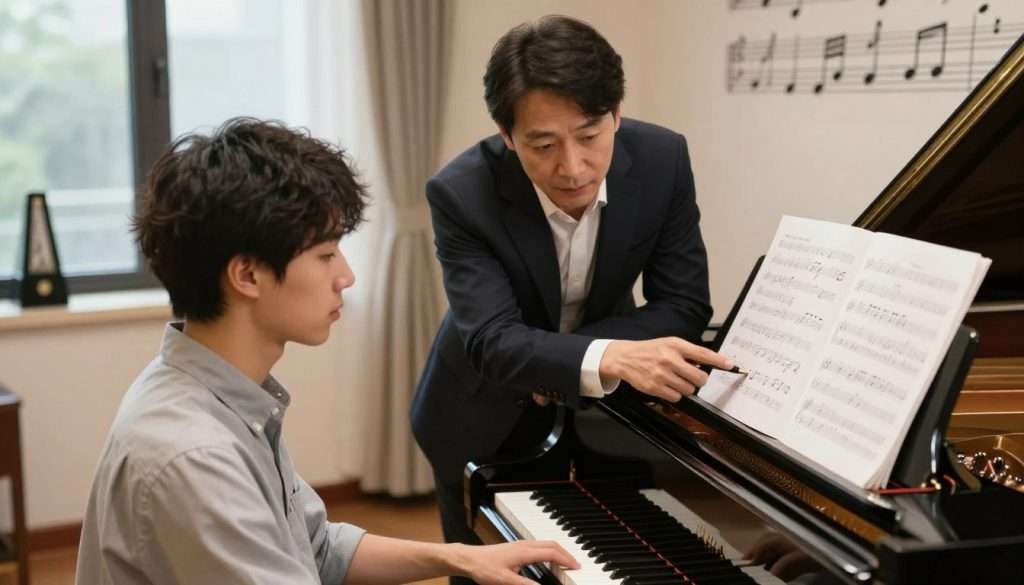
Feedback can come from a teacher, a peer, or your own review. Pick a source that fits the skill and gives information you can act on.
| Feedback source | What it can reveal | A useful next move |
|---|---|---|
| Teacher or coach | A detail you may not notice yet | Ask for one specific correction |
| Peer | Whether your explanation or demonstration is clear | Ask what was confusing |
| Self-check or recording | A change you can compare across attempts | Review one target, then try again |
A student giving a class presentation might ask a partner which point was hard to follow. The answer can guide one change, such as slowing down or adding an example.
Self-checking can work too. A short recording of a song or speech lets you compare one detail across attempts instead of judging the whole performance.
Make mistakes useful information, not a reason to stop. Seeing a clear next move can make the work feel more rewarding.
Why Is Learning Something New Worth the Effort?
Knowing how to use a new phone feature can make the next unfamiliar setting less daunting. Small wins can help you trust yourself with another task.
Learning can build confidence, support independence, and bring curiosity into everyday life. Those benefits matter beyond a grade or a polished performance.
New skills can build confidence and independence
A person who learns a basic repair may feel more ready to handle a loose cabinet knob. A student who learns a new computer tool may complete schoolwork with less help.
Each skill will not solve every problem. Still, knowing how to handle one thing can make the next unfamiliar task feel more possible.
Curiosity can make everyday life feel less routine
Learning also brings fresh attention to familiar routines. Trying a new recipe can make an ordinary evening feel different, even if the first dish needs another attempt.
People learn for many reasons: to meet a need, explore an interest, or enjoy a new challenge. There is no single right subject or age to begin.
Learning new things is not a promise of a specific health outcome. It can be worthwhile for the practical ways it helps people take part in their own lives.
Choose a challenge that feels useful or interesting to you. A good next skill can start with a small problem you would like to solve.
What Should You Learn Next?
If schoolwork takes too many clicks, learn a few keyboard shortcuts that save time. A useful choice solves a small need or keeps your interest.
Choose something new enough to catch your attention, but practical or fun enough to revisit. A subject that connects with daily life can be easier to stick with.
New skills to learn for students might match a real school need, a hobby, or both. Try one of these options:
- Learn basic keyboard shortcuts to move through schoolwork faster.
- Practice a simple recipe to make a meal or snack.
- Start conversational phrases in a language you want to use.
- Draw an everyday object, such as a mug or shoe.
- Learn a beginner song on an instrument you can access.
Each option has a clear first step. You could memorize three shortcuts, chop one ingredient, practice a greeting, sketch a cup, or play one short phrase.
What you want to learn may change as your interests and needs change. That is fine; choosing one thing now does not lock you into it forever.
The choice need not impress anyone. Pick something that feels worth trying, then find a way to return to it in real life.
How Can You Make Practice Fit Your Life?
You might practice piano for ten minutes after dinner, once the dishes are done. A small session can fit between ordinary responsibilities.
Start with a repeatable practice pattern and a modest target. A class or lesson can add structure when it is available, while solo practice gives you room to work at your own pace.
A practical piano example pairs about ten minutes of daily practice with a one-hour lesson once a week. The lesson can guide the next steps, and brief sessions help you return to the instrument.
| Practice pattern | Example | What to watch for |
|---|---|---|
| Brief solo sessions | About 10 minutes of piano practice daily | Choose one small target |
| Weekly lesson plus short practice | One one-hour lesson with brief practice between lessons | Use the lesson to get feedback |
| Weekend-only block | A single longer session for a busy week | Break it into focused rounds and return to the skill when possible |
Daily novelty is optional. You do not need to find new things to learn every day for practice to help; returning to one skill counts.
Try a simple plan for the week:
- Choose a time that often stays open.
- Set a small target for each session.
- Keep the needed book, tool, or instrument easy to reach.
If a week gets crowded, adjust the plan instead of dropping the skill forever. Even a shorter session can help you stay connected to what you are learning.
Choose a repeatable time and a modest target. Then use a clear first practice loop to decide what to do when you begin.
How Do You Start Without Getting Overwhelmed?
Set a first goal to learn one short musical phrase or prepare one part of a recipe. A small finish line makes it easier to begin.
Keep the first goal small enough to complete in one session. You can build on it later, once you know what the task asks of you.
Use this four-step loop when you sit down to practice:
- Choose one small outcome for the session.
- Work on one manageable piece of the skill.
- Check the result or ask for feedback.
- Decide what to adjust on the next attempt.
For a recipe, your goal might be to chop the vegetables evenly. For a song, it might be to play one phrase at a steady pace.
A mistake can show where to focus. It is a clue about the next attempt, not proof that you should quit or that you cannot learn.
Some skills need a tool, a teacher, or more time than one session allows. Keep the first step small anyway, and give yourself room to learn through the work.
Pick one manageable goal and give it a try. Your first small step can lead to the next one, and you can find more study support when you are ready.
Keep the first goal small enough to complete, and treat a mistake as a clue for your next attempt.
Conclusion
A first attempt does not decide how good you can become. Awkwardness is part of being a beginner, and focused practice can make a skill feel more familiar.
Want to go deeper? Get my free book, How to Become the Smartest Student in the Classroom, for memory techniques, study routines, and strategies that stick. There is no cost and no catch: https://www.studyingmachine.com/free-books/.
Choose one small skill goal and try one focused practice session today.