
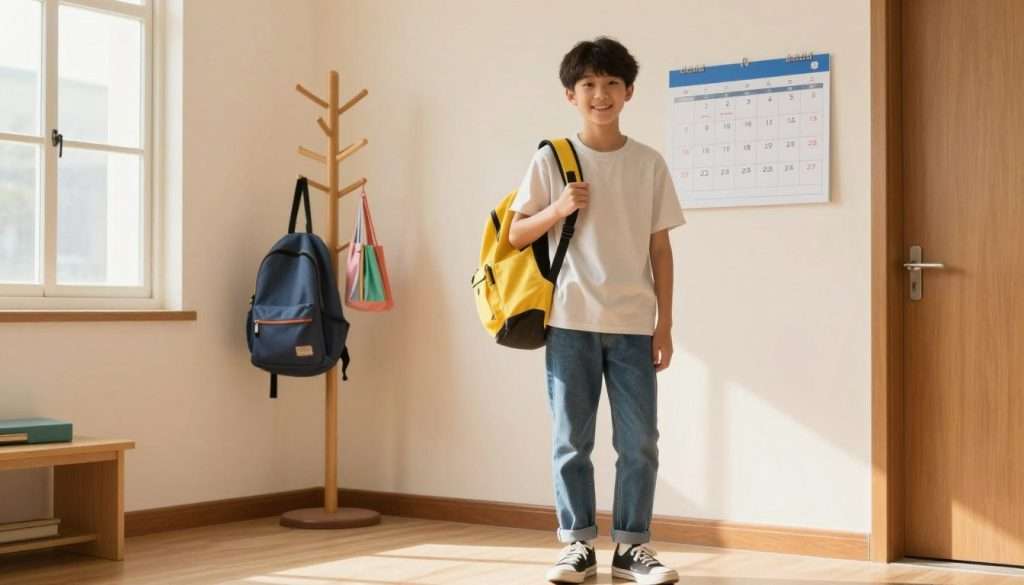
A student reaches the door and realizes the homework is still on the kitchen table. That small scramble can set a stressful tone before school even begins. Now picture starting with your backpack, lunch, and clothes ready to go.
Your circadian rhythm is your body’s internal clock, which helps regulate when you feel awake and sleepy. A useful routine fits your life; it does not have to start at dawn. A calmer morning can leave you with more time for learning and less stress about what you forgot.
Key Takeaways
- Choose a routine that fits your school day and sleep needs.
- Prepare key items before bed to cut down on morning searching.
- Use a short priority list to keep the day in view.
- Adjust the routine when a task or schedule changes.
- Build a calmer start with a few repeatable choices.
A few simple choices can make mornings feel more manageable. Let’s turn them into ten steps you can shape to fit your day.
Morning Routine for Students: 10 Steps to a Productive Day
A good morning routine is a short sequence that gets the essentials done without rushing. We can keep it simple, so you have room to adjust when the morning gets busy.
Protect enough sleep first, then use the steps as a flexible path toward school, not a race against the clock. The CDC recommends 9-12 hours of sleep for younger children and 8-10 hours for teens.
Sleep comes first. A morning routine should help you get ready without cutting into the sleep your age group needs.
- Protect enough sleep. Set a bedtime that leaves room for the sleep your age group needs.
- Wake at a consistent time. A steady wake-up can help your body settle into a morning rhythm.
- Get natural morning light. Open the curtains or step outside briefly while you wake up.
- Drink water. Keep a glass near the sink or fill a bottle for later.
- Move or stretch. Try shoulder rolls, a few gentle stretches, or a short walk around the room.
- Eat breakfast if hungry and able. Choose a healthy breakfast, such as yogurt and fruit, when it works for you.
- Wash up and get dressed. Keep the order familiar, so you do not have to decide what comes next.
- Check your backpack and schedule. Look for homework, lunch, and any change to the school day.
- Choose one priority for the day. Write a short priority list, such as “ask about the science project.”
- Take a positive reset. Breathe slowly or name one thing you feel grateful for before heading out.
Use these steps as a menu, not a test. Pick the parts that help, then prepare the night before to make them easier.
What should you prepare the night before?
A backpack packed before bed can save you from a frantic search when it is time to leave. Fewer decisions at night can also mean less morning stress.
Handle the small school details before they become a last-minute hunt. A consistent bedtime routine can help children prepare for the next day and settle into sleep.
Make tomorrow’s school essentials easy to find
Use this checklist to keep school items in one place. Check school notifications before you pack, so a special event does not catch you by surprise.
- Choose clothes, including shoes and any layer the forecast calls for.
- Pack the backpack with homework, books, and supplies for class.
- Prepare lunch, then place it in the fridge or by the bag.
- Check tomorrow’s schedule and school notifications for changes or special activities.
A library bag or sports clothes left until morning can undo the whole plan. Put special school items beside the backpack, not in a different room.
Protect sleep with a simple wind-down
Choose a steady bedtime routine that feels calm, not like another assignment. Reading a few pages or journaling for a few minutes can help mark the end of the day.
A comfortable, cool room may make settling in easier. Keep the wind-down simple enough to repeat, even on a night when homework runs late.
Once the evening basics are ready, you can decide how much time each morning task needs.
How can you fit the routine into your morning?
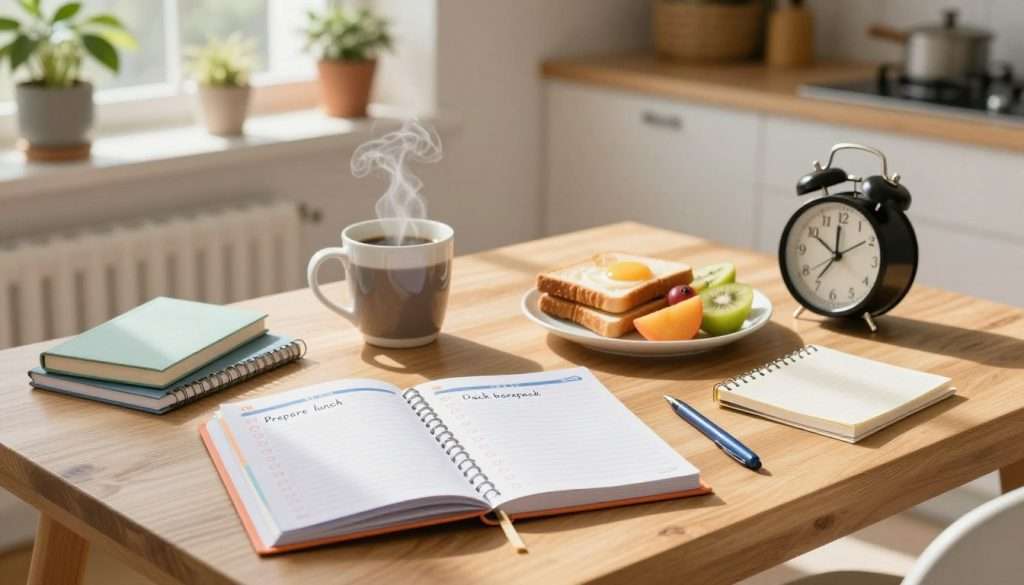
A sample 60-minute window shows how a few school-morning tasks can fit together. Use it as a starting point, not a universal schedule.
Build your timeline around your departure time. This example runs from a 7:30 a.m. wake-up to an 8:30 a.m. departure, with room for the main tasks.
| Example time | Task | How to adapt it |
|---|---|---|
| 7:30 a.m. | Wake up | Shift the start to match your departure |
| 7:40 a.m. | Eat breakfast | Choose a quick option or allow more time |
| 8:00 a.m. | Wash up and get dressed | Set clothes out in advance |
| 8:20 a.m. | Put lunch in the backpack and check essentials | Keep the bag by the exit |
| 8:30 a.m. | Leave for school | Add a buffer if the trip needs it |
Your own morning routine may need more or less time for breakfast, getting dressed, or travel. A long bus ride changes the plan; a short walk may leave more room.
Try timing your own tasks once, without turning the clock into a referee. Then adjust the schedule to match what you actually need.
How should the routine change as students get older?
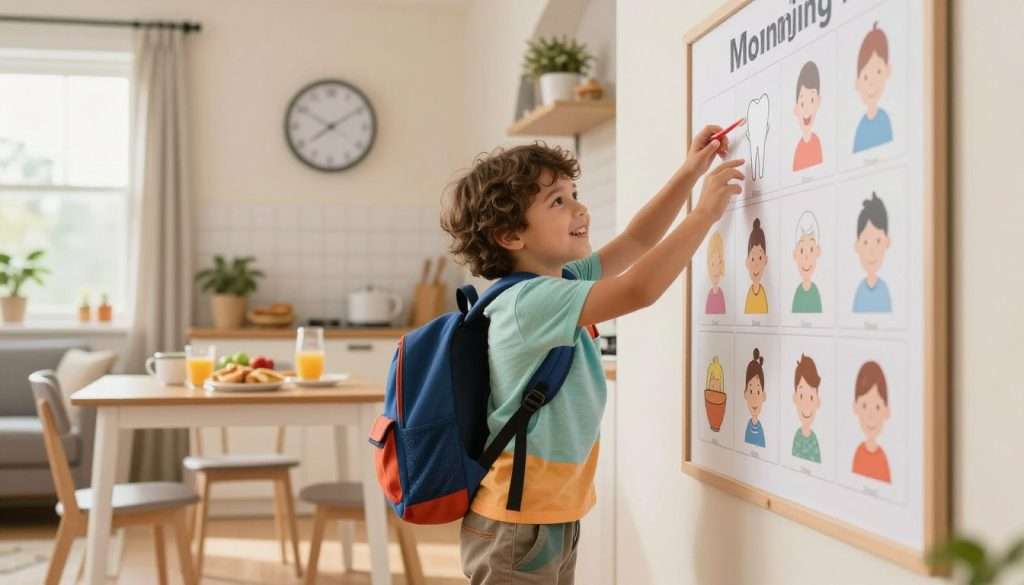
A picture checklist may help a young child follow the morning without needing a spoken reminder for every task. Support should fit the student, not force every age into one plan.
Young children often need caregiver guidance, while older students can take on more preparation. Specific praise can help a child notice when they start a task on their own.
Give younger children visual cues and hands-on support
Preschool and elementary students may do best with a picture chart and calm reminders. A simple visual timetable can show children who are not reading yet what comes next.
Keep choices small, such as picking between two shirts. Praise the action you want to see: “You put your lunch box in the bag.”
Let teens take more ownership
Middle school students can start using a checklist and checking their own schedule. High school students may want room to plan, with a short goal list to guide their morning.
Offer help without taking over each task. A student who packs their own bag can also learn to spot what is missing before the door closes.
| Age group | Helpful support | A good next responsibility |
|---|---|---|
| Preschool and elementary | Picture chart and calm reminders | Get dressed or put a lunch box in the bag |
| Middle school | A clear checklist and a brief quiet moment | Pack their own bag and check the day’s schedule |
| High school | Room to plan and a short goal list | Prepare school materials and choose a first priority |
Independence grows one task at a time, with support still close by. If the routine feels bumpy, make one small change before adding more rules.
What can you change when mornings keep going off track?
If the same argument or delay happens every morning, treat it as a clue about the routine, not a reason to add more pressure. Look for the snag before changing everything.
Notice which task causes the delay, then move it earlier or prepare it the night before. Getting up 15-30 minutes earlier than you think you need is one option, not a requirement.
Find the snag instead of adding more rules
Maybe shoes are hard to find, breakfast takes longer than expected, or a student cannot find one worksheet. Watch the routine for a few days and note where time slips away.
Try changing only that part. Moving shoes near the exit may work better than giving the whole family another list of reminders.
Make cooperation easier for everyone
Use calm, clear instructions, one at a time. Notice a child’s effort with specific praise, such as, “You started getting dressed when I asked.”
Reduce screen distractions while everyone gets ready. A phone or show can pull attention away just when the family needs to leave.
Try “Beat the buzzer” as a playful prompt. Set a gentle timer for one task, then celebrate finishing before it rings, without turning it into a high-stakes contest.
If a child seems to delay because they do not want to go to school, check in with the teacher about possible concerns. One small change at a time can ease the morning and help you arrive ready for the first learning task.
How can you carry that focus into studying?
A student who sits down with one clear task has an easier starting point than one facing a whole day’s worth of work at once. Start with one thing, not the entire pile.
Choose a clear first study task and put the needed book or materials within reach. When possible, keep distracting devices out of immediate view, so attention has fewer places to wander.
One clear task gives your attention a place to land. Start there, then decide what comes next.
For students learning at home, a quiet, consistent study spot can cue the brain that it is time to focus. Keep the materials for the first task ready there.
Some mornings feel slow, even when you have planned well. Take a short pause when attention fades instead of treating a hard start as a failure.
A small, repeatable start is enough to build on every day. For deeper study strategies, the free book is a useful next step.
Conclusion
A good start does not need to be perfect to help you feel more prepared. A routine works best when it fits the student’s real schedule and can change as school, sleep, or family needs shift.
Choose one part to try tomorrow, then keep what helps. Small study routines can support learning without making every morning feel like a test.
Want to go deeper? If this article resonated with you, my free book How to Become the Smartest Student in the Classroom gives you a full system: memory techniques, study routines, and strategies that actually stick. No cost, no catch. Grab your free copy here: https://www.studyingmachine.com/free-books/.