
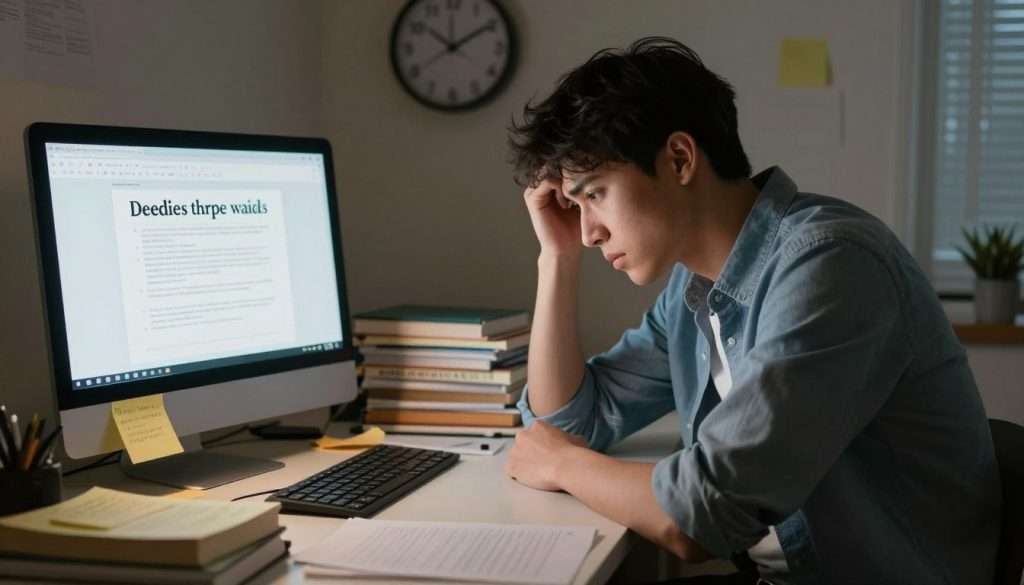
A looming deadline can make your heart race before you have even opened the assignment. Stress can sharpen your attention for a while, but a packed week or family worry can make it harder to focus, remember details, and feel steady. Those effects matter when you are studying, working, or trying to take in new information.
Short bursts of pressure can help you respond to a challenge. When strain sticks around, though, learning and daily life may take more effort, and physical well-being can suffer too. That does not mean every hard day causes lasting harm. We’ll lay out the science in plain language and share practical ways to respond. Stress is a signal to notice, not proof that you are failing.
Key Takeaways
- A brief stress response can help you act when something feels urgent.
- Ongoing pressure can make focus, memory, mood, and sleep harder to manage.
- Stress may affect the body in different ways for different people.
- Small changes can make a demanding day feel more workable.
- Professional support can help when symptoms persist or disrupt daily life.
How Does the Nervous System Respond to Stress?
A sudden bang or a near miss in traffic can make your body react before you have time to think it through. The nervous system can shift into high alert, preparing you to respond to a possible threat. The fight-or-flight response can raise your heart rate, speed your breathing, and sharpen alertness.
The HPA axis is the hormone signaling pathway that connects the hypothalamus, pituitary gland, and adrenal glands. Ordinary events can set off this response, too, even when no one is in danger.
The brain sounds the alarm
The amygdala acts like an alarm bell when it detects a possible threat. It can signal the hypothalamus, a command center that helps direct the body’s response. Think of the amygdala as sounding the alert and the hypothalamus as sending the first instructions.
The hypothalamus communicates through the autonomic nervous system, which runs many body functions without you having to think about them. Its sympathetic branch switches on the fight-or-flight response. This shift can happen before you have worked out whether the problem is a real danger or just a tough moment.
The body gets the message
The adrenal glands release epinephrine, also called adrenaline. The HPA axis works on a linked hormone path: the hypothalamus releases CRH, the pituitary releases ACTH, and the adrenal glands respond by releasing cortisol. These stress hormones help the body meet a demand.
Nervous system symptoms of stress can include a pounding heart, quicker breathing, and tense muscles. When stress keeps returning, the body may switch into high alert repeatedly. Repeated activation can keep the nervous system on alert, but it does not mean the system is permanently damaged.
The parasympathetic nervous system acts like a brake, helping the body calm after danger passes.
A calmer pace can return as the body responds to safety and the demand eases. The parasympathetic nervous system supports that shift, though it may take time after a tense moment. A slower breath is one clue that the body is beginning to leave high alert.
When Does Short-Term Stress Become Chronic?
A presentation can give you a useful burst of energy, but a string of deadlines with no recovery is a different story. Stress can be acute, episodic, or chronic, depending on how often it happens and how long it lasts. Chronic stress lasts for weeks or longer, often while a difficult problem continues.
Positive pressure does not automatically cause harm. It can become chronic stress when demands keep returning or continue without enough time to recover. The useful challenge is not the problem by itself; it is the unbroken pattern around it.
Acute stress comes and goes
Acute stress is short-term and often follows a clear event. You might feel it before a presentation or after an argument with a friend. When the moment passes, the pressure usually eases instead of following you through every part of life.
Episodic stress keeps returning
Episodic stress is acute stress that happens often. A student who overcommits to clubs, work, and coursework may move from one deadline to the next. Each event may end, but another can arrive before there is much room to reset.
Chronic stress lasts
Chronic stress can follow ongoing money worries, work problems, or conflict in a relationship. The issue may not have one clear finish line. When a pressure continues for weeks, the body and mind may have fewer chances to rest between demands.
Here is a simple way to compare the patterns. Stress hormones may rise with each type, but the pattern and common clues differ.
| Type | Pattern or duration | Example | Common clue |
|---|---|---|---|
| Acute stress | Short-term, tied to an event | One presentation | Pressure eases afterward |
| Episodic stress | Acute stress happens often | Repeated overcommitment | One deadline replaces another |
| Chronic stress | Weeks or longer | Ongoing money worries | The main problem continues |
A packed schedule can turn a positive challenge into ongoing strain if every open space fills with another demand. A student may enjoy learning and still struggle when work shifts, family needs, and study tasks pile up without recovery time. The pattern deserves attention even if each task seems manageable on its own.
If the pressure keeps returning for weeks, treat the pattern as worth changing rather than waiting for one perfect quiet day.
What Stress Effects Can Show Up in Your Body?
A tight jaw after a tense meeting is one small example of stress showing up outside your thoughts. Stress can affect the heart, breathing, digestion, immune response, and muscles. A faster heartbeat, raised blood pressure, and quicker breathing can happen in the short term.
People do not all respond in the same way. The effect may depend on the person, the stressor, and how long the strain lasts.
Heart, blood pressure, and breathing
During a stressful moment, the heart may beat faster and blood pressure may rise. Breathing may also become quicker. These changes can help prepare the body to respond, but they can feel unpleasant when you are trying to sit still in class or finish a task.
When strain lasts, it can add to cardiovascular stress and contribute to higher blood pressure and cardiovascular risk. Stress does not explain every case of high blood pressure, and symptoms alone cannot tell you what is causing a change. A health professional can check a pattern that concerns you.
Stress may also aggravate breathing difficulty for people with asthma or emphysema. A tense moment can make breathing feel harder, especially when someone already has a lung condition. New or worsening trouble breathing deserves medical attention.
Immune defenses and recovery
The immune system helps the body respond to illness and injury. Ongoing stress can affect immune response, and some people may recover more slowly from illness. That does not mean every stressful week will make you sick or stop your defenses from working.
Rest and recovery can be harder to come by when pressure continues. If you find that you are unwell often or taking longer to feel better, a clinician can help look at possible causes beyond stress.
Digestion and appetite
The gut can react to pressure with discomfort, changes in appetite, or other digestive symptoms. Stress may aggravate irritable bowel syndrome, often called IBS, or acid reflux. Some people eat less under strain; others reach for food more often.
Those changes can affect daily life in quiet ways, such as making meals less appealing or leaving you uncomfortable during class. They are not a reliable test for stress, since many health problems can affect digestion and appetite.
Muscle tension and pain
Muscle tension can show up as a tight jaw, stiff shoulders, or a clenched back. Some people experience headaches or back pain during stressful periods. The pain may have several causes, so it is better not to assume pressure is the whole explanation.
Stress can also affect libido for some people. That change can feel personal, but it may reflect strain, health issues, medication, or other factors. A conversation with a professional can help you sort through it.
New, severe, or persistent physical symptoms deserve a conversation with a health professional, not a guess about their cause.
How Does Stress Change Memory, Focus, and Mood?
You sit down to study, read the same paragraph three times, and still cannot say what it was about. Stress can make it harder to hold information in mind, focus, and make decisions. A difficult study session does not prove that ordinary stress has permanently damaged your brain.
Pressure can use up attention that you hoped to give to a lecture, book, or practice problem. That can make learning feel slower, especially when several demands compete for your mind at once.

Thinking gets harder under pressure
Working memory is the small mental workspace you use to hold details while you work. Under strain, keeping several pieces of information in that space can feel harder. You might lose your place in a calculation or forget what you planned to say next.
Stress can also make choices feel heavier. A simple decision, such as which chapter to review first, may seem like one more demand when your attention is already stretched. Try to notice the change without turning it into a judgment about your ability.
Sleep matters here, too. When stress disrupts sleep, it can be harder to pay attention and manage your mood the next day. Appetite and daily routines can shift as well, though each person’s pattern is different.
Mood and behavior can shift
Some people feel irritable, overwhelmed, or less patient with friends and family. Others pull back from people or stop doing activities they usually enjoy. These changes can be signs that life is asking more than you can comfortably carry.
Burnout describes sustained exhaustion and reduced capacity or enjoyment, not laziness or a moral failing. It can make work or study feel harder to start and harder to finish. Those signs alone do not diagnose the cause, so persistent changes deserve a closer look.
A change in your usual focus, mood, or routines is useful information, even when it does not tell you the cause by itself.
Can Stress Lead to Anxiety and Depression?
Ongoing stress may contribute to mental-health problems, but feeling stressed does not mean you will develop a disorder. Stress often has a clear trigger, while anxiety disorders and depression can involve lasting symptoms. Symptoms can overlap, so a symptom list cannot confirm a diagnosis.
Anxiety is a normal part of life. An anxiety disorder involves anxiety that does not go away, appears in many situations, and can grow worse over time.
Stress and anxiety are not the same thing
About a third of U.S. adolescents and adults experience an anxiety disorder at some point in their lives. About a third of U.S. adolescents and adults have this lifetime experience. That figure describes a group, not any one person’s future.
Nervous system symptoms of anxiety can overlap with stress symptoms. A pounding heart or tense feeling, for example, does not by itself show whether someone has an anxiety disorder. The pattern over time and its effect on daily life matter.
Depression affects more than mood
Depression can cause severe symptoms that affect feelings, thinking, sleep, eating, or working. Symptoms that affect daily life may make it hard to keep up with responsibilities or enjoy familiar activities. Depression is not simply a bad mood or a rough day.
Stress, anxiety, and depression describe different experiences, even when they overlap. This table shows the broad distinctions, not a way to diagnose yourself.
| Term | What it describes | Pattern | Possible effects on daily life |
|---|---|---|---|
| Stress | Response to a demand | Often tied to a trigger | Focus or routines may feel harder |
| Anxiety disorder | Anxiety that does not go away | Can occur in many situations and worsen | Daily tasks may become difficult |
| Depression | Severe changes in feelings and function | Can affect several parts of life | Sleep, eating, thinking, or work may change |
Ongoing stress may raise the chance of mental-health problems, but it does not set a person’s future in stone. A qualified mental-health professional can ask about timing, daily impact, and other factors. That gives you more useful information than trying to label yourself from one difficult week.
A qualified mental-health professional can help sort out persistent symptoms without reducing them to “just stress.”
Which Stress Management Techniques Help You Regain Control?
If a deadline is causing the pressure, changing the plan may help more than trying to breathe your way through an impossible schedule. Stress management works best when it matches the stressor. Four common approaches are avoid, alter, accept, and adapt.
Pick a response that fits what you can change. One small adjustment may help more than stacking five new habits onto an already full day.

Work with the stressor
These four approaches offer different ways to respond. Each one fits a different kind of pressure.
- Avoid: Decline an optional task that would crowd out a key deadline.
- Alter: Ask a project partner to divide the work more clearly.
- Accept: Recognize that a long wait is outside your control for now.
- Adapt: Change your expectations and focus on a workable version of the task.
Help your body come down from high alert
Deep breathing, meditation, yoga, and tai chi can help some people settle. Physical activity can also be a useful way to shift out of a tense state. Try a short walk between study blocks if a long workout will not fit your day.
Therapy can offer tools for ongoing stress. Cognitive behavioral therapy, or CBT, helps people work with patterns in thoughts and actions. Mindfulness-based stress reduction, or MBSR, uses mindfulness skills to help people respond to stress.
Social support can be simple: a check-in with a friend, a study group, or time with family. Helpful tips for mental health include seeking connection, using manageable routines, and getting professional support when symptoms persist. No one technique works as a cure-all for every person or every stressor.
One trial studied 122 people with hypertension who were age 55 or older. After eight weeks, 34 people who practiced the relaxation response reduced systolic blood pressure by more than 5 mm Hg. The eight-week relaxation-response trial shows one study result, not a promised change for everyone.
Pick one approach that fits the stressor you can influence today, then notice whether it makes the next step easier.
When Should You Get Help for Stress?
If you cannot keep yourself safe, this is a moment for immediate human help, not another productivity trick. Contact a health professional when symptoms persist or interfere with daily life. Talk of suicide or serious self-harm needs immediate attention.
A mental-health crisis deserves the same serious response as a physical emergency. If you are worried about someone, stay with them if you can do so safely and help connect them with support.
- Contact a health professional when symptoms persist or disrupt daily life.
- Call or text 988 for suicide-related crisis support in the United States.
- Call 911 for a life-threatening emergency.
People sometimes describe intense stress as their body “shutting down.” There is no single stress symptom that proves the body is shutting down. Sudden or severe symptoms need urgent assessment, since they may have causes that require prompt care.
Depression is a risk factor for suicidal thoughts and behaviors. If someone talks about suicide or serious self-harm, take the words seriously and seek immediate help rather than waiting for the moment to pass.
When safety is at risk, getting human help matters more than trying another self-help technique.
In the United States, call or text 988 for suicide-related crisis support, and call 911 when someone’s life is in immediate danger.
How Can Students Make Stress Easier to Manage Day to Day?
A packed week feels less like one giant wall when you can name the next small piece. A simple study reset can turn a vague plan into a task you can start. The goal is a workable next step, not a perfectly optimized schedule.
Use the reset when a class task feels too big to begin. Keep it flexible enough to leave room for work shifts, family needs, and breaks.
- Identify the next task you need to do.
- Break it into one small, clear target.
- Choose a realistic time to work on it.
- Decide what can wait until later.
For example, “study for biology” is too broad to guide your next move. You could change it to “read the section on cell structure and answer three review questions.” Then pick a time that fits around your work shift or family plans.
Planning ahead can make a demanding day easier to read. Look at the week before several due dates collide, and leave space for obligations outside school. A plan with no room for work or family is likely to crack the first time real life taps your shoulder.
If the workload is too large, ask a teacher, classmate, manager, or family member for help with a specific part. You do not need to explain everything at once. A clear request, such as asking a classmate to review one problem set, gives them a place to start.
Study routines should support learning, not become another test you can fail. If a task takes longer than expected, adjust the plan instead of treating the delay as proof that you cannot manage your time. Leave some room for the ordinary surprises that show up in a real week.
If the same task keeps slipping, shrink it or ask for help before adding more pressure to the calendar.
Conclusion
You do not need a stress-free life to make progress; you need a next step you can actually take. Stress is a signal to respond to, not a verdict on your ability to learn. Notice what is getting in the way, then choose one useful action for today.
Want to go deeper? If this article resonated with you, my free book How to Become the Smartest Student in the Classroom gives you a full system: memory techniques, study routines, and strategies that actually stick. No cost, no catch. Grab your free copy here: https://www.studyingmachine.com/free-books/.