

Fifteen focused minutes a day can build steady progress toward a skill, but no daily allotment guarantees mastery. A small practice can help you learn, yet skill grows through effort, useful feedback, and time.
If you’re a student or lifelong learner, you may have tried ambitious study plans that faded after a few busy days. We can make practice easier to start by choosing actions that fit real life. An anchor is an existing routine you use as a reliable cue for a new action. We’ll share examples for learning and everyday routines, without pretending that a timer can do the learning for you.
Fifteen minutes is a practical choice, not a magic number or a scientific threshold. You might use less on a packed day and more when your schedule allows. The power of tiny habits lies in making the next useful step feel possible, even when motivation takes a day off.
A routine you can repeat on an ordinary day is a better starting point than a perfect plan you rarely use.
Key Takeaways
- Short practice can support progress, but does not promise mastery.
- Choose a small action that fits your daily life.
- Use a reliable anchor as a cue for the new action.
- Spend practice time on a clear task, not vague study.
- Adjust the routine when it feels hard to start.
Why Does the Power of Tiny Habits Work?
Habit formation does not run on a universal 21-day timer: four studies reported median times of 59-66 days, while individual results ranged from 4 to 335 days. Small actions can lower the effort needed to begin, and a steady cue can help a behavior feel more automatic over time.
A 2024 review covered 20 studies and 2,601 participants, with 11 studies rated at high risk of bias. Across different habits, scores improved from before to after the programs, with a standardized mean difference of 0.69 and a 95% confidence interval of 0.49-0.88. The review found no fixed schedule for lasting change.
The review studied health behaviors, not learning a skill. These included activity, drinking water, taking vitamins, flossing, eating well, microwaving a dishcloth, and sitting less. Those results do not prove that a tiny study action leads to the same results.
Habit timing is a rough guide, not a deadline. A high risk of bias in many studies makes fixed promises especially unwise.
Habit strength also depended on frequency, timing, behavior type, personal choice, feelings about the behavior, self-regulation, and preparatory habits. Morning practices and self-chosen habits generally showed greater strength.
Some results may help explain why routines feel easier with repetition, but they do not tell us how quickly a particular learner will improve. A useful habit can support consistency, while results still depend on the skill and the quality of practice.
Treat the timing as a rough guide, and choose a small action you can repeat in the setting where you want it to stick.
How Do You Build a Tiny Habit That Sticks?
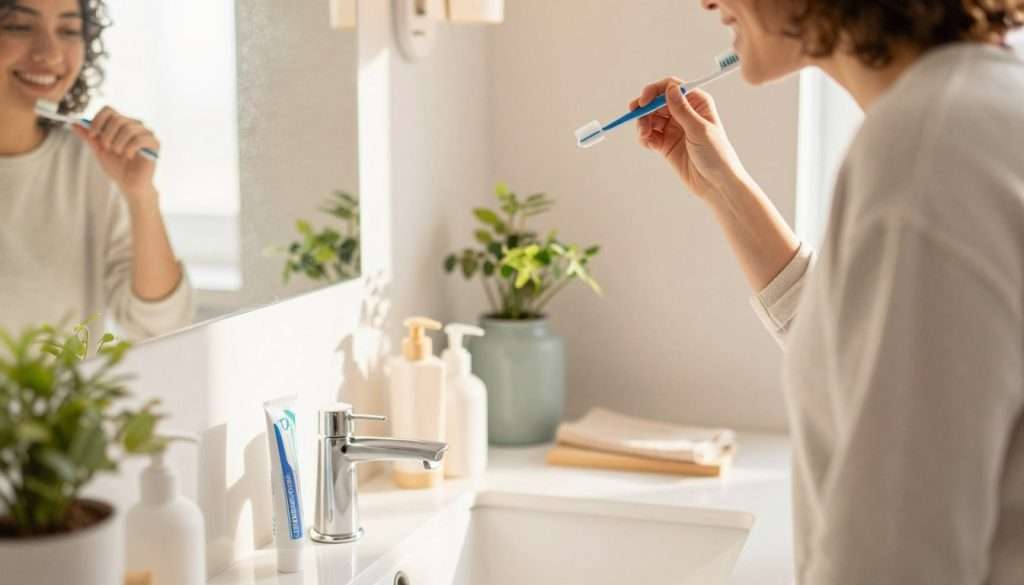
After you brush your teeth, flossing one tooth is a complete first version of a new routine. BJ Fogg created the Tiny Habits method and directs Stanford University’s Behavior Design Lab. The method makes a behavior small enough to start, even when motivation is low.
Fogg’s Behavior Model says a behavior happens when motivation, ability, and a prompt come together. A prompt is the cue for an action. A Tiny Habit takes less than 30 seconds, needs little effort, and happens at least once a day.
| Behavior ingredient | What it means | A practical adjustment |
|---|---|---|
| Motivation | Wanting to act | Choose an action you value |
| Ability | How easy it feels | Make the action smaller |
| Prompt | A cue to begin | Use a reliable anchor |
Shrink the action to under 30 seconds
A tiny habit is a starting point, not a test of willpower. You can do more when you have energy, but the action itself can stay tiny. That protects the routine from turning into another oversized goal.
Anchor it to a reliable routine
Use the exact recipe: “After I [behavior anchor], I will [tiny habit].” The anchor is the routine that prompts the new action. Keep the wording clear enough to picture the moment.
- Choose one action you can finish quickly.
- Attach it to a reliable anchor you already do.
- Celebrate right after you do the action.
For example: “After I brush my teeth, I will floss one tooth.” Then celebrate with a small smile or a quiet “Nice!” Fogg recommends starting with 1-3 tiny habits, practicing for 7-14 days, then evaluating and scaling up or adjusting.
The free Tiny Habits Toolkit offers a way to try the method. Pick an anchor you already do reliably, then make the attached action small enough to finish in under 30 seconds.
How Can 15 Minutes a Day Help You Practice a Skill?
A student with 15 minutes before dinner can try recalling a concept, solving one problem, then checking the answer. That simple plan gives your practice a clear shape, rather than asking you to “study” and hoping for the best.
Spend a few minutes recalling what you know without looking at notes. Use most of the block to solve a problem or practice the skill. Save the final minutes to check errors and mark what needs another try.

Use the time for focused practice
For language learning, recall five words, write a sentence with them, then check spelling and meaning. In math, solve one problem and inspect each step. For music, practice a tricky measure slowly, then listen for the note that slips.
Choose one specific skill task for each practice block. A clear task makes it easier to see your effort and gives you useful feedback. If a problem takes longer than the timer, note where you stopped instead of rushing the answer.
Add movement without making it another goal
A movement break can fit between classes or after a long stretch at a desk. It is optional, and it does not replace focused practice. A few minutes of walking or stairs may help break up sitting without turning your study plan into a second job.
For adults in the United States, the general health benchmark is at least 150 minutes of moderate activity per week, 75 minutes of vigorous activity, or an equivalent mix. Adults also need muscle-strengthening activity on at least two days each week. People can spread activity across the week and break it into smaller chunks.
A 2024 review of short activity bouts covered 12 studies, all reporting positive health outcomes. Five studies reported adherence rates of at least 92%. The review defined physical-activity snacks as bouts under 10 minutes and noted changes in cardiometabolic markers and body composition.
That guidance is a general health benchmark, not a special study prescription. Some moderate or vigorous movement is better than none. Keep the practice task specific enough that you can tell what you worked on when the timer ends.
What Can You Change When a Habit Keeps Slipping?
If your phone keeps pulling you away from a study session, make the distracting app harder to reach before blaming your motivation. A missed action can point to a poor cue, too much effort, or an inconvenient setup. Treat a slip as useful information about the routine, not a personal failure.
Move the distracting app off your home screen, or place your study materials where you need them. If you tend to scroll after sitting on the couch, try a brief stretch or a glass of water instead. Small changes to your surroundings can make the wanted action easier to choose.
Make the unwanted action harder
The best way to break an unwanted habit is to remove its prompt, add friction, or meet the same need another way. For example, a phone notification may prompt scrolling when you need a short break. Put the phone in another room, then take a quick walk or stretch.
That change works with the situation rather than demanding endless self-control. A behavior may serve a real need, such as rest or connection. Choose a replacement that meets that need without pulling you into the same pattern.
Use prompts and tracking with care
Digital tools can offer prompts, self-set goals, and self-monitoring, but none is required. A 2024 review of 41 digital behavior-change studies from 2012 to 2022 found those techniques were used most often.
The methods also included automatic monitoring, feedback, time-based cues, and virtual rewards. A reminder might help you begin, while a simple note can show whether the routine fits your day. Keep it light; you do not need to turn every action into a score.
Try one adjustment at a time so you can tell what helps. Keep only the reminder or tracking method that makes the next useful action easier.
Which Tools Can Make Your Routine Easier?
A checklist is enough for many people, while a game-style tracker may suit you better if rewards keep you engaged. Choose a tool that supports your routine without becoming the routine. Prices and features below reflect a 2026 comparison.
Compare three habit trackers
| App | Listed price | Platforms | Useful feature |
|---|---|---|---|
| Streaks | $5.99 one time | iOS | Up to 24 habits; Apple Health, Siri Shortcuts, Apple Watch |
| Habitify | $3.33 per month for paid plan | iOS, Android, Mac, web, Watch | Real-time syncing |
| Habitica | Free or $4.99 per month | iOS, Android, web | Quests, parties, and boss battles |
Finch is another option if a virtual-pet reward sounds fun. Completing self-care habits helps raise its pet. Pick based on the features you will use, not the longest list of extras.
Try a free Tiny Habits resource
The Tiny Habits Toolkit is free and lets you try the basic approach. The full Tiny Habits book offers more explanation and examples. To read the book online legally, check your public library’s ebook or audiobook catalog.
The free Tiny Habits Academy five-day program starts with about 25 minutes of weekend setup. Then you practice for five days in a row, Monday through Friday. Daily practice takes three minutes and includes an afternoon check-in with a certified coach, without a promised result.
The Tiny Habits book suits readers who want a fuller explanation and more examples. The free Toolkit is a no-cost way to test the basic approach before deciding whether you want more.
Choose the simplest tool you will actually open, rather than adding another task to your routine.
What Tiny Habits Can Students Try Today?
After you open your notebook, write one question you want to answer in today’s class. That is a practical learning action, not a vague goal to “do better.” Start with a routine already in your day, then attach one small step.
Here are five study-friendly examples you can shape to fit your own schedule:
- After opening a notebook, write one question.
- After sitting at your desk, review one flashcard.
- After breakfast, read one paragraph.
- After opening a textbook, solve one practice problem.
- After closing a laptop, write one sentence of reflection.
These are starting points, not a required routine or a promise of mastery.
You could pair brushing teeth with a glass of water in the morning, but study actions are often easier to connect to school routines. The best example is one you can picture doing without a special setup. Choose the example that fits a routine you already do, and make it yours.
Conclusion
One small action you repeat is a stronger start than a grand study plan you abandon. Tiny actions can build momentum and support consistency, but they are not shortcuts to instant mastery. The useful win is showing up for practice often enough to learn from it.
Choose one action for today, then let your goals grow as your routine settles into daily life. Want to go deeper? If this article resonated with you, my free book How to Become the Smartest Student in the Classroom gives you a full system: memory techniques, study routines, and strategies that actually stick. No cost, no catch. Grab your free copy here → https://www.studyingmachine.com/free-books/.
Choose your first action today, then grab your free copy of How to Become the Smartest Student in the Classroom at https://www.studyingmachine.com/free-books/.