

Imagine achieving what once seemed impossible. We think you can transform your life and hit your biggest goals with the right mindset.
UNESCO says adopting a growth mindset and embracing lifelong learning is key for growth. It helps you unlock your full potential and move closer to your goals.
So, how do you start this journey? We’ll show you how to build your learning empire. We’ll help you stay motivated and focused on your goals.
Key Takeaways
- Embracing lifelong learning is essential for achieving personal and professional growth.
- A growth mindset is crucial for overcoming obstacles and reaching your goals.
- Building a learning empire requires dedication, persistence, and the right resources.
- You can start your learning journey by identifying your goals and creating a plan.
- Staying motivated and focused is key to achieving success in your learning endeavors.
The Psychology Behind Seemingly Impossible Goals
Seemingly impossible goals often seem that way because of our own psychological limits. When we aim for big goals, we’re not just testing our skills. We’re also facing our deep-seated beliefs that hold us back.
Why We Limit Our Potential
Our fear of failure and fixed mindset often stop us. We prefer what’s safe, avoiding risks that could help us grow. This fear comes from past experiences and what others expect of us.
The Science of Achievement Psychology
Achievement psychology shows how our mindset matters. By having a growth mindset, we see challenges as chances to grow, not just hurdles. David A. Kolb’s Experiential Learning Theory shows how important reflection and action are in learning and reaching our goals. By using these psychological insights, we can overcome the obstacles to our big goals.
Defining Your Personal Learning Empire
Building a personal learning empire begins with knowing what it means to you. It’s about setting up a strong structure for ongoing growth. Your learning empire grows as your goals and dreams do.
What Constitutes a “Learning Empire”
A learning empire covers many parts of your life where learning is key. It’s not just about school; it’s about always looking for ways to get better. This includes:
- Professional development
- Personal interests
- Skill acquisition
- Networking and community building
Assessing Your Current Knowledge Foundation
To build a strong learning empire, you must know your current knowledge. This means finding out what you’re good at and what you need to work on. It’s about knowing how you learn best and where you can improve.
| Area | Current Level | Desired Level |
|---|---|---|
| Programming Skills | Beginner | Advanced |
| Data Analysis | Intermediate | Expert |
| Communication Skills | Advanced | Expert |
Understanding what a learning empire is and knowing your current knowledge helps you build a strong base. This base is key for continuous learning and self-improvement.
The Connection Between Continuous Learning and Goal Achievement
The path to success is built on the foundation of knowledge gained through lifelong learning. As we aim to reach our goals, ongoing education is key. It gives us the skills and insights we need.
How Knowledge Accelerates Progress
Getting new knowledge doesn’t just expand our abilities; it speeds up our progress toward our goals. By learning from others and applying their lessons, we can dodge common mistakes. This helps us quickly achieve success. Studies on lifelong learning show its importance in reaching personal and professional goals, as UNESCO’s report points out.
Breaking Complex Goals into Learning Milestones
Dividing big goals into smaller, achievable learning steps is a smart way to succeed. This method lets us concentrate on one skill at a time, making learning easier. It helps us create a clear path for our learning, ensuring we’re always moving toward our goals.
Identifying Your Impossible Goals Worth Pursuing
The first step to achieving the impossible is to pick goals that are truly worth the effort. We need to carefully look at our dreams to see if they are real and can be done.
Distinguishing Between Aspirational and Delusional Goals
Aspirational goals push us to grow but are still possible. Delusional goals are too high and can lead to sadness. We must check our goals against what we can do now.
For example, becoming a pro athlete quickly is usually not realistic. But, working hard to become an expert in a field is a good goal.
The SMART+ Framework for Ambitious Goals
The SMART framework helps set goals we can reach. But, for the impossible, we need to add more, making it SMART+.
Setting Stretch Targets
Stretch targets are big challenges that push us to innovate and work hard. They are tough but keep us moving forward.
Creating Accountability Systems
To keep moving towards our big goals, we need to stay accountable. This can mean meeting with a mentor, joining a group, or using apps to track our progress.
| Goal Type | Characteristics | Example |
|---|---|---|
| Aspirational | Challenging, yet realistic; aligns with resources and skills | Learning a new language in a year |
| Delusional | Unrealistic; lacks alignment with current capabilities | Becoming fluent in 10 languages in a month |
As James Clear, author of “Atomic Habits,” once said,
“You do not rise to the level of your goals. You fall to the level of your systems.”
This shows how important it is to have strong systems to reach our goals.
Creating Your Personal Learning Curriculum
The key to unlocking your full potential is designing a learning plan that fits your dreams. A personal learning curriculum is essential for reaching your goals. It means identifying what you need to learn, planning your learning path, and choosing what to focus on.
Conducting a Skill Gap Analysis for Your Goals
Starting a skill gap analysis is crucial for a personalized learning plan. It’s about checking your current skills against what you need for your goals. This helps you see where you need to improve, so you can learn more effectively.
To do a skill gap analysis, list the skills needed for your goal. Then, rate how good you are at each skill. This will show you what you need to learn next.
Designing Strategic Learning Pathways
After finding your skill gaps, design a learning plan. Break your learning into smaller parts and arrange them in a logical order. This makes your learning journey easier to follow.
Core Knowledge Requirements
Core knowledge is the basic stuff you must know to reach your goals. These are the must-haves for your lifelong learning plan.
Supplementary Skills
Supplementary skills are extra abilities that help you reach your goals. They give you an edge and open up new chances for self-improvement.
Prioritizing Learning Investments
It’s important to choose what to learn first. Focus on the skills and knowledge that will help you achieve your goals the most. This drives your continuous learning forward.
By following these steps, you can make a learning plan that helps you succeed in reaching your impossible goals.
Conquer Impossible Goals: Build a Lifelong Learning Empire in Practice
Building a lifelong learning empire helps you conquer big goals. By using a structured learning plan, you can make big dreams come true. Let’s see how people have reached success through learning.
Case Studies of Learning-Based Achievement
Many people have hit their goals with a smart learning plan. For example, a software developer wanting to get into AI engineering can make a learning plan. This plan might include online courses, working on projects, and networking with AI experts.

Implementing the 5-Stage Learning Acceleration Method
The 5-stage learning method is a great way to reach your goals. It has five steps:
Stage 1: Immersion Learning
Start by learning a lot from books, online courses, and more.
Stage 2: Application Testing
Use what you’ve learned in real projects or scenarios.
Stage 3: Feedback Integration
Get feedback from others or yourself to improve your learning.
Stage 4: Knowledge Synthesis
Put all your learning together to get a deep understanding.
Stage 5: Teaching to Master
Teach what you know to others. This helps you learn more and find areas to get better.
By following these steps, you can speed up your learning and get closer to your goals. This method helps you build a strong learning empire that fits your needs.
To reach success, keep working on your learning plan. Always update it based on your progress and new goals.
Developing a Growth Mindset for Continuous Improvement
Adopting a growth mindset is crucial for reaching your full potential. It opens you up to new possibilities and lets you see challenges as chances to grow. This mindset is key to continuous learning and self-improvement.
Transforming Failures into Learning Opportunities
Failures are a normal part of learning. Instead of getting discouraged, those with a growth mindset see failures as chances to learn. They figure out what went wrong and use that to do better next time.
Cultivating Intellectual Curiosity
A growth mindset sparks curiosity. It makes you want to ask questions, try new things, and see things from different angles. This curiosity keeps you learning and adaptable in a changing world.
Embracing Challenges as Growth Catalysts
Challenges aren’t things to avoid but chances to grow. By facing challenges, you can go beyond what’s comfortable and reach new heights of success.
| Growth Mindset Traits | Fixed Mindset Traits |
|---|---|
| Embraces challenges | Avoids challenges |
| Persists in the face of obstacles | Gives up easily |
| Sees effort as a path to mastery | Sees effort as fruitless |
Building Learning Habits That Stick
The secret to lifelong learning is making habits that last. When learning is part of your daily life, reaching your goals becomes easier.
The Science of Habit Formation for Learners
Forming habits involves triggers, actions, and rewards. For learners, this means setting up a study-friendly environment. Studies show that small, consistent efforts lead to big gains over time.
Creating Effective Learning Routines
To make good learning routines, think about your schedule, learning style, and goals. Here are some tips to start:
- Find when you learn best
- Set clear, reachable learning goals
- Make a good study space
Daily Practices (15-Minute Learning Blocks)
Adding short learning sessions to your day works well. Spend 15 minutes daily learning something new.
Weekly Knowledge Reviews
Make time each week to review what you’ve learned. This strengthens your knowledge and shows where you need more work.
Monthly Skill Assessments
Regular skill checks help you see how far you’ve come and adjust your learning plan if needed.
| Routine | Frequency | Benefits |
|---|---|---|
| 15-Minute Learning Blocks | Daily | Consistent progress, improved retention |
| Weekly Knowledge Reviews | Weekly | Reinforces knowledge, identifies gaps |
| Monthly Skill Assessments | Monthly | Tracks progress, informs learning adjustments |
By adding these habits to your daily life, you’ll be on your way to lifelong learning success. The most important thing is to stay consistent and keep going.
Leveraging Technology for Your Learning Empire
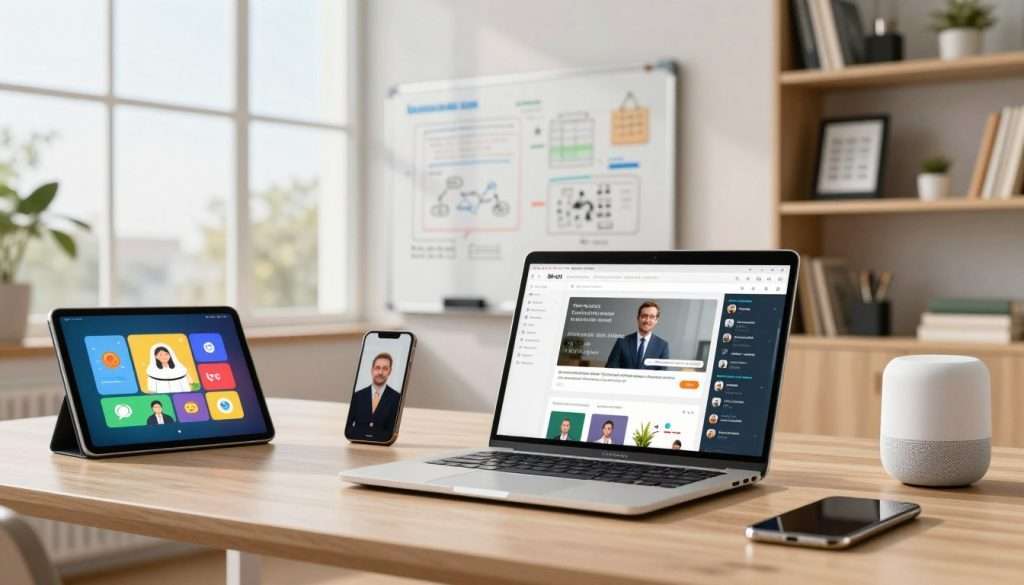
Technology is key in building our learning empire. It helps us keep learning and improving. In today’s world, many tools and methods can make learning better.
Digital Tools for Knowledge Management
Good knowledge management is vital for a growing learning empire. Tools like Evernote and Notion help us organize info. They make it easy to find and review.
AI-Assisted Learning Strategies
AI is changing how we learn new things. Sites like Duolingo and Coursera use AI to make learning fit our style and speed. This makes learning more effective.
Creating Personal Knowledge Databases
Having a personal knowledge database is key for keeping and recalling info. Organizing our learning materials helps us build on what we know. It encourages us to keep learning and improving.
Using these tech tools, we can significantly accelerate our learning. We can turn big dreams into real achievements.
Overcoming Learning Plateaus and Resistance
As we learn for our whole lives, we hit bumps that slow us down. It’s a common part of learning, but it can be tough when we want to reach our goals fast. The trick is to know when we’re stuck and use special ways to get past it.
Recognizing When You’re Stuck
The first step to get past a learning block is to admit you’re not moving forward. You might feel like you’re not getting new stuff or improving, even when you try hard. To see if you’re stuck, ask yourself:
- Am I feeling frustrated or demotivated about my learning?
- Have I stopped seeing improvements or progress?
- Am I avoiding certain topics or tasks?
If you said “yes” to any of these, you’re likely stuck.
Breakthrough Techniques for Continued Progress
When you know you’re stuck, it’s time to try new things. Changing where or how you learn can help. Try studying in a new place, using different tools, or learning through different senses. Also, breaking down big topics into smaller parts can make them feel less scary.
The 30-Day Learning Sprint Method
A great way to beat resistance is the 30-Day Learning Sprint. This means focusing for 30 days on one topic. Here’s how to do it:
| Day | Learning Activity | Goal |
|---|---|---|
| 1-5 | Research and planning | Define the scope of your learning |
| 6-20 | Intensive learning | Acquire new knowledge and skills |
| 21-30 | Practice and application | Apply what you’ve learned to real-world scenarios |
With these methods, you can get past learning blocks and keep moving towards your goals. This way, you’ll keep learning and growing for the rest of your life.
Measuring Progress in Your Learning Empire
Building a learning empire means you must track your progress. This helps you see where you need to improve. It also guides you in making smart choices for your learning path.
Creating Meaningful Learning Metrics
To measure progress well, you need to set up meaningful metrics. Start by setting clear goals and picking key performance indicators (KPIs) that match your goals. For example, you might count the books you read, courses you finish, or new skills you learn over time.
| Metric | Description | Target |
|---|---|---|
| Books Read | Number of books completed within 3 months | 6 |
| Courses Completed | Number of online courses finished within 6 months | 3 |
| Skills Acquired | Number of new skills learned within 1 year | 5 |
Tracking Skill Development Over Time
It’s key to watch how your skills grow over time. This helps in self improvement and goal setting. By keeping an eye on your progress, you can spot areas needing more focus and tweak your learning plan.
Celebrating Milestones and Achievements
Celebrating your achievements is crucial to keep you motivated and engaged. Recognizing your progress helps you stay on track and keeps you moving towards achieve success.
Conclusion: From Impossible to Inevitable Through Lifelong Learning
As we finish our journey to conquer impossible goals and build a lifelong learning empire, it’s clear. The path to achieving the extraordinary is through continuous learning and growth. UNESCO’s report on lifelong learning shows its importance for both individuals and society.
You now have the tools and strategies to make your dreams come true. By adopting a growth mindset and using technology, you’re on your way. You’ll make the impossible seem inevitable.
Your lifelong learning empire is more than reaching a single goal. It’s about growing and thriving on challenges. As you keep going, you’ll see what’s possible expand. What once seemed impossible will become your reality.
So, start today. Begin building your learning empire. Watch as your biggest dreams become real. The journey to conquer impossible goals is ongoing. But with persistence and the right approach, you’ll be unstoppable.