
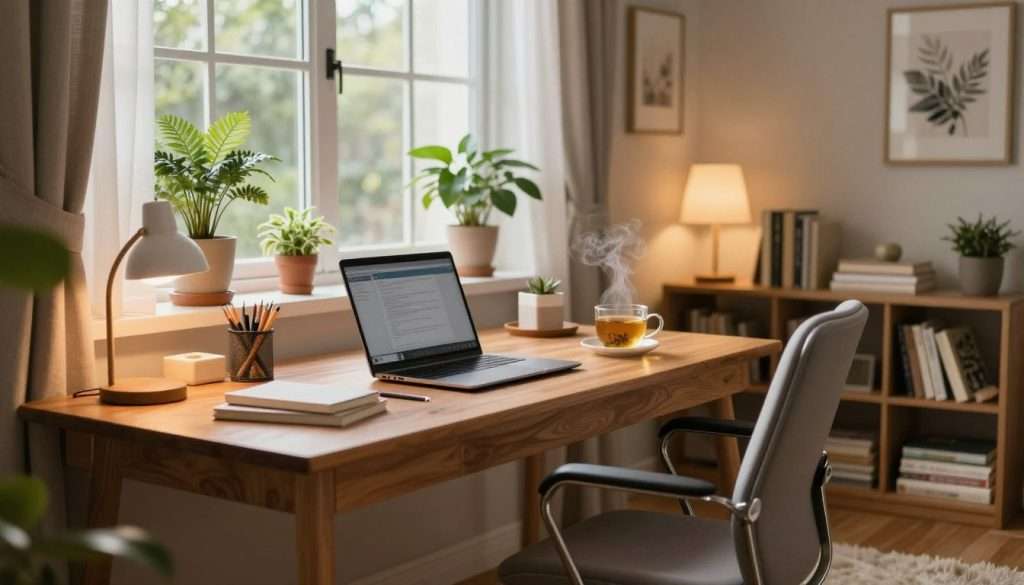
Ever sit down to work and feel your motivation disappear? We’ve all been there, staring at a messy desk while our focus wanders. It’s clear that where you study is just as important as what you study.
By creating the ultimate study sanctuary: environment is everything when it comes to your daily output. We aim to turn your workspace from a dull corner into a place of joy and deep focus.
See your desk as a personal productivity haven, not a chore zone. Designing a space that feels rewarding naturally builds better study habits for success. Let’s make those long, dreaded sessions into moments of inspiration you look forward to every day!
Key Takeaways
- Your physical surroundings directly influence your ability to focus and retain information.
- A personalized workspace turns academic tasks into a more enjoyable, rewarding ritual.
- Intentional design helps you avoid distractions and stay in a flow state longer.
- Small changes to your desk setup can lead to significant improvements in your mood.
- Building a dedicated haven is a foundational step toward long-term academic growth.
The Psychology of Space and Academic Performance
Ever felt like your brain is overwhelmed when you’re at a messy desk? It’s not just your imagination. Your study environment plays a big role in how well you do in school.
Our surroundings affect our mood and focus more than we think. By understanding this, we can work with our environment to get better grades.
How Physical Surroundings Influence Cognitive Load
Your brain is always taking in details around you, like papers and lights. This makes your brain work harder, leaving less energy for studying.
A messy room makes it hard for your brain to ignore distractions. This is why a clean study area is so important. It helps your brain focus better.
The Connection Between Order and Mental Clarity
A clean, organized space is like a mental reset button. Clearing your desk tells your brain it’s time to focus on your studies.
A tidy area makes it easier to reach your goals. Knowing the importance of study environment helps you create a calm space. This space lets your mind learn without distractions.
Selecting the Ideal Location for Your Study Sanctuary
You don’t need a huge office to make a great study space design. Even a small, quiet spot can boost your productivity. The key is to create a space that tells your brain it’s time to focus.
The importance of study environment is huge. Choose a spot that makes you feel ready to work. If it makes you sleepy, it’s not the right place.
Evaluating Natural Light and Airflow
Fresh air and sunlight are great for tackling tough tasks. Place your desk near a window for natural light. It keeps your energy up all day.
Good airflow is also key for a sharp mind. If your room feels stuffy, your brain will feel slow. Open a window to let in a breeze and keep the air fresh.
Minimizing Distractions in Shared Living Spaces
Living with others can make finding quiet hard. Use noise-canceling headphones to create an auditory bubble. This helps block out household noise and keeps you focused.
Visual cues can also signal you’re busy. A “do not disturb” sign or a specific lamp on can tell others you’re in work mode. Setting these boundaries helps you stay focused.
The Benefits of Dedicated Versus Multi-Purpose Zones
Many study at the kitchen table, but it can mix work and relaxation. A dedicated study zone helps your brain get into learning mode. It makes you stay on track.
If you use a space for both, pack your study stuff away when done. This helps you mentally disconnect from work. The table below compares dedicated and multi-purpose spaces to help you choose:
| Feature | Dedicated Zone | Multi-Purpose Zone |
|---|---|---|
| Mental Focus | High (Immediate trigger) | Moderate (Requires effort) |
| Setup Time | Zero (Always ready) | High (Requires clearing) |
| Space Needs | Permanent footprint | Flexible/Temporary |
| Best For | Deep, long-term study | Quick tasks/Casual work |
Ergonomics and Furniture Essentials for Long-Term Comfort
Creating a study-friendly space is more than looks; it’s about keeping your body comfortable while you study. When you’re uncomfortable, it’s hard to focus. The right furniture can make a big difference in your studies.
Good study space design helps you stay focused for hours. It makes your desk a comfortable place to work, not a source of stress.
Choosing the Right Desk for Your Workflow
Your desk is the heart of your study space. It should have enough room for all your stuff without feeling cramped. Stability is key, so avoid tables that wobble.
Think about your desk’s height. Your elbows should be at a ninety-degree angle to avoid shoulder pain. If your desk is too high or low, you’ll slouch and get tired.
Selecting an Ergonomic Chair to Prevent Fatigue
Your chair is crucial for comfort. A good ergonomic chair supports your back during long study sessions. Look for one that you can adjust to fit your body.
Make sure your feet are flat on the floor while sitting. If your chair is too high, use a footrest. Prioritizing comfort now can prevent long-term pain.
Proper Monitor Placement and Eye Strain Reduction
Looking at screens for hours can hurt your eyes and neck. Place your monitor so the top third is at or below eye level. This keeps your neck relaxed.
Keep your screen about an arm’s length away to avoid eye strain. If you use a laptop, consider a separate keyboard and stand. Small changes can make a big difference in your energy.
| Feature | Why It Matters | Pro Tip |
|---|---|---|
| Adjustable Chair | Prevents back pain | Ensure lumbar support |
| Desk Height | Reduces shoulder tension | Keep elbows at 90° |
| Monitor Level | Protects neck health | Top of screen at eye level |
Lighting Strategies for Optimal Focus
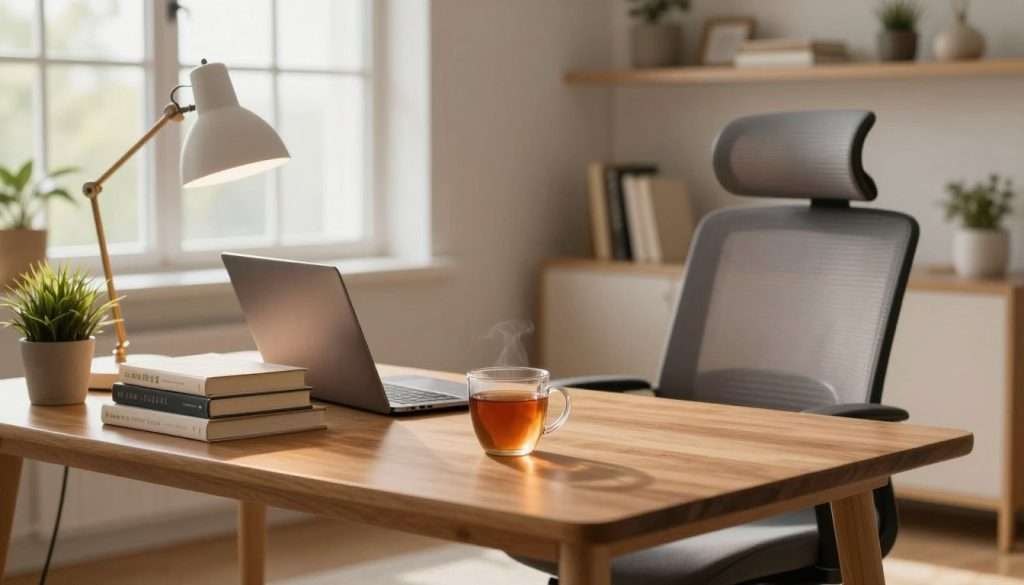
Getting the right light is key for a great study spot. It helps you avoid eye strain and boosts your energy. It’s the magic that turns a boring desk into a place you love to be.
Layering Ambient, Task, and Accent Lighting
Think in layers for a pro setup. Ambient lighting gives the room a soft glow, avoiding harsh shadows. Use a ceiling light or a floor lamp for this.
Task lighting is crucial. A good desk lamp shines on your books or keyboard, making everything clear. Add accent lighting like LED strips for personality and depth.
The Impact of Color Temperature on Alertness
The light’s color affects your brain. For focus, use cool, blue-toned light during the day. It’s like daylight and keeps you awake.
At night, switch to warm, yellow-toned lights. They help your brain relax. Smart bulbs can change color automatically for you.
Utilizing Natural Light Without Glare
Windows are great, but tricky. Place your desk so the light hits from the side, not straight on. This avoids glare and squinting.
If the sun is too strong, use curtains or blinds. They soften the light, keeping your room bright and comfy. This balance is crucial for a great study spot.
| Lighting Type | Primary Purpose | Best Placement |
|---|---|---|
| Ambient | General visibility | Ceiling or corners |
| Task | Focused work | Directly on desk |
| Accent | Mood and style | Shelves or walls |
Creating the Ultimate Study Sanctuary: Environment is Everything
Let’s make your workspace your own. Ergonomics and lighting are key, but environment is everything for staying motivated. Your desk should be a place you enjoy, not just a spot to sit.
Personalizing Your Space with Motivational Elements
Surround yourself with things that make you happy. A vision board, a photo of your goals, or plants can brighten your desk. These touches make your space feel inviting, not cold.
“The secret of getting ahead is getting started.”
Managing Sensory Input Through Sound and Scent
Your space affects more than your eyes. Good sounds and smells matter too. Noise-canceling headphones and ambient sounds help block distractions. A diffuser with peppermint or lemon can keep your mind sharp.
Integrating Technology Without Creating Clutter
Technology is key for learning today, but it can also distract. Use cable sleeves and under-desk trays to keep things tidy. A clean desk helps your brain focus on important tasks.
- Use wireless peripherals to reduce cable mess.
- Store unused chargers in a dedicated drawer.
- Keep your monitor at eye level to save desk space.
Organization Systems to Maintain a Productive Workflow
A messy desk can make your mind feel cluttered too. When things are all over the place, finding a simple pen can be hard. With smart productivity tips for studying, you can clear your mind and keep your work flowing smoothly.

Vertical Storage Solutions for Small Spaces
When your desk is full, it’s time to look up. Vertical storage is a lifesaver for small spaces. You can add floating shelves or a pegboard to keep your tools handy without taking up too much space.
Think of your walls as extra space for your stuff. Use hanging baskets or magnetic strips for scissors, cables, and markers. This keeps your desk free for your books and laptop.
Digital Versus Analog Filing Systems
Choosing how to organize your notes is up to you. Digital tools like Notion or Google Drive are great for keeping everything in one place. They save space and make sharing easy with study buddies.
But some people love the feel of paper. If you prefer analog, try color-coded binders or an accordion folder. The best system is the one you use every day.
“For every minute spent organizing, an hour is earned.”
The Daily Reset Routine for a Clean Desk
You don’t need to spend hours cleaning to keep your desk tidy. A quick daily reset routine takes just a few minutes. Clear out the trash, put pens away, and stack your books neatly.
This small habit signals to your mind that your work is done. When you start fresh the next day, you’ll find a clean, welcoming space. No more wasting time searching for supplies!
Temperature and Air Quality Control
Your brain needs more than just a quiet desk to perform at its best. The air and temperature in your room are key to focus. An optimal study environment means good air and the right temperature.
When your room is too hot or cold, your body works hard to stay comfortable. This takes away from your mental energy. Staying comfortable is essential for deep focus.
Maintaining the Ideal Room Temperature for Concentration
Experts say a cooler room helps you stay alert. Too warm, and you’ll feel sleepy quickly. Aim for 68 to 72 degrees Fahrenheit for sharp thinking.
Sharing a space means you might not control the thermostat. Use a desk fan in summer. In winter, a blanket keeps you warm without drying out the air.
The Role of Indoor Plants in Improving Air Quality
Fresh air is key for focus. Stale air can cause headaches and a foggy brain. Indoor plants are a natural way to improve your optimal study environment.
Plants like Snake Plants or Pothos clean the air and add life to your desk. They help with humidity and offer a calming sight. Caring for your plants is a great break during study sessions.
If plants aren’t your thing, opening a window for ten minutes daily helps. It brings in fresh air and oxygen. This simple habit keeps your space an optimal study environment for your goals.
Essential Tools and Supplies for Your Study Sanctuary
Creating a great study space is more about picking the right tools than buying lots of stuff. You don’t need a lot to be a great student. What matters is having the tools that help you learn.
By focusing on study room organization, you can start working without any hassle.
Curating a Minimalist Stationery Kit
A minimalist kit helps keep your mind clear and your desk tidy. Choose a few high-quality items you love using. A good pen, a nice notebook, and a simple planner are all you need to stay organized.
Quality over quantity is key. With fewer supplies, you spend less time looking for things and more time learning. Keep only what you use every day within reach for a clean, efficient workspace.
Cable Management Techniques for a Tidy Workspace
A tangled mess of cords can quickly ruin a peaceful study space. Those wires can distract you from your goals. But, there are easy ways to hide them.
Use adhesive cable clips to keep wires hidden along your desk legs. You might also consider a cable management box for power strips and adapters. Keeping your tech organized creates a calm space that supports better study room organization and keeps your focus sharp.
Conclusion
Creating your ultimate study sanctuary is a journey, not just a task. You’re building a space that grows with your goals. This space is key to your success and happiness in learning.
Think of your desk as a launchpad for your dreams. Using these study tips will keep you on track. Even small changes, like better lighting or storage, can greatly improve your mood.
Good study habits start with the right environment. You deserve a space that feels like your own retreat. Keep improving your setup as you learn what works best for you.
What change will you make to your desk today? Share your progress or post your workspace photos on Instagram with #StudySanctuary. We love seeing how you turn your space into a creative and focused hub!