
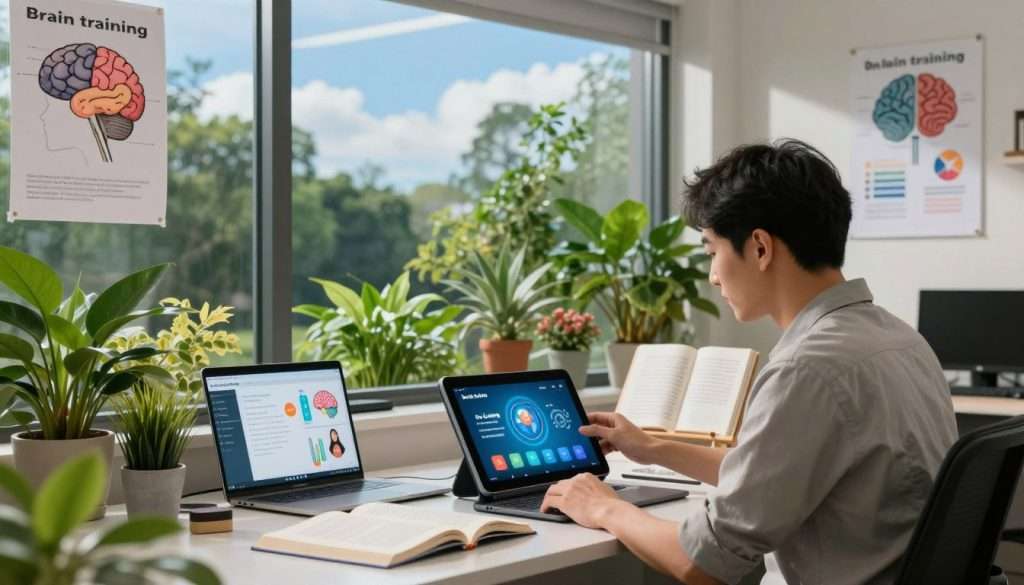
Do you ever feel like your textbooks are just heavy paperweights? We think studying should be fun, not a chore. Imagine making every study session a fun mental challenge.
Your mind is incredibly flexible, known as plasticity. By doing the brain training routine that makes learning easier, you can grow new connections at any age. It’s like upgrading your mind every day!
Building a cognitive reserve protects your future self. When you challenge your mind often, you keep your memory sharp and focus clear. Let’s find out how to make learning fun and rewarding.
Key Takeaways
- Neuroplasticity allows your mind to adapt and grow at any stage of life.
- Consistent mental exercises help build a robust cognitive reserve.
- Studying transforms from a burden into an engaging, rewarding habit.
- Sharp thinking requires regular, intentional mental stimulation.
- You possess the power to improve your memory through simple daily actions.
Understanding the Science of Neuroplasticity
Did you know your brain changes every day? For a long time, we thought our brains stopped growing after we grew up. But now, we know that’s not true!
Your brain has a cool ability called neuroplasticity. It can change and adapt your whole life. By doing the right neuroplasticity exercises, you can make learning faster and easier.
How Your Brain Rewires Itself for Learning
Think of your brain as a big network of roads. Learning something new is like making a new path between your neurons. The more you use that path, the better and faster it gets.
This process is based on the “use it or lose it” rule. If you don’t challenge your mind, those paths can get weak. But, keeping your mind active keeps those paths strong and fast, making your brain stay sharp as you get older.
The Role of Cognitive Enhancement Techniques
You can help your brain grow by using cognitive enhancement techniques. These methods challenge your brain just enough to make it grow without getting too tired. It’s all about finding the right level of challenge.
Whether you’re learning a new language or getting better at a hobby, these techniques keep you sharp. By focusing on good mental challenges, you make your brain work better. See the table below to understand how these methods are different from just studying the usual way.
| Feature | Traditional Study | Neuroplasticity Training |
|---|---|---|
| Primary Goal | Memorizing facts | Building neural pathways |
| Mental Effort | Passive reading | Active problem solving |
| Long-term Result | Short-term recall | Enhanced cognitive agility |
| Frequency | Cramming sessions | Consistent daily practice |
The Brain Training Routine That Makes Learning Easier
Ready to make your brain a high-performance machine? We think that the brain training routine that makes learning easier isn’t about long hours at a desk. It’s about small, lasting habits that keep your mind sharp and ready for new things.
Establishing a Consistent Mental Agility Workout
Your brain is like a muscle that needs regular exercise to stay strong. Adding mental agility workouts to your daily routine is key to success. You don’t need to change your whole life; just ten minutes a day can make a big difference.
Being consistent is what really matters. It’s better to practice a little every day than to study for hours once a week. Daily practice shows your brain that these skills are important.
Balancing Intensity and Recovery for Cognitive Growth
Trying too hard without breaks can lead to burnout, which hurts learning. We suggest balancing intense focus with rest. This mix helps your brain solidify what you’ve learned.
Exercise is also crucial for recovery. It clears mental fog and improves memory. Combining exercise with mental agility workouts creates the best environment for your brain to grow.
| Training Element | Low Intensity | High Intensity |
|---|---|---|
| Focus Duration | 15-20 Minutes | 45-60 Minutes |
| Mental Effort | Light Review | Deep Problem Solving |
| Recovery Need | Short Break | Physical Activity/Sleep |
| Primary Benefit | Consistency | Cognitive Growth |
Remember, the brain training routine that makes learning easier is a personal journey. Listen to your body and mind, and adjust as needed. You’re building a foundation for a lifetime of curiosity and success!
Optimizing Your Environment for Deep Focus
Your surroundings play a big role in your learning journey. They can either help you soar or hold you back. Creating a space for deep focus tells your brain it’s time to work hard.
A well-designed environment helps you dive into complex material without distractions. It removes the obstacles that usually stop you.
Eliminating Digital Distractions
Ever reached for your phone to check a notification and lost thirty minutes? These tiny interruptions are big enemies of your focus. Try putting your phone in another room or use apps that block your browser during study.
Turning off non-essential notifications on your computer is also a good idea. A digital-free zone lets your mind stay focused. It’s easier to concentrate when devices aren’t constantly asking for your attention.
The Impact of Physical Workspace on Mental Clarity
Your desk setup does more than hold your books; it affects your mind. A cluttered desk can make your mind feel cluttered too. Keeping your workspace clean and organized helps you feel in control.
Lighting and comfort are key to staying focused. Natural light boosts your energy, and a comfy chair prevents physical fatigue. Investing in your physical environment means investing in your learning.
Memory Improvement Exercises for Rapid Recall
Ever struggled to remember a simple fact during a test? You’re not alone. Our brains are not static storage units but dynamic muscles that need regular training. Doing memory improvement exercises regularly keeps your mind sharp and agile for years.
Did you know solving crossword puzzles can delay mental decline by up to seven years? It’s a small time investment that greatly benefits your brain. By adding these proven techniques to your daily routine, you can change how you learn and remember new things.
Utilizing Mnemonic Devices and Visualization
When faced with a lot of abstract data, your brain can get lost. Mnemonic devices help by acting as mental shortcuts. They turn dry facts into vivid mental images, making them easier to remember.
Try making a silly story or a weird mental picture to connect ideas. The more absurd or emotional the image, the better your brain will remember it. This makes studying fun and creative.
Spaced Repetition Systems Explained
Ever crammed for an exam only to forget it the next day? That’s because your brain needs time to solidify new information. Spaced repetition reviews information at perfectly timed intervals.
Instead of reviewing everything at once, you review topics just before you’re about to forget them. This moves data from short-term to long-term memory. It’s a top memory improvement exercise for learning complex subjects well.
| Technique | Best For | Primary Benefit |
|---|---|---|
| Mnemonic Devices | Lists and Vocabulary | Instant Recall |
| Visualization | Complex Concepts | Deep Understanding |
| Spaced Repetition | Long-term Retention | Prevents Forgetting |
Nutrition and Hydration for Peak Cognitive Performance
Your brain is like a high-performance engine that needs top-notch fuel to run well. When you learn new things, your body uses a lot of energy. Without the right nutrients, you might hit a mental wall sooner than you think.
We think that what you eat directly affects how well you learn and remember. By making small changes to your diet, you can stay sharp during long study times.
Brain-Boosting Foods to Incorporate Daily
You don’t need a fancy diet to see results. Just add foods rich in antioxidants, healthy fats, and vitamins for long-term brain health. These nutrients protect your brain cells and help them communicate better.
Try adding these simple snacks to your routine to keep your energy up. Being consistent is key to improving your focus and memory.
| Food Item | Primary Benefit | Best Time to Eat |
|---|---|---|
| Blueberries | Antioxidant boost | Morning study |
| Walnuts | Omega-3 fatty acids | Mid-day slump |
| Dark Chocolate | Improved blood flow | Afternoon break |
| Pumpkin Seeds | Zinc for memory | Evening review |
The Connection Between Hydration and Mental Stamina
Even a little dehydration can make your brain feel slow. When you’re thirsty, your focus drops, and your mental stamina fades fast. It’s easy to forget to drink water when you’re in the zone, but your brain needs it to perform at its best.
Keep a water bottle at your desk to remind you to drink all day. Staying hydrated keeps you alert and focused, so you don’t burn out before you reach your goals. Listen to your body and keep drinking water to keep your mind sharp and ready for anything!
The Power of Sleep in Consolidating New Information
Think of sleep as your brain’s filing cabinet. While you sleep, your brain sorts through the day and stores it in your memory. It is not just downtime; it is a high-stakes processing phase.
Skipping sleep means leaving your learning scattered. Sleep is key to making your studies stick.

How REM Cycles Affect Memory Retention
Rapid Eye Movement, or REM sleep, is crucial for learning. In this stage, your brain processes and strengthens what you learned.
This stage is like the final polish on a masterpiece. Without enough REM, remembering facts and solving problems becomes harder. You might study a lot, but without sleep, you won’t remember it.
“Sleep is the golden chain that ties health and our bodies together.”
Establishing a Pre-Sleep Routine for Better Rest
A consistent wind-down routine is great for your brain. Try to avoid screens an hour before bed to relax. Blue light is the enemy of deep, restorative sleep.
Here are some habits to help your brain prepare for sleep:
- Dim the lights to signal to your body that it is time to produce melatonin.
- Read a physical book or listen to calming music to shift your focus away from daily stressors.
- Keep your room cool and dark to create the perfect environment for uninterrupted REM cycles.
Seeing sleep as a vital part of your learning strategy makes you sharper. Keep your bedtime consistent, even on weekends!
Effective Learning Strategies for Complex Subjects
Ever felt like a textbook is written in a secret code? It’s a common feeling, but you don’t have to face it alone. By using effective learning strategies, you can change how you learn. Even the toughest topics can become easier to grasp.
Active Recall and Feynman Technique Application
Many of us just re-read our notes, but it doesn’t help much. Try active recall instead. This means closing your book and trying to remember the information without looking. It’s like a brain exercise that makes your memory stronger.
Then, use the Feynman Technique. Choose a concept and explain it to a child. If you struggle, you’ve found a knowledge gap. This method is great because it makes complex ideas simple. It helps you really understand the material.
Breaking Down Difficult Concepts into Manageable Parts
Big subjects can feel too much to handle. The trick is to break them down into smaller parts. Focus on one small piece at a time. This reduces stress and keeps you moving forward.
Think of it like building a puzzle. Start with the edges, not the whole thing at once. This way, you build a strong base before tackling the next part.
| Strategy | Traditional Method | Effective Approach |
|---|---|---|
| Reviewing | Passive Re-reading | Active Recall |
| Complexity | Memorizing Jargon | Feynman Technique |
| Workload | Cramming Sessions | Chunking Concepts |
Using these effective learning strategies will transform your learning. It’s not about how long you study, but how you use that time. Focus on engaging with your goals.
Mindfulness and Meditation for Cognitive Skills Development
Ever felt like your brain is too full? Too many tabs open? Mindfulness can clear your mental space. It’s a key part of a cognitive skills development program.
Training your brain to stay present is like doing neuroplasticity exercises. It’s not just sitting still. It’s about focusing when your mind drifts.

Reducing Stress to Enhance Information Processing
Stress clouds your mind. It makes learning hard. Lowering stress helps your brain learn faster and more accurately.
“Mindfulness is the aware, balanced acceptance of the present experience. It isn’t more complicated than that.”
Less stress means a clearer mind. This is crucial for any cognitive skills development program. You’ll find learning easier and less frustrating.
Daily Mindfulness Practices for Better Concentration
You don’t need hours to see benefits. Just five minutes of breathing can improve focus. These neuroplasticity exercises can be done anywhere.
Here’s how mindfulness changes your mental state:
| Feature | Stressed State | Mindful State |
|---|---|---|
| Focus Level | Fragmented | Deep and Sustained |
| Memory Recall | Slow and Hazy | Rapid and Clear |
| Learning Speed | Stagnant | Accelerated |
| Emotional State | Anxious | Calm and Ready |
Start your day with a breathing exercise. It sets a positive tone. Regular practice boosts your concentration. Your brain will thank you for the extra room to learn!
Tracking Your Progress and Adjusting Your Regimen
If you don’t track your growth, you’re just guessing. It’s easy to feel like you’re working hard. But without clear data, you might miss small changes in your brain.
Keeping a record of your journey is the best way to stay motivated. Seeing how far you’ve come makes it easier to keep going, even on tough days of mental agility workouts.
Using Journals to Monitor Cognitive Gains
A simple notebook or a digital app can be your most powerful tool. By writing down your daily wins and challenges, you create a roadmap of your brain’s growth.
Try tracking these specific metrics to see real results:
- Time spent on focused learning sessions.
- The number of complex concepts you mastered each week.
- Your subjective feeling of mental clarity after a session.
- Any patterns in when you feel most alert or tired.
When to Modify Your Mind Training Regimen
Even the best plans need a little tweaking as you grow. If your current mind training regimen feels too easy or no longer sparks your interest, it’s time for a change.
Consider adjusting your routine if you notice these signs:
- You are finishing tasks without feeling any mental fatigue or challenge.
- Your progress in the journal has plateaued for more than two weeks.
- You feel bored or uninspired by your current study methods.
Don’t be afraid to experiment with new techniques or increase the intensity of your sessions. Your brain loves novelty, and staying flexible is the key to keeping your cognitive growth on an upward trajectory!
Advanced Tools and Resources for Lifelong Learning
Becoming a lifelong learner is easier with the right digital tools. Your dedication is the engine, and the right resources fuel your progress.
Leveraging Digital Tools for Brain Training
Modern tech offers great ways to improve focus and memory. By using cognitive enhancement techniques daily, you can make your brain work better.
Many apps challenge your working memory and pattern recognition. These tools make your mind training regimen fun and interactive, like a game.
Accessing Expert Systems for Academic Success
There are also expert systems for studying. These platforms find your weak spots and tailor your cognitive skills development program to you.
With these systems, you don’t guess what to study. You follow a roadmap that boosts retention and saves time.
| Feature | Traditional Study | Expert Systems |
|---|---|---|
| Planning | Manual/Random | Data-Driven |
| Feedback | Delayed | Instant |
| Efficiency | Low | High |
How to Become the Smartest Student in the Classroom
Want to learn more? My free book, How to Become the Smartest Student in the Classroom, offers a full system. It teaches memory techniques and study routines for lasting success.
Claiming Your Free Resource for Further Growth
There’s no cost or catch. Get your free copy here at the Studying Machine website to start mastering today.
Conclusion
You now have the tools to sharpen your mind. By adding memory exercises to your daily routine, you make every study session a success. These small habits lead to big results over time.
Feel confident as you learn new things. Using effective learning strategies helps you understand and remember information better. You’re building a strong foundation for success that lasts a lifetime.
Consistency is key on your journey. Keep challenging your brain, stay curious, and watch your skills grow. What new skill will you master first with your improved mental abilities?
Share your progress with us on social media using the hashtag #BrainTrainingJourney. We love hearing about your breakthroughs. Your journey to easier learning begins now.