
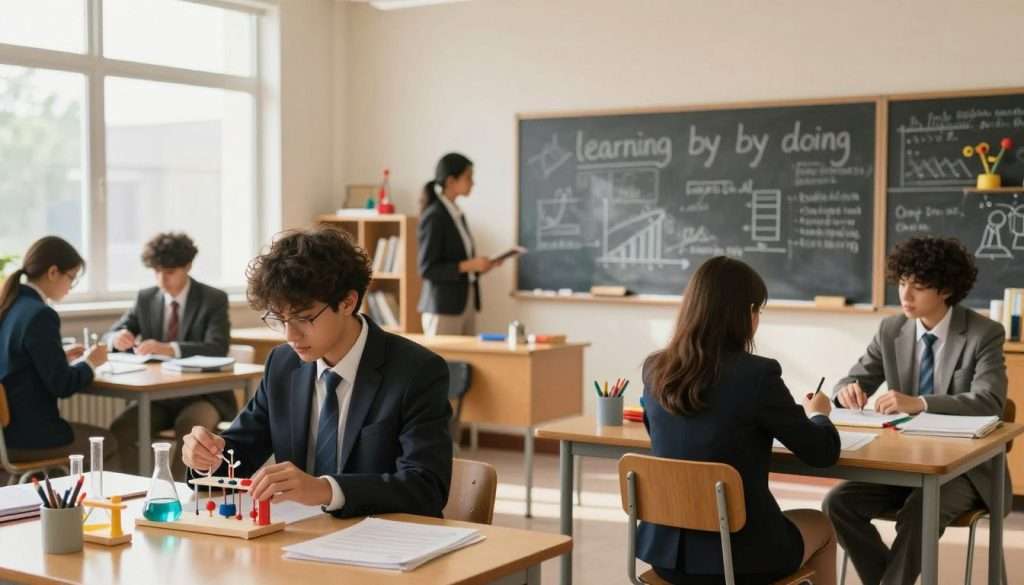
Ever feel like you’re drowning in dusty textbooks? We know that feeling well. It’s time to move away from dry notes and get hands-on with real-world practice.
Learning by doing is magic for everyone. We want you to take charge and explore. You can understand the world through real experience, not just reading.
Think of learning like riding a bike for the first time. Reading manuals won’t teach you like feeling the wind. By doing, you get a deeper understanding that lasts.
We think your education should be an adventure, not a chore. Embracing an active approach turns study sessions into exciting discoveries. Let’s see how this can improve your life!
Key Takeaways
- Engage directly with subjects to boost your memory.
- Move beyond passive listening to active participation.
- Build confidence through real-world experimentation.
- Transform boring study time into an interactive journey.
- Gain deeper insights that textbooks simply cannot provide.
- Develop practical skills that stay with you forever.
What Is Learning by Doing?
Learning by doing, or experiential learning, focuses on hands-on experience. It’s a way to understand and remember things better. This method says we learn best when we’re actively involved.
The Core Philosophy Behind Experiential Learning
At its heart, experiential learning is about immersion and application. It’s not just about listening or reading; it’s about doing. By directly experiencing things, you connect theory with real life. This approach lets you explore, try new things, and learn from mistakes in a safe space.
It follows a learning cycle that includes direct experience, reflection, abstract thinking, and experimentation. This cycle, as David Kolb described, makes learning ongoing and dynamic.
Historical Roots: From John Dewey to Modern Education
John Dewey, a famous educator, started the idea of learning by doing. He believed education should be a team effort between teacher and student. His ideas helped shape today’s experiential learning.
Over years, experiential learning has grown. It now includes internships, apprenticeships, and more. It’s a mix of psychology, education, and technology.
Defining Hands-On Experience in Contemporary Learning
In today’s schools, hands-on experience is key. It’s not just extra; it’s essential. Through experiments, fieldwork, or projects, it makes complex ideas clear and memorable.
By adding hands-on learning to classes, teachers make education more fun and effective. This way, you not only understand better but also gain skills for real-life use.
The Science Behind Active Learning
Active learning is more than just staying engaged. It’s about how our brains work when we’re actively learning. This approach helps us remember and develop skills better.
How the Brain Processes Kinesthetic Learning
Kinesthetic learning means learning by doing. It uses physical activity to help us remember things. When we do hands-on activities, our brains make new paths to understand and remember better.
Memory Retention Through Physical Engagement
Studies show that being physically active helps us remember more. The National Training Laboratories found that we remember up to 75% of what we learn by doing. This is much more than the 10% we remember from just reading.
The Neuroscience of Learning Through Action
Learning through action is a complex process in our brains. When we do practical tasks, our brains work hard. They connect information and store it for later use.
Neural Pathway Formation During Practical Tasks
Our brains create new paths during practical tasks. This is key to learning and remembering. The more we repeat tasks, the stronger these paths get. This makes it easier to remember and use what we’ve learned.
The Role of Dopamine in Experiential Success
Dopamine, or the “feel-good” hormone, is important in learning. When we succeed, dopamine is released. This makes us want to keep learning. This reward system is why active learning works so well.
Why Learning by Doing Transforms Education
Learning through action boosts engagement, sharpens critical thinking, and boosts confidence. It makes learning more dynamic and effective by adding hands-on experiences to education.
Enhanced Engagement and Intrinsic Motivation
Students who take part in learning are more likely to be intrinsically motivated. This motivation comes from the joy of learning through experience, not just theory. So, they become more engaged and invested in their studies.
Practical learning like projects and experiments helps students dive deeper into concepts. It makes learning fun and rewarding as they see the results of their hard work.
Development of Critical Thinking and Problem-Solving Skills
Experiential learning is key for critical thinking and problem-solving skills. It prepares students to tackle real-world challenges. They learn to analyze, identify problems, and find solutions.
Through learning by doing, students face various scenarios that require them to adapt and innovate. This prepares them for the complexities of the real world, where problems need creative solutions.
Building Confidence Through Tangible Achievement
Practical learning boosts students’ confidence. Achieving real results through their efforts fills them with pride and self-assurance. This confidence is vital for their growth, as it lets them tackle new challenges and pursue their goals.
As students go through experiential learning, they build a portfolio of achievements. This shows their capabilities and boosts their self-image. It also makes them more appealing to future employers or schools.
Active Learning Versus Traditional Passive Methods
Let’s explore the difference between sitting back and listening versus getting involved. Active learning changes how we learn and apply knowledge compared to traditional methods.
The Limitations of Lecture-Based Instruction
Traditional lectures often leave students just listening, not engaging. This can make it hard to stay motivated and remember what’s being said. Studies show that passive learning can lead to shallow understanding and forgetting.
Lecture-based learning can also be one-size-fits-all. It doesn’t consider individual learning styles or needs. This can be tough for students who need hands-on learning.
How Immersive Learning Bridges Theory and Practice
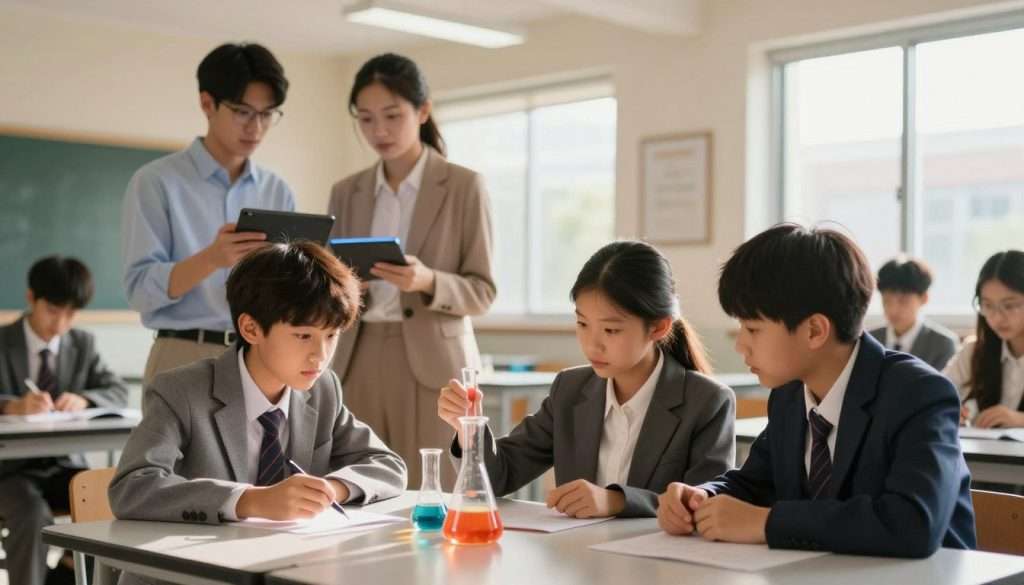
Immersive learning puts you in the middle of the learning experience. You’re not just hearing theories; you’re testing them in real life. This makes learning more relevant and memorable.
In science class, for example, you might do experiments instead of just reading about them. This hands-on approach deepens your understanding and improves your critical thinking.
Comparative Outcomes: Retention and Application Rates
So, how do these methods compare in results? Studies show active learning leads to better retention and application of knowledge. When you’re involved in learning, you’re more likely to remember and apply what you’ve learned.
A study might show:
| Learning Method | Retention Rate | Application Rate |
|---|---|---|
| Active Learning | 75% | 85% |
| Passive Learning | 40% | 50% |
These numbers highlight the big difference between active and passive learning. Using immersive learning can make learning much more effective.
Real-World Applications Across Different Disciplines
From labs to boardrooms, and from coding to art, experiential learning is changing education. It’s used in many fields.
Applied Learning in Science, Technology, Engineering, and Mathematics
In STEM, experiential learning is key. It helps develop skills for solving real-world problems.
Laboratory Work and Experimental Design
Labs and experimental design projects let students apply what they learn. This deepens their understanding of science.
Coding Bootcamps and Programming Projects
Coding bootcamps and projects help learners build real projects. This boosts their coding skills and gets them ready for tech jobs.
Hands-On Training in Healthcare Professions
Healthcare education relies on hands-on experience. It prepares students for real patient care.
Clinical Rotations and Simulated Patient Scenarios
Clinical rotations give students valuable hands-on training. Simulated patient scenarios help them practice under pressure.
Experiential Learning in Business and Entrepreneurship
Business and entrepreneurship education benefits from experiential learning. It simulates real business environments.
Case Studies and Business Simulations
Case studies and simulations let students tackle real business challenges. They learn to develop strategic solutions for the business world.
Startup Incubators and Real Market Testing
Startup incubators and market testing let entrepreneurs test their ideas. This supports innovation and entrepreneurship.
Practical Learning in Creative Arts and Design
In creative fields, experiential learning boosts innovation and creativity. Students work on projects that mimic real-world scenarios.
This practical approach helps develop artistic and design skills. It’s done in a real-world context.
Implementing Learning Through Action in Educational Settings
Effective experiential learning needs a clear plan and engaging activities. As teachers, we aim to boost academic success and prepare students for life’s challenges. We mix theory with hands-on experiences to achieve this.
Designing Effective Practical Learning Experiences
We must create learning scenarios that are real and challenging. Understanding the subject deeply helps us set clear learning goals.
Creating Authentic Learning Scenarios
Learning scenarios that reflect real life are best. For example, culinary arts students might run a restaurant. This teaches cooking, business, and teamwork.
- Use real-world examples and case studies.
- Incorporate industry partners for guest lectures or project collaborations.
- Encourage students to work on projects that have tangible outcomes.
Establishing Clear Learning Objectives
Clear goals are essential for effective learning. They guide activities and help track student progress. For instance, science classes might focus on understanding principles, conducting experiments, and analyzing data.
- Define what students should know and be able to do by the end of the course.
- Align learning objectives with industry needs and standards.
- Communicate objectives clearly to students at the outset.
Building Safe Environments for Trial and Error
A safe learning space is vital for trying new things and learning from mistakes. It’s where students feel supported and can take risks without fear.
- Foster a culture of feedback rather than criticism.
- Provide resources and support for students to reflect on their mistakes.
- Encourage iterative learning processes.
Balancing Theoretical Foundation with Hands-On Practice
It’s important to balance theory and practice in learning. Too much of one can be boring, while too little of the other lacks depth.
In engineering, for example, students learn mechanics principles and then apply them in labs or projects. This balance helps students understand the ‘why’ behind their actions and apply their knowledge well.
Key strategies include:
- Integrating theoretical lessons with practical applications.
- Using case studies that illustrate theoretical concepts in real-world contexts.
- Encouraging students to reflect on how theory informs their practice.
Technology’s Role in Modern Experiential Learning
Technology and experiential learning are coming together in exciting ways. This mix is changing how we learn by doing. It’s making learning more fun and interactive.
Virtual Reality and Augmented Reality Training Platforms
Virtual Reality (VR) and Augmented Reality (AR) are leading this change. VR lets learners dive into simulated worlds that feel real. This is great for training in risky jobs where mistakes can be deadly.
AR adds digital info to the real world. It makes learning more interactive and relevant. For example, medical students can see 3D body parts with AR, helping them learn better.
Interactive Simulations and Digital Labs
Interactive simulations and digital labs are key in tech-enhanced learning. They let learners try things out in a safe space. This is perfect for hands-on subjects like science and engineering.
Digital labs can do complex experiments that are hard or costly in real labs. This makes learning easier, cheaper, and safer.
Gamification Strategies for Skill Development
Gamification is making learning more fun and effective. It uses game elements to keep learners engaged and motivated.
Point Systems and Achievement Badges
Point systems and achievement badges are popular in gamification. They give learners a feeling of achievement. For example, language apps use badges to celebrate progress.
Scenario-Based Learning Games
Scenario-based learning games are another great tool. They present learners with real-life challenges. This boosts critical thinking and prepares learners for the real world.
Overcoming Challenges in Hands-On Education
The move to immersive learning is thrilling, but it faces hurdles. We aim to make learning more engaging and effective. Yet, we must tackle the obstacles of hands-on education.
Addressing Resource and Budget Limitations
One big challenge is the lack of resources and budget. Many schools find it hard to fund hands-on activities and tools.
To tackle this, teachers can look into:
- Seeking grants or funding from outside groups
- Working with local businesses or industries for resources and knowledge
- Using free materials and DIY tools
Scaling Experiential Learning for Larger Student Groups
As experiential learning becomes more popular, teachers face the task of growing these programs. They need to handle bigger student groups.
Here are some ways to scale up:
- Creating modular or rotational hands-on activities
- Using technology to mimic real-world settings
- Collaborating with other schools to share resources and knowledge
Developing Fair Assessment and Evaluation Methods
Assessing students in hands-on learning is tricky. Teachers must find fair and effective ways to measure student success.
Rubrics for Practical Skill Demonstration
One method is using detailed rubrics for practical skill demonstration. This ensures fairness and consistency in grading.
For instance, a rubric for science experiment skills might include:
| Criteria | Excellent | Good | Needs Improvement |
|---|---|---|---|
| Experimental Design | The experiment is well-designed and clearly articulated. | The experiment is generally well-designed but lacks some clarity. | The experiment is poorly designed and lacks clear articulation. |
| Data Collection | Data is collected accurately and efficiently. | Data is collected with some minor errors. | Data collection is inaccurate or incomplete. |
| Data Analysis | Data is analyzed thoroughly and accurately. | Data is analyzed with some minor errors. | Data analysis is incomplete or inaccurate. |
Portfolio-Based Assessment Approaches
Another method is portfolio-based assessments. Students gather their work over time.
This approach lets teachers see student progress and growth in a more complete way.
Learning by Doing in Professional Development and Workplace Training
Learning new skills by doing them in the workplace is very effective. This method, called experiential learning, works well in both work and school.
On-the-Job Training and Modern Apprenticeship Models are changing how we learn. Working with experts, people get real experience that helps them do their jobs better.
On-the-Job Training and Modern Apprenticeship Models
On-the-job training lets people learn by doing, with help from those who know more. It’s great for jobs that need special skills, like making things or helping sick people.
Cross-Functional Projects and Job Rotation Programs
Cross-functional projects and job rotation let people try new things. They learn more and work better together, making a more creative place.
Mentorship and Learning from Direct Experience
Mentorship programs match new workers with experienced ones. They get advice and learn the job’s details. This helps them think better and solve problems.
Continuous Skill Development Through Applied Practice
Keeping skills sharp means using what you know in real life. This way, you learn more and see what you need to get better at.
By using learning by doing in work, companies can build a strong team. This team is ready for any challenge that comes their way.
Best Practices for Maximizing Active Learning Outcomes
Successful active learning relies on a few key practices. To get the most out of hands-on experience and active learning, it’s important to use strategies that keep learners engaged and help them grow.
Establishing Clear Goals and Success Metrics
Setting clear goals and defining success metrics is crucial for active learning. Knowing what learners should achieve helps tailor the learning experience. This focus makes activities more relevant and effective.
In project-based learning, goals might include mastering specific skills or finishing a project. Success could be measured by the project’s quality, the process used, or the skills shown.
| Goal Type | Example | Success Metric |
|---|---|---|
| Skill Development | Improving coding skills through project development | Quality of the code, functionality, and documentation |
| Project Completion | Developing a fully functional app | App functionality, user experience, and presentation |
Creating Effective Feedback Loops and Coaching Moments
Feedback is key in active learning. It shows learners how they’re doing, what they need to work on, and how to improve. Good feedback is timely, specific, and actionable.
“Feedback is the breakfast of champions.” – Ken Blanchard
Coaching moments offer tailored guidance. They help learners overcome obstacles and reach their goals more effectively.
Encouraging Reflection and Metacognitive Awareness
Reflection is a powerful tool in active learning. It lets learners think deeply about their experiences and what they’ve learned. Encouraging metacognitive awareness helps learners understand their learning process and develop strategies for future learning.
Journaling and Self-Assessment Techniques
Journaling is a simple yet effective way to encourage reflection. By writing down their thoughts and insights, learners can process their learning and identify areas for growth.
Peer Review and Collaborative Learning
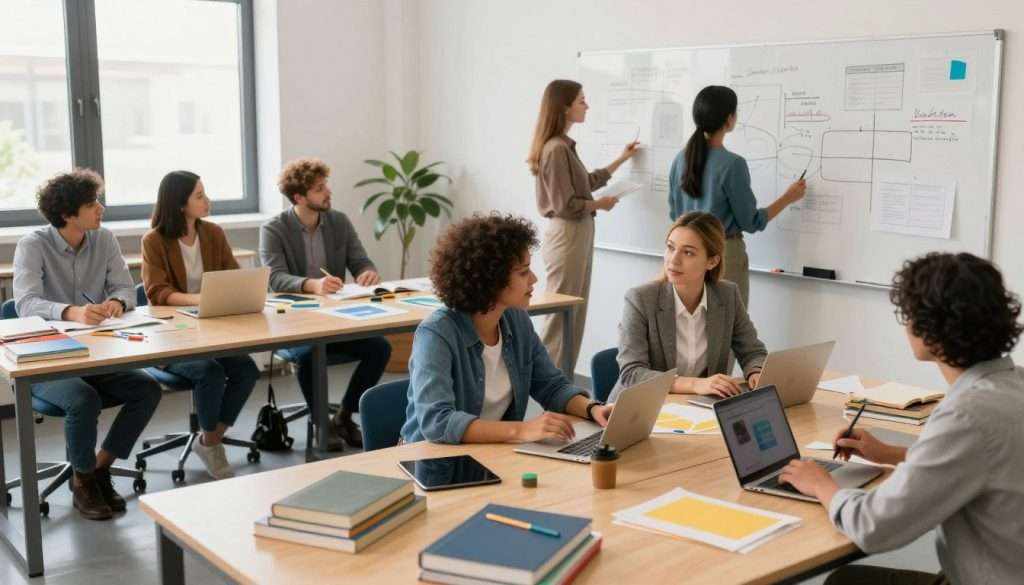
Peer review and collaborative learning activities build a sense of community. They offer more chances for feedback and reflection. Learners gain new insights and develop important collaboration skills.
Designing Progressive Complexity in Skill Building
To maximize learning outcomes, learning experiences should increase in complexity. This approach challenges learners and helps them build on their existing skills and knowledge.
By gradually introducing more complex tasks and projects, learners are supported in their development. They become better prepared for real-world challenges.
Conclusion
In today’s fast-paced world, we need people who can think on their feet and adapt quickly. This article has shown how learning by doing is key. It’s been around for ages and is now used in many fields.
Learning through doing makes learning more fun and keeps you motivated. It helps you think critically and solve problems. This way, you can apply what you learn in real life, making you ready for today’s fast-changing world.
We suggest you start using practical learning in your studies and work. It will help you face tough challenges and keep up with new trends. The future of learning is all about hands-on experiences. It’s time to dive in!