
Ever feel like your brain is stuck in a loop? We’ve all been there! It’s tough to find fresh sparks when you are looking at the same old problems. We are so excited to show you a clever way to shake things up and find your groove again.
This specific innovation strategy helps you look at your projects from totally new angles. By asking seven simple questions, you can turn a boring task into something extraordinary. It’s like having a Swiss Army knife for your brain!
Using the SCAMPER Method makes it easy to improve what you already have. Whether you are a student or just love learning, these tips help your creativity shine. Let’s start building better solutions together!
Key Takeaways
- Learn to ask the right questions for better results.
- Boost your problem-solving skills with simple steps.
- Turn old ideas into fresh new products easily.
- Use seven different perspectives to grow.
- Improve your daily study habits quickly.
- Unlock your full mental potential today.
What Is the SCAMPER Method?
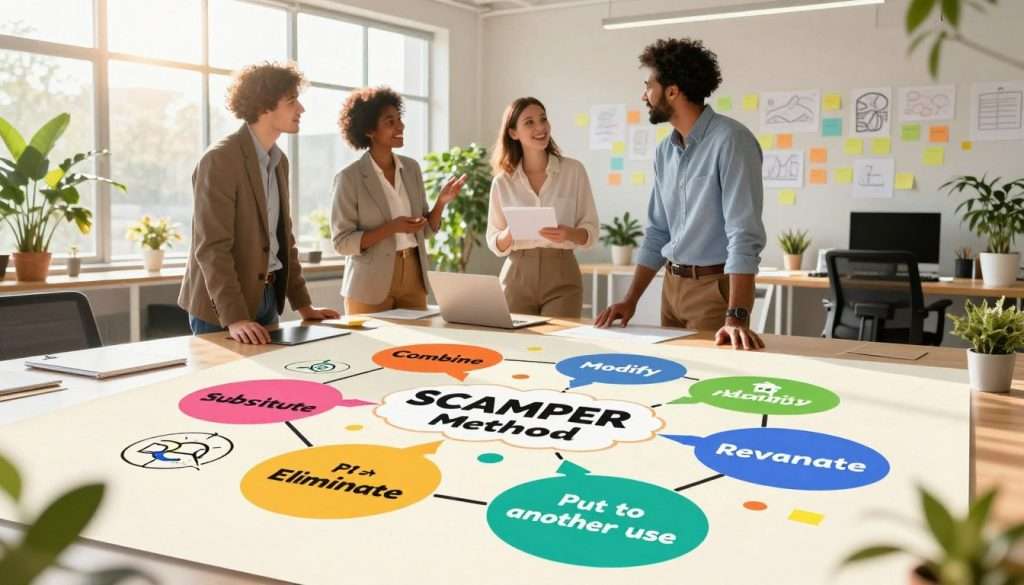
Creativity isn’t just about making something new. It’s also about making what’s already there better. The SCAMPER Method is a way to do this. It uses different views on existing things to come up with new ideas. SCAMPER stands for Substitute, Combine, Adapt, Modify, Put to Another Use, Eliminate, and Reverse.
The Origins of SCAMPER
Bob Eberle created the SCAMPER Method. It’s based on Alex Osborn’s brainstorming ideas. Osborn showed that you can make something new from old ideas.
Why SCAMPER Works as a Creative Thinking Technique
SCAMPER challenges the usual ways of thinking. It makes you think sideways. By using SCAMPER, you can find new ways to solve problems. It’s great because it gives a clear way to think creatively.
| SCAMPER Technique | Description |
|---|---|
| Substitute | Replacing a component with something else |
| Combine | Merging two or more elements to create something new |
| Adapt | Adjusting an existing idea to fit a new context |
Who Can Benefit from This Brainstorming Approach
Anyone can use SCAMPER to improve ideas. This includes business owners, designers, and anyone who wants to think creatively. SCAMPER helps you come up with lots of new ideas.
Substitute: Finding Better Alternatives
Let’s explore the ‘Substitute’ part of SCAMPER. Here, we look for new options by swapping out what’s already there. The Substitute method is about finding things that can be swapped out to make things better or new. By asking the right questions, we can find these swaps that might have been missed.
Key Questions to Ask When Substituting
To use the Substitute technique well, we need to ask some key questions. These questions help us find swaps that can make things better or new.
Materials and Resources
- What materials can be swapped out to make the product or process better?
- Can we use more sustainable or eco-friendly materials?
- Are there other resources we can use to save money or work better?
People and Roles
- Can different people or teams bring new ideas?
- Are there outside experts or consultants who could help?
- How can we change tasks or roles to make things more efficient?
By asking these questions, we can find where swapping things out can really help.
Real-World Substitution Examples
Many companies have used the Substitute technique to innovate. For example, some have switched to biodegradable packaging to cut down on waste. Others have automated tasks to save time and money.
A company changed its materials to eco-friendly ones. This attracted green consumers and saved money over time. These stories show how Substitute can lead to innovation and sustainability.
As we keep learning about SCAMPER, we’ll see how other methods like Combine and Adapt can also spark creativity and innovation.
Combine: Merging Ideas for Innovation
Merging different ideas can spark creativity and innovation. It opens up new ways to solve problems and come up with new ideas. This method involves looking beyond the usual and finding new ways to mix existing ideas, products, or services.
Identifying Elements Worth Combining
To use the Combine technique well, you must find elements to merge for synergy. Analyze your product, process, or service to see how they can be combined in new ways. Think about how combining different parts can improve functionality or user experience.
Key steps to identify combinable elements include:
- Listing the core components of your product or service
- Researching complementary products or services
- Brainstorming how different elements can be merged
Successful Product Combinations
Many successful products come from combining different features or technologies. Let’s explore some examples across various industries.
Technology Industry Examples
The tech world is full of examples of successful combinations. Smartphones, for instance, combined cameras, phones, and computers into one device, changing personal tech forever. Smartwatches also show how combining fitness tracking, heart rate monitoring, and smart notifications can enhance our lives.
In the service industry, combining services can offer more to customers. Banks now provide a wide range of financial services, from savings accounts to investment advice, all in one place. Healthcare providers are also combining traditional medical services with wellness programs and preventive care for a more holistic approach.
By using the Combine technique, businesses and individuals can discover new ways to innovate and grow. It’s about being open to new ideas and experimenting with different combinations to find what works best.
Adapt: Adjusting Existing Solutions
Adapting existing ideas or products is a great way to innovate and solve tough problems. When we adapt, we make something that already exists work for a new situation or problem. This is key to the SCAMPER method, making old ideas new again.
Questions That Drive Adaptation
To adapt well, we must ask the right questions. What parts of a product or process can we change? How can we tweak these parts to meet our needs? Asking these questions opens up new possibilities.
Some important questions for adapting include:
- What existing solutions can we modify for our problem?
- How can we change the scale or scope of an idea?
- Are there other industries where a similar solution works well?
Learning from Other Industries
Looking outside our own field for ideas is very powerful. Many innovations come from using solutions from one field in another. For instance, medical device tech often comes from aerospace or cars.
By studying how other industries solve problems, we get new insights. This mixing of ideas is what creative thinking is all about.
“The best way to get a good idea is to get a lot of ideas.” – Linus Pauling
Adaptation Case Studies
Here are some examples of successful adaptation:
| Original Concept | Adapted Solution | Industry/Application |
|---|---|---|
| GPS Technology | Personal Navigation Devices | Consumer Electronics |
| Aerospace Materials | Lightweight Sports Equipment | Sports Goods |
| Medical Imaging | Security Screening Technology | Security and Surveillance |
These examples show how adaptable and effective adaptation can be. By asking the right questions and looking to other industries, we can find new solutions to old problems.
Modify: Changing Attributes and Features
Innovation doesn’t always mean creating something new. Sometimes, it’s about making what exists better. The Modify technique in SCAMPER focuses on changing a product, service, or process to make it better or more appealing.
“The way to get good ideas is to get a lot of ideas.” Linus Pauling said this. It shows how the Modify technique can lead to many new ideas by tweaking what we already have.
Types of Modifications to Explore
There are many ways to modify a product or process. Let’s look at a few important ones:
Size and Scale Modifications
Changing a product’s size or scale can greatly affect its appeal and use. For example, making electronics smaller has led to portable devices that changed the tech world. On the other hand, making some features bigger can make a product easier to use or better at what it does.
Shape and Form Changes
Changing a product’s shape or form can make it more comfortable, look better, or work better. For instance, ergonomic design changes in furniture have made products more comfortable and less tiring to use.
Modification Strategies in Product Development
In product development, making changes is key. By altering things like color, motion, sound, smell, form, or shape, companies can create new products or improve old ones. For example, changing a product’s color can attract different cultural markets, or changing its texture can make it more enjoyable to use.
To use the Modify technique well, ask yourself: What can I change in my product, problem, or process? Can I alter its meaning, color, motion, sound, smell, form, or shape? By asking these questions, you can find new ways to innovate and improve.
Key Takeaway: The Modify technique in SCAMPER is very useful. It offers many creative ways to change existing products, services, or processes.
Put to Another Use: Repurposing Ideas
Repurposing ideas can give new life to old products or services. By asking, “What else can this be used for?” we find new markets and uses. This approach helps us see things in a new light.
Applying the “Put to Another Use” technique means finding new uses for what we already have. This could be a product, service, or skill. The goal is to find new places where our offerings can add value.
Finding New Markets and Applications
To repurpose an idea, we must think beyond its original use. We need to understand its core benefits and imagine new scenarios where these benefits are valuable.
- Identify the key features or benefits of your product or service.
- Consider different user groups or industries that might find these features beneficial.
- Research potential new markets or applications where your offering could meet unmet needs.
Examples of Successful Repurposing
Many products have found new life in different markets or uses. Here are a few examples:
Products That Found New Life
Duct tape, once just for HVAC, now has many uses, from crafting to repairs. Post-it Notes, a failed adhesive, became a hit in offices for notes and reminders.

Skills and services can also find new uses. A graphic designer might make social media content, or a teacher might train in corporate settings. Recognizing our skills’ versatility opens up new career paths or business ideas.
As Steve Jobs said, “Creativity is just intelligence having fun.” Repurposing ideas is a creative way to use what we have in new ways.
The ability to repurpose ideas is a key component of creative thinking and innovation. By looking at existing products, services, or skills through a new lens, we can uncover fresh opportunities and extend the lifecycle of our offerings.
Eliminate: Simplifying Through Removal
Removing clutter helps unlock new efficiency and innovation. The Eliminate technique is key in the SCAMPER method. It encourages simplifying by removing what’s not needed.
Think about what can be cut without hurting the core function. This makes things better for users and can save money. For example, cutting out unnecessary steps makes a process smoother.
What Should You Consider Eliminating
To use the Eliminate technique well, you must carefully look at your product or process. Ask yourself:
- What features are not used or are extra?
- Are there steps that don’t add value?
- Can any parts be taken out without hurting how it works?
These questions help find where cutting back can make things better.
The Strategic Value of Minimalism
Minimalism through Eliminate has big benefits. It can lead to:
- Cost savings: Fewer parts or steps mean lower costs.
- Improved user experience: Simpler products are easier to use.
- Increased efficiency: Cutting out the extra makes things run smoother.
Examples of Successful Elimination
Many companies have made their products and services better by cutting back. Tech firms have removed less-used features, making their products easier to use. Service providers have also made their processes simpler, improving customer happiness and saving money.
Using the Eliminate technique leads to a more efficient solution. It’s a great tool for solving problems, helping you focus on what’s important.
Reverse: Flipping Perspectives and Processes
At times, you must turn things upside down to see them anew. The Reverse technique is a powerful tool for gaining fresh insights. It challenges traditional thinking and can lead to innovative solutions.
By asking how you can change or reverse a product or problem, you open up new possibilities. What if you had to do this process in reverse? This simple question can reveal new opportunities and approaches that might have been overlooked.
Reversal Techniques for Fresh Insights
Reversal techniques involve changing the direction of a process or considering opposite approaches. This can lead to new ideas and challenge existing assumptions. There are several ways to apply reversal techniques, including reversing the user experience and inverting traditional processes.
Reversing the User Experience
Reversing the user experience means looking at a product or service from the user’s perspective, but in reverse. For example, start from the end of a process instead of the beginning. This can help you identify pain points and areas for improvement that might not be immediately apparent.
- Identify the end goal of the user experience
- Work backward to identify each step in the process
- Analyze each step to identify potential pain points or areas for improvement
Inverting Traditional Processes
Inverting traditional processes means turning a familiar process on its head. For instance, if you’re used to doing things a certain way, try doing them the opposite way. This can help you see things from a new perspective and come up with innovative solutions.
When Reverse Thinking Delivers Results
Reverse thinking is very effective when traditional thinking doesn’t work. By flipping your perspective, you can break through mental blocks and find creative solutions to complex problems.
Key benefits of reverse thinking include:
- Identifying new opportunities and approaches
- Challenging conventional wisdom and assumptions
- Breaking through mental blocks and coming up with innovative solutions
By adding reverse thinking to your creative thinking toolkit, you can improve your problem-solving skills. You’ll come up with fresh, innovative ideas.
How to Apply the SCAMPER Method for More Creativity
Using the SCAMPER Method can really boost your brainstorming. It helps you come up with new ideas. This method works for many industries and challenges.
Step-by-Step Implementation Guide
To use the SCAMPER Method well, follow these steps:
- Prepare Your Brainstorming Session: Get a team with different views. Pick a product, service, or idea to work on.
- Work Through Each SCAMPER Element: Go through each SCAMPER part. Ask questions and think of ideas.
- Evaluate and Select Ideas: Look at the ideas. See if they can work, if they’ll make a big impact, and if they match your goals.
Preparing Your Brainstorming Session
Before starting the SCAMPER Method, get ready. This means:
- Choosing a team with different skills and views.
- Picking a product, service, or idea to focus on.
- Setting clear goals for the brainstorming.
Working Through Each SCAMPER Element
When going through each SCAMPER part, ask questions to spark ideas. For example:
- Substitute: What can be swapped out to make the product better?
- Combine: How can you mix different features or services to create something new?
- Adapt: What solutions already exist that can be used for our challenge?

After you have ideas, check them. Look at if they can work, if they’ll make a big difference, and if they fit your goals. This helps pick the best ideas to work on.
Tips for Effective Team Collaboration
Working well together is key for the SCAMPER Method. Here are some tips:
- Make sure everyone can share ideas freely.
- Create a team atmosphere where everyone feels important.
- Use tools and methods to help come up with ideas.
Common Mistakes to Avoid
When using the SCAMPER Method, avoid these mistakes:
- Don’t judge ideas too quickly.
- Make sure you have clear goals.
- Include different views in your team.
Key Benefits of Using the SCAMPER Method
The SCAMPER Method is a great way to brainstorm and solve problems. It helps you come up with new ideas and solutions. It’s also flexible and can be used for many creative challenges.
Enhanced Problem-Solving Approach
The SCAMPER Method makes solving problems better. It lets you look at problems from different sides and find new solutions. It also encourages you to think outside the box and explore new ideas.
For example, the Substitute technique helps find better alternatives. The Reverse technique gives you a fresh view by turning things around.
Structured Innovation Strategy
The SCAMPER Method offers a clear plan for innovation. This plan keeps brainstorming sessions focused and productive. It helps you explore different ways to innovate and find new opportunities.
The Combine technique is great for mixing ideas or products to create something new. This can lead to unique solutions that might not be possible with other methods.
Improved Team Brainstorming Ideas
The SCAMPER Method also boosts team brainstorming. It creates a team environment that encourages everyone to think creatively. The method ensures everyone is working together towards a common goal.
Techniques like Adapt and Modify help teams come up with many ideas. This teamwork not only boosts creativity but also builds a sense of unity and shared responsibility.
SCAMPER vs. Other Creative Thinking Techniques
The SCAMPER Method is a way to solve complex problems from many angles. It’s structured for idea generation. Other methods like Six Thinking Hats and Design Thinking offer unique views on solving problems.
It’s important to know the strengths and uses of each technique. This helps you use them better together for great results.
SCAMPER and Six Thinking Hats Compared
SCAMPER and Six Thinking Hats help with creative thinking but in different ways. SCAMPER uses various techniques to improve existing ideas. Six Thinking Hats looks at problems from different angles with different hats.
Key differences between SCAMPER and Six Thinking Hats:
| Technique | Primary Focus | Method of Application |
|---|---|---|
| SCAMPER | Generating new ideas by modifying existing concepts | Applying SCAMPER techniques (Substitute, Combine, Adapt, Modify, Put to Another Use, Eliminate, Reverse) to existing products or services |
| Six Thinking Hats | Exploring different perspectives on a problem | Using different ‘hats’ to represent various modes of thinking (white hat for facts, red hat for emotions, etc.) |
Integrating SCAMPER with the Design Thinking Process
The Design Thinking Process focuses on solving problems by understanding users. It involves empathizing, defining, ideating, prototyping, and testing. SCAMPER is great for generating ideas during the ideation phase.
Using SCAMPER in Design Thinking can lead to many ideas. These ideas are based on user insights. This results in solutions that meet user needs.
Choosing the Right Problem-Solving Approach
Choosing between SCAMPER, Six Thinking Hats, Design Thinking, or other techniques depends on the problem and context. Each has its own strengths. The best approach often combines parts of several methods.
Consider the problem, team experience, and desired outcomes when choosing a technique. The right approach or combination can make your problem-solving more effective.
Practical Applications of SCAMPER Across Industries
Many companies are using the SCAMPER technique to change their products and marketing plans. This method is a powerful tool for innovation and solving problems in different fields.
Business and Marketing
In business and marketing, SCAMPER helps create new strategies and campaigns. For example, companies can swap old marketing ways for new digital ones. Key applications include:
- Repurposing existing products for new markets
- Combining different marketing channels for a cohesive campaign
- Adapting successful strategies from other industries
Education and Training
Teachers are also using SCAMPER to make their training programs better. By applying SCAMPER, they can make learning more fun and effective. For instance, they can:
- Modify existing curricula to incorporate new technologies
- Put educational resources to new uses, such as repurposing textbooks for online courses
- Eliminate redundant or outdated course content
Product Design and Development
In product design and development, SCAMPER is key for coming up with new ideas and better products. Companies can use the “Reverse” aspect of SCAMPER to find new ways to solve problems. Some strategies include:
- Reversing the typical product development process to identify new opportunities
- Combining different product features to create something entirely new
- Adapting products for new user groups or markets
Conclusion
The SCAMPER Method shows that innovation isn’t just for geniuses. It’s about using a structured approach. By using SCAMPER’s seven techniques, you can come up with new ideas and make old ones better.
This method is great for many fields and jobs. It helps you solve tough problems and find new chances. By using SCAMPER, you’ll be ready to face any challenge.
Now that you know about SCAMPER, it’s time to try it out. Use the different techniques to spark innovation and reach your goals. With SCAMPER, you’ll have a solid plan for innovation that works.