

Reading is a powerful tool for personal and professional growth. Warren Buffett, a top investor, spends about 80% of his time reading. He believes reading is key to growing our knowledge and thinking skills.
Starting a reading habit might seem hard, but with the right reading strategies, it can be fun and rewarding. We’ll share book lover advice and tips to help you love reading. You’ll learn how to make reading a lasting part of your life.
Key Takeaways
- Discover effective reading strategies to enhance your reading experience.
- Learn how to prioritize your reading list and stay focused.
- Understand the benefits of developing a consistent reading habit.
- Explore tips on how to retain information and recall what you’ve read.
- Find out how to make reading a enjoyable and sustainable part of your lifestyle.
The Benefits of Reading More Books
Reading is a powerful tool that offers many benefits. It can improve your thinking and emotional well-being. You’ll see how reading can positively change your life in many ways.
Cognitive Benefits of Regular Reading
Regular reading boosts your brain power. It makes your memory, focus, and thinking sharper. Reading complex texts challenges your brain, which may slow down brain aging.
Studies show that reading can delay age-related brain problems. This is a great reason to read more.
Emotional and Psychological Advantages
Reading more books can greatly improve your emotional and mental health. It reduces stress and anxiety by offering a break from daily life. Reading about others’ lives can also increase empathy and understanding.
Career and Academic Benefits
Boosting your reading can also help in your career and studies. It introduces you to new ideas and perspectives. This sharpens your critical thinking and analysis skills.
These skills can make you stand out in school and work. Reading keeps you ahead in your field.
Assess Your Current Reading Habits
To start reading more, first understand your current habits. Look closely at how and what you read.
Tracking Your Reading Time and Volume
Many readers track their time and volume to see their progress. Use a reading log or a mobile app to monitor your daily reading. This habit keeps you on track and motivated.
Identifying Your Reading Preferences and Patterns
Knowing what and when you like to read is key. Do you prefer fiction or non-fiction? Do you read more in the day or at night? By knowing your preferences, you can develop a reading routine that fits your life. This makes it easier to meet your reading goals.
Recognizing Your Personal Reading Obstacles
Every reader faces challenges that stop them from reading more. For some, it’s lack of time; for others, it’s hard to focus. By knowing your obstacles, you can find ways to overcome them. This might mean better time management or a better reading space. As a book lover, understanding your challenges is the first step to finding the right book lover advice to help you read more.
Setting Realistic Reading Goals
The journey to reading more books starts with defining your reading goals. To make progress, you need to understand what drives your desire to read and set achievable targets.
Determining Your “Why” for Reading More
Understanding your motivation is key. Are you reading to expand your knowledge, escape into fiction, or enhance your professional skills? Identifying your “why” helps you stay committed to your reading goals. We recommend taking a moment to reflect on what drives your reading habit.
Creating SMART Reading Goals
SMART stands for Specific, Measurable, Achievable, Relevant, and Time-bound. For example, instead of saying “I want to read more,” a SMART goal would be “I will read 12 books in the next 6 months.” This approach helps you stay focused and track your progress. Setting SMART goals can significantly boost your reading motivation.
Building a Personalized Reading Plan
Once you have your SMART goals, it’s time to create a reading plan. Consider your schedule, preferred genres, and the types of books you want to read. Flexibility is key – your plan should be adaptable to changes in your reading preferences or schedule. By having a clear plan, you’ll be more likely to stick to your reading goals.
By following these steps, you’ll be well on your way to setting realistic reading goals that you can achieve.
How to Read More Books: Practical Strategies
To read more, you need simple strategies that fit your life. Adding easy techniques to your daily routine can greatly increase your reading. This makes reading a part of your everyday life.
The 10-Page-Per-Day Method
The 10-page-per-day method is easy to start. Reading just 10 pages a day can lead to big progress. It’s great for those who can’t find long times to read.
Benefits of the 10-Page-Per-Day Method:
- Builds a consistent reading habit
- Helps in making progress on large books
- Reduces the feeling of overwhelm associated with reading
Time Blocking for Consistent Reading
Time blocking helps you read regularly. By setting aside specific times for reading, you avoid putting it off. Choose a time that suits you best, like early morning or before bed.
Example Time Blocking Schedule:
| Day | Time | Reading Goal |
|---|---|---|
| Monday | 7:00-7:30 AM | 30 minutes |
| Tuesday | 7:00-7:30 AM | 30 minutes |
| Wednesday | 7:00-7:30 AM | 30 minutes |
Reading Multiple Books Simultaneously
Reading many books at once keeps things interesting. It lets you explore different genres and topics. But, managing multiple books well is key to avoid getting confused.
Using these strategies can make your reading better and more enjoyable. You’ll get to read a variety of books, making your reading experience richer.
Creating a Reading-Friendly Environment
Turning your space into a cozy reading spot can really boost your reading joy. A good reading area helps you focus better, keeps distractions away, and deepens your love for books.
Setting Up a Dedicated Reading Space
Choose a special place for reading, away from distractions. It could be a snug corner at home or a quiet area in the library. Make sure it’s comfy, well-lit, and has all your reading stuff.
Reducing Digital Distractions While Reading
To cut down on digital distractions, try website blockers or apps that help you concentrate. Turn off your phone’s notifications or put it on silent mode. You can also use an e-reader or a reading app that’s designed to keep distractions out.
Organizing Your Physical and Digital Book Collection
Keep your books tidy, so you can easily find what you want to read. For physical books, use a bookshelf or storage. For digital books, use e-reader libraries or apps that let you organize and access your books easily.
| Tips | Benefits |
|---|---|
| Create a dedicated reading space | Improves focus and reduces distractions |
| Minimize digital distractions | Enhances reading experience and comprehension |
| Organize your book collection | Saves time and increases reading efficiency |
Leveraging Technology to Read More
Technology has opened up a world of books at our fingertips. This digital change has made reading easier in our busy lives.
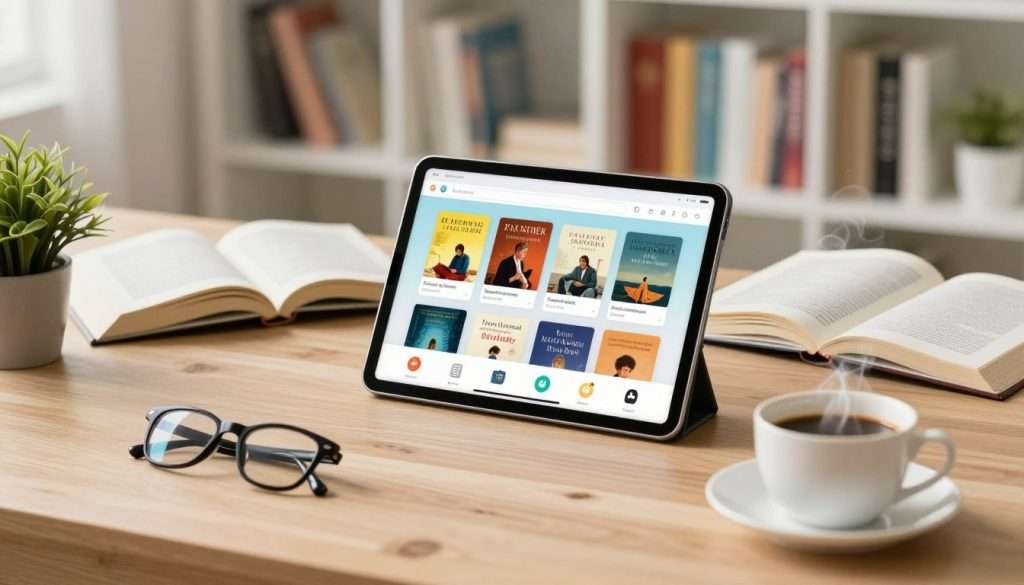
E-readers and Reading Apps
E-readers and apps let you carry many books without weight. Apps like Scribd, Kindle, and Kobo give you lots of choices and tips.
Audiobooks and Podcast Alternatives
Audiobooks are great for those with little time. Audible and Google Play Books have many audiobooks. You can listen while moving or working out.
Digital Reading Trackers and Challenges
Digital tools keep you on track and motivated. Apps like Goodreads and Reading Challenge help you set goals and join challenges.
| Tool | Feature | Benefit |
|---|---|---|
| Scribd | Access to a vast library | Discover new authors and genres |
| Audible | High-quality audiobooks | Enjoy “reading” on-the-go |
| Goodreads | Personalized tracking and challenges | Stay motivated and engaged |
Using these tech tools, you can make reading a fun and lasting habit.
Finding Time to Read in a Busy Schedule
Finding time to read can be tough in today’s fast world. But, with smart strategies, you can make reading a top priority. Many readers fit reading into their daily lives, like during commutes or before bed. This way, they keep up with their reading goals even when life gets busy.
Maximizing Commutes and Waiting Times for Reading
One simple way to read more is by using your commute or waiting times. Whether you’re on a bus, train, or waiting in line, a book or e-reader can change your day. As Warren Buffett said, “
I don’t have a lot of time to read, but I read a lot because I read very quickly.
” Use these moments to catch up on your reading list and move closer to your goals.
Incorporating Reading into Daily Routines
Adding reading to your daily routine is easy. Try reading a chapter before bed or during lunch. Making reading a habit helps you stay on track with your goals. Look for times in your day to swap screen time for reading. For example, choose a book over your phone before bed. As “reading is a basic tool in the living of a good life” says Mortimer Adler.
Comparing Morning, Daytime, and Bedtime Reading
The best time to read can affect how well you understand and enjoy it. Some like reading in the morning, while others prefer before bed. Try different times to see what works best for you. You might find you enjoy reading more at a certain time.
Improving Your Reading Speed and Comprehension
Learn to read smarter, not harder, with our guide. Boosting your reading speed and comprehension makes reading better. You’ll get more out of what you read in less time.
Effective Speed Reading Techniques
To read faster, try skimming and scanning. Skimming looks at headings and bullet points for the main ideas. Scanning finds specific information. These methods help you read quicker without losing understanding.

Active Reading Strategies for Better Understanding
Active reading means really engaging with what you’re reading. Try to summarize the main points in your own words. Ask questions and connect it to what you already know. This way, you’ll understand and remember more.
Note-Taking Methods for Improved Retention
Good note-taking is key to keeping information. Use systems like the Cornell Notes system or mind mapping to organize your thoughts. Regularly reviewing your notes helps solidify your learning and boosts retention.
By using these strategies, you’ll read more efficiently and effectively.
Overcoming Common Reading Obstacles
We’ve all hit a wall while reading – feeling stuck or losing focus. It’s okay! There are ways to beat these hurdles and dive back into your favorite stories.
Breaking Through Reading Slumps
Feeling stuck in a reading slump is tough. But, you can get past it. Try changing genres or formats. If you’re stuck on a thick book, switch to a lighter one or listen to an audiobook.
Joining a book club or finding a reading friend can also help. It’s a great way to spark your love for reading again.
Combating Reading Fatigue and Maintaining Focus
Reading fatigue can make long books feel overwhelming. The Pomodoro Technique is a great solution. Read for 25 minutes, then take a 5-minute break. This method keeps you focused and prevents burnout.
Strategies for Handling Difficult or Boring Books
We’ve all faced books that are hard to get through or just not interesting. Sometimes, books get better after the first chapters. If not, it’s fine to put it down and come back later.
Looking for a summary or discussion online can also help. It gives you a better understanding of the book.
| Strategy | Description | Benefit |
|---|---|---|
| Switch Genres | Try a different type of book | Reignites interest |
| Pomodoro Technique | Read in focused intervals | Improves focus |
| Join a Book Club | Discuss books with others | Boosts motivation |
Building a Sustainable Reading Habit
To make reading a lasting part of your life, you need to build a sustainable habit. Create a routine you can stick to every day. This will help you read more books and understand them better.
The 21-Day Reading Challenge Method
Start your reading habit with the 21-day reading challenge. Read for a set time each day for 21 days straight. This creates a streak you’ll want to keep going.
“The key is not to prioritize what’s on your schedule, but to schedule your priorities,” as the saying goes. Just a few minutes each day can start a consistent reading routine.
Using Social Accountability through Book Clubs and Reading Partners
Joining a book club or finding a reading partner can boost your reading habit. Social accountability gives you extra motivation to read. You can discuss books, share insights, and learn from others.
This makes reading more fun and keeps you committed. As reading becomes a social activity, it’s easier to keep up with your habit.
Tracking and Celebrating Your Reading Milestones
Tracking your progress and celebrating your milestones is key to a sustainable reading habit. Use a reading log or app to track your books, time spent reading, and goals. Celebrate your achievements, no matter how small.
This will motivate you to keep reading and strengthen your habit. By acknowledging your progress, you’ll be more likely to keep going.
Conclusion: Your Journey to Reading More Books
As we finish our guide on reading more books, it’s clear that success comes from finding a routine that fits you. By using the strategies and tips from this article, you can build a lifelong reading habit. This habit brings many benefits.
Your reading path is unique, and being patient and flexible is key. Whether you’re already a book lover or just starting, the main thing is to make reading a regular and fun part of your day.
Remember, it’s okay to change your approach as you go. Your reading tastes might shift, or you might need to try new ways to keep reading. By staying true to your goals and open to new things, you can grow a rewarding reading habit. This habit will bring you joy and fulfillment.
For book lovers, the journey to read more is personal and rewarding. We urge you to start today and see the many benefits reading offers. With persistence and dedication, reading can become a meaningful and enjoyable part of your life.