

Hey there! Have you ever spent a whole night reading a textbook just to forget everything by the next morning? We know that feeling all too well, and it is totally frustrating for any student.
But what if we told you science found a way to make your study sessions actually stick? We are talking about active recall learning techniques, the secret sauce for building a much sharper brain.
Instead of just looking at your notes, you challenge your mind to find the answer. This simple shift shows you how to use active recall to learn anything faster without the usual stress of cramming.
We want to help you turn studying from a boring chore into a total win. Let’s dive into how these active recall learning techniques can change your life and your grades!
Key Takeaways
- Retrieving information is much better than passive reading.
- Testing yourself strengthens your neural pathways and memory.
- Active recall helps you build long-term knowledge quickly.
- Stop highlighting your notes and start asking yourself questions.
- Master complex topics in half the time with these methods.
- Turn every study session into an engaging and active challenge.
What Is Active Recall and Why It Transforms Learning
Active recall is a top learning method. It’s known for its effectiveness. Let’s dive into what makes it so powerful.
The Definition of Active Recall Learning
Active recall means actively trying to remember information instead of just reading it. It boosts your memory and helps information stick in your long-term memory. By recalling information, you strengthen the brain’s memory pathways.
How Active Recall Differs from Passive Reading and Highlighting
Active recall is different from just reading or highlighting. It makes you actively engage with the material. This active role is key to its success.
The Psychological Principle Behind Memory Retrieval
The “testing effect” is the psychological principle behind active recall. It shows that recalling information strengthens our memory. This effect is based on how our brains process and keep information.
By using active recall, you can make your learning better. It helps you remember and recall information more easily.
The Science Behind Active Recall for Faster Learning
Active recall is more than a study trick. It’s backed by science that boosts your learning speed. Let’s explore the world of cognitive psychology to learn how active recall works.
Research Studies Proving Active Recall Effectiveness
Many studies show active recall is a learning powerhouse. Educational psychology research proves it beats passive methods like re-reading and highlighting. A key study in “Psychological Science in the Public Interest” found it strengthens memory and aids long-term learning.
How the Brain Strengthens Neural Pathways Through Retrieval
Active recall doesn’t just help you memorize. It strengthens the brain’s neural pathways. This makes it easier to remember later. It’s like making a path clearer with each use.
As you use active recall, your brain makes these pathways more efficient. This boosts your ability to recall information when needed. That’s why active recall is great for improving learning speed and retention.
The Testing Effect and Long-Term Memory Boost
The “testing effect” shows that recalling information strengthens long-term memory. It’s not just about passing tests; it’s about using recall to learn. By adding active recall to your study routine, you tap into this effect.
This approach doesn’t just make you study harder. It makes you study smarter. Active recall helps you retain more information over time. It’s essential for anyone wanting to learn faster and more effectively.
Preparing Your Study System for Active Recall Success
To get the most out of active recall, you must prepare well. You need the right materials, a good study environment, and clear goals.
Essential Materials and Tools You’ll Need
You’ll need some basic tools to start with active recall. Flashcards are a good place to begin, either physical or digital. Practice questions help you check your knowledge and see what you need to work on. A dedicated notebook for studying is also useful.
Think about using spaced repetition software to improve your studying. It helps you review at the best times, making your learning stick better.
Creating a Distraction-Free Learning Environment
Your study space is key to focusing and learning. Find a quiet, comfy spot for studying. This could be a special area at home or a quiet library.
To avoid distractions, turn off phone notifications or use a focus app. A good study environment boosts your active recall practice.
Setting Realistic Learning Goals and Time Blocks
Setting achievable goals is vital for active recall success. Break your study material into smaller parts and set clear goals for each session. This keeps you motivated and tracks your progress.
Plan out your study time and try to stick to it. Being consistent is crucial for active recall. Make sure you have regular study time set aside.
Step 1: Actively Consume and Chunk Your Learning Material
To start your active recall journey, dive into your learning material with purpose. You’re not just reading or listening; you’re engaging, asking questions, and seeking answers. This way, you’ll understand the material better and prepare for active recall.
Reading with Intent
When we say “read or study with intent,” we mean you should have a clear goal. This could be to understand a specific concept, identify key terms, or grasp the main ideas. To do this, try to:
- Set specific questions you want to answer as you read through the material.
- Take notes in your own words, rather than copying down everything verbatim.
- Pause periodically to summarize what you’ve read in your own words.
Dr. Barbara Oakley, a renowned expert, suggests engaging actively with the material. “When you’re reading or studying, try to identify the main ideas and concepts. Don’t just highlight or underline – engage actively with the material.”
Breaking Down Information
Breaking down information into manageable chunks is key for effective learning. This means identifying the main elements and grouping them into categories or concepts that make sense to you. Here’s how:
- Identify the main topics or themes within the material you’re studying.
- Subdivide these topics into smaller subtopics or key concepts.
- Use headings, subheadings, or bullet points to organize the information visually.
For example, when studying cellular biology, break it down into chunks like cell structure, cellular processes, and cell division. Each chunk can then be further subdivided into more specific topics.
| Chunk | Subtopics |
|---|---|
| Cell Structure | Cell membrane, cytoplasm, nucleus |
| Cellular Processes | Metabolism, photosynthesis, respiration |
| Cell Division | Mitosis, meiosis |
Identifying Key Concepts
As you break down the information, identify the key concepts and facts worth memorizing. These are the most critical pieces of information that will form the foundation of your understanding. To do this effectively:
- Look for information that’s repeated or emphasized in the material.
- Identify terms or concepts that are defined or explained in detail.
- Consider what information will be most useful for understanding the broader topic or for applying what you’ve learned.
By following these steps, you’ll be well on your way to actively consuming and chunking your learning material. This sets you up for success with the active recall method.
Step 2: Close Your Materials and Test Yourself Immediately
Testing yourself right after studying is key to solidifying what you’ve learned. It’s a shift from just reading or highlighting to actually recalling the information from memory.
Why Immediate Retrieval Practice Matters
Immediate retrieval practice is vital for active recall. By testing yourself on what you’ve studied, you strengthen your memory. This process makes the information stick in your long-term memory, making it easier to recall later.
“The act of recalling information is a powerful learning event in and of itself.”
Writing Down Everything You Remember Without Peeking
First, close all your study materials. Then, try to remember as much as you can and write it down. This method is called the “blank page method.” It’s a great way to reinforce your learning and spot areas needing more practice.
Using the Blank Page Method for Maximum Effect
Here’s how to use the blank page method effectively:
- Start with a blank sheet of paper or a new digital document.
- Write down as much information as you can remember from the material you’ve studied.
- Don’t worry if you can’t remember everything at first; it’s all part of the process.
- Review your notes and compare them with the original material to identify knowledge gaps.
How to Handle Frustration When You Can’t Remember
Feeling frustrated when you can’t recall information is normal. But frustration means you’re pushing your brain to work harder. To handle it, take a deep breath and remember it’s okay to make mistakes. You can also try breaking down the information into smaller chunks or taking a short break before retrying.
| Study Technique | Effectiveness for Long-Term Retention |
|---|---|
| Passive Reading | Low |
| Highlighting | Moderate |
| Active Recall with Immediate Testing | High |
By adding immediate self-testing to your study routine, you’ll reinforce your learning. You’ll also spot knowledge gaps and boost your memory. This active recall technique is a powerful tool for reaching your learning goals.
Step 3: Check Your Answers and Target Your Weak Spots
Now that you’ve tested your knowledge, it’s time to review your answers. This step is crucial because it helps you understand where you need to focus your efforts to achieve mastery.
Comparing Your Recall Against the Source Material
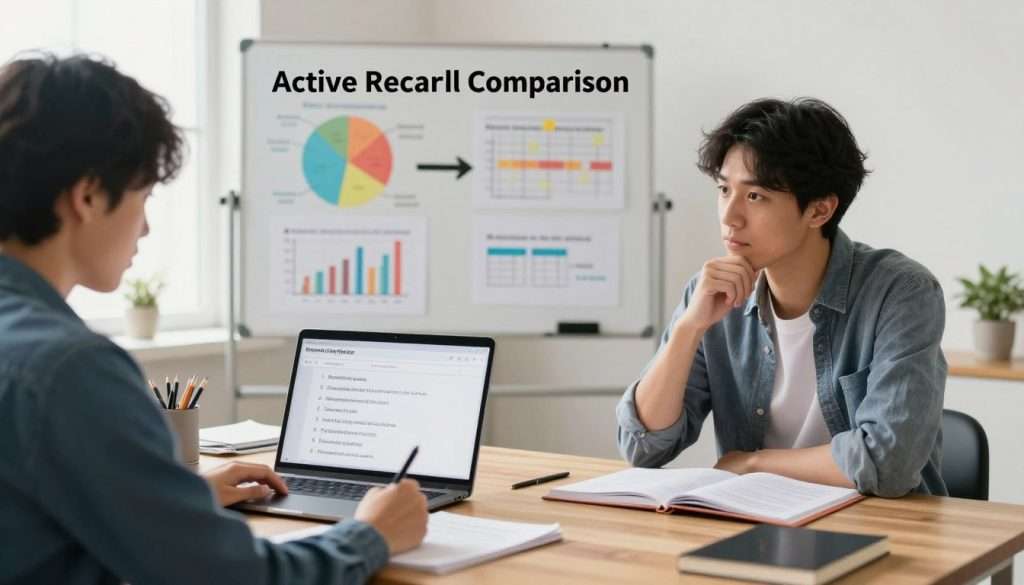
Begin by comparing your recalled information against the original source material. This step is essential to identify any discrepancies or gaps in your knowledge. Be honest with yourself – if you got something wrong, make a note of it. This process helps you understand what you know and what you don’t.
Marking Knowledge Gaps and Areas Needing Review
As you compare your recall with the source material, mark the areas where you struggled. These are your knowledge gaps – the topics or facts you need to revisit. Creating a list or using a specific symbol to highlight these gaps can be very helpful.
How Many Retrieval Cycles You Should Complete
The number of retrieval cycles you need can vary. A good rule of thumb is to continue practicing until you can recall the information with ease. For some topics, this might mean multiple cycles over several days or weeks.
| Retrieval Cycle | Description | Expected Outcome |
|---|---|---|
| 1st Cycle | Initial recall attempt | Identify major knowledge gaps |
| 2nd Cycle | Review and retry recall | Notice improvement, some gaps remain |
| 3rd Cycle | Further review and recall practice | Significant improvement, minor gaps |
Implementing Spaced Repetition for Long-Term Retention
Spaced repetition is a powerful technique to reinforce long-term retention. It involves reviewing material at increasingly longer intervals to help solidify it in your long-term memory. By incorporating spaced repetition into your active recall practice, you can ensure that the information stays with you over time.
By following these steps and consistently practicing active recall, you’ll not only learn faster but also retain more information in the long run. Remember, the key to effective learning is not just recalling information but also refining your understanding through careful review and practice.
How to Use Active Recall to Learn Anything Faster with Proven Techniques
To improve your learning, we’ll look at some active recall techniques you can use today. Active recall is more than just studying; it’s a powerful way to learn that fits your needs.
There are many techniques for active recall. Let’s explore some of the most effective methods to learn faster and remember more.
Digital Flashcards and Spaced Repetition Software
Digital flashcards and spaced repetition software are very popular. Tools like Anki or Quizlet let you make digital cards with questions and answers. The spaced repetition helps you review at the best times to remember.
Digital flashcards are great for remembering key terms and concepts. They’re flexible and easy to use anywhere, making studying fit into your busy life.
The Feynman Technique for Teaching What You Learn
The Feynman Technique involves teaching what you’ve learned to others. It helps you see where you need more practice and deepens your understanding. Explaining complex ideas in simple terms helps you learn better and understand more.
The Feynman Technique is about learning by teaching. It’s a great way to fill knowledge gaps and feel more confident in what you know.
Question-Answer Pairs for Structured Study Sessions
Creating question-answer pairs is another good technique. Write down important questions and answer them without looking at your notes. This method helps you focus on key information and study in a structured way.
Using question-answer pairs helps you practice for tests and exams. It’s a practical way to check your knowledge.
Mind Mapping from Memory for Complex Subjects
Mind mapping from memory is great for complex subjects. It involves making a visual map of information from memory. Mind mapping helps organize and connect different pieces of information, which is useful for subjects with many connections.
Practicing mind mapping from memory improves your ability to recall complex information. It’s a creative way to engage with your study material and strengthen your learning.
Common Active Recall Mistakes That Slow Down Your Progress
Active recall is a great way to improve learning speed and keep information in your mind. But, it’s important to use it correctly to get the most benefits. Many people make mistakes that slow down their learning.
We’ll look at some common errors and how to avoid them. This will help you use active recall more effectively.
Testing Too Soon or Waiting Too Long After Learning
Testing yourself too soon or too late can be a big mistake. If you test too soon, you might not be using your long-term memory. Waiting too long can cause you to forget the information, making it harder to recall.
It’s important to find the right time to test yourself. The best time can vary for everyone and the type of material. A good starting point is to review the material a day or two after you first learn it. Then, gradually increase the time between reviews.

Stopping When Recall Feels Hard Instead of Pushing Through
Another mistake is stopping when recall feels tough. Active recall is most effective when it challenges you. It’s normal for it to feel hard, but pushing through is where the real learning happens.
Instead of giving up, try to keep going. The effort to recall information strengthens your memory. Think of it as a mental workout that makes your brain stronger.
Confusing Passive Recognition with True Active Recall
It’s easy to confuse passive recognition with active recall. Passive recognition is when you think you know something because you’ve seen it before, but you can’t recall it without looking. True active recall means you can recall information from memory without any help.
To avoid this mistake, make sure you’re actively recalling information. Test yourself by trying to recall key concepts or facts without looking at your study materials. This will show you if you really understand and remember the material.
| Mistake | Description | Solution |
|---|---|---|
| Testing too soon or too late | Testing before information is consolidated or after it’s been forgotten | Find an optimal review schedule, such as reviewing a day or two after learning |
| Stopping when recall feels hard | Giving up during challenging recall attempts | Push through the difficulty to strengthen memory |
| Confusing passive recognition with active recall | Mistaking familiarity for true recall ability | Test yourself without cues to ensure true active recall |
By knowing these common mistakes and how to avoid them, you can improve your learning speed with active recall. This powerful technique can help you learn faster and more effectively.
Conclusion
Active recall is a game-changer for learning. It makes studying more effective by helping you remember information better. So, how can you start using active recall to learn faster?
When you actively recall information, you’re not just remembering it. You’re also making it stick in your memory. This is great for students and anyone who loves to learn. To make the most of active recall, review what you’ve learned at the right times. Use spaced repetition to keep it in your long-term memory.
Now that you know how to use active recall, it’s time to try it out. Start using it in your daily learning routine. Watch as your knowledge expands.