
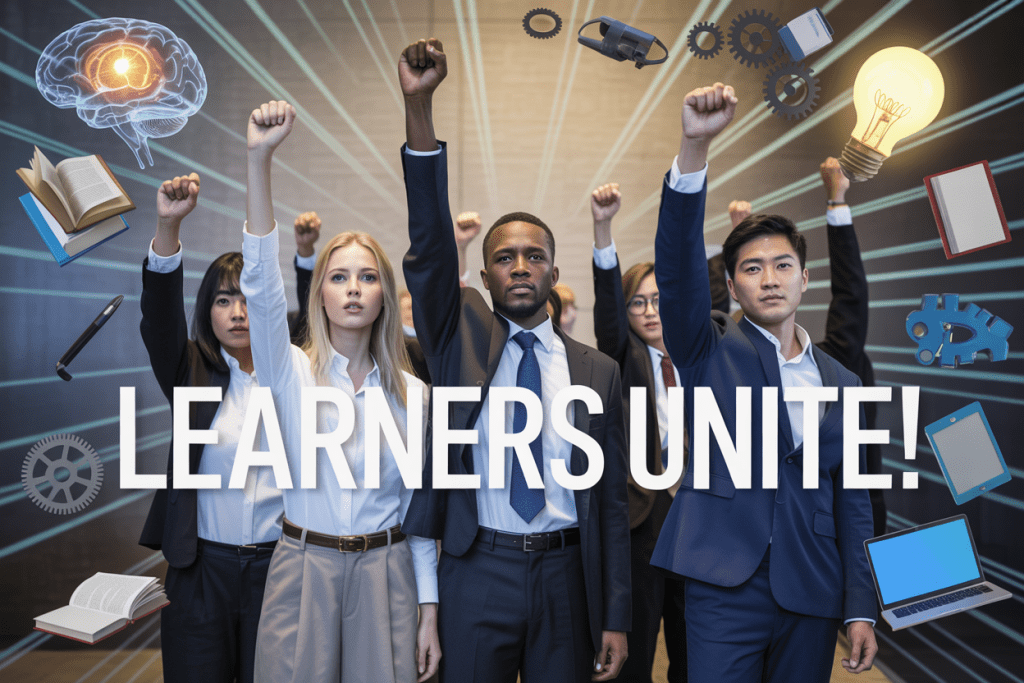
Your brain has incredible untapped potential for learning, but most people never unlock it. This manifesto is for students, professionals, career changers, and lifelong learners who want to transform how they absorb and retain information.
Traditional education systems taught us to memorize and forget, but science shows our brains can actually rewire themselves for faster, deeper learning. You don’t need to accept slow progress or information overload as normal.
We’ll explore how to break free from outdated learning methods that hold you back. You’ll discover proven techniques to rewire your brain for accelerated learning success, giving you the mental edge to master new skills quickly. Finally, we’ll show you how to build unstoppable learning habits that stick, so you can apply your knowledge to create real impact in your work and life.
Ready to turn your brain into a learning machine? Let’s get started.
Break Free from Traditional Learning Limitations

Escape the classroom mindset that restricts your potential
Traditional education has programmed us to believe learning happens within four walls, under fluorescent lights, with someone else controlling the pace. This institutional approach creates artificial boundaries around when, where, and how we absorb knowledge. The classroom mindset convinces us that we need permission to learn, that expertise requires formal credentials, and that knowledge must be delivered in predetermined chunks.
Real learning rebels break these invisible chains. They recognize that the world becomes their classroom – conversations with strangers, documentaries during lunch breaks, podcasts while commuting, and YouTube tutorials at midnight all become valid learning environments. The most successful learners treat every experience as potential education, extracting lessons from failures, insights from random encounters, and wisdom from unconventional sources.
Overcome the myth that learning becomes harder with age
Science has demolished the outdated belief that our brains become rigid after childhood. Neuroplasticity research proves that our brains continue rewiring throughout our entire lives, creating new neural pathways and strengthening existing ones regardless of age. The “old dog, new tricks” mentality is nothing more than a self-imposed limitation disguised as biological fact.
Adults actually possess advantages that children lack: accumulated experience, developed metacognitive skills, and the ability to connect new information to existing knowledge frameworks. Where children rely on rote memorization, adults can leverage pattern recognition, analogical thinking, and contextual understanding to accelerate their learning process.
The real barrier isn’t age – it’s the accumulated mental resistance built from years of believing we’ve reached our learning peak. Every time someone says they’re “too old” to master a new skill, they’re accepting a fictional constraint that serves no one.
Reject passive consumption in favor of active knowledge creation
Most people mistake consuming information for actual learning. They read articles, watch videos, and attend lectures while remaining mentally passive, letting content wash over them without engagement. This consumption-based approach creates the illusion of learning while producing minimal retention or practical application.
Active learners flip this dynamic completely. They question everything, challenge assumptions, and immediately test new concepts in real-world scenarios. Instead of collecting facts, they build mental models. Rather than memorizing procedures, they understand underlying principles that can be applied across multiple contexts.
The transformation happens when you shift from asking “What should I learn?” to “How can I experiment with this knowledge right now?” This approach turns every learning session into a laboratory where you become both scientist and test subject.
Transform from student to lifelong learning revolutionary
The student mindset positions you as a passive recipient waiting for knowledge to be delivered. Students follow curricula, complete assignments, and measure success through external validation. This dependency model creates learned helplessness where people feel lost without structured guidance.
Learning revolutionaries design their own educational experiences. They identify knowledge gaps, curate resources, create personalized learning paths, and measure progress against self-defined objectives. They understand that mastery comes from deliberate practice, not just exposure to information.
This revolutionary approach means taking complete ownership of your intellectual development. You become the architect of your knowledge, the curator of your resources, and the judge of your progress. No institution, instructor, or authority figure controls your learning destiny – you do.
Rewire Your Brain for Accelerated Learning Success
Harness neuroplasticity to build stronger neural pathways
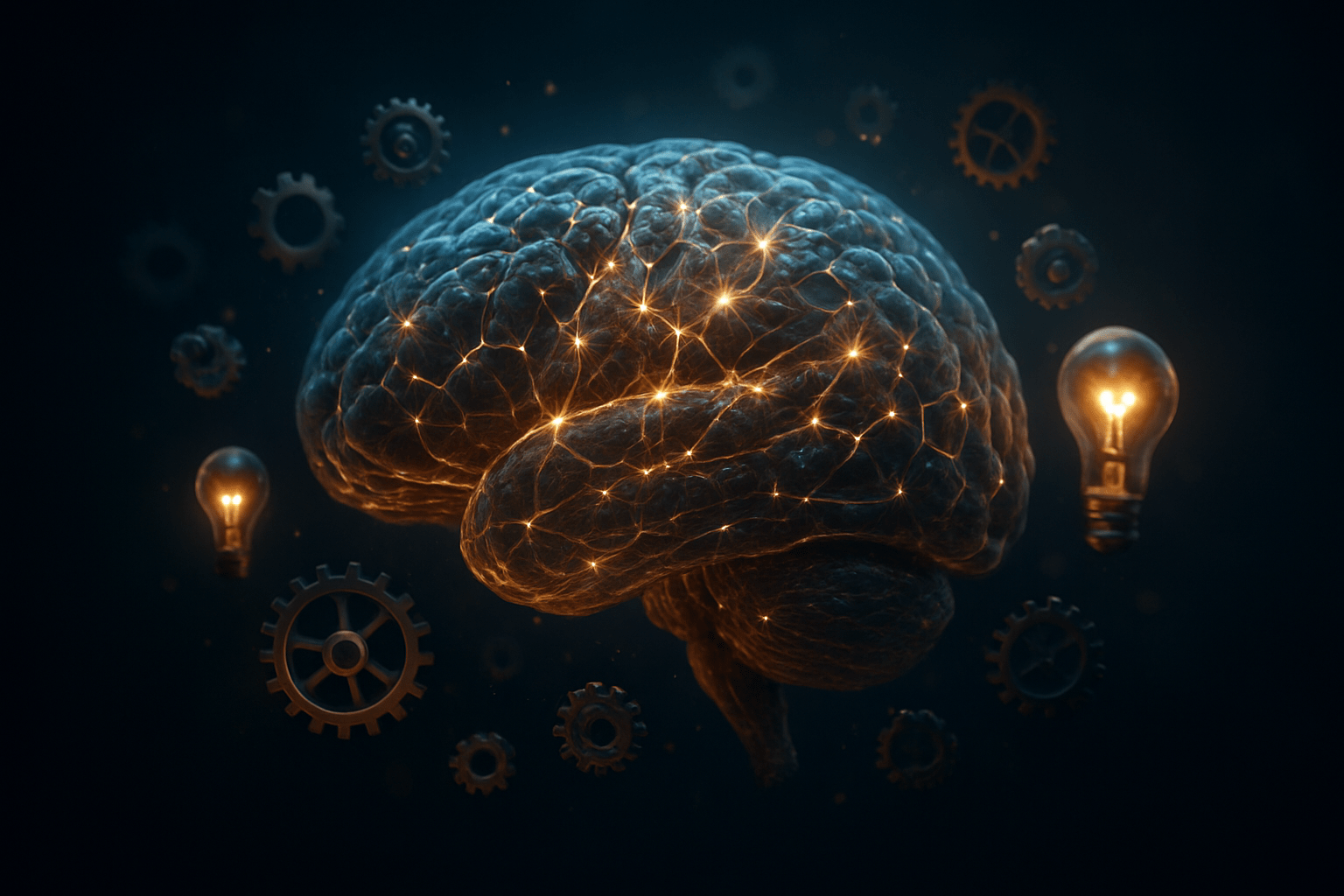
Your brain is like a bustling city that never stops building new roads. Every time you learn something, you’re literally rewiring your neural networks. Scientists call this neuroplasticity, and it’s your secret weapon for becoming a learning powerhouse.
The old myth that adult brains can’t change has been completely shattered. Your brain creates new connections throughout your entire life, and you control the construction process. When you practice a skill repeatedly, you strengthen the neural pathways associated with that skill. Think of it like walking through a forest – the more you take the same path, the clearer and easier it becomes to navigate.
To maximize this process, challenge your brain with novel experiences. Learn a musical instrument, switch your dominant hand for simple tasks, or take a different route to work. These activities force your brain to build new pathways and strengthen existing ones. The key is consistency – small, daily challenges create more lasting changes than sporadic intense sessions.
Your brain’s peak neuroplasticity hours occur during focused learning sessions followed by rest periods. During sleep, your brain consolidates new information and strengthens the connections you built during waking hours. This is why cramming the night before an exam backfires – you’re robbing your brain of the recovery time it needs to cement new knowledge.
Implement spaced repetition for permanent knowledge retention
Cramming might get you through tomorrow’s test, but it won’t help you remember information next month. Spaced repetition works with your brain’s natural forgetting patterns to create lasting memories that stick around for years.
The forgetting curve shows how rapidly we lose new information – about 50% within the first hour and 70% within 24 hours. Spaced repetition fights this by reviewing information at strategically timed intervals, right before you’re about to forget it.
Here’s how to implement this system:
- Day 1: Learn new material
- Day 2: First review (24 hours later)
- Day 4: Second review (2-3 days later)
- Day 10: Third review (1 week later)
- Day 30: Fourth review (3 weeks later)
- Day 90: Final review (2-3 months later)
Digital tools like Anki, Quizlet, or RemNote automate this process, calculating optimal review intervals based on your performance. When you answer correctly, the interval increases. When you struggle, the system schedules more frequent reviews.
The magic happens in the struggle. When your brain has to work to recall information, it strengthens those neural pathways. Easy recall doesn’t build strong memories – difficult recall does. Embrace the moments when information feels just out of reach. That’s your brain building permanent storage.
Use active recall techniques to strengthen memory formation
Reading and highlighting feels productive, but it’s mostly an illusion. Active recall – forcing yourself to retrieve information from memory – creates dramatically stronger learning outcomes than passive review methods.
The testing effect proves that attempting to recall information, even unsuccessfully, strengthens memory more than simply re-reading material. Your brain treats retrieval like exercise, building stronger neural connections each time you pull information from storage.
Transform your study sessions with these active recall methods:
The Blank Page Test: Close your materials and write everything you remember about the topic. Don’t worry about organization or completeness – just dump what’s in your brain onto paper.
Question Generation: Turn every paragraph into questions. Instead of reading “Mitochondria produce ATP through cellular respiration,” ask yourself “What organelle produces ATP and how?”
Explain It Simply: Pretend you’re teaching the concept to a curious 10-year-old. If you can’t explain it simply, you don’t understand it well enough yet.
The Feynman Technique: Choose a concept, write it at the top of a blank page, then explain it in plain language without looking at your notes. When you get stuck, return to your materials, then try again.
Active recall feels harder than passive reading because it is harder. Your brain is actually working to build lasting knowledge instead of creating the illusion of understanding.
Create mental models that connect new information to existing knowledge
Your brain doesn’t store information in isolation – it builds vast networks of interconnected knowledge. Mental models act as frameworks that help you organize, understand, and apply new information by connecting it to what you already know.
Think of mental models as filing systems in your mind. Instead of cramming random facts into disconnected folders, you create logical structures that make information easier to find and use. The stronger your mental models, the faster you can absorb and apply new knowledge.
Building Effective Mental Models:
| Model Type | Description | Example |
|---|---|---|
| Analogies | Compare new concepts to familiar ones | DNA is like a recipe book for building proteins |
| Hierarchies | Organize information from general to specific | Biology → Genetics → DNA → Genes → Alleles |
| Systems | Show how parts interact within a whole | Economic supply and demand cycles |
| Stories | Create narrative connections | Historical events as character-driven stories |
Start with broad frameworks before diving into details. If you’re learning about World War II, first understand the major players, timeline, and causes before memorizing specific battles. This top-down approach gives new facts a place to stick in your existing knowledge structure.
Connect new information to multiple existing knowledge areas. Learning about photosynthesis? Link it to your understanding of chemistry (molecular reactions), physics (energy conversion), economics (resource transformation), and even cooking (ingredient transformation). The more connection points you create, the stronger your understanding becomes.
Your mental models should evolve as you learn more. Regularly review and refine your frameworks, looking for new connections and better organizing principles. The goal isn’t perfect models – it’s useful ones that help you think more clearly and learn more efficiently.
Build Your Personal Learning Arsenal

Master the Art of Effective Note-Taking Systems
Your brain needs a reliable external storage system, and random scribbles on napkins won’t cut it. The most successful learners have cracked the code on note-taking systems that actually work.
Start with the Cornell Note-Taking System – divide your page into three sections: notes, cues, and summary. During lectures or reading sessions, capture main ideas in the notes section. Later, add questions and keywords in the cue column. The magic happens when you write a brief summary at the bottom, forcing your brain to synthesize everything.
Mind mapping unleashes your brain’s natural pattern recognition abilities. Place your main topic in the center, then branch out with related concepts, using colors and simple drawings. This visual approach mirrors how your brain actually stores information – in interconnected webs rather than linear lists.
For digital natives, the Zettelkasten method creates a personal knowledge network. Each note gets a unique identifier and connects to other related notes through links and tags. Popular tools like Obsidian or Roam Research make this approach seamless, turning your notes into a searchable, interconnected brain extension.
The key lies in consistency. Pick one system and stick with it for at least 30 days. Your notes should become a conversation with your future self – clear enough that you’ll understand them months later, detailed enough to trigger memory recall, and organized enough to find what you need quickly.
Develop Speed Reading Skills Without Sacrificing Comprehension
Speed reading isn’t about racing through text like a caffeinated squirrel. Real speed reading combines velocity with understanding, and anyone can master these techniques with focused practice.
Eliminate subvocalization – that inner voice reading every word. Your brain can process visual information much faster than your internal narrator can speak. Practice reading while humming or chewing gum to break this habit. Start with simple texts and gradually increase complexity as your brain adapts.
Expand your visual span beyond single words. Train your peripheral vision to capture word groups instead of individual words. Use your finger or a pointer to guide your eyes in smooth movements across lines. This reduces the number of eye fixations needed, dramatically increasing your reading speed.
Strategic skimming becomes your superpower for information-heavy materials. Read the first and last paragraphs completely, scan topic sentences of middle paragraphs, and focus on transition words that signal important information. This approach works especially well for business reports, research papers, and news articles.
Practice with purpose using apps like Spreeder or 7 Speed Reading. Set realistic goals – doubling your reading speed while maintaining 80% comprehension is achievable for most people within 4-6 weeks of consistent practice.
Remember the 80/20 rule: 80% of useful information often comes from 20% of the text. Learn to identify and focus on high-value content while skipping redundant explanations and filler material.
Use Technology Tools That Amplify Your Learning Capacity
Your smartphone and computer can become learning accelerators when you choose the right tools and use them strategically.
Spaced repetition software like Anki or Quizlet transforms memorization from tedious drilling into efficient, science-based learning. These apps present information at optimal intervals, strengthening memory pathways right before you’re likely to forget. Perfect for languages, technical terms, or any factual information you need to retain long-term.
AI-powered learning assistants are revolutionizing personal education. Tools like ChatGPT can serve as your personal tutor, explaining complex concepts in simple terms, generating practice questions, or helping you brainstorm connections between ideas. Claude can analyze your learning materials and create custom study guides tailored to your knowledge gaps.
Video learning platforms offer more than just content consumption. YouTube’s playback speed controls let you absorb information faster, while tools like Video Speed Controller for Chrome give you precise control over any video content. Coursera and edX provide structured learning paths with certificates that actually matter to employers.
Productivity apps create learning environments that stick. Notion combines note-taking, task management, and knowledge organization in one platform. Forest or Focus apps eliminate digital distractions during study sessions. RescueTime tracks how you actually spend your time, revealing learning patterns you might not notice.
| Tool Category | Recommended Apps | Primary Benefit |
|---|---|---|
| Spaced Repetition | Anki, Quizlet | Long-term retention |
| AI Tutoring | ChatGPT, Claude | Personalized explanations |
| Video Learning | YouTube, Coursera | Visual and auditory input |
| Productivity | Notion, Forest | Organized, focused learning |
The secret lies in integration, not accumulation. Choose 3-4 tools that work together seamlessly rather than jumping between dozens of apps that create more confusion than clarity.
Create Unstoppable Learning Habits

Design daily routines that make learning automatic
The secret to becoming a learning powerhouse lies in making education as automatic as brushing your teeth. Your brain craves predictability, and when you establish consistent learning touchpoints throughout your day, you’re essentially programming yourself for success.
Start by identifying your peak mental energy hours. For most people, this happens within the first few hours of waking up, when cortisol levels naturally spike and your mind feels sharp. Block this golden time for your most challenging learning material. Whether that’s tackling complex programming concepts or diving into a foreign language, your brain will thank you for feeding it quality content when it’s most hungry.
Create micro-learning slots that fit seamlessly into existing routines. Listen to educational podcasts during your commute, review flashcards while your coffee brews, or watch instructional videos during lunch breaks. These small pockets of time add up dramatically over weeks and months.
Build environmental cues that trigger learning mode. Place books strategically around your living space, set up a dedicated learning corner with all your materials ready, or use smartphone widgets that display your learning goals every time you unlock your device. When your environment constantly reminds you to learn, resistance melts away.
The key is starting ridiculously small. Commit to just five minutes daily of focused learning. Once this becomes automatic, your brain will naturally want to extend these sessions. You’re not just building knowledge – you’re rewiring your neural pathways to crave continuous growth.
Eliminate distractions that sabotage your focus
Your smartphone is probably the biggest enemy of deep learning, but it’s not the only culprit stealing your attention. Modern life bombards you with notification pings, social media alerts, and the constant temptation to multitask – all of which fragment your ability to absorb and retain information effectively.
Start with a digital detox strategy. Turn your phone to airplane mode during learning sessions, or better yet, leave it in another room entirely. Use website blockers like Cold Turkey or Freedom to eliminate access to time-wasting sites during designated study periods. Your future self will appreciate the immediate productivity boost.
Physical environment matters just as much as digital hygiene. Clear your learning space of visual clutter, ensure proper lighting, and maintain a comfortable temperature. Background noise can either help or hinder depending on your learning style – experiment with white noise, instrumental music, or complete silence to discover what works best for your brain.
Batch similar tasks together instead of switching between different types of learning. If you’re studying multiple subjects, dedicate specific time blocks to each rather than jumping around randomly. This prevents the mental fatigue that comes from constantly shifting cognitive gears.
| Distraction Type | Impact on Learning | Solution |
|---|---|---|
| Smartphone notifications | Breaks focus every 11 minutes | Airplane mode or separate room |
| Social media urges | Reduces retention by 40% | Website blockers during study time |
| Cluttered workspace | Increases stress hormones | 5-minute cleanup before learning |
| Background conversations | Impairs comprehension | Noise-canceling headphones or quiet space |
Build accountability systems that keep you motivated
Learning alone is like trying to lift weights without a spotter – you might make progress, but you’ll plateau faster and give up easier. Smart learners understand that external accountability transforms wishful thinking into consistent action.
Find an accountability partner who shares your commitment to growth. This could be a colleague learning similar skills, a friend pursuing different goals, or even someone online through learning communities. Schedule weekly check-ins where you share progress, challenges, and upcoming goals. The simple act of verbalizing your commitments makes you significantly more likely to follow through.
Join or create learning groups focused on your interests. Online communities like Reddit’s study groups, Discord learning servers, or local meetups provide built-in accountability while offering diverse perspectives on your subject matter. When other people expect you to contribute and participate, you’ll naturally maintain higher standards for yourself.
Use public commitment strategies that leverage social pressure positively. Share your learning goals on social media with specific deadlines, start a learning blog where you document your journey, or teach others what you’re learning through video content or presentations. The fear of public failure becomes a powerful motivator to stay consistent.
Set up financial stakes that make quitting expensive. Use apps like StickK or Beeminder to put real money on the line for your learning goals. When breaking your commitment costs you actual cash, your brain suddenly finds all sorts of creative ways to stay on track.
Track progress to maintain momentum and celebrate wins
What gets measured gets improved, and learning is no exception. Without clear tracking systems, you’ll lose sight of how far you’ve come and struggle to identify what methods work best for your unique learning style.
Design a simple progress tracking system that captures both quantity and quality metrics. Track obvious numbers like hours studied, pages read, or practice problems completed, but also monitor subjective measures like confidence levels, understanding depth, and real-world application success. Use a simple spreadsheet, learning apps like Anki for spaced repetition tracking, or habit trackers like Habitica that gamify your progress.
Create visual representations of your learning journey. Progress bars, learning streaks, and skill trees provide immediate visual feedback that motivates continued effort. When you can literally see yourself advancing toward mastery, maintaining momentum becomes much easier.
Establish milestone celebrations that reinforce positive learning behaviors. Set mini-goals throughout your learning journey and reward yourself when you hit them. This could be treating yourself to a nice dinner after completing a course, buying a new book after finishing your current one, or taking a day off after mastering a challenging concept.
Weekly learning reviews help you course-correct quickly and maintain perspective on long-term goals. Spend 15 minutes each week reviewing what you learned, what challenged you, and what you want to focus on next. This reflection time prevents you from mindlessly going through the motions and ensures your learning stays purposeful and directed.
Keep a learning journal where you record breakthrough moments, interesting insights, and connections between different concepts. These written records become powerful motivational fuel during difficult periods when progress feels slow or non-existent.
Apply Knowledge for Real-World Impact

Bridge the Gap Between Theory and Practical Application
Your brain is full of knowledge, but knowledge without action is just expensive entertainment. The real magic happens when you take what you’ve learned and apply it to solve actual problems. Start small with personal projects that excite you. Learning Python? Build a simple app that tracks your daily habits. Studying marketing? Create a social media campaign for a local business you love.
The key is active experimentation. Don’t wait until you feel “ready” – that day never comes. Pick a project that’s slightly beyond your comfort zone and dive in. You’ll discover gaps in your understanding that books never revealed. These gaps are gold mines for focused learning.
Document your experiments obsessively. Keep a learning journal where you record what worked, what failed spectacularly, and what surprised you. This creates a feedback loop that accelerates your growth exponentially. Real-world application isn’t about perfection; it’s about iteration and improvement.
Teach Others to Solidify Your Understanding
Teaching is the ultimate test of knowledge mastery. When you explain concepts to others, your brain reveals hidden gaps and strengthens neural pathways. Start a blog, create YouTube videos, or simply explain ideas to friends and family. The Feynman Technique works: if you can’t explain it simply, you don’t understand it well enough.
Join online communities in your field and answer questions. Platforms like Reddit, Stack Overflow, or Discord servers offer endless opportunities to help others while sharpening your skills. Each question you answer forces you to think critically and articulate complex ideas clearly.
Consider mentoring someone who’s earlier in their learning journey. The questions they ask will challenge assumptions you didn’t even know you had. Teaching creates a virtuous cycle: the more you teach, the more you learn, and the more confident you become in your expertise.
Connect with Fellow Learners to Accelerate Growth
Learning in isolation is like trying to start a fire with one match – possible but unnecessarily difficult. Find your tribe of fellow learners who share your passion and curiosity. Online communities, local meetups, and professional associations are treasure troves of like-minded people.
Create or join study groups where members share resources, discuss challenges, and celebrate wins together. The collective intelligence of a group often surpasses individual effort. Different perspectives illuminate blind spots and offer alternative approaches you’d never consider alone.
Don’t underestimate the power of accountability partners. Share your learning goals with someone who’ll check in on your progress. Peer pressure, when channeled positively, becomes a powerful motivator. Schedule regular coffee chats or video calls to discuss what you’re learning and challenge each other’s thinking.
Turn Learning into Tangible Career and Life Improvements
Learning should pay dividends in your real life, not just your résumé. Identify specific skills that directly impact your current role or desired career path. Then create a learning plan with measurable outcomes. Want a promotion? Master the skills your next-level position requires and start demonstrating them in your current role.
Track your learning ROI ruthlessly. Keep a record of how new skills translate into career opportunities, salary increases, or life improvements. This data becomes powerful motivation during learning plateaus. Quantify everything: the online course that led to a project leadership role, the language skills that opened international opportunities, or the technical knowledge that solved a critical business problem.
Build a portfolio that showcases your applied learning. Create case studies, before-and-after examples, and success stories. Your learning journey becomes compelling evidence of your growth mindset and problem-solving abilities. Employers and collaborators want to see proof of impact, not just certificates of completion.
Most importantly, use your expanded knowledge to solve problems that matter to you. Whether it’s improving your health, strengthening relationships, or contributing to causes you care about, learning becomes meaningful when it serves a purpose beyond personal achievement.

The journey from passive learner to learning machine isn’t just about cramming more information into your head. It’s about breaking down the walls that traditional education built around your potential, rewiring your mental pathways to absorb and process knowledge faster, and building a toolkit that works specifically for you. When you combine these elements with rock-solid habits that stick, you transform from someone who learns occasionally to someone who learns constantly.
Your brain is ready for this transformation right now. Stop waiting for the perfect course, the ideal mentor, or the right moment to start. Pick one technique from your new learning arsenal, commit to practicing it for just 15 minutes today, and watch how quickly momentum builds. The world needs learners who don’t just consume knowledge but turn it into real solutions and meaningful change. Your learning revolution starts the moment you decide that average just isn’t good enough anymore.