
We’re excited to start this journey of discovery with you! Learning continuously can unlock your full potential. It helps you achieve amazing things.
By seeing learning as a superpower, you can face challenges head-on. You can make a big difference in your life and the world. In this article, we’ll show you how knowledge can change your life. We’ll also give you tips to make learning fun and effective.
Key Takeaways
- Discover the benefits of viewing learning as a superpower.
- Learn how to unlock your full potential through continuous education.
- Explore practical tips for making learning an enjoyable experience.
- Understand how knowledge acquisition can transform your life.
- Find out how to overcome challenges through learning.
The Transformative Power of Knowledge Acquisition
Knowledge acquisition can change your life in big ways. It’s not just about learning facts. It’s about growing a mindset that helps you reach your goals.
Why Learning Sets High Achievers Apart
High achievers know the power of learning and how it helps them succeed. They always look for new knowledge and skills. This makes them stand out from others.
The Neurological Benefits of Continuous Learning
Learning a lot has great benefits for your brain. It builds up your brain’s strength and makes new paths for thinking.
How Learning Creates New Neural Pathways
Learning makes your brain connect neurons in new ways. This is called neuroplasticity. It lets you adapt and come up with new ideas.
Cognitive Reserve: Building Your Brain’s Resilience
Learning helps build a strong brain that can fight off brain decline. As Dr. Lisa Feldman Barrett says, “Your brain is a dynamic system that can change and adapt throughout your life.”
By always learning, you can reach your highest potential and succeed more.
| Benefits of Learning | Description |
|---|---|
| Personal Growth | Learning new skills and knowledge enhances personal development. |
| Professional Advancement | Continuous learning can lead to career advancement opportunities. |
| Cognitive Resilience | Building cognitive reserve helps protect against cognitive decline. |
Learning is a Superpower: How It Transforms Your Life
Learning is a powerful tool in today’s fast-changing world. It helps us adapt and grow. In a world where change is constant, learning is key.
Adaptability in the Age of Rapid Technological Change
Technologies change fast, making what we know today outdated soon. Continuous learning keeps us ahead. It lets us adapt to new tech and ways of doing things.
By choosing lifelong learning, we keep our skills sharp. This way, we’re always ready for new chances.
How Continuous Learning Creates Unlimited Opportunities
Continuous learning opens doors to new possibilities. It helps us find new jobs, solve problems better, and be creative.
Career Advancement Through Knowledge Acquisition
Learning new things boosts our career chances. It makes us stand out and prepares us for leadership roles.
Personal Growth and Self-Actualization
Lifelong learning also boosts our personal growth. As we learn, we gain confidence and find our purpose.
By always learning, we can change our lives for the better. We reach our full potential and live a more rewarding life.
Understanding Your Unique Learning Style
Discovering your unique learning style can change the game for anyone wanting to improve their learning mindset. Knowing how you learn best lets you customize your study methods. This way, you can retain information better and enjoy learning more.
Visual, Auditory, Reading/Writing, and Kinesthetic Learning
There are four main learning styles: visual, auditory, reading/writing, and kinesthetic. Visual learners do well with images and diagrams. Auditory learners prefer listening to information. Reading/writing learners like text, and kinesthetic learners learn by doing.
How to Identify Your Primary Learning Style
To find your primary learning style, think about your past learning experiences. Ask yourself: Do you remember things better with pictures or text? Do you like doing things yourself or listening to lectures? Trying out different ways of learning can show you what works best for you.
Leveraging Multiple Learning Approaches for Maximum Retention
Even if you have a main learning style, using many approaches can help you remember more. For instance, watching a video (visual) and then talking about it (auditory) can help you understand better. Mixing different learning methods can make you a more flexible and effective learner.
The Science of Effective Learning: How Your Brain Processes Information
To get the most out of learning, knowing how your brain works is key. Understanding how it processes and keeps information helps us enhance skills through learning. Let’s explore the exciting areas of neuroplasticity, memory, and cognitive load.
Neuroplasticity: Your Brain’s Ability to Rewire Itself
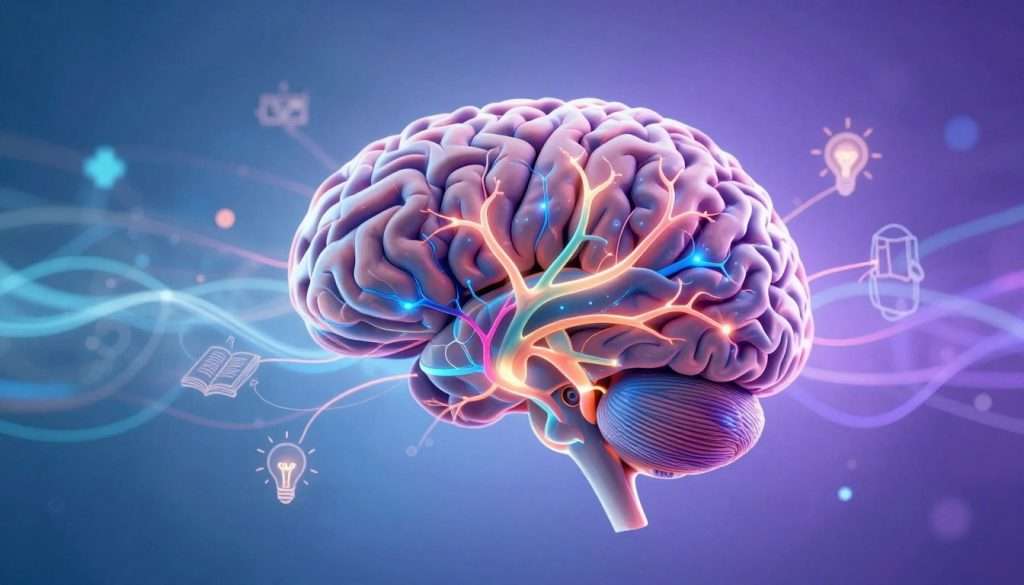
Our brains are not set in stone; they can change and adapt. This idea, called neuroplasticity, shows that our brains can evolve. Through learning and practice, we can improve our thinking and even heal from injuries.
The Role of Memory in Learning
Memory is vital for learning. It’s not just about taking in info; it’s about keeping it for later use. There are various types of memory, each playing a part in how we learn.
Working Memory vs. Long-Term Memory
Working memory is like a mental note pad for temporary info. Long-term memory stores info for longer. Moving info from working to long-term memory is key to learning well.
The Forgetting Curve and How to Beat It
The forgetting curve shows how our memory fades over time without review. To fight this, using spaced repetition can help keep learning fresh and prevent forgetting.
| Memory Type | Description | Retention Strategy |
|---|---|---|
| Working Memory | Temporary holding area for information | Repetition and Practice |
| Long-Term Memory | Permanent storage for information | Spaced Repetition |
Attention, Focus, and Cognitive Load
Managing cognitive load is key for learning well. Cognitive load is the mental effort needed in working memory. By breaking down info and avoiding distractions, we can learn better.
In conclusion, knowing how our brains handle info is a powerful tool for learning. By using neuroplasticity, managing memory, and controlling cognitive load, we can truly make education is power a reality in our lives.
Proven Techniques to Accelerate Your Learning
Learning is a superpower, and we’re about to show you how to wield it more effectively. As the saying goes, “knowledge is power,” and with the right techniques, you can supercharge your learning journey.
Spaced Repetition: The Key to Long-Term Retention
Spaced repetition is a powerful technique. It involves reviewing material at increasingly longer intervals to solidify it in your long-term memory. This method uses the psychological spacing effect, showing that spaced sessions retain information better than a single session.
How to Create an Effective Spaced Repetition Schedule
To implement spaced repetition, start by creating a schedule. Review material at optimal intervals. Use flashcards or apps designed for spaced repetition to stay on track. For example, review a new concept one day, then again a week later, and after a month.
| Review Interval | Material Covered | Retention Rate |
|---|---|---|
| 1 day | New concepts | 80% |
| 1 week | Previously learned concepts | 90% |
| 1 month | Long-term retention | 95% |
Active Recall: Testing Yourself to Learn Better
Active recall involves actively recalling information from memory rather than simply re-reading it. This technique strengthens your ability to retrieve information and improves long-term retention. Try testing yourself on the material you’re trying to learn, or use active recall techniques like summarizing information in your own words.
“The more you engage with the material, the more likely you are to remember it.” –
The Feynman Technique: Teaching to Master
The Feynman Technique involves teaching the material you’re trying to learn to someone else. This technique helps you identify areas where you need more practice and forces you to simplify complex concepts. By teaching others, you’ll gain a deeper understanding of the material and improve your ability to communicate it effectively.
Interleaving: Mixing Up Your Learning for Better Results
Interleaving involves switching between different types of material or problems to deepen your understanding and improve your ability to apply what you’ve learned. This technique helps you develop a more nuanced understanding of the subject matter and improves your ability to solve complex problems.
By incorporating these techniques into your learning routine, you’ll be able to accelerate your learning and make the most of your study time. Remember, the key to effective learning is to stay engaged, be consistent, and use a variety of techniques to keep your learning fresh and exciting.
Overcoming Learning Obstacles and Limitations
Learning is a superpower that we can all tap into. But, we must face and conquer the challenges that stand in our way. As we learn new things, we hit roadblocks that slow us down.
Conquering Procrastination and Distraction
Procrastination is a big obstacle for many learners. To beat it, we can use certain strategies to stay on track.
The Pomodoro Technique for Focused Learning
The Pomodoro Technique is a great tool. It involves working in 25-minute blocks, followed by a 5-minute break. This method keeps us focused and prevents burnout.
Digital Detox Strategies for Better Concentration
In today’s world, distractions are everywhere. To stay focused, we can try digital detox strategies. This includes turning off notifications or using website blockers.
Managing Information Overload
There’s so much information out there, it can feel overwhelming. To deal with this, we need to learn how to filter and prioritize what we learn.
Strategies for Pushing Through Learning Plateaus
Learning plateaus are a normal part of the journey. To get past them, we can try new learning methods, seek out more resources, or set new challenges for ourselves.
By facing and solving these common problems, we can keep growing as learners. Remember, learning is a superpower that gets stronger with time and effort.
Building a Sustainable Learning Habit
To make learning a lasting part of your life, you need the right setup. This includes a good environment, a routine that fits you, and technology to help you learn. These elements are key to making learning a sustainable habit.
Creating an Effective Learning Environment
Your learning space is crucial for focus and learning. To make it effective, remove distractions and make it comfortable and productive.
- Choose a quiet, comfortable spot
- Minimize digital distractions
- Organize your study materials
Designing a Learning Routine That Sticks
Consistency is essential for a learning habit. Find your best learning times and fit learning into your daily life.
Morning vs. Evening Learning: Finding Your Peak Time
Some people learn better in the morning, others at night. Try different times to see when you’re most alert.
Habit Stacking: Attaching Learning to Existing Routines
Link learning to things you already do, like after breakfast or during your commute.
| Routine | Learning Activity | Benefits |
|---|---|---|
| Morning Routine | Language learning app | Boosts mental energy |
| Daily Commute | Audiobooks or podcasts | Maximizes travel time |
| Evening Routine | Reviewing notes or planning | Prepares for the next day |
Using Technology to Support Continuous Learning
Apps, online courses, and digital flashcards make learning fun and easy.
With the right environment, routine, and technology, you can create a lasting learning habit. This habit will help you reach your long-term goals.
Transforming Knowledge into Action
The real power of learning is not just getting knowledge. It’s about using it to get real results. As we keep learning, we must close the gap between knowing and doing.
Applying What You Learn for Tangible Results
To really benefit from learning, we must use what we learn in real life. This makes our understanding stronger and helps us get better at practical skills. For example, if you’re learning a new language, talk to native speakers or write stories in that language.
Project-Based Learning for Skill Development
Project-based learning is a great way to use what you learn. By doing real projects, you can improve specific skills and get practical experience. This method not only deepens your understanding but also shows off your skills through your work.
Creating Mini-Projects to Reinforce New Knowledge
Begin with small projects that push you to use what you’ve learned. For instance, if you’re learning web development, make a simple website or blog. These small projects make new ideas stick and boost your confidence.
The 30-Day Challenge Approach to Skill Building
Try a 30-day challenge in your area of interest. Spend a set time each day learning and practicing a new skill. This regular effort leads to big progress in a short time.
The Learning-Doing Feedback Loop
Learning and applying what you learn creates a feedback loop. You learn, then apply; you apply, then get feedback that helps you learn more. This ongoing cycle is key to getting better and mastering skills.
“The key to success is to focus our conscious mind on things we desire rather than things we fear.” – Brian Tracy
Learning Communities: Amplifying Your Growth Through Others
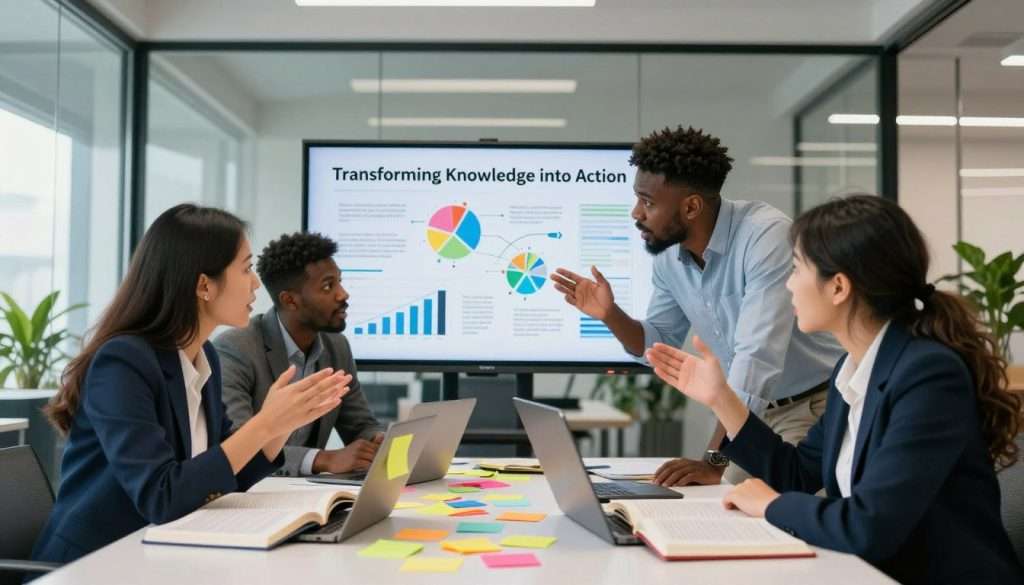
Learning with others can change your life. Joining a learning community boosts your personal and professional growth. Being around people who love lifelong learning as much as you do creates a space for growth.
Finding Your Learning Tribe
To begin, find your learning tribe. Look for communities that match your interests and goals.
Online Communities and Forums for Knowledge Exchange
Online platforms are full of chances to meet like-minded people. You can join forums, attend webinars, and be part of social media groups that interest you.
Local Meetups and Study Groups
Local meetups and study groups offer real-life connections. You can find them at community centers, libraries, or through online meetup platforms.
Collaborative Learning Approaches
Collaborative learning means working together to learn something new. It includes group projects, peer review, and study groups.
| Benefits | Collaborative Learning | Individual Learning |
|---|---|---|
| Motivation | High | Variable |
| Resource Sharing | Yes | No |
| Networking Opportunities | Yes | Limited |
Mentorship and Knowledge Sharing
Mentorship is key in learning communities. Having a mentor who guides and shares their knowledge can really help your learning mindset.
Being part of learning communities lets you learn new things. You also build a network of peers and mentors to support you on your learning journey.
Conclusion: Embracing Lifelong Learning as Your Ultimate Advantage
As we finish this journey, you’re ready to unlock your full potential through lifelong learning. This approach lets you improve your skills and open up new doors. Remember, learning is a powerful tool that helps you make a difference in the world.
We’ve looked at how knowledge changes us, finding what works best for you, and making learning a habit. Using these tips, you’ll be ready to face new challenges and stay ahead. So, start your lifelong learning journey today.
Your ability to learn is your biggest strength. By always learning, you’ll grow personally and professionally. You’ll find new chances and opportunities. Let’s begin this exciting learning journey together!