

Are you tired of cramming for exams only to forget everything soon after? We’ve all been there! Traditional study methods often lead to burnout and poor retention. But what if we told you there’s a better way to learn?
Imagine being able to recall important information with ease, without the stress of last-minute cramming. This is where effective study techniques come into play. By incorporating a simple yet powerful method into your study routine, you can achieve long-term retention and make learning a more enjoyable experience.
We’re excited to introduce you to a game-changing approach that makes learning easier and more efficient. Say goodbye to cramming and hello to a more confident you!
Key Takeaways
- Discover a simple method to improve memory retention
- Learn how to avoid burnout with effective study techniques
- Understand the benefits of long-term learning
- Find out how to make studying a more enjoyable experience
- Adopt a study routine that leads to long-term success
The Problem with Traditional Cramming
We’ve all been there – pulling all-nighters, cramming as much information as possible into our brains. It’s a stressful ritual many students know all too well. But, as we often realize too late, cramming is not an effective memorization strategy. Let’s explore why this method fails us and what we can do differently.
Why Cramming Fails Long-Term Memory
Cramming involves trying to memorize large amounts of information in a short period. This approach might help you pass a test, but it doesn’t lead to long-term retention. “Cramming is like trying to fill a leaky bucket; no matter how much water you pour in, it won’t stay filled for long.” The information is quickly forgotten because it hasn’t been consolidated into our long-term memory.
The Forgetting Curve Explained
The concept of the forgetting curve, introduced by Hermann Ebbinghaus, shows how our memory of new information decays over time. Without reinforcement, our retention of new information drops significantly within days or even hours.
“The memory decays rapidly at first, and then the rate of decay slows down.”
This is wherespaced repetitioncomes in – a technique that counters the forgetting curve. It reviews material at optimal intervals to help solidify it in our long-term memory.
What is Spaced Repetition?
Spaced repetition is a powerful learning technique. It makes study sessions more effective. It’s based on the spacing effect, which shows learning in spaced sessions is better than in one session. This makes it an efficient learning method that saves study time.
By spreading out study sessions, spaced repetition uses the spacing effect to improve memory. You’re not just memorizing; you’re making it stick in your long-term memory.
The Science Behind Spaced Repetition
The science of spaced repetition is about how our brains learn and remember. When you first learn something, it goes into your short-term memory. Spaced repetition moves it to long-term memory by reviewing it at the right times. This strengthens the connections between neurons, making it easier to remember later.
How Memory Consolidation Works
Memory consolidation turns short-term memories into long-term ones. Spaced repetition helps by reviewing material at the best times. This strengthens the memory and deepens your understanding.
Using spaced repetition, you’re not just memorizing; you’re learning. It’s a great way to make the most of your study time, helping you learn more efficiently.
The Proven Benefits of Spaced Repetition
Spaced repetition is a game-changer for learners, offering many benefits. It makes it an effective study habit. By using this technique, you can learn and remember information better.
Improved Long-Term Retention
One big advantage of spaced repetition is better long-term retention. Studies show it keeps information in your memory longer than cramming. It helps move memories from short-term to long-term, making them easier to recall.
Reduced Study Time Overall
Spaced repetition also cuts down study time. It optimizes your review process, focusing on material about to be forgotten. This way, you get better results in less time. It’s perfect for busy learners who want to never cram again.
Enhanced Understanding of Complex Topics
Spaced repetition also helps you understand complex topics better. It reviews material at longer intervals, deepening your understanding. This makes complex topics easier to handle, boosting your confidence.
Spaced Repetition Made Simple: Never Cram Again Starting Tomorrow
You can start using spaced repetition tomorrow with a few easy steps. It’s not just about memorizing; it’s about keeping information in your mind for a long time. By breaking down your study material and reviewing it at the right times, you can learn more effectively.
First Steps to Implementing Spaced Repetition
To begin, divide your study material into smaller parts. This could mean breaking a big topic into smaller ones or making flashcards. One side has the key information, and the other has the details.
Breaking Down Your Material
For example, if you’re studying for a history exam, divide it by era. Make flashcards for important events, dates, and figures. This makes it easier to remember specific details.
Setting Initial Review Points
After organizing your material, set review times. For example, review a flashcard one day, then a week later, and after a month. This helps the information stay in your memory longer.
Creating Your First Spaced Repetition Schedule
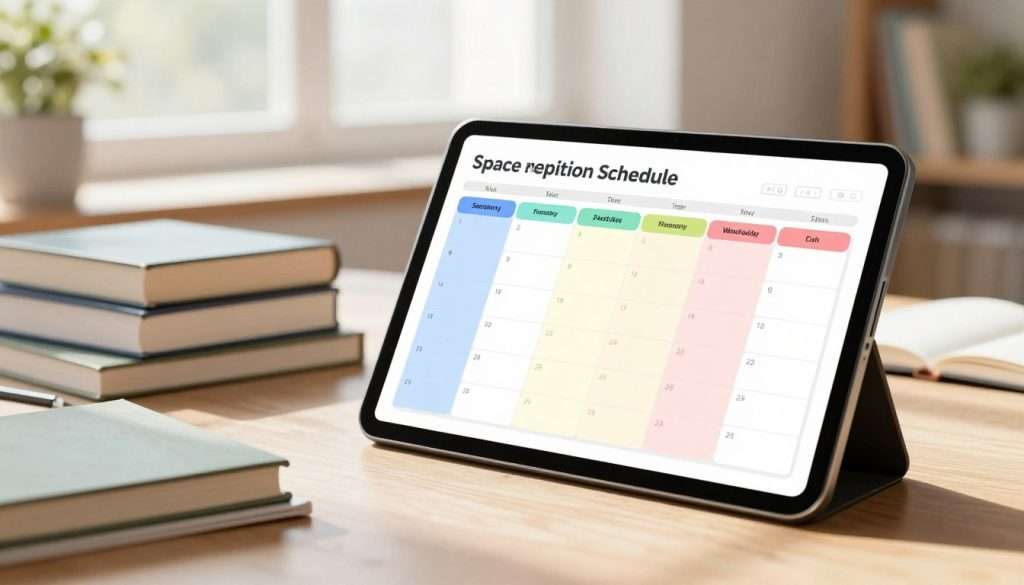
Now, let’s make a schedule. Start by planning your reviews day by day. Use a digital tool like Anki or a calendar to keep track.
Day-by-Day Planning
For example, if studying a new language, review vocabulary on Monday, Wednesday, and Friday. Increase the time between reviews.
Tracking Your Progress
Keep track of how well you’re doing. Use a table like the one below to monitor your progress.
| Topic | Initial Review | Second Review | Third Review |
|---|---|---|---|
| History Era 1 | Day 1 | Day 7 | Day 30 |
| Language Vocabulary | Monday | Wednesday | Friday |
By following these steps and using the right tools, you can make spaced repetition a part of your study routine. This leads to better learning and retention.
Setting Up Your Spaced Repetition System
Now that we’ve talked about spaced repetition, it’s time to set up your system. The first step is to choose the type of system you want to use.
Digital vs. Physical Systems
You can use digital or physical methods for spaced repetition. Digital tools like Anki offer flexibility and automation. They let you study anywhere, anytime. Physical flashcards, on the other hand, offer a hands-on experience that some find more engaging.
Pros and Cons of Each Approach
Digital systems are good for organizing lots of data and can schedule reviews for you. But, they need a device and can be distracting. Physical systems, like the Leitner box, are hands-on but can get heavy as your collection grows.
As SuperMemo’s creator, Piotr Woźniak, said, “The key to effective learning is not just memorizing, but understanding the material.” The right system can help you understand better.
Hybrid Systems for Maximum Benefit
Why pick just one when you can use both? Many learners use a mix of digital and physical systems. They use digital tools for most studying and physical flashcards for specific subjects or sessions.
Organizing Your Study Material
After choosing your system, organize your study material. This means categorizing by subject and tagging items by difficulty.
Subject Categorization
Organizing by subject helps you focus on one area at a time. For example, if you’re studying for multiple exams, make separate categories for each subject.
Difficulty Tagging
Tagging items by difficulty ensures you review hard material often. You can do this with digital tools or by using different colored flashcards for physical systems.
By setting up a well-organized spaced repetition system, you’ll review material efficiently. This makes the most of your study time. As “the art of learning is the art of remembering”, a good memorization strategy is key for learning well.
The Best Spaced Repetition Intervals
Spaced repetition is key to keeping information in your memory for a long time. Finding the right intervals for each subject can make learning much better. This way, you can make your study plan more effective.
Optimal Spacing Schedules for Different Subjects
Every subject needs its own spacing schedule. For example, learning new words in a language needs shorter intervals because of their complexity.
Language Learning Intervals
Begin with 1-3 days for new words in language learning. Then, increase to 1-2 weeks as you get more comfortable with them.
Fact-Based Knowledge Intervals
For facts like historical dates or formulas, start with 1 week. Then, extend to 1-3 months as you remember them better.
Adjusting Intervals Based on Difficulty
Changing intervals based on how hard the material is is important. For tough topics, use shorter intervals to help you remember. For easier ones, you can use longer intervals.
| Subject | Initial Interval | Extended Interval |
|---|---|---|
| Language Learning | 1-3 days | 1-2 weeks |
| Fact-Based Knowledge | 1 week | 1-3 months |
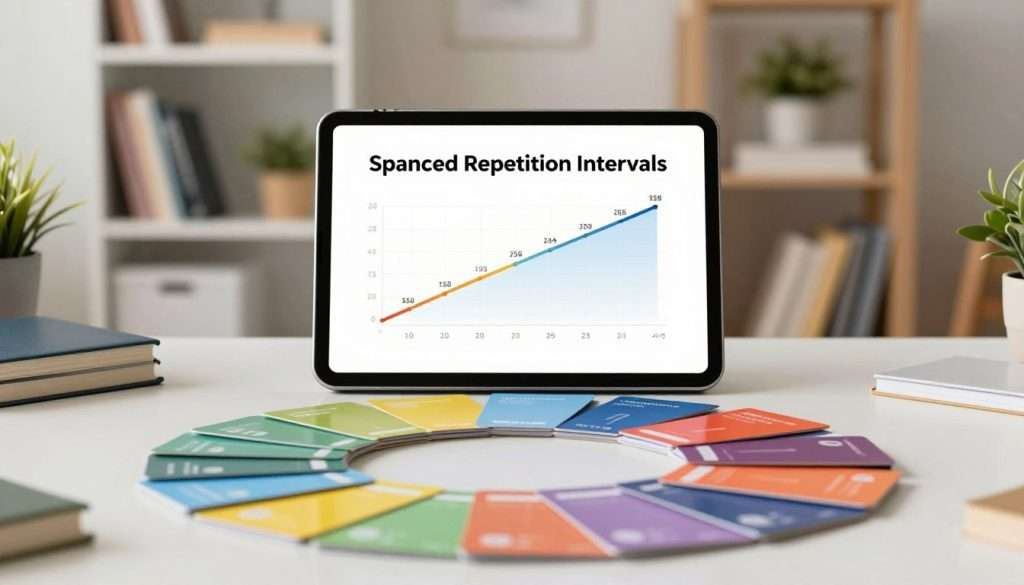
By adjusting your spaced repetition intervals for your study material, you’ll learn better and remember more.
Top Digital Tools for Spaced Repetition
Forget the old flashcards and try out these digital tools for spaced repetition. They make learning easy and effective.
There are many digital tools for spaced repetition. Let’s look at some of the best ones.
Anki: The Gold Standard
Anki is the top choice for spaced repetition software. It’s free, open-source, and customizable. Anki uses spaced repetition algorithms to help you learn better.
It has a big community of users. This means there are lots of resources to help you get started.
Quizlet and Alternative Apps
If Anki isn’t for you, Quizlet is a great alternative. It’s easy to use and has lots of content. Apps like Mnemosia and Memrise also offer great spaced repetition features.
They let you choose the best tool for your learning style.
Calendar-Based Systems
For a more traditional approach, try calendar-based systems. They let you schedule review sessions in your digital calendar. This keeps you on track with your learning.
These digital tools are perfect for students or anyone who loves to learn. Try out different options to find what works best for you. Your learning will improve in no time!
Creating Effective Flashcards for Spaced Repetition
Making good flashcards is key to getting the most from spaced repetition. You need to create cards that are both useful and easy to remember. This will help you learn better.
The Minimum Information Principle
The minimum information principle says each flashcard should have just enough info to remember the concept. This means no extra stuff. By keeping it simple, you can review faster and better.
- Keep the question or prompt brief.
- Focus on a single concept or piece of information per card.
- Avoid complex sentences or unnecessary details.
Using Images and Mnemonics
Adding images and mnemonics to your flashcards can really help. Images make things easier to remember by creating pictures in your mind. Mnemonics give you something to hold onto in your memory. These study techniques make your flashcards more fun and useful.
Avoiding Common Flashcard Mistakes
One big mistake is putting too much on one card. This can confuse you and make studying harder. To avoid this, keep your cards simple and focused. Another mistake is not using mnemonics or images to help remember. By avoiding these mistakes, you can make a better flashcard system.
- Don’t overload your flashcards with too much information.
- Use both sides of the flashcard effectively.
- Review and update your flashcards regularly.
Troubleshooting Your Spaced Repetition Practice
Spaced repetition is a great way to learn, but you might hit some bumps along the way. Don’t worry, it’s normal. Here are some common problems and how to fix them to keep you moving forward.
When You’re Falling Behind Schedule
It’s easy to fall behind when trying something new. To catch up, review your schedule and make changes if needed. Focus on the most important stuff first and take a break from the rest.
Dealing with Difficult Material
Some subjects are harder than others. To tackle tough topics, break them down into smaller pieces. Work on one piece at a time. You can also make more flashcards or use different memory tricks to help you remember.
Maintaining Motivation Long-Term
Keeping up the motivation is key to making spaced repetition work for you. To stay motivated, set goals you can reach and celebrate when you do. It’s also good to find a study group or a study partner to share the journey and stay motivated.
By tackling common problems and using these tips, you can keep up a good study habit. This way, you’ll enjoy the benefits of spaced repetition for a long time.
Conclusion: Your Path to Effortless Learning
By using spaced repetition, you can make studying fun and effective. We’ve seen how it helps you remember things better, study less, and understand tough topics easier.
Start your journey to effortless learning by being consistent. Add spaced repetition to your daily study routine. Your confidence will grow. Use digital tools like Anki or Quizlet to make your study techniques better and stay organized.
The advantages of spaced repetition are obvious. It boosts long-term memory, cuts down study time, and makes learning more enjoyable. We urge you to start using spaced repetition today and see its benefits for yourself.