

Ever seen someone memorize a deck of cards in seconds? It seems like magic, but it’s not. You don’t need a superhuman brain to do it.
Those people are just regular folks who’ve learned special mental tricks. We’re going to show you the best memory techniques used by world memory champions. These can change how you study today.
You don’t have to be a genius to do well in school. You just need the right tools to unlock your potential. Let’s dive into these powerful strategies. You can use them for your textbooks, lectures, and daily tasks starting today!
Key Takeaways
- Elite memorizers are not born with special brains; they use learnable systems.
- Anyone can improve their recall by practicing specific mental frameworks.
- These strategies work for textbooks, lectures, and everyday tasks.
- You do not need to be a genius to see massive improvements in your grades.
- Consistency is the real secret to mastering these powerful mental tools.
Understanding the Science Behind Memory Champions
Many think memory champions have a special brain. But, the truth is more thrilling. A 2002 study in Nature Neuroscience found no brain differences between memory athletes and regular folks. This means memory champions secrets are open to anyone who wants to learn.
How the Brain Encodes Information
Remembering a list isn’t like storing files on a computer. Top performers use brain areas for spatial and navigation to store info well. They turn abstract data into mental maps, making it easier to recall later.
Start using memory improvement techniques by visualizing info in familiar places. Your brain is great at remembering locations. Use this to your advantage. It’s a simple change that improves how you process new info.
The Difference Between Natural Memory and Trained Memory
Most of us just try to memorize things, like holding water in our hands. It’s tiring and often leads to forgetting quickly. Trained memory, on the other hand, uses meaningful associations to keep info in your mind.
By moving from repetition to visualization, you work with your brain instead of against it. See how these methods compare in everyday life in the table below.
| Feature | Natural Memory (Rote) | Trained Memory |
|---|---|---|
| Primary Method | Repetition | Spatial Association |
| Retention Rate | Low/Short-term | High/Long-term |
| Mental Effort | High Fatigue | Low/Engaging |
| Best Use Case | Simple Tasks | Complex Data |
The Best Memory Techniques Used by World Memory Champions
The top memory tricks used by champions are easy once you get the idea. We often think they have perfect memories, but it’s more fascinating than that. They use structured mental systems that anyone can learn with practice.
The Method of Loci Explained
The Method of Loci, or Memory Palace, is the base of most advanced memory tricks. First, pick a place you know well, like your childhood home. Then, mark specific spots along that path.
Place items you want to remember at these spots. This creates a spatial map in your mind. To recall, just walk through your palace mentally. You’ll find your memories right where you left them.
“Memory is a way of holding onto the things you love, the things you are, the things you never want to lose.”
Visual Association and Vivid Imagery
Your brain loves remembering vivid, absurd, and humorous images. That’s why champions turn dull data into wild stories.
For a shopping list, picture a giant, dancing cow in sunglasses doing a backflip in your kitchen. The crazier and more emotional the image, the better your brain will remember it.
By turning abstract ideas into stories, you avoid just memorizing them. You trick your brain into thinking it’s a real experience. This is how you master your mind.
Mastering the Roman Room Technique
Imagine walking into your home and seeing your notes on the coffee table. It’s not magic; it’s the Roman Room technique. This method uses memory strategies based on spatial awareness. It turns familiar places into powerful storage for your brain.
Setting Up Your Mental Palace
Start by choosing a place you know well. Your bedroom, kitchen, or daily commute works great. Identify specific anchor points or “stations” for your information.
Think of these stations as mental shelves. You might pick the front door, a coat rack, a mirror, and a desk. Keep the order the same to navigate easily in your mind.
Navigating Through Familiar Spaces
After setting up your stations, fill them with the data you need to remember. For exam prep, place complex concepts on each station. Visualize the info interacting with the object to make it stick.
Recalling information is easy with a mental walk through your room. The physical layout acts as a natural filing system for your thoughts. It’s a reliable way to organize complex topics.
| Location | Best For | Ease of Use |
|---|---|---|
| Your Bedroom | Daily Tasks | Very High |
| Commute Route | Lists & Sequences | Medium |
| Office Desk | Technical Data | High |
| Favorite Park | Long Narratives | Medium |
The Power of the Major System for Numbers
Numbers can be tough to remember because they seem so abstract. Unlike words, numbers don’t create mental images. Learning memory champions secrets can change how you study.
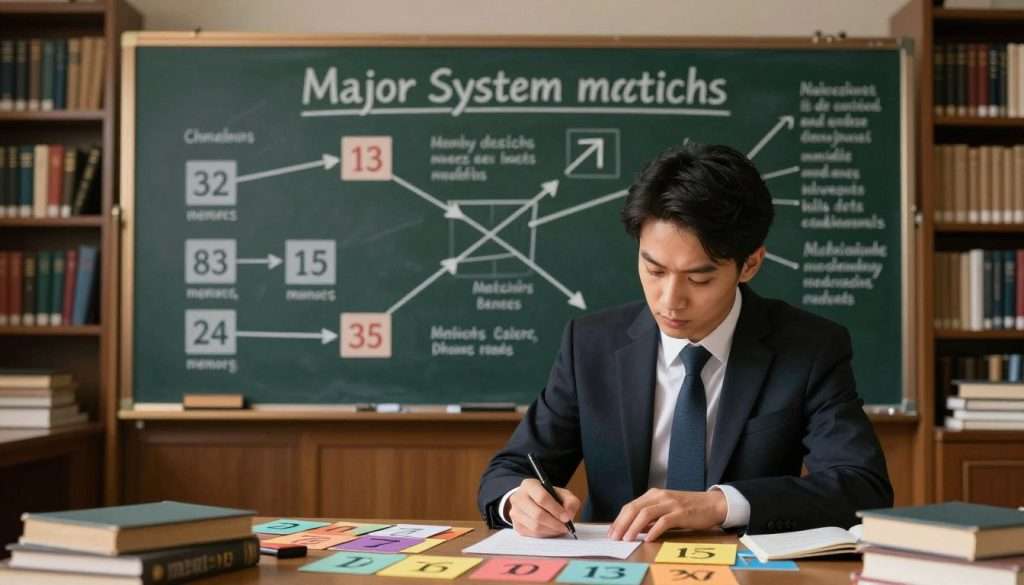
The Major System turns numbers into sounds. These sounds help you build memorable words and images. It’s a fun way to remember everything from dates to math formulas.
Converting Digits into Consonants
To start, learn the basic code. Each number from 0 to 9 has a consonant sound. This simple list is the base of your new mental tool:
- 0 = s, z
- 1 = t, d
- 2 = n
- 3 = m
- 4 = r
- 5 = l
- 6 = j, sh, ch
- 7 = k, g
- 8 = f, v
- 9 = p, b
These sounds match how your mouth moves. This logical connection makes learning easier. With this code, you’re ready to build.
Building Phonetic Words from Numbers
With your code, turn any number into a word. For example, 12 becomes “tin” by combining 1 (t) and 2 (n). Remember 94 as “pear” by using 9 (p) and 4 (r).
Turning these words into vivid, funny scenes is the magic. Linking these images in a story makes remembering numbers easy. Using memory champions secrets, even hard numbers become simple to recall. You’ll never see numbers the same way again!
Utilizing the Peg System for Ordered Lists
Imagine having a mental coat rack for all your important information. The Peg System is perfect for keeping lists in order. It helps you remember every detail without forgetting anything.
Creating Permanent Mental Hooks
To start, create permanent mental hooks. Think of these as anchor points that stay in your brain forever. Use simple rhymes like “one is a bun” or “two is a shoe” to make them.
With these images in your mind, you can use them for any list. Your brain finds them easy to remember. It’s like having a reliable filing cabinet in your mind.
Linking New Information to Established Pegs
Now, link new information to your pegs. For example, if your first item is “milk” and your first peg is “bun,” imagine a big, wet bun with milk. The more vivid and bizarre your image, the better you’ll remember it.
By making these strong connections, your information stays in place. You won’t need notes or apps to remember your tasks. Just go through your mental pegs, and everything will be right where you left it!
Advanced Memory Strategies for Complex Data
When dealing with a lot of complex data, your brain needs a better way to handle it. We often feel overwhelmed by dense material. But, these memory strategies can help you understand it better. By organizing and reviewing information differently, you can learn even the toughest topics easily.

Chunking Information for Better Retention
Think of your brain like a closet; if you just throw everything inside, you will never find what you need. Chunking is the art of breaking large, intimidating blocks of data into smaller, bite-sized pieces. By grouping related items together, you reduce the cognitive load on your mind.
For example, if you are memorizing a long string of numbers or a complex historical timeline, try splitting it into groups of three or four. This simple shift makes the information feel much less daunting. It is one of the most effective memory strategies for keeping your focus sharp during long study sessions.
The Role of Spaced Repetition in Long-Term Storage
Have you ever studied for hours only to forget everything by the next morning? That happens because we often cram instead of using spaced repetition. This technique involves reviewing information at increasing intervals, which helps move data from your short-term memory into your long-term storage.
By catching a memory just before it fades, you reinforce the neural pathways associated with that information. This is a core component of advanced memory strategies that ensures your hard work actually sticks. Check out the table below to see how different approaches compare for long-term success.
| Method | Best For | Effort Level | Retention Rate |
|---|---|---|---|
| Cramming | Short-term tasks | High | Low |
| Chunking | Complex data | Medium | High |
| Spaced Repetition | Long-term mastery | Low | Very High |
“Memory is not a vessel to be filled, but a fire to be kindled.”
By combining these memory strategies, you can learn more in less time. You don’t need to be a genius to remember complex information. Just be strategic, start small, and stay consistent. Your recall abilities will grow.
Developing Cognitive Enhancement Methods
Think of your brain as the ultimate supercomputer that needs special care to perform at its best. While memory techniques are powerful, they work best when your body is healthy. By using smart cognitive enhancement methods, you keep your mind sharp and ready for any challenge.
The Impact of Mindfulness on Focus
Ever tried to memorize a list while your mind was racing? It’s hard to remember anything when your attention is all over the place. Mindfulness is like a reset button for your brain, helping you focus by clearing out distractions.
Just a few minutes of mindfulness before studying can really help. It trains your brain to stay present, even when you get distracted. This simple habit is a top cognitive enhancement method for students who find it hard to stay focused.
Optimizing Sleep and Nutrition for Brain Health
Your brain is a hungry organ that needs top-notch fuel to learn and remember. Eating junk food and pulling all-nighters is like sabotaging your own success. Getting enough deep sleep is crucial because that’s when your brain solidifies what you learned during the day.
What you eat also affects how well your brain works. Foods like blueberries, nuts, and fatty fish give your brain the energy it needs to remember things for a long time. Combining good sleep with a healthy diet creates the best environment for these cognitive enhancement methods to work their magic.
| Habit | Primary Benefit | Impact on Memory |
|---|---|---|
| Mindfulness | Reduces Stress | High Focus |
| Quality Sleep | Consolidation | Long-term Storage |
| Healthy Diet | Brain Fuel | Mental Clarity |
Practical Memory Training Tips for Daily Life
We often think memory champions have special brains. But, their secrets are simple to use every day. You don’t need a photographic memory to improve your daily life. A few memory training tips can make your brain reliable for success.
Memorizing Names and Faces
Meeting new people can be stressful, worrying about forgetting their names. Imagine the confidence when you remember everyone at a networking event. Katie Kermode, a world record holder, memorized many names and faces in 15 minutes.
To remember names, focus on a unique face feature. Use a vivid mental image to link it to their name. For example, if someone named “Bill” has a big nose, picture him with a giant dollar bill. This trick helps you remember names longer than just repeating them.
Recalling Lists and Schedules Without Notes
Using your phone for everything can make your brain feel lazy. Use these memory training tips to remember your daily schedule. Instead of checking a list, place tasks along a familiar path in your home.
For example, to buy milk, call your boss, and finish a report, imagine these tasks in your kitchen. Picture the milk carton on your front door and your phone ringing on the counter. By mentally walking through your space, you’ll easily recall your to-do list. These habits boost your confidence and keep your mind sharp.
Overcoming Common Obstacles in Memory Training
Ever felt like your brain just hit a snooze button during practice? It’s normal to feel frustrated when starting memory improvement techniques. You’re teaching your brain a new language, and it takes time.
Dealing with Mental Fatigue
Mental fatigue happens when you push your mind too hard. Instead of long sessions, try short, intense bursts. This keeps your focus sharp and prevents brain drain.
Think of your brain as a gym muscle. You wouldn’t lift weights for five hours straight. Break your study into twenty-minute blocks to let your mind recover and absorb info better.
Maintaining Consistency in Your Practice
Consistency is key to becoming a true master. Showing up every day, even when progress is slow, makes a huge difference. Remember, every champion started where you are now.
Instead of fearing mistakes, you should ask yourself what happens if you succeed.
To keep going, use these memory training tips to stay on track:
- Celebrate small wins: Acknowledge every time you recall something successfully.
- Keep a log: Tracking your daily practice shows how far you’ve come.
- Stay playful: If a technique feels boring, change it to something fun or silly.
- Focus on the goal: Remember why you started this journey.
Don’t let fear of mistakes stop you. Embrace the process, keep sessions manageable, and stay consistent. You’re building a stronger, faster, and more reliable memory every day!
Integrating Memory Skills into Academic Success
By using strategies of top memory athletes, you can boost your grades. Sharpening your memory skills makes studying fun and effective. It’s time to move away from just memorizing and tap into your brain’s ability to create images.
Applying Techniques to Textbooks and Lectures
When tackling a thick textbook, focus on the key concepts first. Instead of highlighting everything, turn important facts into vivid mental images. This method helps you remember information better than just reading it.
James Gerwing, a school leader, scored 90% in Latin using these methods. He showed that memory skills are useful for school success, not just for competitions. Use these techniques for your notes to stay on top of class material.
Preparing for Exams Using Champion Strategies
Exams can be stressful, but you can stay calm by building a strong mental filing system. Using vivid association to recall information boosts your confidence. This way, you’ll recall information faster as you practice these habits every day.
Start by applying these memory skills to one subject at a time. As your grades improve, you’ll be more eager to tackle tough subjects. The aim is to make your brain work smarter, not harder, so you can enjoy learning more.
Conclusion
You now have the tools to sharpen your mind. These memory skills are not just for stage performers or competition winners. They are practical tools you can use every day to make learning feel effortless.
Building your mental palace takes time and patience. Treat your brain like a muscle that grows stronger with every session. You will notice that your ability to retain complex information improves as you stay consistent with your practice.
Do you want to go deeper into these concepts? My free book, How to Become the Smartest Student in the Classroom, gives you a full system to master your studies. You get access to proven memory skills, efficient routines, and strategies that actually stick.
There is no cost and no catch involved. Grab your free copy here at Studying Machine to start your journey today. Your path to becoming a more effective learner starts with a single step.