

We all have trouble remembering important stuff. It could be for a test, a speech, or just daily tasks. That’s where the “Link Method” comes in. It’s a strong memory technique that makes remembering easy.
This mnemonic device links information with vivid images. It makes remembering and recalling easier. Using the “Link Method,” you can get better at remembering and feel more confident learning new things.
Students and lifelong learners will find this method very helpful. It’s a simple yet effective way to remember anything, forever.
Key Takeaways
- Discover a simple yet effective memory technique to improve recall.
- Learn how to create associations between pieces of information.
- Boost your confidence in learning new things with the “Link Method.”
- Improve your memory retention with this powerful mnemonic device.
- Apply this technique to enhance your cognitive abilities.
What Is the “Link” Method?
Ever wondered how some people remember so much? The secret is the “Link” method. It’s a memory technique that uses vivid images and links them to remember things.
Definition and Basic Concept
The “Link” method is a mnemonic device that makes remembering lists easy. It works by linking memorable images together. This way, you can recall information with ease.
History and Development of the Technique
The “Link” method started in ancient Greece and Rome. It helped orators remember speeches. Now, it’s used by many to boost their cognitive abilities.
| Key Features | Benefits |
|---|---|
| Vivid Mental Images | Improved Memory Recall |
| Association Technique | Enhanced Cognitive Abilities |
| Simple and Effective | Easy to Learn and Use |
The Science Behind Memory Linking
Memory linking is a complex process in our brains. It helps us learn new things. By understanding how memories are made, we can improve our memory and thinking skills.
How Your Brain Forms Memories
When we learn something new, our brain works hard. It uses many parts of the brain to make a memory. This is how we remember things.
The Role of Neural Connections
Neural connections, or synapses, are key in making memories. When we learn, these connections get stronger. This makes it easier to remember later.
Short-term vs. Long-term Memory
First, new information goes into our short-term memory. It stays there briefly. But, with practice or linking to other memories, it moves to long-term memory. There, it stays longer.
Why Association Works Better Than Repetition
Studies show that linking new info to what we already know is better than just repeating it. This is because it uses more brain areas. It makes memories stronger and easier to recall.
The “Link” Method: Remember Anything Forever
Memory techniques change, but the “Link” method stays popular. It helps people remember things forever. Its success comes from being simple and adaptable.
Core Principles of the Link Method
The “Link” method uses vivid mental connections. To do this well, you must:
- Create vivid mental images that stick in your mind
- Connect these images in a logical order
- Make the connections exaggerated and absurd for better recall
By sticking to these steps, you can build a chain of memories that’s easy to remember.
How It Differs From Other Memory Techniques
The “Link” method is unique among memory techniques. Let’s see how it compares to others.
Comparison With the Memory Palace Method
The Memory Palace method links memories to places in your mind. It’s good but needs a strong spatial memory. The “Link” method, though, focuses on creating a story or sequence. This makes it easier for those who find it hard to picture spaces.
Rote memorization is all about repetition, which can be boring and not very effective. The “Link” method, by contrast, uses association and visualization to keep memories alive. This method not only makes learning fun but also helps you remember better.
In summary, the “Link” method is a strong and flexible way to improve your memory. By understanding its core principles and how it differs from other methods, you can use it to its fullest potential.
Getting Started: Preparing Your Mind
Starting the “Link” method journey is more than just knowing the technique. It requires a prepared mind. To use this tool well, you need to set up the right mental space. You also need to tackle any obstacles that might slow you down.
Creating the Right Mental Environment
To boost your memory, you must reduce distractions and create a good mental space. This means dedicating time for practice, finding a quiet place to work, and having a positive attitude towards learning.
Tips for a conducive environment:
- Choose a quiet, comfortable space
- Set aside regular practice times
- Reduce digital distractions
Overcoming Memory Limitations
Everyone’s memory is different, and some may face challenges like age-related memory loss or trouble focusing. Knowing these challenges is the first step to beating them.
Addressing Age-Related Memory Concerns
Age can impact memory, but it’s not a reason to stop using the “Link” method. Consistent practice and adjusting the method to fit your speed can help with age-related issues.
Working Around Attention Deficits
If you have trouble focusing, try breaking study sessions into shorter, focused periods. This can make the “Link” method more effective for you.
| Memory Challenge | Strategy |
|---|---|
| Age-Related Decline | Practice at your own pace, use memory aids |
| Attention Deficits | Short, focused practice sessions |
Step-by-Step Guide to Creating Memory Links
Let’s explore how to make memory links that last forever. The “Link” method boosts your memory by linking things in your mind. Follow these steps to unlock your memory’s full power.
Step 1: Identify What You Need to Remember
First, figure out what you want to remember. It could be a list, a series of events, or other data. Clarify and organize this information in your mind. For example, if you need to remember a shopping list, mentally list each item.
Step 2: Create Vivid Mental Images
After identifying what to remember, create vivid mental images. The wilder and more engaging your images, the better they’ll stick. Let’s see how to make these images unforgettable.
Using All Five Senses
To enhance your mental images, use all five senses. For example, picture a lemon and think about its taste, texture, sound, and color. The more sensory details, the more real it feels.
Making Images Distinctive
To make your images stand out, make them unique. Use exaggeration and absurdity to make them memorable. For instance, picture a cat in a superhero cape or riding a unicycle. The sillier, the better.
Step 3: Connect Images in a Sequence
Lastly, link your images in a logical order. Imagine each image leading to the next, forming a story. For example, if remembering a shopping list, see each item transform into the next or interact in a funny way. This story helps you recall each item in order.
Making Your Links Memorable
To make your memory links unforgettable, tap into your brain’s love for new and exciting things. This is where creating vivid mental images comes in. It uses techniques that make your associations stand out.
Using Exaggeration and Absurdity
One way to make links memorable is through exaggeration and absurdity. By making the items you’re trying to remember more extreme, you create images that are hard to forget. For example, imagine a huge cat wearing sunglasses!
Incorporating Motion and Action
Making your mental images dynamic can make them easier to remember. Dynamic images grab your attention better than still ones. So, picture a cat not just sitting there, but riding a unicycle or juggling balls.
Adding Emotional Elements
Emotions are key in forming memories. By linking your mental images to emotions, you make them stickier. For instance, picture a dramatic event on a historical date to evoke a strong feeling.
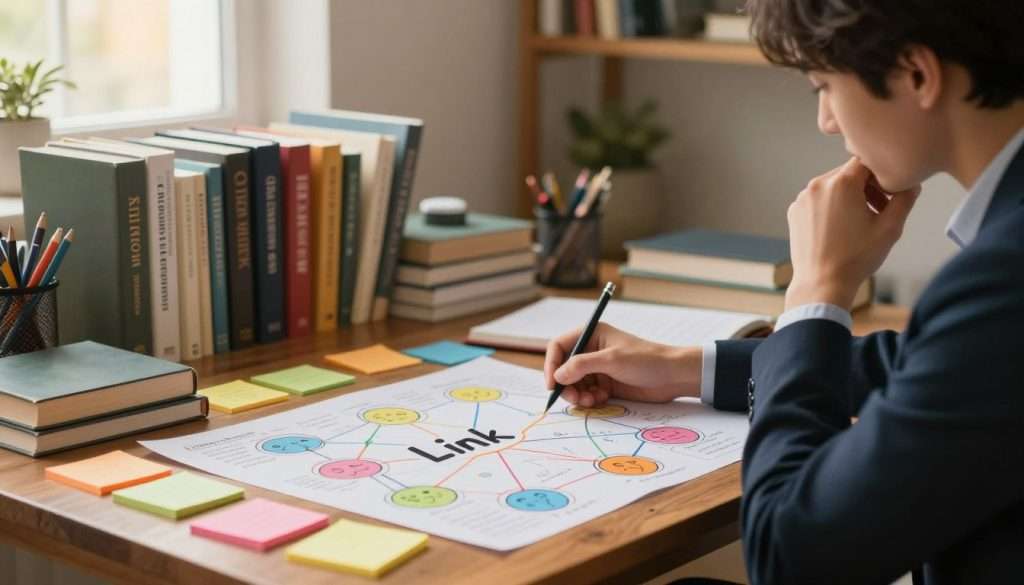
By mixing these methods—exaggeration, motion, and emotions—you craft memorable and engaging memory links. This way of enhancing memory can boost your brain’s abilities. It makes remembering things easier than ever.
Practical Applications of the Link Method
The “Link” method can help you remember things in many areas. It’s great for learning new skills or remembering important details. This technique is useful in both school and everyday life.
Memorizing Lists and Sequences
One key use of the “Link” method is for remembering lists and sequences. You can use it to recall shopping lists, to-do lists, or historical timelines. By making vivid mental images and linking them, you can easily remember complex information.
- Create a mental image for each item on the list
- Link these images together in a memorable story or sequence
- Practice recalling the list by retracing the mental links you’ve created
Learning New Vocabulary and Languages
The “Link” method is also great for learning new words and languages. By linking new words to memories or images, you can remember them better. For example, when learning a new language, link a new word to something similar in your native language.
Example:To remember the French word “pomme” (apple), imagine a “pom-pom” girl holding an apple.
Remembering Names and Faces
Remembering names and faces can be tough, but the “Link” method helps. By linking a person’s name to their face in your mind, you can remember names better. Try to create a vivid image that connects the person’s name to something unique about them.
Integrating the Link Method Into Daily Life
By using the “Link” method every day, you can boost your memory and thinking skills. It’s not just for remembering lists. It’s a way to improve how well you think.
Morning Memory Routines
Begin your day with a memory routine to feel more positive. Spend 10 minutes each morning practicing the “Link” method. You can link items on your to-do list or new words you’re learning.
Here’s a simple table to help you structure your morning routine:
| Time | Activity | Link Method Application |
|---|---|---|
| 5 minutes | Review daily tasks | Link tasks together in a memorable story |
| 3 minutes | Learn new vocabulary | Create vivid images for new words and link them |
| 2 minutes | Recall the links created | Reinforce memory by recalling the story or sequence |
On-the-Go Memory Practice
You can use the “Link” method all day, not just in the morning. For example, while you’re on your way to work, link the names of stations or landmarks.
To practice on the go, try to:
- Link items you need to remember, like a shopping list or appointments.
- Create mental images that are absurd or exaggerated to make them more memorable.
- Use emotional connections to strengthen your links.
Advanced Linking Techniques
Now that you know the basics of the Link Method, it’s time to dive into advanced techniques. These will boost your memory even more. By mixing the Link Method with other memory systems, you can make your brain work better.
Combining the Link Method With Other Memory Systems
One way to make the Link Method better is to add other mnemonic devices. For example, you can use the Major System to turn numbers into words. Then, link these words with the Link Method. This is great for remembering long numbers or dates.
By mixing different memory tricks, you get a strong tool for solving memory problems. Try out different mixes to see what works best for you!
Creating Complex Memory Networks
As you get better at the Link Method, start making more complex memory networks. Link many chains of info together. This creates a strong web of connections.
Handling Abstract Concepts
For abstract ideas, turn them into something you can see or touch. Link them to a personal story or a clear image that shows the idea.
Memorizing Numbers and Dates
To remember numbers and dates well, mix the Link Method with numerical tricks. Turn numbers into pictures or stories. Then, link these to other important info.

Common Challenges and How to Overcome Them
The “Link” method can change the game, but what if it doesn’t work as expected? As you keep using this strong memory technique, you might face some hurdles. But don’t worry, there are ways to beat these challenges with the right strategies.
When Links Break Down
Sometimes, your links might not be as strong as you hoped, causing memory slips. This could be because your mental images are not vivid enough or you don’t feel an emotional connection. To make your links stronger, try to make your images exaggerated and absurd. The crazier the image, the more it will stick in your memory!
Strengthening Weak Associations
Weak associations can get stronger with repetition and review. Go back to your links often and try to remember them without looking at your list or cues. Adding more sensory details can also make your links more engaging and memorable. This not only boosts your memory but also helps with cognitive improvement.
| Challenge | Solution |
|---|---|
| Links breaking down | Make images more vivid and exaggerated |
| Weak associations | Repetition, review, and adding sensory details |
By tackling these common challenges, you can improve your memory enhancement journey. The “Link” method will become an even more powerful tool in your cognitive toolkit.
Maintaining Long-Term Memory With the Link Method
To keep your memories fresh, it’s key to use the Link method. This method is more than just making vivid mental images. It also needs strategies to keep these memories for a long time.
Spaced Repetition Strategies
Spaced repetition is a great way to keep memories long-term. This method involves reviewing material at longer intervals. It helps solidify the information in your long-term memory.
For example, if you’re trying to remember a list, review it first one day. Then, again a week later. And lastly, after a month. This strengthens the memory links.
Refreshing and Updating Your Memory Links
It’s also important to refresh and update your memory links often. As you learn new things, some of your old memory links might fade. By revisiting and revising these links, you keep your memory sharp.
This process not only helps you hold onto what you’ve learned. It also makes it easy to add new knowledge to your existing memory.
Conclusion
The “link” method is a great way to improve your memory. It helps you remember lists, sequences, and new words by making mental images. These images are linked together.
Using the “link” method well takes practice. Start small and do it every day. As you get better, you’ll see your memory and thinking skills improve.
This method not only helps with memory but also boosts your brain’s overall function. It’s a powerful tool for learning and remembering things. It’s great for students and anyone who wants to learn more.
Ready to improve your memory? Start using the “link” method today. See how it can change your life for the better.