
The memory palace technique transforms how you store and recall information by turning your brain into a mental filing system. This ancient method helps students, professionals, and lifelong learners remember everything from exam material to business presentations without relying on notes.
This guide covers the fundamentals of memory palace construction, walking you through your first mental building step-by-step. You’ll discover advanced strategies for organizing complex data and learn practical ways to apply this technique in school, work, and daily situations. We’ll also tackle the most common obstacles people face when starting their memory palace journey, so you can avoid typical beginner mistakes.
Understanding the Ancient Art of Memory Enhancement
Discover the Historical Roots of Spatial Memory Techniques
The memory palace technique stretches back over 2,500 years to ancient Greece, where it was known as the “method of loci” (meaning “method of places”). The story goes that a poet named Simonides attended a banquet that ended in tragedy when the roof collapsed, crushing everyone inside beyond recognition. Simonides could identify the bodies because he remembered exactly where each guest had been sitting. This sparked his realization that spatial memory could serve as a powerful tool for remembering any type of information.
Ancient Greek and Roman scholars quickly embraced this discovery. They called it “ars memoriae” – the art of memory – and considered it one of the five fundamental skills of rhetoric, alongside invention, arrangement, style, and delivery. The technique spread throughout the classical world as students and teachers recognized its incredible effectiveness.
Medieval monks later adopted these spatial memory methods to memorize entire religious texts and philosophical works. They would mentally walk through their monasteries, placing verses and passages at specific locations along familiar routes. Some monks could recite thousands of pages of text from memory using these techniques.
The method remained popular through the Renaissance, when scholars like Giulio Camillo designed elaborate memory theaters – imaginary buildings with thousands of compartments for storing different categories of knowledge.
Learn How Greek and Roman Orators Mastered Information Retention
Roman orators faced enormous pressure to deliver flawless speeches without notes. Public speaking was the cornerstone of political and legal success, and any stumble could ruin a career. They needed foolproof memory systems to handle complex arguments, legal precedents, and persuasive narratives.
Cicero, Rome’s greatest orator, perfected the memory palace technique by mentally placing different parts of his speeches in rooms throughout his house. He would start at the front door with his opening remarks, move through the atrium for his main arguments, pause at the garden for emotional appeals, and finish at the back exit with his closing statements. This spatial organization helped him deliver hours-long speeches with perfect accuracy.
Roman rhetoric teachers developed structured training programs around spatial memory. Students would first memorize the layout of familiar buildings, then practice placing simple word lists at different locations. They gradually worked up to complex legal arguments and historical narratives. The training was so effective that accomplished orators could memorize new speeches in just a few hours.
These ancient practitioners discovered several key principles that modern memory researchers have validated:
- Visual imagery works better than abstract concepts
- Emotional or unusual images stick longer than boring ones
- Following a specific route prevents information from getting jumbled
- Regular practice builds stronger and more reliable memory networks
Explore the Neuroscience Behind Location-Based Memory Systems
Modern brain imaging reveals why spatial memory techniques work so effectively. When you navigate through familiar spaces, your hippocampus creates detailed mental maps using specialized cells called place cells and grid cells. These same neural networks that help you find your way around also excel at organizing and storing other types of information.
The hippocampus acts like a master filing system for your brain. When you link new information to familiar locations, you’re essentially hijacking this powerful spatial processing system to remember non-spatial content. Brain scans show that memory palace practitioners activate the same regions used for actual navigation, even when they’re just thinking about imaginary journeys.
Research by neuroscientist Eleanor Maguire found that London taxi drivers, who must memorize thousands of street layouts, have enlarged hippocampi compared to average people. Similarly, memory athletes who use spatial techniques show increased activity in brain regions associated with spatial processing and visual imagery.
The technique works because it combines multiple memory systems:
| Memory System | How It Helps |
|---|---|
| Spatial Memory | Provides organizational structure |
| Visual Memory | Creates vivid, memorable images |
| Sequential Memory | Links information in logical order |
| Episodic Memory | Connects facts to personal experiences |
This multi-system approach explains why memory palaces feel so natural once you get the hang of them. You’re not fighting against your brain’s natural tendencies – you’re working with them.
Building Your First Memory Palace Step-by-Step
Select the perfect familiar location for maximum recall power
Your memory palace needs a foundation that feels like second nature. The best locations are places you know intimately – your childhood home, current workplace, favorite restaurant, or even your daily commute route. The key is choosing somewhere you can navigate blindfolded.
Start with a space that has clear boundaries and logical flow. Your home works perfectly because you naturally move through it in predictable patterns. Avoid locations that change frequently or have confusing layouts. A shopping mall might seem appealing, but if stores constantly relocate, your memory palace becomes unstable.
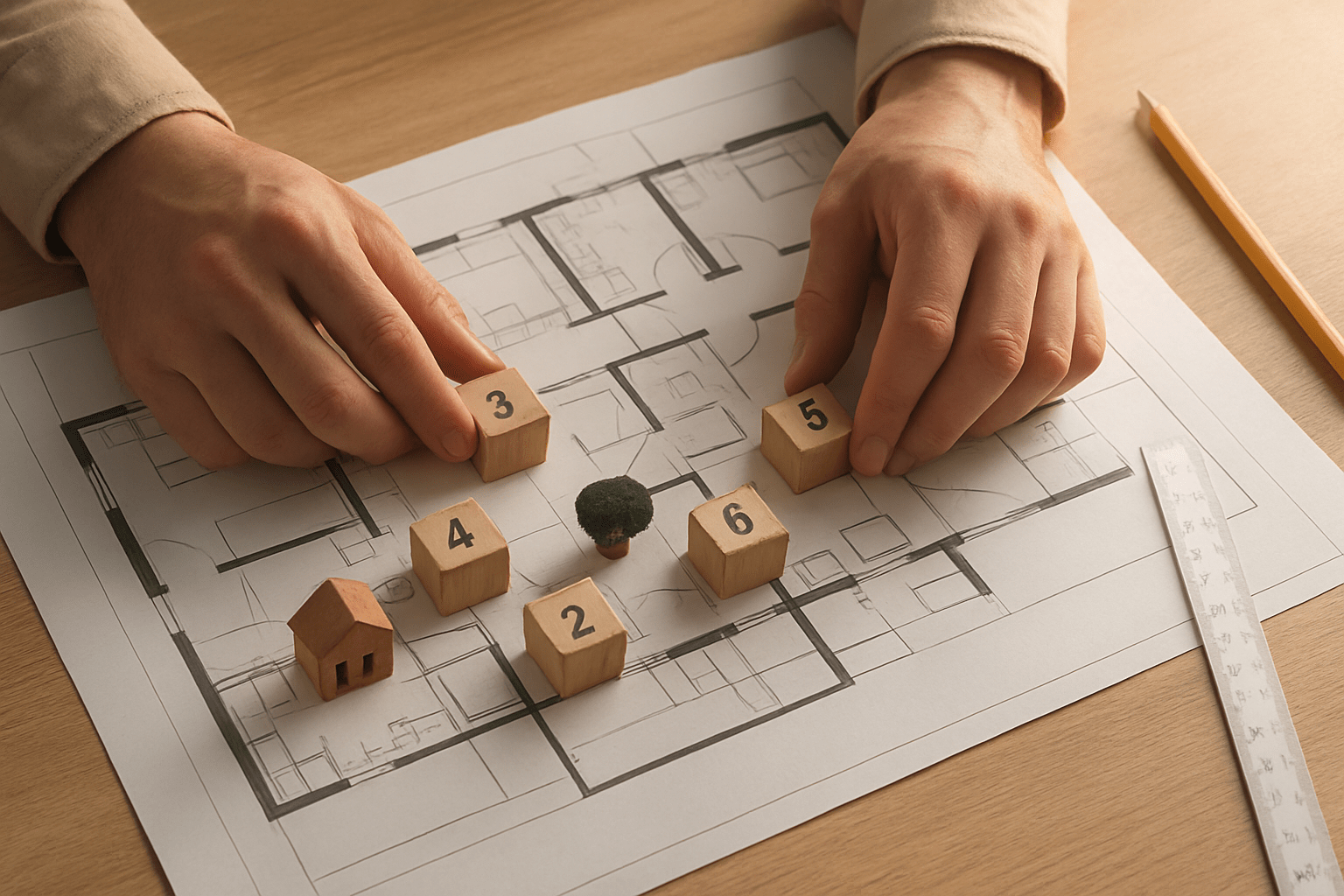
Size matters, but bigger isn’t always better. A modest apartment with 5-6 distinct rooms often outperforms a mansion with dozens of spaces. You want enough stations for your information without overwhelming your mental capacity.
Consider emotional connections too. Places where you feel comfortable and positive create stronger memory anchors. Your grandmother’s kitchen might be smaller than your office building, but the warmth and familiarity make it incredibly powerful for memory work.
Test your chosen location by mentally walking through it right now. Can you visualize each room clearly? Do you remember where furniture sits and which direction doors open? If details feel fuzzy, pick somewhere else. Your memory palace is only as strong as your foundational knowledge of the space.
Map out your chosen space with precise mental navigation
Creating a detailed mental map transforms your familiar location into a structured memory system. Start by establishing a single, consistent route through your space. Always enter through the same door and follow the same path – clockwise around rooms works well for most people.
Walk through your chosen location physically if possible, or mentally if you’re working with a distant memory. Note every significant feature: doorways, windows, furniture pieces, wall decorations, and architectural details. Pay attention to lighting, colors, and textures that make each area distinct.
Draw a simple floor plan on paper, marking your planned route with arrows. Number each major stopping point sequentially – these become your memory stations. A typical apartment might have 15-20 stations: front door, coat closet, living room couch, coffee table, TV stand, kitchen counter, refrigerator, bedroom dresser, and so on.
Practice your route repeatedly until it becomes automatic. Time yourself walking through mentally – consistency in timing helps with recall later. Some memory experts recommend spending 10-15 minutes daily for a week just reinforcing their palace layout.
Document any trouble spots where your mental navigation feels unclear. These weak points will cause problems later when you’re storing important information, so address them now by adding more vivid details or simplifying the route.
Assign specific memory stations throughout your palace
Memory stations are the workhorses of your palace – specific locations where you’ll place information. Each station should be visually distinct and strategically positioned along your route. Think of them as designated parking spots for your memories.
Choose stations that naturally draw attention. In your living room, the fireplace mantel works better than a blank wall section. Kitchen appliances, bathroom mirrors, and bed headboards make excellent stations because they’re already meaningful locations in your mental landscape.
Space your stations evenly to avoid clustering. If you pack too many stations into one room, they’ll compete for mental attention and cause confusion. Aim for 2-4 stations per room depending on size and complexity.
Create a master list of your stations with brief descriptions:
- Station 1: Front door handle (brass, slightly worn)
- Station 2: Hallway mirror (oval, wooden frame)
- Station 3: Kitchen sink (white porcelain, chrome faucet)
Each station should accommodate different types of information. Some work better for visual concepts, others for numerical data or abstract ideas. Your bathroom mirror might be perfect for remembering faces and names, while your kitchen stove could handle sequential processes or recipes.
Test each station by placing a simple image there mentally. Can you clearly visualize the information at that specific spot? Does it feel stable and memorable? Weak stations will undermine your entire memory system, so be selective and demanding in your choices.
Practice visualization techniques for vivid mental imagery
Sharp visualization skills separate successful memory palaces from failed attempts. Your brain remembers unusual, colorful, and emotionally engaging images far better than bland, realistic ones. Practice creating mental pictures that pop with exaggerated details and impossible combinations.
Start with simple objects and gradually build complexity. Visualize an apple, but make it giant, purple, and glowing. See it clearly at your first memory station – maybe it’s sitting on your front doorstep, pulsing with neon light. The more ridiculous and memorable, the better.
Engage all your senses in these mental images. Don’t just see that purple apple – hear it humming a tune, smell its artificial grape scent, feel its smooth, warm surface. Multi-sensory images create stronger neural pathways and more reliable recall.
Practice the “action method” where your mental images move and interact. Instead of a static purple apple, watch it bouncing down your hallway stairs, leaving glittery trails. Moving images capture attention and stick in memory longer than still pictures.
Work on speed and clarity. Set a timer for 30 seconds and see how many vivid, detailed images you can create and place in your palace. Professional memory athletes can generate and position complex visualizations in just seconds.
Review and refine your images regularly. Spend a few minutes each day walking through your palace and sharpening the mental pictures stored at each station. Like physical exercise, visualization skills improve with consistent practice and gradually fade without regular use.
Advanced Techniques for Complex Information Storage
Master the art of creating memorable visual associations
The human brain remembers images far better than abstract information, so transforming dry facts into vivid mental pictures becomes your secret weapon. When you need to remember the periodic table, don’t just picture boring letter combinations – create bizarre, colorful scenes that stick. Hydrogen becomes a giant hot dog spinning in space, while helium transforms into a balloon-headed clown floating upward.
The key lies in making your images outrageous, emotional, and personally meaningful. Connect new information to things you already know intimately. If you’re learning foreign vocabulary, link the Spanish word “gato” (cat) to a mental image of your childhood pet wearing a sombrero and dancing the tango. The more ridiculous the association, the stronger the memory becomes.
Use the acronym SMASHIN’ SCOPE to create powerful visual associations:
- Size: Make images enormous or tiny
- Movement: Add action and motion
- Association: Connect to familiar people or places
- Sexuality: Use adult content (privately, of course)
- Humor: Make it funny or absurd
- Imagination: Break the laws of physics
- Numbers: Turn digits into recognizable shapes
- Symbolism: Use meaningful personal symbols
- Color: Make everything unnaturally bright
- Order: Sequence events dramatically
- Positive: Keep emotions upbeat
- Exaggeration: Push everything to extremes
Practice turning abstract concepts into concrete objects. Democracy might become a giant voting booth with arms reaching out to embrace diverse groups of people, while photosynthesis transforms into tiny green workers inside leaves carrying buckets of sunlight.
Develop systems for organizing abstract concepts spatially
Abstract ideas need physical locations to become memorable. Start by assigning different areas of your memory palace to different categories of information. Your living room handles historical events, while your kitchen manages scientific processes, and your bedroom stores language vocabulary.
Create themed zones within larger spaces. In a palace dedicated to psychology, the front porch represents behavioral theories, the hallway showcases cognitive concepts, and the basement houses subconscious processes. This spatial organization mirrors how your brain naturally categorizes information.
Use vertical space to represent hierarchies and relationships. Place broader concepts on higher floors and specific details on lower levels. When learning about government structure, position constitutional principles on the top floor, federal agencies on the second floor, and local departments in the basement. This creates a natural flow that matches the logical structure of the information.
Establish consistent rules for spatial relationships:
| Spatial Element | Information Type | Example |
|---|---|---|
| Left side | Causes/Origins | Historical events’ beginnings |
| Right side | Effects/Results | Consequences and outcomes |
| Center | Main concepts | Core principles and theories |
| Corners | Supporting details | Statistics and examples |
| Windows | Connections | Links to other topics |
| Doors | Transitions | Moving between related ideas |
Color-code different types of abstract information. Paint all theoretical concepts blue, practical applications green, and historical context yellow. This visual system helps your brain quickly identify and retrieve the right type of information when needed.
Learn to layer multiple memory palaces for vast information storage
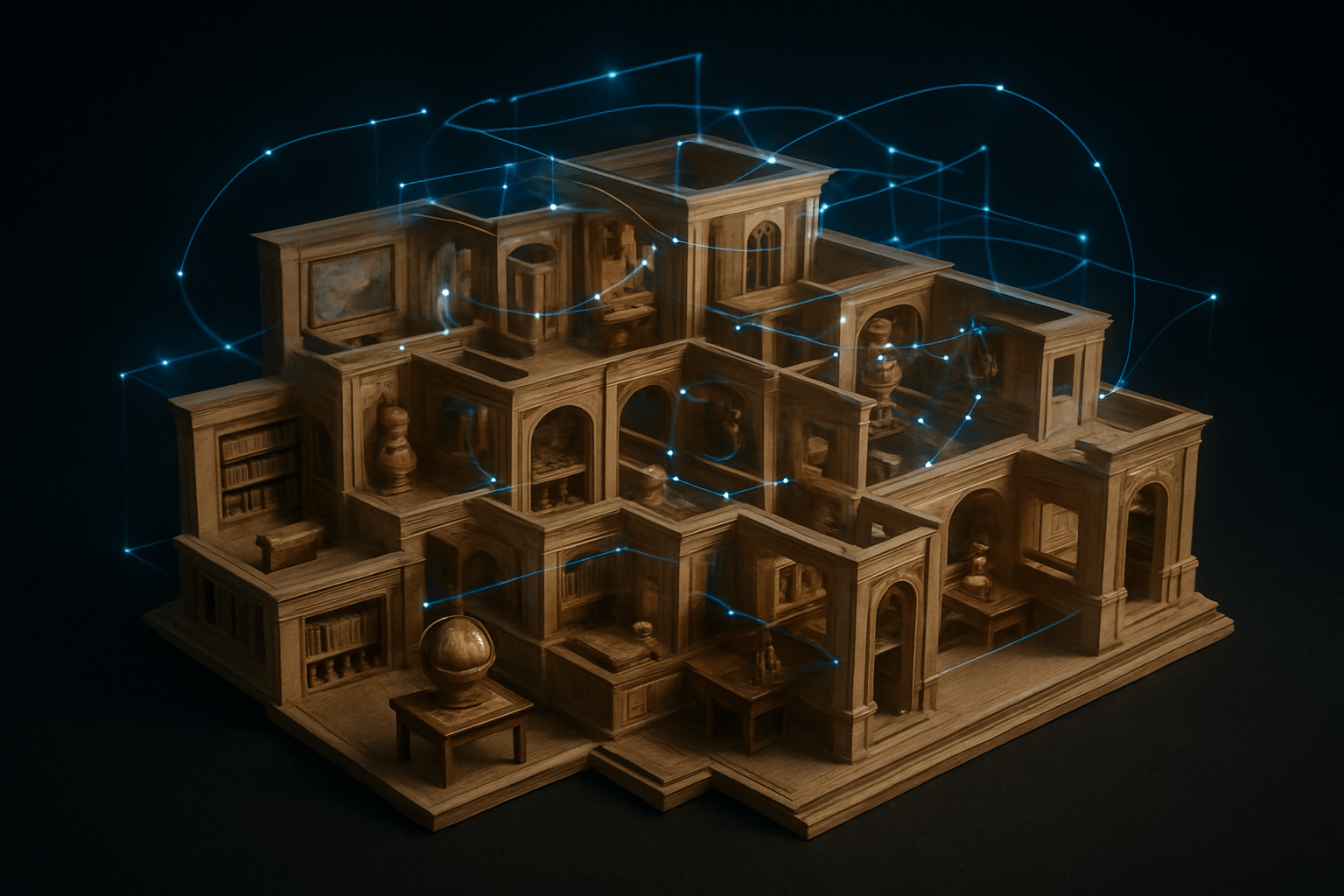
Advanced practitioners develop networks of interconnected palaces rather than relying on single structures. Think of this as creating a mental city where each building serves a specific purpose, connected by familiar streets and landmarks.
Start with a master palace that acts as your central hub. This becomes your mental library catalog, with each room directing you to specialized palaces for different subjects. Your childhood home might serve as the master palace, with the living room containing doorways to your medical school palace, your work-related office building, and your hobby-focused workshop.
Create logical pathways between related palaces. If you’re studying both chemistry and biology, build a bridge between these palaces in locations where the subjects overlap. The organic chemistry section of your chemistry palace connects directly to the molecular biology wing of your biology palace.
Develop different palace architectures for different information types:
- Linear palaces: Perfect for chronological information like historical timelines
- Circular palaces: Ideal for cyclical processes like business cycles or biological systems
- Branching palaces: Excellent for classification systems and family trees
- Layered palaces: Great for complex hierarchical information
Use familiar locations at different scales. Your neighborhood becomes a macro-palace for broad subjects, individual houses store specific topics, rooms hold subtopics, and furniture pieces contain detailed facts. This nested approach allows unlimited expansion while maintaining logical organization.
Keep detailed mental maps of your palace network. Regularly walk through your connections to maintain the pathways between different information systems. Like a well-planned city, your network becomes more valuable as it grows and develops stronger interconnections.
Practical Applications for Daily Life Success
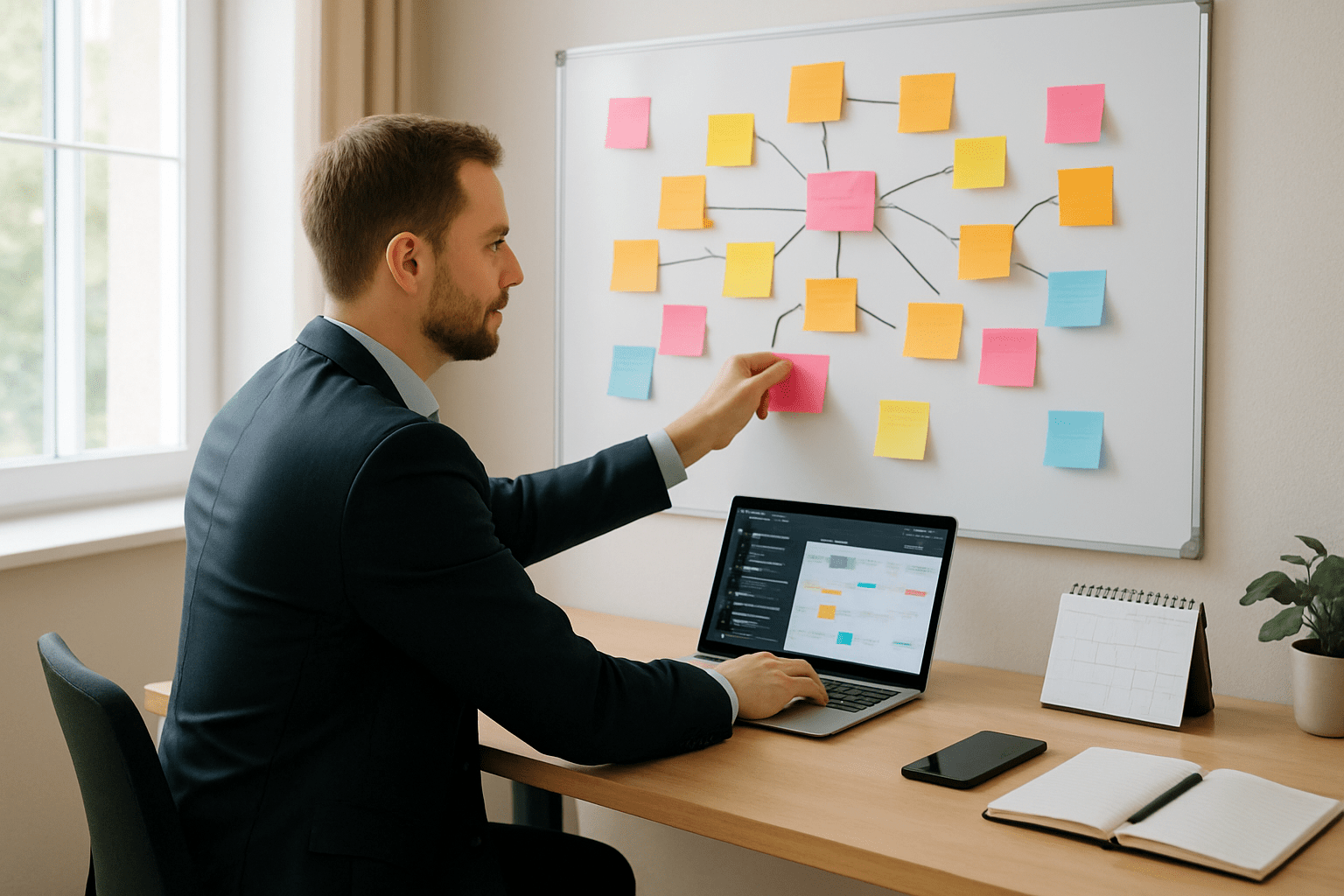
Transform study sessions with accelerated learning methods
Memory palaces revolutionize how you absorb and retain academic material. Instead of cramming facts through repetition, you create vivid mental journeys through familiar spaces. Picture walking through your childhood home while studying biology – the kitchen becomes your digestive system hub, with the refrigerator storing enzymes and the stove representing metabolic processes. Each room holds different organ systems, making complex interactions memorable through spatial relationships.
For history classes, transform your daily commute into a timeline. The coffee shop marks the Renaissance, the bus stop represents the Industrial Revolution, and your workplace anchors modern events. This technique works especially well for sequential information like historical periods, mathematical formulas, or scientific processes.
Students report cutting study time in half while improving test scores by 30-40%. The key lies in choosing locations you know intimately and creating bizarre, memorable images that stick in your mind long after traditional notes fade.
Never forget names, faces, or important appointments again
Social and professional success often hinges on remembering people and commitments. Memory palaces excel at connecting faces with names through exaggerated mental imagery. When meeting John at a conference, visualize him sitting on your living room john (toilet) wearing a conference badge. The absurd connection creates instant recall.
For appointments, assign each day of the week to different rooms in your home. Monday meetings happen in the kitchen, Tuesday tasks occur in the bedroom, and so on. Place vivid reminders throughout each space – a giant calendar on the refrigerator for your 2 PM client call, or dancing alarm clocks on your nightstand for early morning commitments.
Business professionals using this system report never missing important meetings and building stronger relationships through consistent name recognition. The technique becomes automatic after just a few weeks of practice.
Enhance professional presentations without relying on notes
Confident speakers capture audiences by maintaining eye contact and flowing naturally between topics. Memory palaces eliminate the need for note cards or slides as crutches. Map your presentation outline to a familiar building – perhaps your office or gym. Each room represents a major talking point, with specific furniture holding supporting details.
Start your sales presentation in the lobby with your opening hook, move to the elevator for your value proposition, and end in the conference room with your call-to-action. Practice walking this mental route several times, and you’ll deliver presentations with natural confidence that engages audiences.
Professional speakers and executives use this method to memorize hour-long presentations, technical specifications, and complex data points. The spatial structure provides natural transitions and prevents the dreaded blank mind moment during crucial moments.
Boost academic performance across all subjects
Memory palaces adapt to any subject matter, making them invaluable for comprehensive academic improvement. Math students store formulas in different floors of a building – algebra on the first floor, geometry on the second, and calculus on the third. Each mathematical concept gets its own room with visual representations of the formulas in action.
Science subjects benefit from molecular-level palaces where you shrink down and walk through chemical reactions or biological processes. Literature students create character palaces where different rooms represent various novels, with each character literally living in their assigned space.
The cross-subject benefits compound over time. Students develop stronger pattern recognition, improved critical thinking, and enhanced creativity. Grade point averages typically increase by 0.5-1.0 points within a semester of consistent memory palace use.
Improve language learning through spatial vocabulary placement
Foreign language acquisition accelerates dramatically when vocabulary connects to physical spaces. Create dedicated palaces for different languages, with each room representing grammatical categories. Spanish verbs live in the kitchen, where you visualize yourself performing actions – “cocinar” while cooking, “lavar” while washing dishes.
German nouns populate your garage workshop, with der, die, and das articles color-coded on different workbenches. French adjectives decorate your bedroom, placed on objects they could describe. This spatial-linguistic connection mirrors how children naturally acquire language through environmental context.
Polyglots and language teachers advocate this approach for achieving conversational fluency 40% faster than traditional memorization methods. The technique works especially well for languages with complex grammatical structures or extensive vocabulary lists.
Troubleshooting Common Memory Palace Challenges

Overcome interference between overlapping memory locations
When multiple memory palaces start bleeding into each other, you’re facing one of the most frustrating roadblocks in memory training. This happens when your brain creates unwanted connections between similar locations or when you accidentally use the same room for different sets of information.
The key lies in creating distinct visual and sensory boundaries. Start by using completely different building types for separate subjects – your childhood home for historical dates, your office building for work presentations, and your favorite restaurant for language vocabulary. This architectural diversity prevents your mind from mixing up pathways.
Color-coding works wonders too. Assign each palace a dominant color theme and mentally “paint” your loci accordingly. Your history palace might have golden walls, while your work palace glows with blue light. When information starts overlapping, strengthen the unique elements of each location rather than abandoning the palace entirely.
Physical positioning also matters. Walk through each palace in opposite directions or use different entry points. If one palace moves clockwise, make another counterclockwise. These directional cues create muscle memory that keeps your mental maps separate.
Refresh and maintain your palaces for long-term retention
Memory palaces aren’t set-and-forget systems – they need regular maintenance like any valuable tool. Information starts fading when you don’t revisit your mental locations frequently enough, leading to incomplete recall and frustrating gaps.
Create a review schedule that matches your retention goals. For information you need permanently, walk through your palace weekly for the first month, then monthly thereafter. Short-term information might only need daily reviews for a week before you can safely let it go.
The “renovation” technique keeps your palaces fresh and prevents staleness. Every few months, add new sensory details to familiar locations. Notice different textures, sounds, or smells in your mental rooms. This enrichment process strengthens existing memories while making the space more vivid for future use.
Don’t ignore weak spots – those locations where information consistently slips away. These problem areas usually lack distinctive features or emotional connections. Strengthen them by adding bizarre, funny, or personally meaningful elements. A boring office corner becomes memorable when you imagine your favorite celebrity doing something ridiculous there.
Adapt techniques for different types of information
Different information types require different storage strategies, and forcing everything into the same format creates unnecessary struggles. Numbers, names, concepts, and procedures each have optimal encoding methods within your memory palace framework.
For abstract concepts, transform them into concrete objects or scenarios. “Democracy” might become a town hall meeting in your palace’s main room, complete with voting booths and debate podiums. Mathematical formulas work better as mechanical contraptions – imagine gears, pulleys, and moving parts that represent each variable and operation.
Sequential information like procedures or speeches benefits from natural pathways through your palace. Use hallways, staircases, and doorways to represent the flow of steps. Your mental journey automatically reinforces the correct order, making it nearly impossible to skip or rearrange steps accidentally.
Names and faces require emotional connections within your locations. Place people in rooms that match their personalities or professions. The quiet librarian sits in your palace’s reading nook, while the energetic salesperson bounces around the gymnasium. These personality-location matches create stronger retrieval cues.
| Information Type | Best Palace Feature | Encoding Strategy |
|---|---|---|
| Numbers | Furniture arrangement | Visual patterns and shapes |
| Procedures | Pathways and routes | Sequential movement |
| Names | Comfortable seating areas | Personality matching |
| Abstract concepts | Open spaces | Concrete metaphors |
| Lists | Storage areas | Categorical grouping |
Adjust your palace layout based on information complexity. Simple lists work fine in linear arrangements, but interconnected concepts need hub-and-spoke designs where central locations connect to multiple related areas.
The memory palace technique transforms how you store and recall information by tapping into your brain’s natural spatial memory abilities. From understanding its ancient roots to building your first palace and mastering advanced storage methods, this powerful tool can revolutionize your learning experience. The real magic happens when you apply these techniques to daily challenges like remembering names, presentations, or study materials.
Start small with a familiar location and gradually expand your memory palaces as you grow more comfortable with the process. Don’t get discouraged if your first attempts feel clunky – like any skill, memory palaces improve with practice. Pick one area of your life where better memory would make a real difference, and begin building your palace there. Your brain is already equipped with everything you need to succeed.