

Are you tired of being stuck in one area? What if having many skills could be your superpower? We’re here to shake things up and show you why being a polymath is great.
Choosing the polymath path means always learning and being open to new skills. This way, you can think more creatively, adapt better, and see the world in a new light.
By exploring more than one field, you open doors to new chances and adventures. So, are you ready to start this journey and see the benefits of being a polymath?
Key Takeaways
- Embracing multiple skills can enhance your creativity and adaptability.
- Adopting a lifelong learning mindset is key to the polymath path.
- Diverse expertise opens up new opportunities and experiences.
- Being a polymath can give you a broader perspective on the world.
- It’s a journey that challenges the traditional notion of specialization.
The Myth of Specialization
The idea that focusing on one area is key to success is a myth. Our education system pushes us to pick a major and focus on a specific skill. But is this the best way to succeed in today’s world?
How Modern Education Reinforces Single-Track Expertise
Our education system values depth over breadth. We’re rewarded for mastering one subject, often ignoring other interests. This can lead to a narrow focus, missing the benefits of learning across different fields.
The Hidden Costs of Hyper-Specialization
Being an expert in one area has its benefits. But hyper-specialization can also have downsides. It can make us less adaptable and limit our ability to innovate by combining different field insights. Understanding these drawbacks helps us see the value of a balanced approach to learning and professional growth.
What Exactly Is a Polymath?
A polymath is someone with knowledge in many areas. This simple definition hides a deep history and meaning. Being a polymath means loving to learn widely and see how things connect.
From Da Vinci to Benjamin Franklin: Historical Polymaths
Leonardo da Vinci and Benjamin Franklin were true polymaths. Da Vinci worked in art, science, engineering, and math. Franklin was great in diplomacy, science, and writing. They show how knowing many things can be powerful.
The Renaissance Ideal in the Digital Age
The idea of being a universal man is still important today. With so much information online, we can dive deep into many subjects. This has made polymathy popular again for solving big problems and creating new ideas.
Key Characteristics of Modern Polymaths
- Curiosity: A drive to learn across disciplines
- Creativity: The ability to connect seemingly unrelated concepts
- Adaptability: Flexibility in the face of new information and challenges
Modern polymaths can make big impacts in many areas. They can work in science, tech, art, and social sciences.
The Polymath Path: Why You Shouldn’t Just Master One Thing
Being open to many disciplines is key in today’s fast world. It helps us adapt and innovate. This is crucial as we face new challenges every day.
Adaptability in an Era of Rapid Change
The world is changing fast. Technological advancements and new needs require us to be quick and flexible. By exploring different areas, we can stay ready for anything.
Being a polymath lets you use a wide range of knowledge. This makes you more flexible and prepared for surprises.
Innovation at the Intersection of Disciplines
Innovation happens when different areas meet. Polymaths can mix fields to create breakthrough ideas. These ideas might not come to specialists.
Case Studies: Breakthrough Ideas from Cross-Pollination
- The GPS technology came from physics, math, and engineering.
- Biomimicry in design and engineering uses nature’s ideas for new solutions.
These examples show how mixing fields leads to innovation. By following the polymath path, you can find new ways to solve problems.
The Science Behind Cross-Disciplinary Thinking
Exploring cross-disciplinary thinking reveals its powerful neurological benefits. It boosts our brain’s ability to adapt and innovate by combining different subjects.
Neurological Benefits of Diverse Learning
Diverse learning experiences make our brain work harder. They create new neural pathways and boost cognitive flexibility. This flexibility helps us switch between tasks and learn new things better.
Cognitive Flexibility and Problem-Solving
Cognitive flexibility is key for solving problems. Learning across disciplines lets us see problems from different sides. This leads to more creative solutions.
Research on Transfer Learning Between Domains
Research shows learning in one area can help in another. This transfer learning is a big plus of cross-disciplinary thinking.
| Domain | Transferable Skills | Benefit |
|---|---|---|
| Mathematics | Logical Reasoning | Enhances problem-solving |
| Art | Creativity | Fosters innovative thinking |
| Linguistics | Communication Skills | Improves expressing ideas |
Embracing cross-disciplinary thinking boosts our thinking skills. It makes us more versatile and effective thinkers.
Breaking Down the T-Shaped Person Model
In today’s job world, being a T-shaped person is a great way to grow. It means you’re really good at one thing (the vertical bar of the T) and also know a lot about other areas (the horizontal bar).
Depth vs. Breadth: Finding Your Optimal Ratio
It’s important to find the right mix of depth and breadth. Being too deep in one area can make you rigid. Being too broad without depth can make you a generalist without expertise. The goal is to know your main area well and add skills from other areas.
Identifying Your Primary and Complementary Domains
To be T-shaped, first pick your main area. This is where you’re most passionate or have the most knowledge. Then, think about what other areas can help your main one. For example, a coder might also learn about design or project management.
| Primary Domain | Complementary Domains |
|---|---|
| Software Development | Design Principles, Project Management |
| Marketing | Data Analysis, Content Creation |
| Engineering | Business Development, Leadership Skills |
By using the T-shaped model, you can become more versatile and valuable in your career.
Overcoming the Jack-of-All-Trades Stigma
The idea of being a jack-of-all-trades has often been seen as mediocre. But what if we changed this view? Being multi-disciplinary is actually a big plus in today’s world.
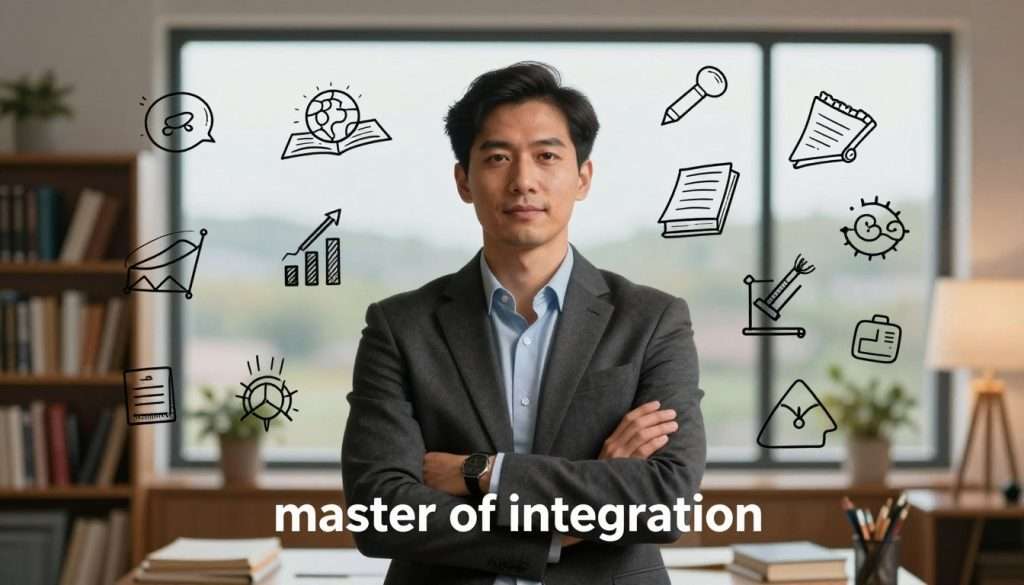
Reframing “Master of None” to “Master of Integration”
The saying “jack-of-all-trades, master of none” suggests someone who tries many things can’t excel in any. Yet, we can see it differently. By mixing different areas, you get a fresh view that brings new ideas and solutions. You’re not just a “jack-of-all-trades”; you’re a master of integration, linking different fields together.
Building Credibility as a Multi-Disciplinary Expert
How do you prove you’re good when you’re not a single-field expert? Here are some tips:
- Look at where your different skills meet. That’s where the best ideas come from.
- Create a strong personal brand that highlights your unique skills mix.
- Keep learning to stay current in all your areas.
- Connect with both specialists and other multi-disciplinary people to grow your network.
By celebrating your varied skills and experiences, you turn a weakness into a major strength. You’re not just beating the jack-of-all-trades stigma; you’re setting a new standard for expertise in today’s world.
The Interconnectedness of Knowledge
In today’s world, it’s easy to forget that knowledge is connected. As we dive into different subjects, we see that some ideas and patterns show up everywhere. This shows us that knowledge is more than just separate facts.
Mental Models That Transfer Across Fields
Mental models are like tools that help us understand complex things. Ideas like systems thinking and feedback loops work in many areas, from science to social studies. By seeing these common models, we can use what we learn in one field to help us in another.
Recognizing Patterns and Principles in Different Domains
When we look at different subjects, we find common patterns and ideas. For example, fractals are found in nature, art, and math. Spotting these patterns helps us grasp the deeper structures that shape many areas.
The Concept of Adjacent Possible in Learning
The “adjacent possible” means new discoveries come from combining what we already know. By exploring this idea, we can find new learning paths and deepen our understanding of complex systems.
Practical Steps to Becoming a Modern Polymath
Starting your journey as a polymath needs a smart plan. We’ll look at how to create a learning plan and manage your time well. This will help you learn many things at once.
Designing Your Personal Curriculum
Building your personal curriculum means setting goals and picking what you want to learn. It’s about choosing your own path wisely.
The Skill Acquisition Framework
To learn new skills fast, use this framework:
- Identify: Know what skills you need.
- Deconstruct: Break down big skills into smaller parts.
- Sequence: Learn in order, building on what you already know.
- Practice: Focus on practicing each part well.
Time Management for Multiple Pursuits
When you have many interests, managing your time is key. It’s about finding a balance. This way, you can make progress in all areas without feeling too stressed.
Deliberate Practice Across Different Domains
Deliberate practice means focused effort to get better. Here’s how to do it in different areas:
| Domain | Skill to Practice | Deliberate Practice Activity |
|---|---|---|
| Language Learning | Conversational Fluency | Daily conversation with a language exchange partner |
| Coding | Problem-Solving | Participating in coding challenges on platforms like LeetCode |
| Art | Drawing from Observation | Spending 30 minutes daily sketching from life or reference images |
By following these steps, you can make great progress on your path to becoming a modern polymath. It’s all about being methodical, persistent, and eager to learn in many fields.
Real-World Success Stories of Modern Polymaths
Elon Musk’s story shows how knowing many things can lead to big breakthroughs. He’s a leader in many fields, proving the value of being a modern polymath.
Elon Musk: Engineering, Business, and Design
Elon Musk’s work, from SpaceX to Tesla, shows his skill in engineering, business, and design. His ability to use knowledge from different areas has been key to his success.
Multidisciplinary Thinkers Reshaping Industries
Modern polymaths like Musk are changing the game. They use knowledge from many fields to solve problems in new ways.
How Diverse Knowledge Creates Competitive Advantage
Polymaths can find solutions where others can’t. This competitive advantage makes them stand out.

In conclusion, Elon Musk’s success proves that knowing many things can lead to amazing achievements. By encouraging learning across disciplines, we can discover new possibilities and push innovation further.
Potential Pitfalls on the Polymath Journey
The path to becoming a polymath is full of challenges. Knowing these challenges can help you move forward. As you explore different subjects, watch out for obstacles that might slow you down.
Avoiding the Trap of Shallow Learning
One big challenge is avoiding shallow learning. With many subjects to learn, it’s easy to just scratch the surface. To avoid this, focus on building a solid base in each area.
For example, when learning a new language, don’t just memorize words. Practice speaking with native speakers or read books in that language. This way, you’ll understand and remember more.
Managing Cognitive Load and Focus
Managing your brain’s load is key when you have many interests. Your brain can only handle so much at once. So, it’s important to plan your learning well.
| Strategy | Description | Benefit |
|---|---|---|
| Prioritization | Focus on the most important tasks first | Reduces stress and increases productivity |
| Spaced Repetition | Review material at increasingly longer intervals | Improves retention and recall |
| Active Learning | Engage with the material actively (e.g., through practice or teaching others) | Enhances understanding and retention |
When to Abandon vs. When to Persist
Knowing when to give up and when to keep going is crucial. It’s important to tell the difference between a tough but valuable challenge and one that’s not worth it.
If you’re learning something new but not getting better, it might be time to change your approach. Or, if it’s not helping you reach your goals, it might be time to stop.
By understanding these challenges and finding ways to overcome them, you can better navigate the path to becoming a polymath. This will help you reach your goals.
How Technology Enables the New Renaissance Person
The Renaissance person is back, and this time, they’re powered by technology. We’re seeing a big change in how people learn and grow, thanks to digital tools.
Digital Tools for Accelerated Learning
Digital platforms and apps make it easy to find knowledge on many subjects. You can take online courses or listen to educational podcasts. These tools let you learn whenever and wherever you want.
Building Your Personal Knowledge Management System
Having a personal knowledge management system is key to organizing the information we find. Tools like note-taking apps and digital bookmarking help us create a system that suits us.
Leveraging AI and Online Communities
AI tools help us find new resources and connect different areas of knowledge. Online communities let us share ideas and learn from others. Together, these tools help us learn faster and keep up with new developments.
| Tool | Purpose | Benefit |
|---|---|---|
| Note-taking apps | Organizing information | Efficient knowledge retention |
| AI-powered platforms | Discovering new resources | Enhanced learning experience |
Conclusion: Embracing Intellectual Curiosity in a Complex World
In today’s complex world, it’s more important than ever to be curious. By thinking like a polymath, you can tackle challenges in a unique way. This leads to more happiness in both your personal and professional life.
Being curious helps you learn in a broad way. You start to see how different subjects are connected. This boosts your creativity, innovation, and ability to solve problems.
Change is always happening, so being open to new things is key. Loving to learn keeps you ahead in a world that’s always changing. It helps you succeed and grow.
Remember, learning is a lifelong journey. Always stay curious and keep exploring. You’ll find new chances and insights that will make your life and career richer.