
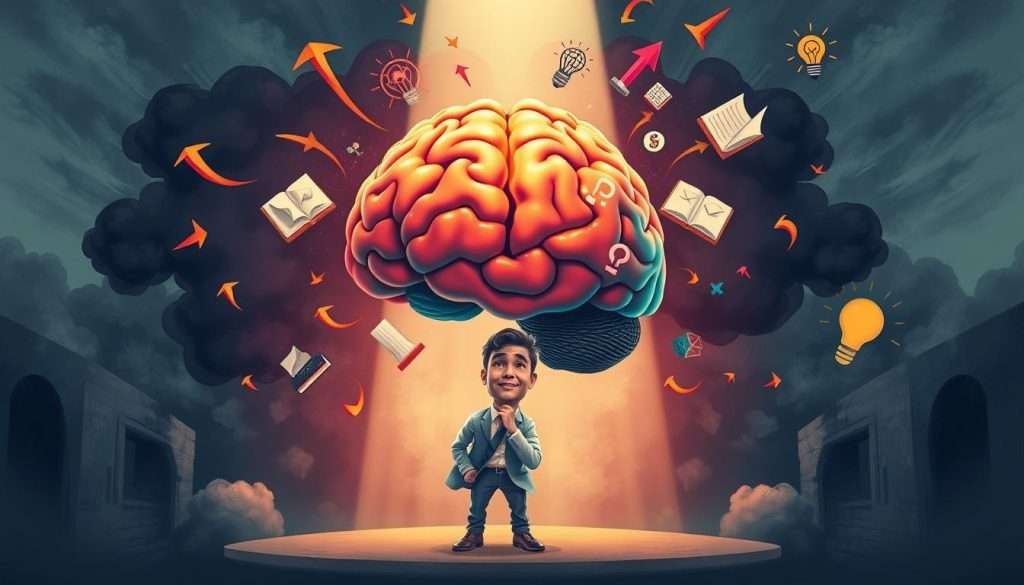
Have you ever felt like your brain is stubbornly resisting a new habit or skill you want to learn? You’re not alone!
Our brains are wired to conserve energy by sticking to familiar patterns. This makes it hard to adopt new behaviors or learn new things. This cognitive resistance can be a big mental barrier to reaching our goals.
So, what’s going on here? Our brains are like super-efficient machines designed to save energy. While this is helpful in many ways, it can also stop us from learning and growing.
Key Takeaways
- Understanding cognitive resistance is key to overcoming mental barriers.
- Our brains are wired to conserve energy, often resisting new learning.
- Recognizing this resistance is the first step to developing effective learning strategies.
- By acknowledging our brain’s natural tendencies, we can work with them to achieve our goals.
- Simple changes in approach can help mitigate mental barriers to learning.
The Science Behind Cognitive Resistance
The human brain is amazing, but it doesn’t always want to learn new things. This is because of how our brains are made. Let’s explore the world of neuroscience to find out why.
How Your Brain Processes New Information
When we learn something new, our brain makes new connections between neurons. This is called neuroplasticity. It’s like creating a new path in a dense forest. It takes effort and repetition to make it clear.
The Energy Cost of Learning
Learning something new uses a lot of energy. Our brain uses about 20% of our body’s energy. This makes it very hungry for power.
Any change, whether it’s good or bad, needs extra energy and effort from our brain. That’s why our brains often stick to what we know. It’s like taking the highway instead of making a new path; it saves energy.
Knowing that learning is hard on our brain can help us be kinder and more patient. By breaking learning into smaller parts and giving our brain time to adjust, we can make it easier.
Why Your Brain Fights Learning (And How to Win)
Our brains want to save energy, and learning is like extra work. This is because our brain is set up to save energy. It helps us move through the world easily.
The Brain’s Conservation Mechanisms
The brain uses a lot of energy, about 20% of what we burn daily. It only makes up 2% of our body weight. To save energy, it creates habits and routines that don’t need much thought. This makes learning new things harder.
Evolutionary Reasons for Learning Resistance
Our brains focus on survival, not learning. Saving energy was key for our ancestors. It helped them find food and stay safe. This is why our brains stick to what’s familiar, making new learning hard.
The First Steps to Overcoming Resistance
So, how do we beat our brain’s learning resistance? The first step is to acknowledge and accept that learning is tough. Knowing why our brain resists helps us find ways to work with it. We can break learning into smaller parts and use spaced repetition to remember new things.
By starting with these steps, we can rewire our brains for better learning. It makes learning less scary and more doable.
Psychological Barriers to Learning
Our brains are made to learn, but sometimes, mental blocks get in the way. These obstacles can make it hard to learn new things and get better at skills. Knowing what these barriers are is the first step to beating them.
Fixed Mindset vs. Growth Mindset
Carol Dweck introduced the idea of fixed and growth mindsets. A fixed mindset thinks our talents are set from birth. On the other hand, a growth mindset believes we can grow our talents with effort and hard work. Choosing a growth mindset can help us be more resilient and open to new challenges.
The Comfort Zone Trap
Getting out of our comfort zones is key to growing, but it’s hard. We often stick to what we know because it’s safe. But staying in our comfort zones can stop us from growing. To get better, we need to try new things that challenge us.
Fear of Failure and Perfectionism
Fear of failure and wanting to be perfect are big mental barriers. The fear of not being perfect can stop us from trying new things or facing challenges. Remembering that failure is part of learning and it’s okay to not be perfect can help overcome these fears.
By understanding and tackling these mental blocks, we can find better ways to learn. It’s about having a mindset that welcomes challenges and sees failures as chances to grow.
Environmental Factors That Hinder Learning
Our environment plays a big role in how well we learn. It’s key to think about the things around us that help or hurt our learning. This includes things like our surroundings and the people we’re with.

Digital Distractions and Information Overload
In today’s world, distractions are everywhere. Things like notifications, social media, and email can pull us off track. To stay focused, we need to control our digital use and set limits on our learning time.
Suboptimal Learning Environments
Where we learn matters a lot. Spaces that are messy, loud, or uncomfortable can make it hard to focus. Creating a quiet, organized, and comfy learning area can help us stay on track.
Social Influences on Learning Motivation
The people we surround ourselves with can either push us to learn or hold us back. Being around people who want to learn as much as we do can motivate us. But, negative people can make it harder to keep going. It’s important to find a supportive group that encourages our learning.
By paying attention to these environmental factors, we can make our learning better. This leads to better thinking skills and a more successful learning process.
The Neuroscience of Effective Learning
Learning is a complex process. By exploring the neuroscience behind it, we can find strategies that work with our brains. Just like muscles get stronger with exercise, our brains get stronger with repeated actions and thoughts.
How Memory Formation Works
Memory formation is key to learning. New information first goes into our short-term memory. It’s then either rehearsed and moved to long-term memory or forgotten. Our attention, emotional state, and how we process the information all play a role.
Attention and Focus Mechanisms
Attention is crucial for learning. Our brains can only handle so much information at a time. Techniques like the Pomodoro Technique help by breaking study into manageable chunks. This allows for regular breaks to rest the mind.
The Role of Sleep in Learning
Sleep is vital for memory consolidation. During sleep, our brains replay and process what we’ve learned. This strengthens connections between neurons. It’s essential for turning short-term memories into long-term ones, making sleep a key part of effective learning habits.
By understanding how our brains work and using strategies that support neuroplasticity and effective learning, we can improve our learning abilities.
Step 1: Recognize Your Learning Resistance Patterns
Learning something new can be thrilling, yet scary. Our brains naturally resist change. This resistance is part of why change can feel uncomfortable.
Common Resistance Signals
So, how do you know when your brain is fighting learning? Watch for these signs:
- Procrastination: Putting off learning because it feels too hard or boring.
- Distractions: Finding yourself easily sidetracked by social media, email, or other tasks.
- Fear of failure: Worrying that you’ll never be good enough or that you’re not smart enough.
Self-Assessment Tools
To understand your learning resistance better, try these tools:
- Mindfulness journals to track your thoughts and feelings.
- Learning diaries to record your progress and challenges.
Tracking Your Learning Blocks
Keep a log of when you feel stuck or resistant to learning. Ask yourself:
- What was I trying to learn?
- How did I feel during the process?
- What triggered my resistance?
By recognizing your learning resistance patterns, you can start to develop strategies to overcome them. 
Step 2: Rewire Your Brain for Learning Success
Good news: you can change your brain for better learning. Start small, as your brain loves quick wins! Break changes into tiny steps for a stream of success that keeps you motivated.
Implementing Spaced Repetition
Spaced repetition is a top learning strategy. It means reviewing material at longer intervals to lock it in your memory. This way, you’re overcoming learning challenges by making the info stick.
- Review material one day, then again a week later
- Use flashcards or apps that implement spaced repetition
- Mix up the order of your study materials to keep things interesting
The Power of Interleaved Practice
Interleaved practice is another key technique. It involves switching between different material or problems to deepen your understanding. This method helps your brain adapt and learn better.
Active Recall Techniques
Active recall is a strong learning strategy. It means actively recalling information instead of just reading it. Two good methods for active recall are:
Question-Based Learning
Create questions from the material you’re learning, and test yourself often. This strengthens your ability to recall info in various situations.
Teaching What You Learn
Teaching someone else what you’ve learned helps you understand it better. It makes you organize your thoughts, fill in knowledge gaps, and recall info in different ways.
By using these techniques in your study routine, you’ll overcome learning challenges. You’ll also develop effective learning habits that last a lifetime.
Step 3: Optimize Your Learning Environment
A well-optimized learning environment can help overcome mental barriers to learning. To achieve learning optimization, focus on creating a space that boosts cognitive performance. Let’s explore how to do this effectively.
Creating Distraction-Free Zones
To minimize distractions, pick a specific area for learning. It could be a corner of your room or a desk. Make sure it’s clean and has everything you need. This way, you’ll focus better and remember more.
The Right Physical Conditions for Learning
The physical environment is key for learning. Good lighting, comfy seating, and the right temperature are important. Avoid extreme temperatures as they can be distracting. Also, think about the noise level; some like silence, others background noise.
Digital Tools That Enhance Focus
In today’s digital world, many tools help focus. Apps like Freedom and StayFocusd block distracting websites. There are also apps that create a good study environment.
| Tool | Description | Benefit |
|---|---|---|
| Freedom | Blocks distracting websites and apps | Enhanced focus |
| StayFocusd | Limits time spent on distracting sites | Better time management |
| Cold Turkey | Blocks distracting sites across all browsers | Improved productivity |
By using these strategies, you can greatly improve your cognitive performance. This will help you reach your learning goals more efficiently.
Step 4: Leverage Your Brain’s Natural Learning Cycles
Using your brain’s natural learning cycles can boost your learning. Everyone’s alertness changes throughout the day. Knowing when you’re most focused helps you learn better.
Understanding Your Cognitive Peak Times
Find out when your brain works best. For some, it’s morning; for others, it’s later. Experiment to discover your peak times and tackle hard tasks then.
The Pomodoro Technique and Other Time Management Strategies
The Pomodoro Technique is a great way to stay focused. It involves 25 minutes of work followed by a 5-minute break. Adjust the times to fit you, but keep the balance of work and rest.
Balancing Intensity and Rest
It’s key to mix intense study with breaks. Here’s a simple guide to help you balance:
| Study Session | Duration | Break Time |
|---|---|---|
| Focused Study | 25 minutes | 5 minutes |
| Intense Learning | 50 minutes | 10-15 minutes |
| Review Session | 30 minutes | 5-10 minutes |
By taking breaks and knowing your peak times, you can make a learning plan that fits your brain. This leads to better learning habits.
Step 5: Build Sustainable Learning Habits
Learning isn’t just about new info; it’s about making it a part of your daily life. To do this, you need to create habits that support your goals.
The Habit Loop and Learning
The habit loop has three parts: cue, routine, and reward. Knowing this can help you make learning habits. For example, set a cue like a certain time, then study, and reward yourself with a break or fun activity.
Accountability Systems That Work
Having someone or something to keep you on track can really help. This could be a study group, mentor, or app. Sharing your goals with others adds extra motivation.
Celebrating Progress and Small Wins
It’s important to celebrate your small wins. This can be as simple as enjoying a favorite meal or reflecting on your progress.
Reward Mechanisms That Reinforce Learning
Using rewards can make your learning habits stronger. For example, treat yourself to a favorite meal or activity after hitting a milestone.
Tracking Long-Term Progress
Tracking your progress helps you see how far you’ve come. Use a journal, spreadsheet, or app to keep track.
| Habit | Cue | Routine | Reward |
|---|---|---|---|
| Daily Study | Morning coffee | Study for 1 hour | Breakfast |
| Weekly Review | Sunday evening | Review notes for 30 minutes | Relaxation time |
By understanding the habit loop, using accountability, and celebrating your wins, you can create lasting learning habits. These habits will help you overcome challenges and reach your goals.
Conclusion: Embracing the Learning Journey
We’ve looked into why our brains sometimes resist learning. This includes how our brains try to conserve energy and the distractions around us. Now, let’s use this knowledge to improve our learning.
By understanding why your brain fights learning, you can find ways to beat this resistance. This means developing learning strategies that work for you.
Change can be a good thing, and you can teach your brain to adapt. By changing how your brain works and improving your learning space, you can get better at thinking. The path to better learning is long, but with the right mindset and methods, you can make big strides.
As you keep going, remember to build lasting learning habits. Celebrate your small victories, and don’t hesitate to try new things. With determination and the right strategies, you can change how you learn and reach your goals.