
Most people who say “I hate math” actually hate sitting through confusing lectures, memorizing formulas without context, and solving problems that feel completely pointless. If you’ve ever felt lost in a math classroom or convinced you’re “just not a math person,” this article is for you.
Math anxiety affects millions of students and adults who were taught math in ways that didn’t click with how their brains work best. The good news? Math comes in many different flavors, and there’s almost certainly a version that will make sense to you.
We’ll explore why traditional math education leaves so many people behind and help you discover your unique learning style. You’ll also see how math hides in your favorite hobbies and interests – from cooking and music to sports and art – making it way more relevant and interesting than those abstract textbook problems ever suggested.
Why Traditional Math Education Fails Most Students
Memorization-based learning kills natural curiosity
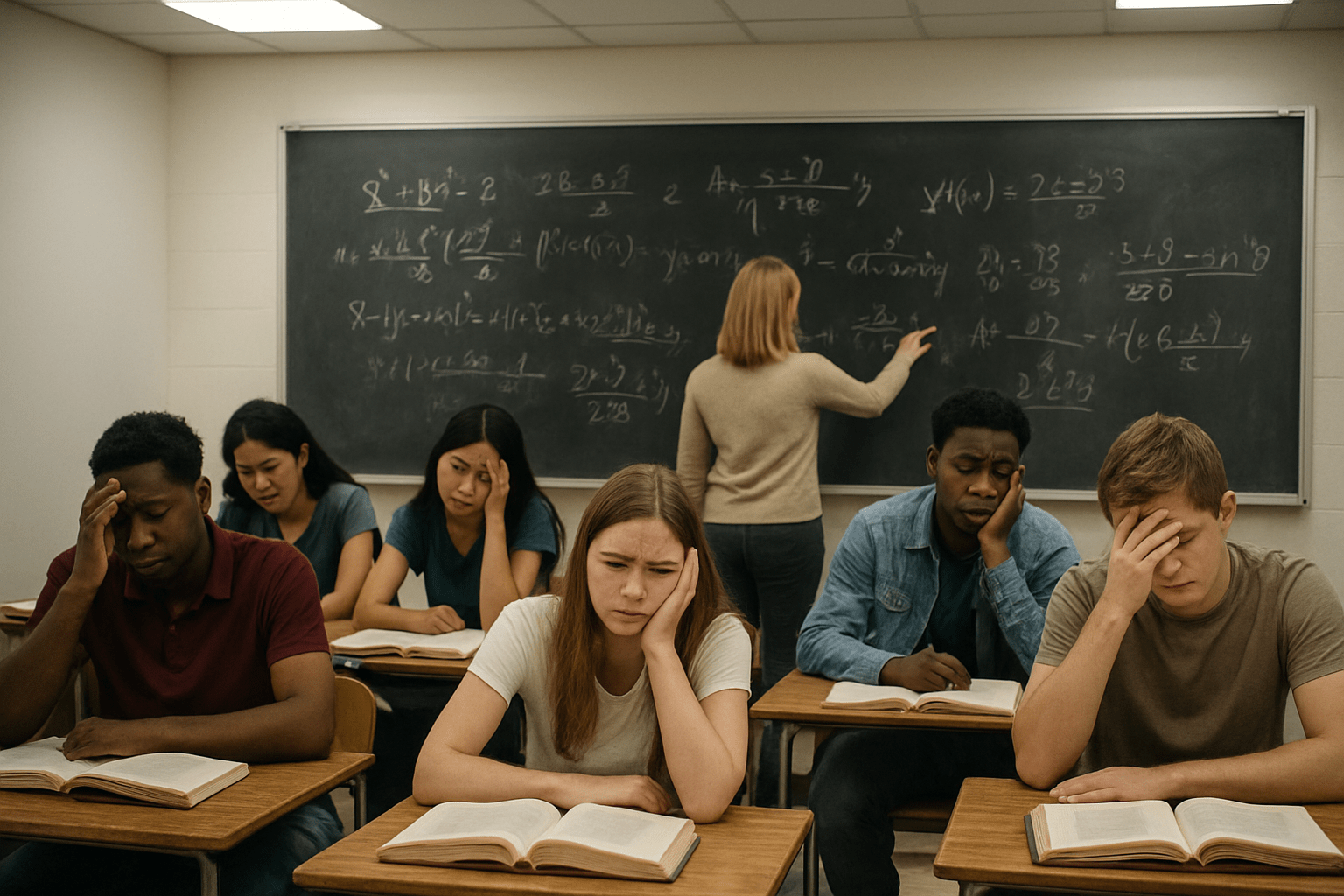
Picture a classroom where students chant multiplication tables in unison, mechanically drilling facts without understanding what they mean. This rote memorization approach treats math like a collection of rules to memorize rather than a language for exploring patterns and solving problems. When children naturally ask “Why does this work?” or “What happens if I try something different?” they’re often told to simply follow the formula and move on.
This approach destroys the innate mathematical thinking that kids are born with. Young children naturally experiment with patterns, compare quantities, and reason about space and time. But traditional math education replaces this curiosity with rigid procedures. Students learn that math success means giving the “right answer” quickly, not asking questions or exploring different approaches.
The damage runs deep. When memorization becomes the focus, students never develop number sense – the intuitive understanding of how numbers behave. They can’t estimate whether their answers make sense or solve problems in creative ways. Math becomes a foreign language they’re forced to speak without ever learning what the words actually mean.
Abstract concepts presented without real-world connections
Traditional math curricula introduce concepts in isolation, as if numbers exist in a vacuum. Students learn about fractions by dividing circles into pieces on worksheets, not by splitting pizza among friends. They memorize the quadratic formula without ever seeing how it helps engineers design bridges or how it explains the path of a basketball shot.
This disconnect makes math feel pointless and irrelevant. When students can’t see why they’re learning something, their brains naturally resist retaining the information. Abstract symbols like x and y become meaningless squiggles instead of powerful tools for representing unknown quantities in real situations.
The problem gets worse as math becomes more advanced. Algebra, trigonometry, and calculus are taught as pure abstractions, divorced from their origins in solving practical problems. Students miss the beautiful connections between mathematical concepts and the world around them – how statistics helps us understand public health, how geometry shapes architecture, or how calculus describes the motion of planets.
One-size-fits-all teaching ignores individual learning styles
Every classroom contains visual learners who need to see concepts graphically, kinesthetic learners who understand through movement and manipulation, and auditory learners who grasp ideas through discussion and explanation. Yet most math instruction relies heavily on one approach: listening to lectures and practicing similar problems on paper.
Some students need to build understanding slowly and methodically, while others learn best by jumping ahead and seeing the big picture first. Some thrive on logical step-by-step reasoning, while others prefer intuitive pattern recognition. Traditional math education typically accommodates only one type of learner, leaving many students feeling confused and inadequate.
The pace of instruction also follows a rigid schedule that ignores natural learning rhythms. Concepts that some students need weeks to internalize are covered in days, while others who grasp ideas quickly become bored waiting for the class to catch up. This mismatch between individual learning needs and standardized instruction creates unnecessary struggle and frustration.
Speed and competition create math anxiety
Timed tests and competitive environments transform math from exploration into performance anxiety. When students are constantly racing against the clock or comparing themselves to classmates, their brains shift into stress mode, actually impairing their ability to think clearly and creatively.
Math anxiety becomes a self-perpetuating cycle. Students who struggle with speed develop negative associations with mathematics, which creates more anxiety, leading to worse performance and deeper negative feelings. Many capable students conclude they’re “not math people” simply because they need more time to process information or prefer to think through problems carefully rather than quickly.
The emphasis on competition also suggests that mathematical ability is fixed rather than developed. Students start believing that some people are naturally good at math while others aren’t, rather than understanding that mathematical thinking can be strengthened like any other skill through practice and good instruction.
Discover Your Personal Math Learning Style
Visual learners benefit from geometric and graphical approaches
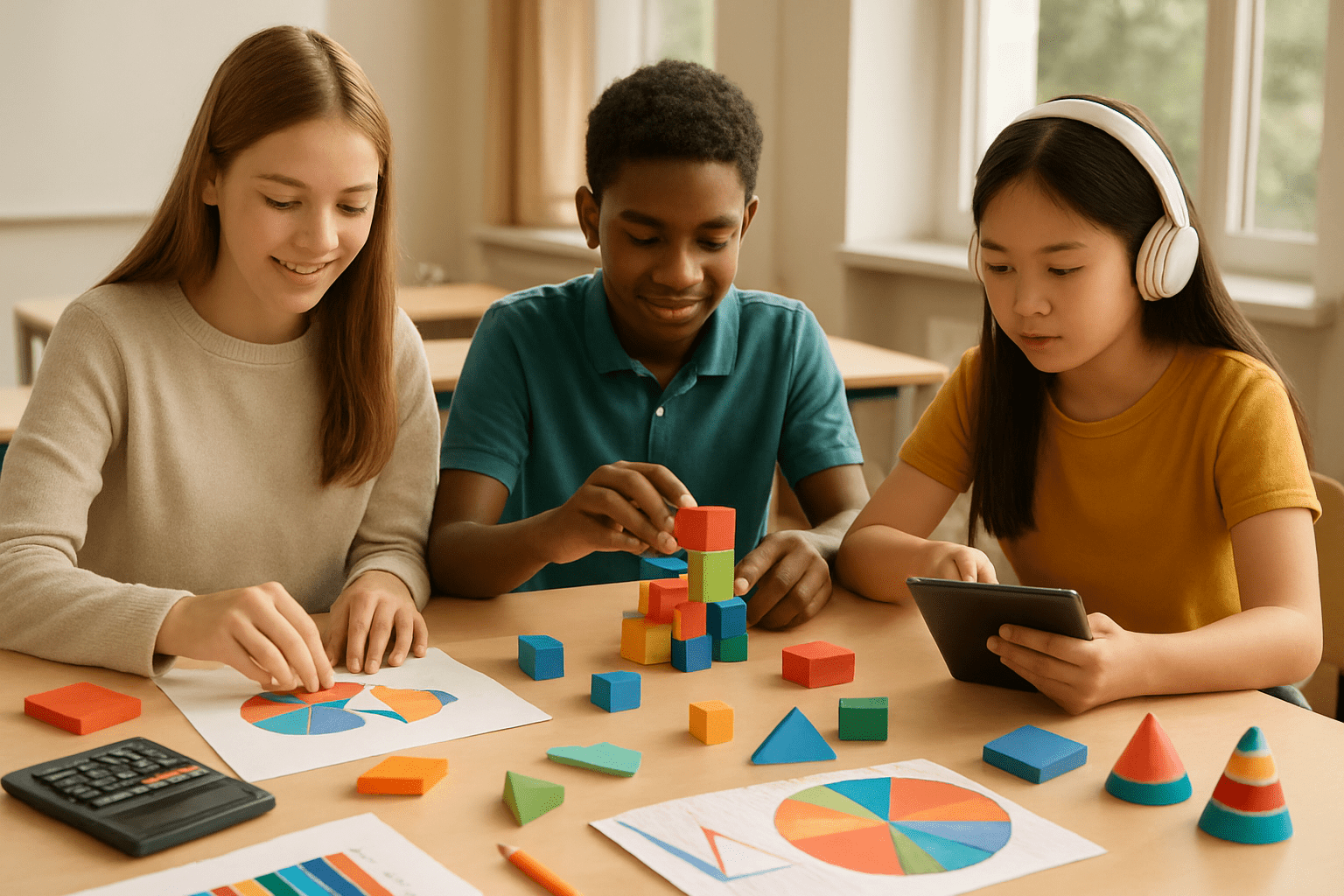
Visual learners process information best when they can see patterns, shapes, and relationships mapped out in front of them. For these students, algebra becomes crystal clear when equations transform into colorful graphs on coordinate planes. Instead of memorizing abstract formulas, visual learners connect with mathematical concepts through diagrams, charts, and geometric representations.
Geometry naturally appeals to visual processors because every theorem comes with a picture. The Pythagorean theorem isn’t just a² + b² = c² — it’s a triangle with squares dancing around each side, showing exactly how the areas relate to each other. Calculus concepts like derivatives and integrals make sense when students see the curves changing and areas filling up on screen.
Modern tools amplify these strengths. Graphing calculators, Desmos, and GeoGebra turn math into an interactive art form where students can manipulate variables and watch equations come alive. Color-coding different parts of complex problems helps visual learners track multiple steps without losing their way.
Kinesthetic learners thrive with hands-on mathematical activities
Kinesthetic learners need to move, touch, and manipulate objects to fully grasp mathematical concepts. These students struggle in traditional classrooms where math exists only on paper, but they shine when given physical tools and real-world projects.
Building geometric shapes with clay or wooden blocks transforms abstract spatial reasoning into tangible understanding. Fraction strips that students can physically move and compare beat worksheets every time. When learning about probability, rolling dice and flipping coins provides the concrete experience these learners crave.
Measurement activities work perfectly for kinesthetic students. Cooking projects teach fractions and ratios while creating something delicious. Building scale models introduces proportional reasoning. Even abstract concepts like algebra become accessible through balance scales where students physically move objects to solve equations.
Movement-based activities keep these learners engaged. Math scavenger hunts, where students measure classroom objects or find geometric shapes around school, combine physical activity with mathematical discovery. Board games and card games sneak in mathematical thinking through play.
Auditory learners excel through musical patterns and verbal explanations
Auditory learners absorb information best through hearing, speaking, and recognizing patterns in sound. These students benefit from talking through problems out loud, hearing mathematical concepts explained in different ways, and discovering the natural rhythms hidden within numbers.
Music provides the perfect bridge to mathematics for auditory learners. The mathematical relationships in musical scales, time signatures, and frequency ratios make abstract concepts concrete. Students who struggle with fractions often grasp them instantly when relating quarter notes to half notes to whole notes.
These learners thrive in discussion-based math classes where they can verbalize their thinking process. Working through word problems aloud helps them catch errors and develop logical reasoning skills. Mathematical storytelling, where equations become narratives with characters and plots, transforms dry calculations into memorable adventures.
Rhymes and songs make formulas stick. The quadratic formula becomes unforgettable when set to music. Skip-counting songs build multiplication facts naturally. Even complex mathematical rules become accessible when students create their own verbal memory devices and teach concepts to classmates.
Math in Disguise: Finding Numbers in Your Passions
Sports Statistics Reveal Probability and Data Analysis
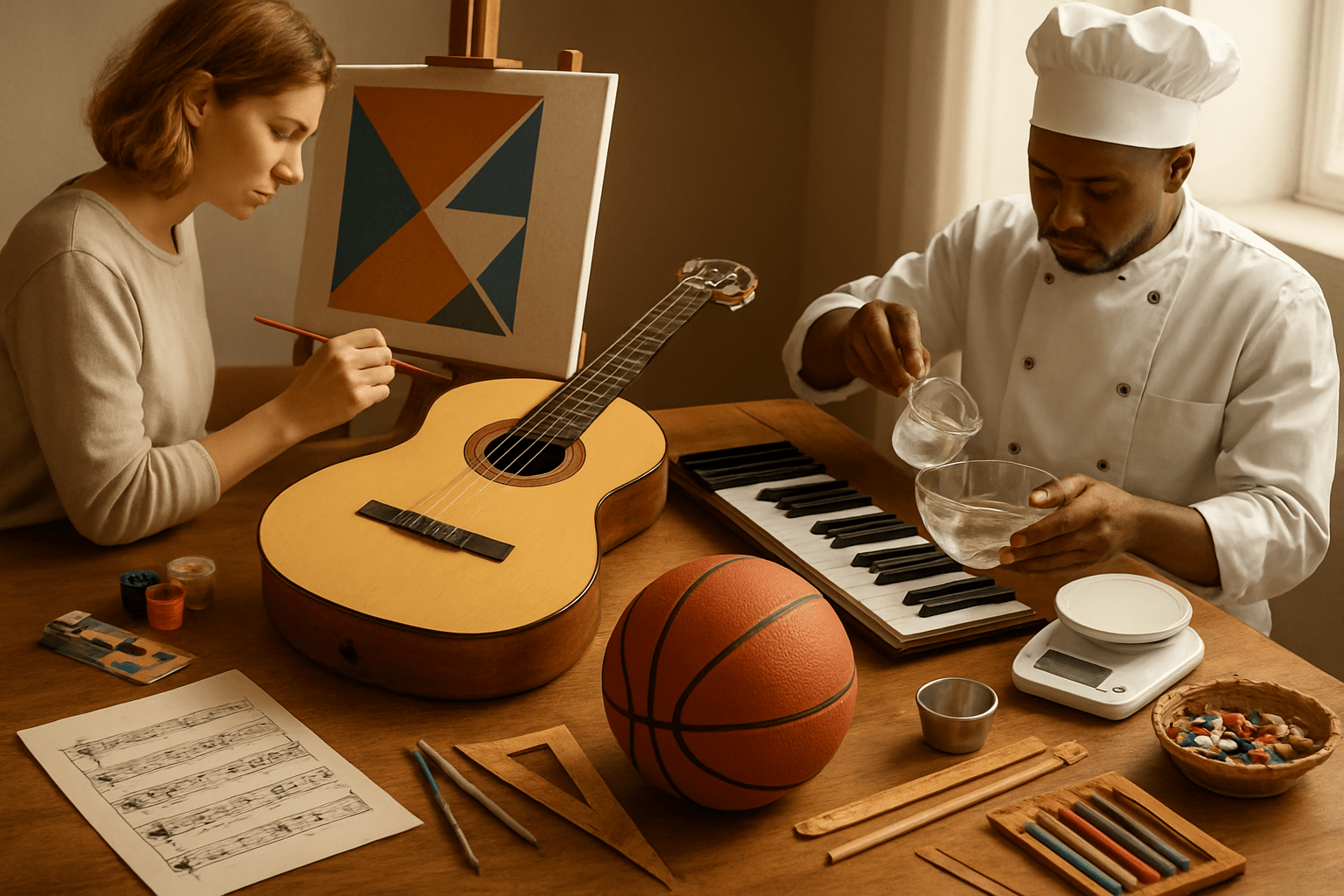
Baseball fans calculate batting averages without realizing they’re working with ratios. Basketball enthusiasts track shooting percentages and analyze player efficiency ratings. Fantasy football players become data scientists, comparing yards per carry, red zone targets, and strength of schedule metrics. Every sport overflows with mathematical concepts disguised as entertainment.
When you watch a tennis match and notice a player’s first-serve percentage dropping under pressure, you’re observing probability in action. The commentator discussing a team’s third-down conversion rate? That’s statistical analysis. Even casual observations like “this quarterback throws better in warm weather” involve pattern recognition and data interpretation.
Cooking Transforms Fractions and Ratios into Delicious Results
Your kitchen is a math laboratory where precise measurements determine success. Doubling a recipe for eight people instead of four requires multiplying fractions. Converting tablespoons to cups involves division. Adjusting cooking times based on different oven temperatures requires understanding proportional relationships.
Professional chefs work with ratios constantly – the perfect pasta-to-sauce proportion, bread dough hydration percentages, or cocktail mixing ratios. When you eyeball ingredients and achieve consistent results, you’ve developed an intuitive understanding of mathematical relationships. Baking especially demands precision, where slight measurement errors can ruin chemical reactions between ingredients.
Art and Design Showcase Geometry and Mathematical Beauty
Artists have used mathematical principles for centuries. The golden ratio appears in classical architecture, Renaissance paintings, and modern graphic design. Photographers compose shots using the rule of thirds, dividing frames into mathematical grids. Quilters create complex geometric patterns through careful angle calculations and symmetrical designs.
Digital artists manipulate vectors, work with coordinate systems, and understand how algorithms generate fractals. Fashion designers calculate fabric requirements, pattern scaling, and proportional adjustments. Even graffiti artists intuitively understand perspective, spatial relationships, and geometric forms when creating three-dimensional lettering on flat surfaces.
Music Theory Demonstrates Mathematical Relationships and Patterns
Music is mathematics in motion. Octaves represent frequency doubling – A440 becomes A880. Time signatures create mathematical frameworks for rhythm. Chord progressions follow numerical patterns that composers have explored for centuries.
Musicians count beats, subdivide measures, and navigate complex mathematical relationships without conscious calculation. Guitar players learn fret patterns based on mathematical intervals. Drummers internalize polyrhythms, playing different mathematical subdivisions simultaneously. Electronic music producers manipulate samples using mathematical ratios, adjusting pitch and tempo through numerical relationships.
Gaming Incorporates Strategic Thinking and Computational Skills
Video games constantly present mathematical challenges disguised as entertainment. Role-playing games involve statistical optimization – balancing attack power, defense ratings, and skill point allocation. Strategy games require resource management calculations and probability assessment for combat outcomes.
Even casual mobile games incorporate mathematical thinking. Puzzle games like Tetris involve spatial reasoning and geometric problem-solving. Card games require probability calculations and risk assessment. Online gaming communities develop complex mathematical models to optimize character builds, analyze meta-game trends, and calculate damage-per-second outputs for different equipment combinations.
Modern Math Tools That Make Learning Enjoyable
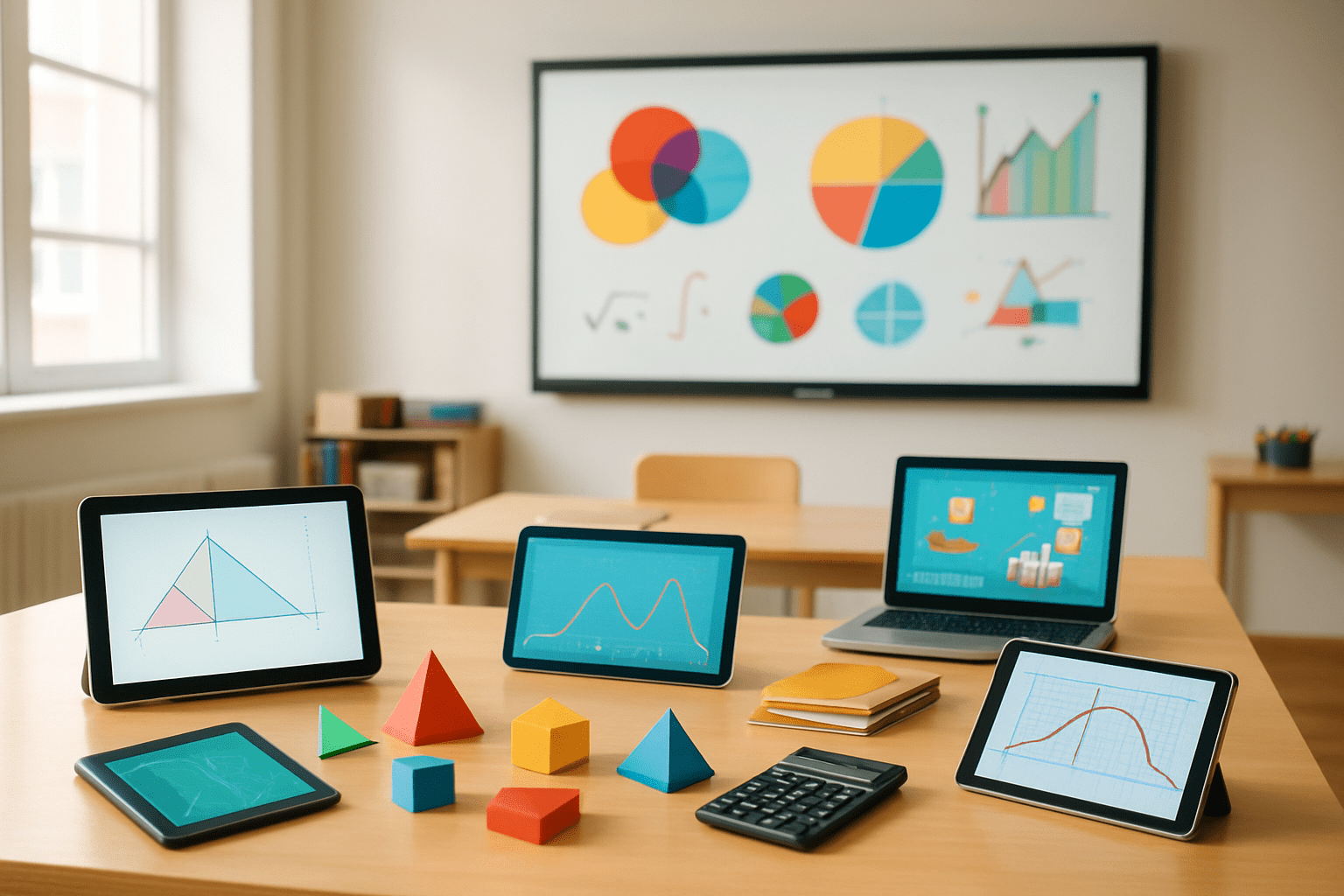
Interactive apps gamify mathematical concepts
Math apps have transformed learning from tedious drill sessions into engaging adventures. Apps like DragonBox teach algebra through puzzle-solving games where students manipulate colorful objects without realizing they’re learning complex mathematical operations. Photomath goes beyond simple calculation by showing step-by-step solutions with detailed explanations, turning your smartphone into a patient tutor that’s available 24/7.
Khan Academy’s gamification features include progress badges, streak counters, and energy points that tap into the same reward systems that make video games addictive. Students earn achievements for mastering concepts, creating a sense of accomplishment that traditional worksheets rarely provide. Prodigy Math Game creates an entire fantasy world where solving math problems advances your character through quests and battles.
These apps adapt to individual learning speeds and styles. If you struggle with fractions, the app presents more practice problems in different formats until mastery clicks. The instant feedback prevents students from practicing mistakes, while the game-like elements maintain motivation during challenging concepts.
Visual software brings abstract ideas to life
Abstract mathematical concepts become tangible through dynamic visual software. GeoGebra transforms geometry and algebra into interactive experiences where students can drag points, rotate shapes, and watch equations change in real-time. Seeing how changing the coefficient in y = mx + b affects the slope of a line makes linear relationships crystal clear.
Desmos graphing calculator has revolutionized how students explore functions. You can type in any equation and immediately see its graph, then modify variables to observe how the visual representation changes. This instant visual feedback helps students develop intuitive understanding rather than memorizing formulas.
3D modeling software like Tinkercad brings geometry into the real world. Students design objects while applying concepts like volume, surface area, and spatial relationships. When you’re creating a custom phone case or miniature building, calculating dimensions becomes purposeful rather than abstract.
Simulation software lets students experiment with probability, statistics, and calculus concepts. Monte Carlo simulations make probability theory visible, while graphing tools show how derivatives represent rates of change in real scenarios.
Online communities provide supportive learning environments
Math anxiety dissolves when students discover welcoming online communities where struggle is normalized and help is always available. Reddit’s r/learnmath connects students worldwide, creating study groups that span time zones. Students post problems they’re stuck on and receive multiple solution approaches from peers and experts.
Discord servers dedicated to mathematics create real-time help channels where students can screen-share problems and work through solutions together. These communities often organize virtual study sessions, homework help hours, and concept explanation sessions that feel more like hanging out with friends than formal tutoring.
YouTube channels like 3Blue1Brown and Numberphile have built passionate communities around mathematical exploration. The comment sections become collaborative learning spaces where viewers share insights, ask questions, and build on each other’s understanding. These creators present math as beautiful and fascinating rather than intimidating.
Online forums like Stack Exchange Mathematics provide detailed, high-quality answers to complex questions. Students can search previous discussions or post new questions, accessing collective mathematical knowledge from professionals and enthusiasts worldwide. The voting system ensures the best explanations rise to the top, creating a curated learning resource.
These digital communities prove that math learning doesn’t have to be solitary. When students see others wrestling with similar concepts and celebrating breakthroughs together, mathematics transforms from an isolating subject into a shared human endeavor.
Real-World Applications That Make Math Meaningful

Personal finance skills for budgeting and investing
Money management becomes surprisingly simple when you understand the math behind it. Creating a budget is really just solving equations where your income minus expenses should equal your savings goals. But here’s where it gets interesting – compound interest transforms basic arithmetic into a powerful wealth-building tool.
When you invest $100 monthly starting at age 25, assuming a 7% annual return, you’ll have about $525,000 by retirement. Wait until 35 to start? That number drops to roughly $245,000. The math doesn’t lie, and suddenly those percentage calculations in school make perfect sense.
Credit card debt works the same way, just in reverse. A $5,000 balance at 18% interest takes over 30 years to pay off with minimum payments, costing you more than $11,000 total. Understanding this exponential growth helps you make smarter financial decisions every day.
Home improvement projects requiring measurement and calculation
Every weekend warrior becomes a mathematician when tackling home projects. Painting a room means calculating square footage, subtracting for windows and doors, then adding 10% for touch-ups. Miss these calculations, and you’re making another trip to the hardware store.
Building a deck involves geometry, load calculations, and material optimization. You need to space joists correctly for structural integrity, calculate board footage for lumber orders, and determine the right angle cuts for railings. These aren’t abstract math problems – they’re the difference between a sturdy deck and a safety hazard.
Even simple projects like tiling a bathroom require fractions and percentages. Tiles come in specific sizes, grout lines need consistent spacing, and you always need extra materials for cuts and mistakes. Professional contractors excel at these calculations because they understand the math directly impacts their profit margins and project timelines.
Career advancement through data analysis and problem-solving
Modern workplaces run on data, making mathematical thinking a career superpower. Marketing professionals analyze conversion rates, customer acquisition costs, and return on ad spend. Sales teams track metrics, forecast revenues, and identify trends in customer behavior.
Project managers use critical path analysis and resource allocation formulas to keep initiatives on track. Operations teams optimize workflows using statistical analysis and lean principles. Even creative roles benefit from understanding analytics – graphic designers track engagement metrics, writers analyze readability scores, and content creators study audience demographics.
The ability to interpret spreadsheets, create meaningful charts, and spot patterns in data sets you apart from colleagues who avoid numbers. Companies value employees who can transform raw information into actionable insights, regardless of their official job title.
Technology understanding through coding and algorithms
Programming demystifies how our digital world actually works. Every app, website, and smart device operates on mathematical logic and algorithms. Learning to code reveals that technology isn’t magic – it’s applied mathematics solving real problems.
Basic programming concepts like loops, conditionals, and variables are mathematical structures in disguise. When you write code to sort a list, calculate taxes, or process user input, you’re implementing mathematical algorithms. Understanding these foundations helps you troubleshoot technology issues, automate repetitive tasks, and even build your own solutions.
Machine learning and artificial intelligence, despite their intimidating reputations, rely on statistical methods and pattern recognition. The recommendation systems on Netflix, fraud detection at banks, and voice recognition on smartphones all use mathematical models trained on data. Grasping these concepts helps you understand how technology shapes our daily lives and opens doors to emerging career opportunities in tech-adjacent fields.

Math doesn’t have to be the subject that makes you want to run for the hills. The truth is, traditional classroom methods have convinced millions of people they’re “bad at math” when they simply learn differently. Once you find your personal learning style and connect math to things you actually care about, everything changes. Whether it’s through visual tools, hands-on activities, or seeing how numbers show up in your hobbies, there’s a version of math that clicks for everyone.
The real game-changer happens when you stop thinking of math as abstract formulas and start seeing it as a tool for understanding the world around you. From managing your budget to improving your cooking or even analyzing your favorite sports team’s stats, math is everywhere once you know where to look. Give yourself permission to explore different approaches and don’t be afraid to start over with a fresh perspective. Your mathematical breakthrough might be just one learning style away.