

Struggling to remember what you’ve learned in class? You’re not alone! Endless rereading and highlighting can be frustrating and ineffective. It’s time to try a game-changing study method that can transform your learning experience.
We ditch the old ways and introduce you to active recall, a powerful technique that’s simple yet incredibly effective. By incorporating active recall into your study routine, you’ll be able to retain information better and recall it when needed.
So, are you ready to supercharge your learning? Let’s explore how active recall can help you achieve your academic goals!
Key Takeaways
- Discover the power of active recall in enhancing your learning experience.
- Learn how to incorporate effective learning techniques into your study routine.
- Understand the benefits of using active recall for improved retention and recall.
- Get started with simple and practical tips for implementing active recall.
- Transform your studying from a chore into an enjoyable experience.
What Is Active Recall? Understanding the Science Behind Effective Learning
Ever wondered why active recall works so well? Let’s dive into the science. Active recall uses the brain’s memory-making process to improve learning.
The Cognitive Psychology of Memory Formation
Creating memories is a detailed process. It includes encoding, consolidation, and retrieval. When we actively recall, we strengthen brain connections. This makes remembering easier later on.
How Active Recall Differs from Passive Review
Passive review just involves looking over material again. But active recall makes you actively engage with it. You might test yourself, summarize in your words, or make concept maps.
The Forgetting Curve and How Active Recall Fights It
The forgetting curve shows how our memory fades over time. Active recall fights this by reinforcing memories at the right times. This helps keep information in our long-term memory.
Learning the science of active recall can change how we learn. It makes learning more effective and fun.
Active Recall for Beginners: The Study Method That Actually Works
Traditional study methods often don’t help us remember what we learn.You’re not alone if you feel like you’re not getting the results you want from studying. Many students find it hard to keep information in their minds. It’s not because they’re not smart or hardworking – it’s because the methods they use don’t work well.
Why Traditional Study Methods Often Fail
Methods like passive reading and highlighting don’t fully engage our brains. When we just read our notes without trying to remember them, we’re not making our memory stronger.It’s like trying to build a muscle without exercising it. To really learn and remember, we need to actively recall information from memory.
The Core Principles of Active Recall
So, what makes Active Recall so good? The main idea is simple:actively recalling information from memory makes it easier to remember. You can do this by testing yourself or summarizing the material in your own words. By actively working with the information, you build a stronger connection in your brain.
Who Benefits Most from Active Recall
Active Recall helps anyone who wants to learn better and remember more. It’s great for students getting ready for exams or anyone wanting to learn more.
It’s really helpful for those who have had trouble with old study methods or want a better way to learn new things.
By understanding the flaws of old study methods and using Active Recall, you can improve your learning. With regular practice, you’ll find it easier to remember things. You’ll also feel more confident in recalling information when you need it.
The Scientific Evidence: Why Active Recall Outperforms Other Study Techniques
Active recall is backed by science, showing it’s better for memory. It makes learners better at remembering things over time.
Research Studies Supporting Active Recall
Many studies prove active recall works well in learning. Cognitive psychology shows it makes memory stronger and keeps it longer.
It works in many areas, like language and solving problems. Adding active recall to your study plan can really help your learning.
Comparing Retention Rates: Active vs. Passive Learning
Let’s look at how active recall stacks up against passive learning. Here’s a table with results from important studies:
| Learning Method | Retention Rate After 1 Week | Retention Rate After 1 Month |
|---|---|---|
| Active Recall | 80% | 60% |
| Passive Review | 40% | 20% |
Neurological Benefits of Retrieval Practice
Active recall boosts memory and has brain benefits. It makes it easier to remember things later.
Using active recall in your studies can make learning better. It’s good for students and anyone who wants to learn more.
Getting Started: How to Implement Active Recall in Your Study Routine
Adding active recall to your study routine can change your learning game. It’s a method that boosts your memory and keeps information in your mind longer. Let’s explore how to start.
Setting Up Your Study Environment
To use active recall well, you need a good study spot. Create a dedicated study space that’s quiet, comfy, and free from distractions. Make sure you have everything you need, like books, notes, and pens, right there.

Creating an Active Recall Schedule
Being consistent is crucial for active recall. Develop a study schedule that includes active recall time. Here’s how to set it up:
Daily Practice Sessions
Set aside a time each day for active recall. Begin with short sessions (20-30 minutes) and grow the time as you get better at it.
Spaced Repetition Integration
Add spaced repetition to your schedule. Review material at longer intervals to lock it in your long-term memory. Use flashcards or apps like Anki to help.
Starting Small: Your First Active Recall Session
Start with a small piece of material. For example, if studying for a history exam, recall key dates and events from one chapter. Test yourself without looking at your notes or textbook. The initial challenge is part of learning.
As you keep practicing active recall, you’ll see your memory and recall skills improve. Stay consistent and adjust your method as needed.
5 Powerful Active Recall Techniques for Different Subjects
Active recall isn’t just one way to learn; it’s flexible for many subjects and learning styles. By using different active recall methods, you can make your studying more effective. This helps you remember information better.
Flashcard Systems for Fact-Based Learning
Flashcards are perfect for learning facts. You make cards with a question or term on one side and the answer on the other. This way, you test your knowledge and improve your memory. Spaced repetition with flashcards is also great, helping you remember just when you need to.
The Cornell Method for Conceptual Understanding
The Cornell Method is a note-taking system that boosts active recall. It divides your paper into sections for notes, summaries, and self-testing. This method helps you understand concepts deeply, not just memorize them. By summarizing your notes, you’re forced to recall and process the information.
Practice Testing for Problem-Solving Subjects
Practice testing is key for subjects like math or physics. It involves solving problems without looking at your notes or textbook. This way, you not only recall formulas but also learn to apply them. It builds your problem-solving skills and confidence.
Teaching Back Method for Comprehensive Understanding
The Teaching Back Method means explaining a concept to someone else. This ensures you fully understand the material, as you need to explain it clearly. It’s a great way to find any knowledge gaps and strengthen your learning.
Mind Mapping for Visual Learners
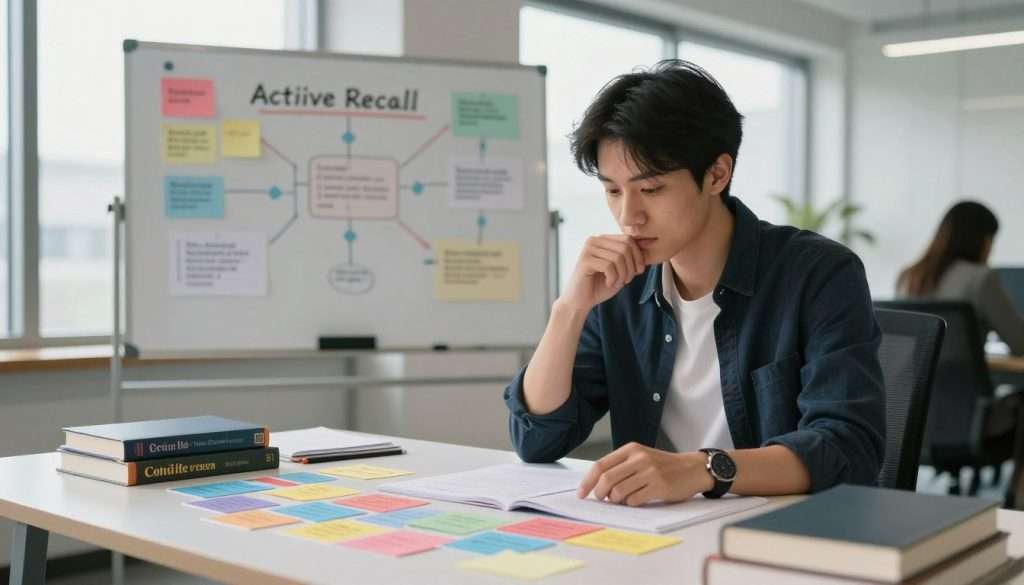
Mind mapping is a visual technique for active recall. It’s a diagram that connects ideas and information. It’s great for visual learners, helping them organize and review their knowledge easily. By making a mind map, you actively engage with the material and make connections.
Using these active recall techniques can make your studying more effective for different subjects. Try out different methods to see what works best for you. Don’t hesitate to mix techniques for even better results.
Digital Tools and Apps That Enhance Active Recall Practice
In today’s digital age, many tools and apps can boost your active recall practice. The right technology makes studying more effective and fun.
Spaced Repetition Software
Apps like Anki and Quizlet use spaced repetition to improve your recall. They help you review at the best time, boosting retention and cutting study time.
Note-Taking Apps with Active Recall Features
Some note-taking apps now have active recall features. You can make digital flashcards and test yourself right in the app. This makes studying easier and more effective.
Testing Platforms for Self-Assessment
Online testing platforms offer quizzes and exams for self-assessment. They give you instant feedback, showing where you need to improve.
Paper vs. Digital: Finding Your Optimal Approach
While digital tools are flexible and easy to access, some prefer paper-based methods. Trying both can help you find the best study method for you.
Using these digital tools and apps can greatly enhance your active recall practice. This way, you can reach your learning goals more quickly and efficiently.
Combining Active Recall with Other Evidence-Based Learning Strategies
To get the most out of learning, mix active recall with other proven study methods. This blend boosts how well you remember and use what you learn. It makes your learning system stronger.
Spaced Repetition: The Perfect Partner
Spaced repetition works well with active recall. It helps you remember things longer by reviewing them at the right times. Using active recall and spaced repetition together can really help you remember things for a long time.
Interleaving: Mixing Up Your Practice
Interleaving means switching between different learning materials or problems. It helps you understand and apply what you learn in new ways. By mixing up your study subjects, you learn more deeply and flexibly.
Elaboration: Adding Depth to Your Understanding
Elaboration means adding new info to what you already know. It connects different ideas and makes your understanding richer. This way, you remember and recall information better.
Dual Coding: Combining Visual and Verbal Information
Dual coding uses pictures and words together to help you learn. It makes the information stick in your memory better. This method combines images and text to create a lasting impression.
Here are some ways to use these strategies together:
- Make concept maps to show how ideas are connected.
- Use flashcards with images on one side and text on the other.
- Change up the types of problems or questions you solve.
- Create mnemonics or memory aids to help you remember.
Overcoming Common Challenges When Practicing Active Recall
Starting active recall in your study routine can face some challenges. But, with the right strategies, you can overcome them. Active recall is a powerful tool, but it has its own obstacles.
Dealing with Difficult or Complex Material
Handling tough subjects can be overwhelming. Break down complex material into smaller parts. Focus on one part at a time.
Use active recall techniques like summarizing in your own words. Or create concept maps to strengthen your grasp.
Maintaining Motivation and Consistency
Staying motivated is key in active recall. Set achievable goals and celebrate your successes. Consistency is vital; make active recall a daily habit.
Avoiding Common Pitfalls and Misconceptions
Many think active recall is just about memorizing. But it’s about understanding and applying what you learn. Use recall practices that deepen your knowledge, like teaching yourself or others.
Adjusting Techniques for Different Learning Styles
Each learner has their own best approach. Visual learners might find mind maps and diagrams helpful. Auditory learners can benefit from recording and listening to their own explanations.
| Learning Style | Active Recall Technique |
|---|---|
| Visual Learners | Mind Maps, Diagrams |
| Auditory Learners | Recording and Listening to Explanations |
| Kinesthetic Learners | Practice Testing, Flashcards |
Real-Life Success Stories: How Students Transformed Their Learning with Active Recall
Active recall has changed many students’ lives. They’ve seen big improvements in their learning. By recalling information, they’ve made their memories stronger and done better in school.
Medical Student’s Exam Performance
A medical student was doing poorly on exams. She started using flashcards and testing herself often. This helped her remember complex medical ideas better.
Her hard work paid off. She moved from average to top scores in her class.
Language Learning Breakthrough
A language learner was having trouble remembering words. He used a spaced repetition app for active recall. This helped him learn and remember hundreds of words.
His vocabulary and speaking skills improved a lot. He became more confident in using the language.
Programming Skills Development
A programming student found active recall helped him understand coding better. He practiced and taught himself the material. This made him better at applying it to real projects.
Lessons Learned from Success Stories
These stories teach us important lessons:
- Consistency is crucial: Regular practice of active recall yields better results.
- Adaptability is key: Different subjects may require different active recall techniques.
- Patience pays off: Improvement may not be immediate, but with persistence, significant gains can be achieved.
By using active recall, students in many fields have improved their learning. They’ve seen better results and gained more confidence.
Measuring Your Progress: How to Know If Active Recall Is Working for You
To see if active recall is working for you, track your progress. This method helps you learn better. It’s important to watch how you improve to get the most out of it.
Tracking Retention and Recall Improvements
Keep an eye on how well you remember things. Use a study journal or log to record your scores. This will help you see if active recall is helping.
Adjusting Your Approach Based on Results
When you check your progress, you might need to change how you study. If some methods don’t work, try new ones. This could mean changing your study plan or trying different techniques.
Setting Realistic Expectations
Remember, active recall takes time to show results. It’s okay if you don’t see improvement right away. Stay patient and keep at it, and you’ll likely see better results.
When to Seek Additional Learning Support
If you’re not getting the results you want, it might be time to get help. You could talk to a tutor, join a study group, or see a learning specialist. They can offer new ways to learn and improve.
| Metric | Description | Target Improvement |
|---|---|---|
| Recall Accuracy | Percentage of correctly recalled information | Increase by 20% over 6 weeks |
| Time to Recall | Average time taken to recall information | Decrease by 30% over 3 months |
| Retention Rate | Percentage of information retained over time | Maintain above 80% after 2 months |
Conclusion: Embracing Active Recall as a Lifelong Learning Skill
Active recall is a powerful study method that changes how you learn. It’s not just about getting better grades. It’s about learning a skill that lasts a lifetime. At first, it might seem hard, but with practice, it becomes easy.
Using active recall makes remembering things easier. It’s not just for exams. It helps you learn and grow every day. As you keep practicing, you’ll see your learning skills improve in all areas of life.
We suggest making active recall a key part of your learning. With time and effort, you’ll see its full benefits. Begin today and see how it changes your learning and life.