

Ever feel like your brain turns into a puddle of mush right when you need it most? We’ve all been there, staring at a ticking clock or a room full of expectant faces. It feels like the world is moving at 100 miles per hour while we are stuck in slow motion.
It’s easy to think some people are just naturally cool, but composure is a skill we can all learn. As leaders, we need to create the right conditions for our friends and teammates to stay focused. When we stay level-headed, we help everyone get the right things done without extra stress.
True composure is a mix of taking care of ourselves and learning new behaviors for life’s wild moments. Achieving mental clarity under pressure means we can guide our team with confidence and flair. It’s about thriving, not just surviving, when things get tough.
By learning to think clearly under pressure, we stay on target without losing our sense of humor. We’ll explore how self-care and smart habits can turn high-stakes moments into our best performances. Let’s find your inner calm in the storm!
Key Takeaways
- Composure is a developed skill that grows through practice and self-care.
- Effective leaders create a calm environment for their team to succeed.
- Maintaining a steady mind allows for timely and accurate decision-making.
- New learned behaviors help replace panic with productive action.
- Self-care is a vital foundation for staying sharp when things get tough.
- Practical techniques can turn high-pressure situations into growth opportunities.
Understanding How Pressure Affects Your Brain
Knowing how pressure affects our brain is vital for clear thinking in tough situations. When we face pressure, our brain’s response can greatly affect our critical thinking and decision-making.
The Neuroscience of Stress Responses
The amygdala, a small almond-shaped structure, triggers our stress response. It sends a distress signal to the hypothalamus when we see a threat. This activates our body’s fight-or-flight response.
The Amygdala Hijack Phenomenon
When the amygdala takes over, it can override our rational thinking. This is known as the amygdala hijack. It makes us react impulsively, without thinking through our actions.
Cortisol and Adrenaline: Chemical Reactions to Stress
Cortisol and adrenaline get released when we feel threatened. These chemicals help us respond physically but can cloud our thinking. They make it harder to make rational decisions when stressed.
Why Clear Thinking Becomes Difficult Under Stress
Stress makes our brain work less well. It can cause tunnel vision, making it hard to see other solutions. This makes adapting and thinking creatively tough.
Tunnel Vision and Reduced Cognitive Flexibility
Tunnel vision happens when we focus too much on one thing. We can’t see the bigger picture. This limits our ability to adapt and think outside the box.
Working Memory Limitations During High Pressure
Stress also affects our working memory. It makes it harder to hold and process information. This can lead to mistakes and poor decision-making under stress.
Recognizing Your Personal Pressure Triggers
Knowing what pressures you can help you manage stress better. By identifying your triggers, you can take steps to reduce their impact. This helps keep your thinking clear even when under pressure.
The Foundation: Building Mental Resilience Before Crisis Hits
Before trouble comes, it’s key to build mental toughness. Think of mental resilience as your mind’s shield against stress. Taking care of yourself is vital, even when plans change.
Developing a Strong Baseline Through Daily Practices
Daily habits are crucial for mental strength. Simple habits can greatly boost your stress handling skills.
Mindfulness and Meditation as Preventive Tools
Mindfulness and meditation are great for mental resilience. They keep you focused and reduce stress. Just a few minutes each day can make a big difference.
Journaling to Process Stress and Build Awareness
Journaling helps you deal with stress and understand yourself better. Writing down your thoughts clarifies your experiences. It also improves your problem-solving skills by reflecting on past challenges.
Sleep, Nutrition, and Physical Fitness as Cognitive Buffers
A healthy lifestyle is key for a strong mind. Good sleep, balanced diet, and exercise boost mental resilience. These habits protect your brain and enhance strategic thinking.
Creating Mental Frameworks in Calm Moments
Developing mental strategies in calm times helps under pressure. It’s about creating plans for tough situations.
Pre-Established Decision Trees
Decision trees are a smart strategy. They guide your choices, helping you act fast and confidently. A clear plan reduces decision-making stress.
Values Clarification for Faster Choices
Knowing your values is essential. It helps you make quick, confident decisions. Your values act as a compass, guiding your choices.
Building mental resilience prepares you for life’s challenges. Focus on creating a strong foundation for clear thinking and effective decisions, even when under pressure.
Immediate Techniques to Think Clearly Under Pressure
When we’re under pressure, our minds can get jumbled. But, with the right strategies, we can think more clearly. It’s important to have techniques that calm our minds and help us focus.
The Tactical Breathing Method for Instant Calm
Breathing is the best way to quickly reduce anger and anxiety. By controlling our breathing, we calm our nervous system and clear our minds.
Box Breathing: Four Counts In, Hold, Out, Hold
Box breathing is a simple technique. Breathe in for four counts, hold for four, breathe out for four, and hold again for four. This creates a “box” shape with your breath, promoting balance and calmness. As you practice, your mind will clear, and your focus will sharpen.
The Physiological Sigh for Rapid Stress Reduction
The physiological sigh is a powerful breathing technique. Take two short breaths in through the nose, then exhale longer through the mouth. This can quickly reduce stress by affecting our body’s stress response.
The Pause Technique: Creating Space Between Stimulus and Response
As Viktor Frankl said, “Between stimulus and response, there is a space. In that space is our power to choose our response. In our response lies our growth and our freedom.”
“The greatest discovery of all time is that a person can change their future by merely changing their attitude.” –
The Five-Second Rule
When you feel like reacting impulsively, count down from five. This simple pause can help you respond thoughtfully instead of acting on impulse.
Strategic Silence in Conversations and Negotiations
In stressful conversations or negotiations, silence is powerful. It lets you gather your thoughts and respond strategically, avoiding regrettable responses.
Grounding Exercises to Anchor Your Focus
Grounding techniques help focus on the present moment, away from stressful thoughts. The 5-4-3-2-1 sensory exercise is an effective method.
The 5-4-3-2-1 Sensory Method
- Notice 5 things you can see around you.
- Identify 4 things you can touch or feel.
- Listen for 3 sounds.
- Acknowledge 2 scents.
- Lastly, notice 1 thing you can taste.
Using Self-Talk to Reframe the Situation
Positive self-talk is crucial. It helps us reframe challenges and stay clear-headed under pressure. Instead of saying “This is too hard,” say “I’ll learn from this challenge.”
By using these techniques daily, you’ll improve your ability to stay focused in stressful situations. Remember, the goal is not to avoid stress but to learn to think clearly when it’s most important.
Strategic Thinking Methods for High-Stress Situations
High-stress situations need more than just quick thinking. They require strategic methods to handle complexity. When we’re under pressure, our brains can get overwhelmed, leading to impulsive decisions. But, by using specific strategic thinking techniques, we can stay clear-headed and make better choices.
The OODA Loop: Observe, Orient, Decide, Act
The OODA Loop is a decision-making model by military strategist John Boyd. It’s all about being faster than your opponent in making decisions.
Applying Military Decision-Making to Everyday Pressure
The OODA Loop was made for the military, but it works for everyday high-pressure situations too. By observing, orienting, deciding, and acting, you can make more effective decisions under stress.
Speeding Up Your OODA Cycle Through Practice
Like any skill, the OODA Loop gets better with practice. Using it in low-stakes situations helps build the muscle memory needed for high-pressure situations.
Breaking Down Complex Problems into Manageable Pieces
Complex problems can feel overwhelming, even more so when you’re under pressure. It’s crucial to break them down into smaller, manageable pieces.
The Chunking Method
The chunking method groups related information together. It simplifies complex problems by focusing on their core components.
First Principles Thinking Under Constraints
First principles thinking breaks down a problem to its basic elements and then reassembles it. This method is great under pressure, as it helps you focus on the problem’s essential aspects.
Prioritization Frameworks When Everything Feels Urgent
In high-pressure situations, prioritization is key. Using frameworks like the Eisenhower Matrix or ABC prioritization helps you focus on what’s truly important.
The Eisenhower Matrix in Real-Time
The Eisenhower Matrix categorizes tasks by urgency and importance. It helps you quickly identify which tasks to tackle first.
ABC Prioritization for Quick Triage
ABC prioritization labels tasks as high (A), medium (B), or low (C) priority. This simple method allows for quick decision-making.
| Prioritization Method | Description | Best Used For |
|---|---|---|
| Eisenhower Matrix | Categorizes tasks based on urgency and importance | Complex decision-making |
| ABC Prioritization | Labels tasks as high, medium, or low priority | Quick triage in high-pressure situations |
By adding these strategic thinking methods to your toolkit, you’ll be better at making decisions under pressure. You’ll think more clearly and make more effective choices.
Decision-Making Under Stress: Avoiding Common Pitfalls
Stress can make decisions feel like a minefield. The pressure leads to mental shortcuts and biases. How can we make clear decisions when stressed?
Recognizing and Countering Cognitive Biases
Our brains simplify complex info under stress, leading to biases. Knowing these biases is key to overcoming them.
Confirmation Bias in High-Stakes Moments
Stress makes us favor info that confirms our beliefs. To fight this, seek diverse views and question our assumptions.
Recency Bias and Anchoring Effects
Recent events and first info can sway our decisions. To avoid this, step back and look at the bigger picture and various sources.
The 10-10-10 Rule for Perspective
The 10-10-10 rule helps gain perspective. Ask yourself:
- How will this feel in 10 minutes?
- How will it feel in 10 months?
- How will it feel in 10 years?
How Will This Decision Feel in 10 Minutes, 10 Months, 10 Years?
This rule broadens our view. It helps make decisions that fit our long-term goals, not just immediate stress.
When to Trust Your Gut vs. When to Analyze
Our intuition is powerful, but we must know when to trust it. Distinguish between gut feelings based on experience and those driven by biases or fear.
Pattern Recognition and Expertise-Based Intuition
When deciding, check if your gut feeling is based on experience. If so, it might be trustworthy.
Preventing Analysis Paralysis
Too much analysis can paralyze us. Set deadlines and use the 80-20 rule to avoid this.
Setting Decision Deadlines
Set a specific time to decide. This stops endless thinking and helps prioritize.
The 80-20 Rule for Information Gathering
Focus on the 20% of info that gives 80% insight. This streamlines decision-making.
By knowing these pitfalls and using strategies to overcome them, we can improve our decision-making under stress. It’s about balancing instinct and thorough analysis.
Maintaining Focus When Distractions Multiply
Staying focused under pressure is like navigating through a storm; you need the right tools to reach calm waters. When distractions multiply, our ability to maintain mental clarity under pressure is tested. We don’t do our best thinking when anxious or angry; instead, we engage in survival thinking. To think clearly, we must adopt strategies that help us stay focused.
The Single-Tasking Principle Under Pressure
Multitasking might seem like a valuable skill, but under pressure, it can be detrimental. Single-tasking allows us to devote our full attention to the task at hand.
Why Multitasking Destroys Critical Thinking
Multitasking divides our attention, reducing the quality of our thought process. As Daniel Kahneman notes in his book “Thinking, Fast and Slow,” our brain’s ability to focus is limited, and multitasking overextends these resources.
Sequential Processing for Better Outcomes
By focusing on one task at a time, we can process information more effectively. This sequential approach leads to better decision-making and outcomes.
Creating Mental Boundaries Against Information Overload
In today’s information-rich environment, it’s easy to become overwhelmed. Creating mental boundaries is crucial for maintaining focus.
Selective Attention Techniques
Selective attention involves filtering out non-essential information. By doing so, we can concentrate on what’s truly important.
The Information Diet: What to Consume and What to Ignore
Just as our physical health depends on a balanced diet, our mental clarity depends on the quality of information we consume. Being mindful of what we expose ourselves to is key.
| Information Type | Action |
|---|---|
| Relevant and Timely | Consume |
| Irrelevant or Outdated | Ignore |
Using External Systems to Free Up Mental Bandwidth
External systems, such as to-do lists and project management tools, can significantly reduce mental clutter. By offloading our memory, we can focus on higher-level thinking.
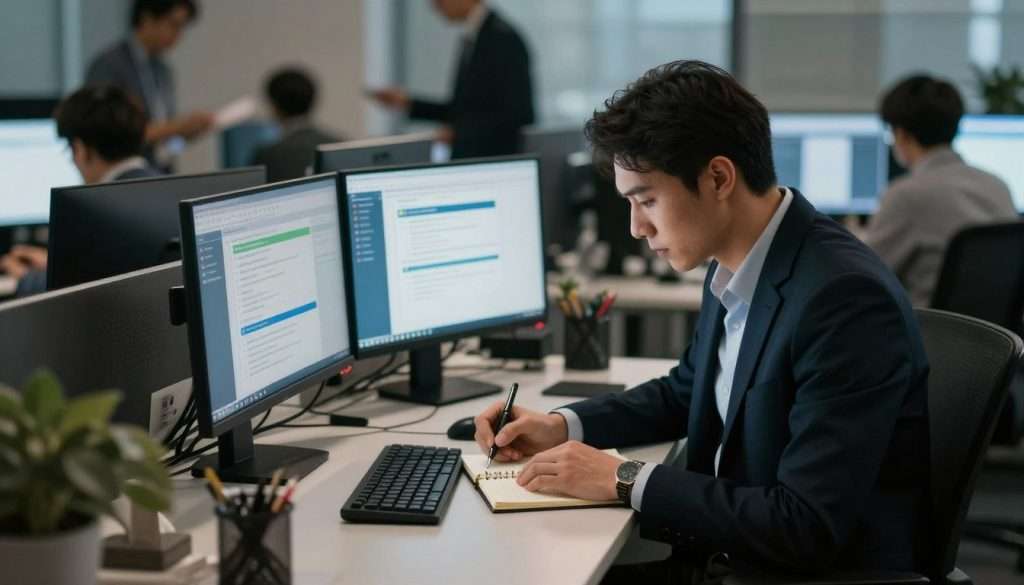
By implementing these strategies, we can improve our ability to stay focused under pressure, leading to better outcomes in high-stress situations.
Physical Techniques That Support Mental Clarity
When you’re under pressure, your body gets tense. But, there are ways to release that tension and think clearer. Physical tension and mental fogginess often go together. Fixing one can help the other.
Progressive Muscle Relaxation for Rapid Tension Release
Progressive muscle relaxation is a strong method for releasing tension. It involves tensing and relaxing different muscle groups. This calms your body and mind.
The Systematic Tense-and-Release Method
This method starts with tensing a muscle group for a few seconds, then relaxing it. Begin with your toes and move up to your head. Notice how each area feels as you tense and relax it.
Power Posing and Body Language Effects on Confidence
Your body language greatly affects your mental state. Taking expansive, confident poses can boost your confidence and ability to handle pressure.
How Physical Stance Influences Mental State
Studies show that powerful body language can lower cortisol levels and improve mood. It’s not just feeling confident; it’s becoming more confident through your stance.
The Two-Minute Power Pose Protocol
Stand or sit in a powerful pose for two minutes. Keep your back straight, shoulders back, and posture expansive. This simple act can prepare you for tough situations with more confidence.
Movement and Position Changes to Reset Your Mind
Changing your environment or moving can reset your mind. Simple actions like standing up or taking a short walk can make a big difference.
Walking Meetings and Standing Decisions
Try walking meetings or making decisions while standing. These actions can spark creativity and help solve problems from a new perspective.
Micro-Breaks for Macro Results
| Activity | Duration | Benefit |
|---|---|---|
| Stretching | 1 minute | Relieves physical tension |
| Short walk | 2-3 minutes | Boosts creativity |
| Deep breathing | 2 minutes | Calms the mind |
By adding these physical techniques to your daily routine, you can stay mentally clear and perform at your best, even in high-pressure situations.
Practice and Preparation: Training for Pressure Situations
Learning to stay calm and think clearly under pressure is a skill you can develop. It comes from practice and preparation. Taking care of yourself and learning new behaviors helps a lot.
Simulation and Scenario Planning
One good way to get ready for pressure is through simulation and scenario planning. You create scenarios that feel real and practice how you’ll handle them.
Mental Rehearsal and Visualization Techniques
Mental rehearsal is about imagining yourself doing well in tough situations. It boosts your confidence and gets your mind ready for real challenges.
Running Tabletop Exercises for Real Scenarios
Tabletop exercises are like simulations where you and your team go through a scenario. You talk about what to do and how to respond. It helps you spot problems and improve your strategic thinking.
Developing Your Personal Pressure Response Playbook
Having a personal playbook for pressure is very helpful. It’s about writing down strategies that work for you and planning for common stressors.
Documenting What Works for You
Keep track of how you’ve handled pressure before. Note what worked and what didn’t. This helps you get better over time.
Creating If-Then Plans for Predictable Stressors
Make plans for common stressors. For example, “If I’m under a tight deadline, then I’ll prioritize and break tasks into smaller parts.”
Learning from Past High-Pressure Experiences
Looking back at past experiences is key for growth. Do after-action reviews without judging yourself. It’s a great way to learn.
After-Action Reviews Without Self-Judgment
After a stressful situation, review what happened. Focus on what you can learn, not on criticizing yourself. It helps you grow.
Building Confidence Through Incremental Exposure
Slowly getting used to pressure situations builds your confidence. It also helps you think clearly when it matters most.
Stress Inoculation Training Principles
Stress inoculation training means gradually facing stress in a controlled way. It makes you more resilient and better at strategic thinking under pressure.
By using these methods regularly, you’ll be more ready to handle tough situations. You’ll make better decisions, even when it’s hard.

| Technique | Description | Benefit |
|---|---|---|
| Mental Rehearsal | Visualizing yourself handling challenging situations | Builds confidence and prepares for real-life scenarios |
| Tabletop Exercises | Discussing hypothetical scenarios with your team | Identifies potential pitfalls and strengthens strategic thinking |
| If-Then Plans | Creating plans for predictable stressors | Enhances preparedness and reduces stress |
Conclusion
Thinking critically under stress is more important than ever in our fast-paced world. We’ve looked at ways to improve your critical thinking and problem-solving skills. This includes building mental resilience and using physical techniques to stay mentally clear.
By using these methods, you’ll be ready for high-pressure situations. Making good decisions when stressed requires calmness, clear thinking, and problem-solving skills. As you get better at these, you’ll feel more confident and able to face any challenge.
Today, leaders face new challenges that test their strength and resilience. By using the techniques we’ve discussed, you’ll be ready to tackle these challenges. You’ll make a real difference in your work and personal life.