
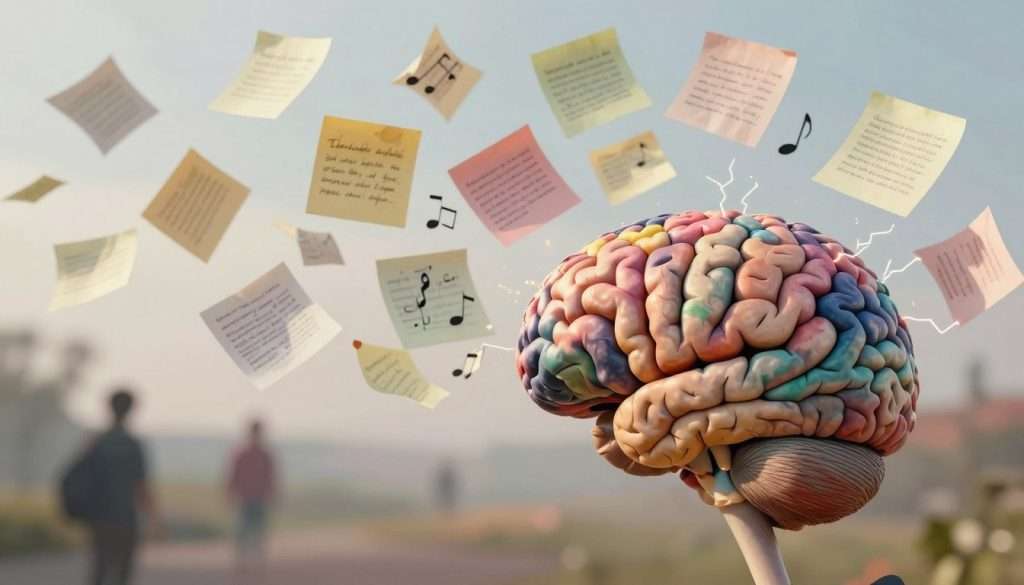
Ever sat down to study, only to have your mind go blank when you need to recall something? It’s a frustrating experience we’ve all had. You’re desperate for information, but your brain seems to have nothing.
But then, remember that awkward moment in middle school? The memory is crystal clear. It feels like a cruel joke. We’re going to explore how our minds decide what to keep and what to forget.
Understanding this process is key to better learning. By knowing how our biology handles data, we can stop fighting our own minds. Let’s learn how to make studying a smart habit, not a chore.
Key Takeaways
- Emotional intensity acts as a sticky note for long-term memory storage.
- The mind prioritizes survival-based information over abstract academic facts.
- Active recall helps bridge the gap between temporary storage and deep learning.
- You can hack your biology by adding personal meaning to study material.
- Consistency beats intensity when training your memory for better results.
The Evolutionary Purpose of Social Pain
Evolution has made us feel social pain like it’s a real injury. You might think your brain is mean for replaying awkward moments. But it’s actually trying to protect you. Understanding why embarrassing moments stick is key to accepting your inner critic.
Survival and Social Cohesion
In the past, being part of a group was crucial for survival. Our ancestors needed the tribe for food, protection, and knowledge. Being cast out meant a big drop in survival chances.
Our brains became super aware of our social standing. We had a strong need to fit in and avoid rejection. This is why embarrassing moments stay in our memory—they warn us to avoid mistakes that could harm our group status.
The Danger of Social Exclusion
Today, you won’t be kicked out for tripping or saying something silly. But your brain still reacts as if you were facing danger. This evolutionary baggage explains why you get nervous and blush when embarrassed.
Your brain is just trying to keep you safe by pointing out social mistakes. It sees these moments as critical data points to help you stay in good standing. It might feel like your brain is undermining your confidence. But it’s really just doing its job to keep you connected to your community.
Why Your Brain Saves Cringe Forever and Deletes Your Notes
It seems unfair that we remember middle school blunders clearly but forget important facts. You might wonder why your brain saves cringe forever and deletes your notes. It’s not that your mind is broken; it just focuses on survival over grades.
The Contrast Between Emotional and Semantic Memory
Let’s explore how your brain stores information. Semantic memory keeps facts and formulas, but it’s hard to keep them from being forgotten. You need to repeat them often to keep them in your memory.
But emotional memories are very hard to forget. If an event makes you feel strongly, like embarrassment, your brain treats it as crucial. It believes the event is important for your safety, so it stores it forever.
The Persistence of Vivid Autobiographical Events
These cringe memories can pop up unexpectedly. They might interrupt your study time, replaying embarrassing moments. This can be frustrating, and for some, it’s a sign of anxiety or stress.
These memories feel like a part of who you are. Your brain replays them to help you avoid making the same mistake again. While this helped our ancestors, it’s very tiring for students today. Knowing this can help you stop feeling overwhelmed and focus on your studies.
The Role of the Amygdala in Emotional Encoding
Meet the amygdala, a tiny, almond-shaped part of your brain. It decides what memories to keep and what to forget. Knowing about it is key to understanding neuroscience of memory.
Your brain doesn’t treat all information the same. The amygdala looks for emotions, making important moments stand out. This way, your most intense experiences are remembered for a long time.
How the Amygdala Tags Memories
The amygdala is like a fast editor for your life. It watches for threats, joy, or embarrassment. When it finds strong emotions, it marks those memories as important.
This is why you remember embarrassing moments but forget everyday things. Your brain focuses on survival and social standing over small facts. The amygdala helps you learn from your past, even if it’s hard.
“Emotion is the glue that binds memory to the mind, making the fleeting moments of our lives permanent fixtures in our consciousness.”
The Connection Between Emotion and Memory Strength
How you feel affects how well you remember something. Strong emotions like embarrassment or excitement make memories stick. This is how brain function and memory work together.
Let’s look at how different experiences are remembered:
| Memory Type | Emotional Trigger | Retention Level |
|---|---|---|
| Cringey Social Moment | High (Embarrassment) | Very High |
| Daily Grocery List | Low (Neutral) | Low |
| Major Life Achievement | High (Joy/Pride) | Very High |
As shown, we’re not perfect at remembering everything. We focus on what helps us survive and thrive. Accepting this can make you less hard on yourself when you forget small things.
The Hippocampus and the Fragility of Academic Memory
Think of your brain as a busy office. The hippocampus is like the librarian for all your academic knowledge. While other parts of your brain deal with emotions, this structure quietly manages your brain function and memory. It turns short classroom lectures into lasting knowledge.
The Process of Encoding Factual Data
When you study, your hippocampus sorts through new information. It decides which facts are worth keeping and which are not. This process is surprisingly fragile compared to emotional memories.
Academic data often doesn’t have an immediate survival benefit. So, your brain might not prioritize it. If you don’t engage with the material, the hippocampus may struggle to store it long-term. This is why studying for hours might not feel effective.
Why Information Without Context Fades Quickly
The secret to effective memory storage in the brain is context. When you learn a fact alone, your brain sees it as clutter. Without a story or connection, the neural pathways don’t get strengthened.
You can help your hippocampus by linking new concepts to things you already know. Creating a narrative or personal association gives your brain a reason to remember. Making your study material stickier ensures your hard work pays off during exams.
The Spotlight Effect and Social Anxiety
Have you ever felt like a walking, talking blooper reel under a giant stage light? Maybe you tripped in the hallway or said something a bit off in a meeting. Suddenly, your heart races, and it feels like everyone is watching your every move.
Perceiving Ourselves Through Others’ Eyes
This feeling is called the spotlight effect. It makes us think we’re the center of everyone’s world. But, most people are too busy with their own lives to notice our small mistakes.
Thinking others are intensely focused on us creates a false sense of being watched. We see our life through a lens that makes our flaws seem bigger. Recognizing this bias helps us feel more at ease in social situations.
The Amplification of Embarrassment
Feeling judged is why embarrassing moments stick in our minds. We think our mistakes are huge, so our brain remembers them well. This is how we get those cringe memories that wake us up at 3:00 AM.
Knowing that people are usually distracted helps us calm our social anxiety. The table below shows how our thoughts often differ from reality in social situations.
| Situation | Your Internal Perception | The Likely Reality |
|---|---|---|
| Stumbling in public | Everyone saw and is judging | Most people didn’t notice |
| Saying the wrong word | Everyone thinks I am foolish | People are focused on their own tasks |
| Wearing an odd outfit | I am the center of attention | People are preoccupied with their day |
Why Negative Experiences Carry More Weight
Why does your brain make a big deal out of a small social mistake? It’s like your mind is playing a trick on you. It highlights every little error but ignores your big wins.
This isn’t just bad luck. It’s how your brain is wired. We naturally focus more on the bad than the good.
The Negativity Bias in Cognitive Psychology
In cognitive psychology, this is called the negativity bias. It means our brains tend to focus more on the negative.
This bias acts like an alarm system that never stops. It might be annoying when you’re studying, but it helped our ancestors survive.
“The brain is like Velcro for negative experiences and Teflon for positive ones.”
Prioritizing Threats Over Neutral Data
Long ago, missing a threat could be deadly. Our cognitive processes in memory learned to focus on danger first. This kept us safe from predators.
Today, your brain still acts this way. It sees a failed quiz or awkward talk as a threat. This makes you obsess over it for hours.
But, the hours you spent learning new things are forgotten quickly. This creates a big imbalance in your life.
| Feature | Survival Mode | Modern Learning |
|---|---|---|
| Primary Focus | Immediate Danger | Academic Growth |
| Brain Response | High Alert | Often Distracted |
| Memory Storage | Permanent/Vivid | Easily Overwritten |
| Outcome | Safety | Frustration |
Knowing about this bias is the first step to taking back control. When you’re getting caught up in a mistake, remember. Your brain is just doing its job, even if it’s a bit too good at it.
The Science of Forgetting Mundane Information
Forgetting is not a sign that your brain is broken. It’s actually a clever survival trick. In cognitive psychology, we learn that our brains don’t store every detail. Instead, they act like editors, deciding what’s important and what’s not.
The Ebbinghaus Forgetting Curve
In the 19th century, Hermann Ebbinghaus found out we lose info at a set rate. Without review, memory storage in the brain drops sharply in the first day. This is why you might remember something in class but forget it the next morning.
This curve acts like a filter. If you don’t revisit material, your brain thinks it’s not crucial. Knowing this, you can use spaced repetition to fight against forgetting.
Why the Brain Prunes Unused Neural Pathways
Your brain constantly trims unused neural paths to save energy. This process, called synaptic pruning, keeps your mind sharp. When you stop using certain info, your brain recycles those paths for new data.
This is a highly efficient system that focuses on what you use most. To keep info, you must show your brain it’s valuable. Regular use is key to keeping your mental paths open.
| Time Elapsed | Retention Rate | Action Required |
|---|---|---|
| 20 Minutes | 58% | Initial Review |
| 1 Day | 33% | Active Recall |
| 1 Week | 25% | Spaced Practice |
| 1 Month | 21% | Long-term Maintenance |
How Emotional Arousal Enhances Memory Consolidation
Ever wondered why some memories feel like they’re carved into your brain? Emotional arousal acts like a chemical glue, making experiences stick in your long-term memory. This is why we remember our first concert vividly but forget what we ate yesterday.
Neurotransmitters and Memory Fixation
When we feel excited or experience something meaningful, our brain releases special chemicals. Dopamine and norepinephrine are like signals saying, “Save this!” These cognitive processes in memory strengthen the neural pathways of that event.
Think of these chemicals as a highlighter for your brain. They mark important events, making it easier to recall them later. Without this boost, our daily experiences would fade away.
“Emotion is the glue that binds our experiences into the tapestry of our identity.”
The Role of Stress Hormones in Recall
Stress hormones, like cortisol, have a complex role in memory. A bit of stress can sharpen your focus, acting as a natural stimulant. But too much stress can mess with your memory.
This is why you might freeze during a big exam. Your brain gets overwhelmed by stress signals, making it hard to access learned information. Finding the right balance is crucial for mastering memory.
| Stress Level | Impact on Focus | Memory Recall |
|---|---|---|
| Low | Distracted | Weak |
| Moderate | Optimal | Strong |
| High | Overwhelmed | Blocked |
To improve learning, aim for a moderate stress level. This helps your brain stay open to new information, rather than being a locked vault.
Strategies to Hack Your Brain for Better Retention
If your brain saves every awkward moment from high school, why not teach it to save your notes too? We can repurpose natural biases to make studying feel less like work. By matching your study habits to your brain’s natural functions, you can boost your memory retention without getting tired.
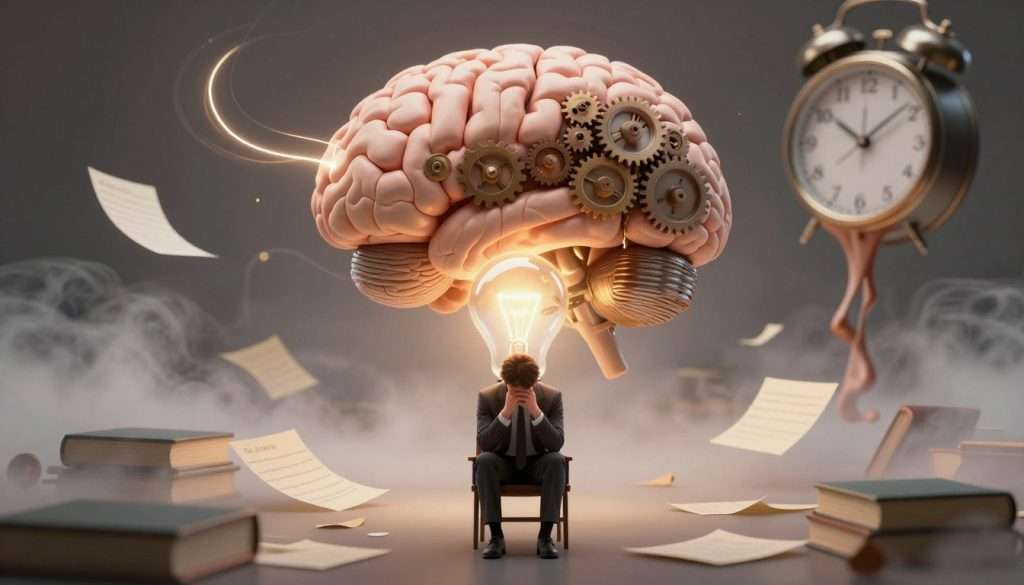
Using Emotional Association for Learning
To make information stick, give it an emotional touch. Link a dry fact to a funny story or a personal experience. Your brain loves info that feels significant. Adding humor or personal touch makes it stick like glue.
For example, remember a complex historical date by linking it to a birthday or a funny event. Turning data into a story tricks your brain into treating your textbook as a drama. This simple trick can greatly improve your memory retention over time.
Spaced Repetition and Active Recall Techniques
After making material interesting, you need a system to keep it in your memory. Spaced repetition reviews info at longer intervals, preventing forgetting. It reinforces neural pathways before they fade.
Active recall, or testing yourself, is the ultimate strategy. It strengthens connections, making info easier to recall. The table below shows why active methods beat passive reading.
| Method | Cognitive Effort | Retention Level |
|---|---|---|
| Passive Re-reading | Low | Poor |
| Active Recall | High | Excellent |
| Spaced Repetition | Medium | Superior |
By using these strategies, you build a strong system for memory retention. Start small, stay consistent, and see how quickly you can recall complex info.
The Impact of Modern Technology on Memory Decay
We live in a world where answers are just a tap away. With the internet in our pockets, our brains have changed how we remember things. We don’t need to memorize facts anymore because we can find them online instantly.
Digital Amnesia and External Storage
This change is called digital amnesia. It happens when we use devices like smartphones to remember things for us. Instead of keeping information in our heads, we rely on our devices to store it.
This makes it easier to forget details. If we know we can look something up, our brains might not bother to remember it. This reliance on technology tells our brain it can take a break from remembering.
The Shift from Internal Knowledge to Searchable Data
Our learning habits have changed. We’re getting better at finding information than at knowing it. This is great for getting things done fast, but it can make our memory weaker over time.
To keep your brain sharp, mix digital habits with learning on purpose. Try to remember important things before using your phone. This simple step helps keep your brain strong in today’s digital world.
| Habit Type | Traditional Approach | Modern Digital Approach |
|---|---|---|
| Information Retrieval | Internal recall and study | Instant search engine queries |
| Data Storage | Mental notes and practice | Cloud apps and screenshots |
| Cognitive Load | High mental engagement | Low mental effort |
| Retention Goal | Long-term mastery | Short-term accessibility |
Reframing Cringe as a Tool for Personal Growth
What if those cringe memories you keep replaying were actually secret keys to your personal growth? Instead of letting these moments haunt your quiet hours, we can choose to see them as valuable data points. Every social stumble is simply a lesson in disguise, waiting for you to decode it.
Learning from Social Mistakes
When you look back at a social blunder, try to view it with the curiosity of a scientist. What exactly went wrong, and how could you handle it differently next time? By analyzing these cringe memories, you refine your social radar and become more adept at navigating complex human interactions.
Think of these moments as training simulations for your personality. You are not failing; you are gathering the necessary experience to handle future situations with more grace and ease. This shift in perspective turns a source of shame into a roadmap for improvement.
“Success is not final, failure is not fatal: it is the courage to continue that counts.”
Developing Resilience Against Embarrassment
Building thick skin does not mean you stop feeling human; it means you stop letting temporary discomfort define your worth. When you learn to laugh at your own blunders, you effectively strip them of their power. This emotional resilience is what separates those who stay stuck from those who keep growing.
You can take the sting out of intrusive thoughts by acknowledging them and then letting them go. Remind yourself that everyone has their own collection of cringe memories, and you are not alone in this experience. Embracing your humanity is the ultimate way to stay confident, no matter how awkward the situation might feel in the moment.
Conclusion
We’ve looked into why your brain might prefer cringe moments over studying. It’s all about survival and the amygdala’s role. Your brain sees social mistakes as threats, but forgets about study notes.
Now, you know how to improve your memory and learning. Your brain is trying to protect you, even if it’s a bit over-the-top. You can work with this instead of fighting it.
Keep practicing recalling information to strengthen your brain. Be gentle with yourself when you make social mistakes or struggle with concepts. You’re making your mind stronger every day.
What small change will you make to your study routine this week? Share your plans with us or post on social media. We’re excited to hear about your progress and how you’re using awkward moments to grow.