
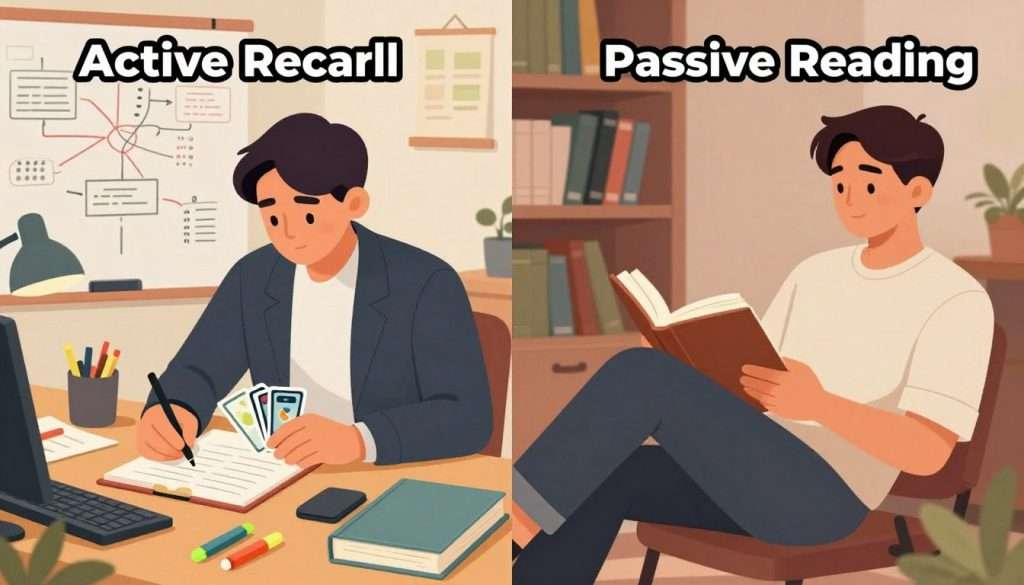
Have you spent hours highlighting notes, then realized you remember almost nothing? Most of us have felt this way. Highlighting feels productive, but it can create a cozy illusion of learning. True mastery comes from retrieval practice, which makes you pull information from memory instead of staring at a page.
When we compare active recall vs. passive reading, the difference is clear. Passive reading feels like a comfortable stroll, while active recall gives your mind a workout. Simple study techniques, such as flashcards, blank-page summaries, and explaining concepts aloud, build neural pathways that stick.
If this resonates with you, my free book How to Become the Smartest Student in the Classroom is free. It gives you a full system with memory routines and strategies that work. No cost, no catch. Grab your free copy here.
Key Takeaways
- Rereading notes often creates a false sense of confidence.
- Retrieval practice forces your mind to work harder, leading to better retention.
- Use flashcards to test yourself instead of just reviewing material.
- Try the blank-page method to see what you truly understand.
- Explaining topics out loud helps identify gaps in your knowledge.
Why Active Recall vs. Passive Reading: Why Your Brain Loves the First One
We often mistake reading comfort for the power of true learning. Scanning a textbook feels productive, but your brain function often chooses the easiest path. This shows why active recall vs. passive reading matters: you may know less than you can recall under pressure.
The difference between recognizing information and retrieving it
A major gap exists between recognizing a concept and explaining it from scratch. Reading makes information look familiar, so your brain confirms it without much effort. This passive process requires little mental work.
In contrast, active recall makes your brain retrieve information without cues. This is the core of effective cognitive learning. It resembles seeing a friend’s face but reciting their entire life story without checking their profile.
Why familiar-looking notes can create false confidence
Many students reread highlighted notes. Familiar text tricks your brain into believing you have mastered the material. In educational psychology, this is called the fluency illusion.
You feel you understand the topic because the words sit before you. Once you close the book, that sense of mastery often vanishes. You are enjoying recognition, not truly learning.
How the two study methods feel different during learning
Passive reading feels smooth and easy, so we often choose it. It uses little mental energy, allowing you to continue for hours. Sadly, this ease prevents strong, long-term memory.
Active recall feels difficult and sometimes frustrating. You must struggle to find answers, and that effort makes memories stick. Grab my free book How to Become the Smartest Student in the Classroom here: get a full system that works.
| Feature | Passive Reading | Active Recall |
|---|---|---|
| Mental Effort | Low | High |
| Memory Strength | Weak | Strong |
| Primary Goal | Recognition | Retrieval |
| Exam Readiness | Low | High |
What Happens in the Brain During Passive Reading
We often mistake reading comfort for the hard work of learning. Although information feels absorbed, our brain function may only process symbols instead of building deep neural connections.
How reading creates exposure without demanding retrieval
Reading a textbook exposes your mind to new data. This process stays passive because information comes to you instead of coming from memory. According to educational psychology, real learning requires effort to retrieve information, not merely receive it.
Why highlighting and rereading often feel more productive than they are
Highlighting lines and rereading chapters can create a sense of familiarity. Your brain recognizes the words and assumes you mastered the material. This trap harms memory retention because recognition differs from recall.
“The illusion of competence is the greatest enemy of the serious student.”
The role of attention, working memory, and mental effort
Passive reading demands little mental effort. Since working memory need not rebuild ideas, your attention can drift easily. You may finish a page and realize you do not understand what you read.
When passive reading still has a useful purpose
We should not abandon reading; it serves a specific role in learning. It is excellent for:
- Getting an initial overview of a new topic.
- Orienting yourself to complex terminology.
- Building a foundation before you start testing your knowledge.
My free book How to Become the Smartest Student in the Classroom offers a full system. It costs nothing, has no catch, and includes memory techniques, study routines, and strategies that stick. Grab your free copy here.
How Active Recall Strengthens Memory Retention
When you stop scanning notes and start searching for answers, you unlock deeper cognitive learning. Your brain works like a muscle, growing stronger each time you lift a challenging mental weight. Each successful recall gives your brain function a brief workout and supports memory retention.
How retrieval practice reinforces memory pathways
Each time you use retrieval practice, you build a stronger neural bridge to specific information. Searching for an answer matters as much as finding it. That effort makes the path easier to follow when you recall the same fact again.
Why effortful remembering improves later access to knowledge
If studying feels easy, you may not learn as much as you think. Effortful remembering helps information stay with you for the long term. When your brain works for an answer, knowledge stays ready for a high-stakes exam.
How active recall supports durable learning instead of short-term familiarity
Passive reading can create a fluency illusion: familiar material may feel known. Active recall makes you prove what you know and strengthens cognitive learning. This builds durable learning that lasts beyond the night before the test.
The difference between struggling productively and becoming overwhelmed
Find the right challenge level during your study sessions. Productive struggle means you feel challenged but can correct your mistakes. Total confusion means you should review basics or split the material into smaller, simpler questions.
If this article resonates, my free book How to Become the Smartest Student in the Classroom offers a full system. It covers memory techniques, study routines, and strategies that actually stick. There is no cost and no catch. Get your free copy here → https://www.studyingmachine.com/free-books/.
Active Recall and the Science of Retrieval Practice
Your brain is not a storage bin; it is a muscle that grows stronger through retrieval. When you pull information from your mind, you do the work needed for true learning. This process builds effective retrieval practice, turning study time into a focused workout for your neurons.
Why recalling an answer is more powerful than rereading it
Rereading your notes can create false comfort. You see familiar words and assume you know them, but your brain may only recognize patterns. Recalling an answer from scratch makes your brain rebuild information and form stronger neural pathways.
This shift in study techniques separates top students from others. Close your book and test yourself to move from passive observation to active engagement. It feels harder, but this effort improves memory retention.
How feedback corrects errors and improves accuracy
Retrieval is only half the battle; you also need to check your answer. Feedback shows where your knowledge is strong and where it remains unclear. Without this check, you may reinforce incorrect information.
When you find a gap, your brain pays closer attention to the correct answer. This correction process creates a powerful learning moment and sharpens your understanding. Compare each recalled answer with your source material to keep your accuracy high.
Why spacing retrieval attempts produces stronger long-term results
Cramming everything at once causes your brain to discard information quickly. Spacing your retrieval attempts makes your brain work harder to recover data. This effortful recovery is the secret sauce for long-term memory retention.
Use flashcards, practice quizzes, or verbal explanations to test yourself at increasing intervals. If this article resonates with you, my free book How to Become the Smartest Student in the Classroom gives you a full system. It covers memory techniques, study routines, and strategies that stick. There is no cost or catch; grab your free copy here.
Using retrieval practice before, during, and after a study session
You can weave these study techniques into your entire routine. Before reading, predict answers to the chapter headings. During your session, pause every few minutes and summarize what you learned without looking at the text.
After finishing, test yourself on the main concepts one last time. This habit keeps you using retrieval practice to lock in what you learned. It helps your hard work pay off.
Why Passive Reading Feels Easier but Produces Weaker Results
Have you ever felt like a genius while reading your textbook, then gone blank during the exam? This happens because active recall vs. passive reading use two very different methods. Reading feels smooth, but it can trick your brain into feeling prepared.
The fluency illusion and the feeling of understanding
This is called the fluency illusion. When you read a page, familiar words can make your brain assume it stored the information. In fact, you recognize the text instead of retrieving it from memory.
How repeated exposure hides gaps in knowledge
Scanning notes again and again can feel comforting, but it hides what you do not know. You may think you understand a concept, but true learning means explaining it without the book. This core idea from educational psychology explains why rereading alone does not build long-term retention.
Why low-effort studying can lead to poor exam performance
Exams put you under pressure and require you to retrieve knowledge without help. If you use low-effort methods, you may struggle when your notes disappear. Using effective learning strategies helps your brain perform under pressure.
Signs that reading has become a substitute for learning
If you highlight whole paragraphs or check the answer key before solving a problem, you may only be reading. These habits create a false sense of progress that vanishes when you face a blank sheet of paper.
| Feature | Passive Reading | Active Recall |
|---|---|---|
| Mental Effort | Low | High |
| Brain State | Recognition | Retrieval |
| Exam Result | Poor | Strong |
If this article speaks to you, my free book How to Become the Smartest Student in the Classroom offers a full system. It covers memory techniques, study routines, and strategies that stick. No cost, no catch. Grab your free copy here.
Choosing the Right Active Recall Study Techniques
You do not need one magic trick to master every subject. You need a useful toolkit. Build effective learning strategies that match each topic.
If this article resonates with you, my free book How to Become the Smartest Student in the Classroom gives you a full system. It includes memory techniques, study routines, and strategies that stick. It costs nothing, with no catch, so grab your free copy here.
Answering questions from memory before checking notes
The key rule of retrieval practice is making your brain work before checking the answer. Looking at notes too soon builds recognition, not recall. The struggle is where the learning happens.
Try the “blank page” method. Read a section, close your book, and write everything you remember on a clean sheet. Check your notes only after you have exhausted your memory.

Creating flashcards that test one clear idea at a time
Many students put too much information on one card. This makes it hard to tell whether you understand the concept or remember a long list. Keep each card simple and focused.
“The quality of your questions determines the quality of your memory.”
Testing one idea per card prevents you from relying on context clues. If you miss a card, you know which information needs more attention.
Using practice tests to simulate real performance demands
Studying should feel like a rehearsal for the actual exam. Practice tests train your brain to recall information under pressure. They are among the most effective learning strategies because they copy the setting where you must perform.
Turning chapter headings into useful retrieval questions
Before starting a new chapter, turn its headings into questions. For “The Causes of the Civil War,” ask, “What were the primary causes of the Civil War?” before reading.
This simple shift changes passive reading into active retrieval practice. It gives your brain a clear goal and makes your study techniques more focused. By finishing the chapter, you will have answered its most important questions.
How to Combine Active Recall With Spaced Repetition
Spacing out study sessions helps you remember information after closing your textbook. Instead of cramming, break learning into smaller, manageable chunks. This approach is one of the most effective learning strategies available to students today.
Why spacing study sessions improves memory retention
Your brain is not a hard drive that saves everything perfectly at first. When you learn something new, its memory trace begins fading almost immediately. By reviewing material before you forget it, you make your brain retrieve the information.
This process of effortful retrieval builds stronger neural connections. Consistent memory retention depends on repeated encounters over time. It turns fleeting thoughts into long-term knowledge you can use during a test.
Building a review schedule around increasing intervals
You do not need a complex calendar for this method. Review new material after one day, then three days, then a week, and finally a month. As recall becomes easier, stretch those gaps even further.
This pattern keeps your brain engaged without feeling like a chore. My free book How to Become the Smartest Student in the Classroom offers memory techniques, study routines, and strategies that stick. It costs nothing, with no catch. Grab your free copy here.
Knowing when to repeat, delay, or retire a flashcard
Use your performance to guide your study schedule. If you answer instantly and correctly, delay the next review. If you struggle or answer incorrectly, repeat that card sooner to reinforce the concept.
Eventually, some facts become deeply ingrained enough to leave your daily deck. This keeps your retrieval practice focused on areas where you still need help.
Adapting spaced retrieval for exams, vocabulary, and technical subjects
You can apply this system to almost anything you need to learn. For vocabulary, review new words quickly each day. For technical subjects or complex formulas, solve problems from scratch during spaced sessions.
By making every study session a self-test, you avoid passive review. This shift helps your hard work produce real results when it matters most.
Making Active Recall Work for Different Learning Needs
Mastering new information is not about finding a secret style; it is about choosing the right tool for the job. You may label yourself, but rigid learning styles can distract more than they help. Focus on how you can actively engage with the specific content in front of you.
Using written recall for facts, definitions, and concepts
When you need to memorize specific terms or core facts, writing them down from memory is powerful. Do not copy your notes; write the definition in your own words without looking at the source. This act of cognitive learning forces your brain to reconstruct the information and build stronger neural pathways than passive reading.
Using verbal explanation to test deeper understanding
If you want to know if you understand a concept, explain it aloud as if teaching a friend. If you stumble or use jargon to hide a gap, you know where you need to review. This method sharpens your cognitive learning skills by making you organize thoughts into a logical flow.
Using diagrams, examples, and problem-solving for complex material
For subjects like math or science, move beyond words and start drawing relationships. Sketching a diagram or solving a practice problem from scratch is a high-effort activity that pays off. Applying knowledge visually or practically helps you grasp the topic’s underlying mechanics, not just memorize symbols.
Why effective learning strategies are not limited to one learning style
The best students stay flexible and adapt their approach to the material. You need not stick to one method; your effective learning strategies should always use active retrieval. If this article resonates, my free book How to Become the Smartest Student in the Classroom gives you a full system.
It includes memory techniques, study routines, and strategies that actually stick. It has no cost or catch, so grab your free copy here.
Common Active Recall Mistakes That Limit Progress
It is easy to feel progress, but some habits limit your cognitive learning. Even with motivation, small errors can turn a powerful tool into frustration. Let’s sharpen your study techniques so each session brings more value.
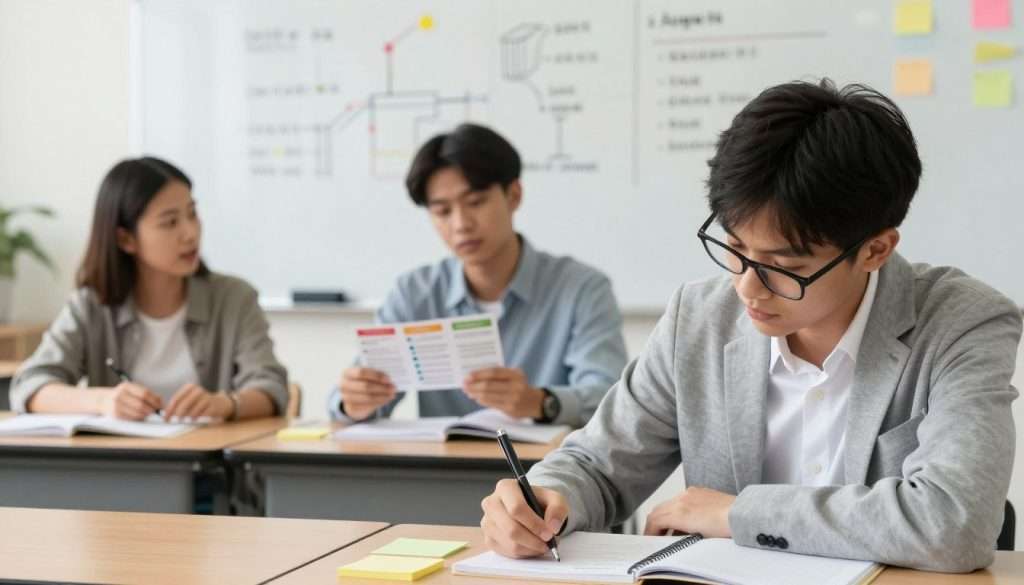
Looking at the answer too quickly
The biggest temptation is flipping your flashcard or checking notes when you feel stuck. This bypasses the key process: struggling to retrieve information. True learning happens in the effort, not in reading the answer.
If you peek too early, you practice recognition instead of recall. Sit with the silence for a few extra seconds. That tension helps your brain build stronger connections.
Making flashcards vague, overloaded, or dependent on recognition
A common trap is making cards far too complex. If you cram an entire chapter onto one card, you test summarizing, not memory. Keep each card focused on one clear idea.
Avoid cues that make answers too obvious. If a flashcard uses a specific word or visual hint, you may mistake recognition for knowledge. Keep your prompts clean and direct so you retrieve the core concept.
Memorizing isolated facts without understanding their connections
It is tempting to treat each fact as a separate item. However, learning styles that focus on rote memorization often fail because they ignore the “why” behind facts. Link new information to things you already know.
“The art of teaching is the art of assisting discovery.”
Ask how a specific fact relates to a broader concept or real-world example. When you understand causes and consequences, information sticks better than disconnected dates or definitions.
Confusing difficult recall with evidence that the method is failing
Many students stop using active recall because it feels hard. They assume that forgetting something instantly means they are doing it wrong. In reality, the difficulty is the point.
If a concept is hard to recall, that does not mean you failed. It means your brain is working hard to strengthen that pathway. If this article resonates with you, my free book How to Become the Smartest Student in the Classroom gives you a full system.
It includes memory techniques, study routines, and strategies that stick. There is no cost or catch; grab your free copy here.
A Practical Study Routine Using Active Recall
Turn your study sessions into a powerful engine for growth. You do not need to be a genius to succeed; you need a repeatable routine that works with your brain. These effective learning strategies can help you stop wasting time and make real progress.
Previewing material before attempting retrieval
Before you begin, scan your material. Review the headings, bold terms, and summary points to build a mental map of the topic. This quick preview warms up your brain and helps you organize new information later.
Closing the book and producing an answer from memory
Once you understand the basic content, close your book or hide your notes. Explain the concepts aloud or write them down from scratch. This retrieval practice matters most because it builds stronger connections in your brain.
“The struggle to remember is not a sign of failure; it is the very moment that learning actually occurs.”
Checking accuracy and recording unresolved questions
Check your work honestly, including what you got right and where you stumbled. Treat mistakes as valuable data points, not reasons to feel bad. Record unresolved questions in a dedicated notebook, then target them during your next session.
Scheduling follow-up reviews before the information fades
Consistency helps you remember information for a long time. Use a simple calendar to schedule your next review before the information fades. Spaced study techniques keep your knowledge fresh and ready for exam day.
If this article resonates, my free book How to Become the Smartest Student in the Classroom gives you a full system. It costs nothing, has no catch, and includes memory techniques, study routines, and strategies that actually stick. Grab your free copy here.
Go Deeper With a Free Guide to Study Smarter
Turn your new knowledge into a complete, high-performance system. If you are ready to move beyond the basics, I created a resource linking theory to real-world success. It helps you master advanced study techniques, so daily sessions feel easier than chores.
What How to Become the Smartest Student in the Classroom covers
This guide is your roadmap for academic success. It covers the full spectrum of memory retention, helping you replace cramming with long-term mastery. You will learn to organize time, manage focus, and approach complex subjects with confidence.
Memory techniques and study routines that actually stick
We focus on practicality above all else. The book turns complex cognitive science into simple steps you can use right away. These effective learning strategies help information stay in your brain longer, even after the final exam.
How to get the free book with no cost and no catch
I believe everyone deserves better ways to learn. That is why I offer this guide for free, with no hidden cost. There is no subscription or catch; it is my way of helping you improve your studies.
Grab your free copy at studyingmachine.com/free-books
Are you ready to start your journey? Claim your copy right now by visiting studyingmachine.com/free-books/. Let’s work together and make your next semester your best one yet!
Conclusion
You now have the tools to change how you process information. Choosing active recall vs. passive reading turns your brain from a passive observer into an active learner.
Using retrieval practice turns hard work into lasting knowledge. Close your books and make your brain produce answers. This builds mental pathways for true memory retention.
Start small by explaining concepts aloud or using practice tests to check your understanding. Space these efforts over time to keep your mind sharp for any exam or project.
If this approach interests you, my free book How to Become the Smartest Student in the Classroom offers a full system. You will find memory techniques, study routines, and strategies that actually stick. It costs nothing, with no catch.
Grab your free copy here at Studying Machine. Let us keep building better habits together as you master the art of learning.