

Ever wondered why your curiosity fades after leaving school? We often see education as a race with a finish line. But what if the best parts come after you get your diploma?
True growth doesn’t end when you leave school. It’s a continuous adventure that keeps your mind sharp and spirit high. When you dedicate yourself to lifelong learning, every day becomes a chance to learn something new or find a hidden passion.
Taking charge of your own growth is the best self-care. By embracing this, you stop waiting for others to teach you. You start building the life you really want. Let’s see how you can make this shift and keep your brain excited for years!
Key Takeaways
- Education is a personal journey that goes beyond school.
- Being curious turns everyday experiences into valuable lessons.
- You have the power to control your own growth.
- Learning new skills keeps your mind sharp and boosts your well-being.
- Every day is a chance to learn something new and expand your horizons.
The Philosophy of Continuous Growth
We believe that learning is the heartbeat of a life well-lived. When you dedicate yourself to lifelong learning, you open doors to experiences that keep your mind sharp and your spirit young.
Many think education ends with a diploma, but that’s just the start. The importance of continuous education is in how it shapes your view of the world.
Understanding the Evolution of Knowledge
Knowledge is not static; it’s a living, breathing thing that changes as fast as the world does. You encounter information in three distinct ways throughout your day, whether you realize it or not.
- Formal learning: Structured programs like college courses or professional certifications.
- Non-formal learning: Workshops, seminars, or community classes that offer specific skills.
- Informal learning: The spontaneous lessons you pick up from hobbies, reading, or daily interactions.
Recognizing these paths helps you see that you are always a student. By embracing these different modes, you can better dedicate yourself to lifelong learning in a way that fits your unique lifestyle.
| Learning Type | Primary Setting | Goal |
|---|---|---|
| Formal | Academic Institutions | Degree or Certification |
| Non-formal | Workshops/Seminars | Skill Development |
| Informal | Daily Life/Hobbies | Personal Growth |
The Psychological Impact of Curiosity
Curiosity is the secret fuel that keeps your brain active and engaged. It acts as a bridge, connecting your current knowledge to new, exciting possibilities you have yet to explore.
When you stay curious, you naturally seek out new challenges. This mindset highlights the importance of continuous education because it turns every mistake or question into a chance to grow.
Stay hungry for answers, and you will find that the world becomes a much more interesting place. Your brain thrives when it is challenged, so keep asking questions and chasing those sparks of interest!
Why You Should Dedicate Yourself to Lifelong Learning
Your brain is like a muscle that grows stronger with new challenges. Learning is key to a fulfilling life. Most successful people see education as a lifelong journey, not just a phase.
By embracing lifelong learning, you stay curious and adaptable. This prepares you for any future challenges.
Cognitive Benefits and Brain Health
Did you know daily habits can protect your mind as you age? Mental exercises are linked to a lower risk of dementia. Learning new skills builds “cognitive reserve,” keeping your brain sharp.
“The beautiful thing about learning is that no one can take it away from you.”
Think of your brain as a high-performance engine. If unused, it will rust. But with constant learning, it stays in top shape. Learning a new language or playing a musical instrument is crucial for brain health.
Professional Advancement in a Changing Economy
The modern job market moves fast. Sticking to old skills can leave you behind. A strong lifelong learning motivation sets you apart and impresses employers.
- Adaptability: You learn to embrace change, not fear it.
- Relevance: You stay current with industry trends and tools.
- Problem-Solving: A curious mind finds innovative solutions to tough problems.
Personal Fulfillment and Emotional Well-being
Learning boosts your happiness. Mastering new concepts releases dopamine, giving you a real sense of achievement. This emotional reward motivates you to keep learning.
Learning gives you a sense of purpose, even in tough times. It turns life into a world full of possibilities. Investing in your growth means investing in your happiness and success.
Essential Skills for the Modern Learner
In today’s world, knowing how to find and use information is key. You need more than just facts. You need lifelong learning skills to find, process, and use knowledge well. These skills help you become the master of your own learning journey.
Developing Critical Thinking and Analysis
Critical thinking keeps your mind sharp. It’s not enough to just read headlines or watch videos. You must question the source and check the evidence.
By analyzing information, you look for biases and hidden agendas. This makes you a smart consumer of content. You learn to ask, “Is this true, and how do I know?” This is a key part of lifelong learning skills.
Mastering Information Literacy
We live in a world filled with digital noise. To master information literacy, you need to know where to find credible data. You must learn to spot quality research from opinions.
Here are some tips to improve your literacy:
- Verify claims through multiple reputable sources.
- Check the publication date to ensure the information is current.
- Identify the author’s credentials and potential conflicts of interest.
The Art of Self-Directed Research
The most successful people read a lot every day. They read two to three hours daily. This self-directed research is what makes them stand out.
You don’t need a classroom to learn something new. You just need to find the right materials. By taking charge of your learning, you focus on what matters to you. Self-directed research lets you explore topics you’re interested in. This way, you build a strong foundation of knowledge that’s yours alone.
How to Cultivate a Learning Mindset
Turning every day into a learning experience is key. Seeing life as a journey of self-discovery opens new doors. It’s not just about reading books; it’s about changing how you think.

Embracing the Growth Mindset Framework
A growth mindset sees life as a journey of constant self-development. You view your talents as seeds that need care. This mindset makes tackling tough tasks exciting, not scary.
With this mindset, you focus on getting smarter, not just looking smart. Every challenge is a chance to grow. You’re defined by your potential, not just your current skills.
Reframing Failure as a Learning Opportunity
We all face setbacks. Instead of getting discouraged, see them as valuable data points. Failure is a teacher, showing you what to practice more.
By seeing failures this way, you avoid the trap of needing to be perfect. You start asking, “What can I do differently next time?” This turns frustration into progress.
Maintaining Intellectual Humility
Being open to new ideas is a sign of strength, not weakness. Intellectual humility means you’re okay with not knowing everything. It’s freeing!
Letting go of the need to be right opens you up to genuine growth. This openness keeps your knowledge fresh and relevant in a changing world.
| Feature | Fixed Mindset | Growth Mindset |
|---|---|---|
| View of Challenges | Avoids them | Embraces them |
| Response to Failure | Gives up easily | Learns from mistakes |
| Effort Level | Sees effort as fruitless | Sees effort as the path to mastery |
| Feedback | Ignores useful criticism | Learns from constructive input |
Practical Strategies for Consistent Education
Learning shouldn’t be a hassle but a natural part of your day. Life gets busy, but we’re here to help you fit learning into your schedule easily. With the right lifelong learning strategies, you can turn small moments into chances to grow.
Setting Achievable Learning Goals
Success starts with small steps. Instead of reading a whole book at once, aim to read just five pages. Breaking big goals into bite-sized pieces makes them easier to achieve.
“The journey of a thousand miles begins with one step.”
Define what success means to you each week. It could be finishing one online module or learning three new words. Keep your goals clear and realistic to avoid burnout and stay motivated.
The Power of Micro-Learning Techniques
You don’t need a lot of time to learn. Micro-learning lets you learn in short, manageable chunks. For example, wake up 30 minutes early for a quick lesson or listen to a podcast while doing laundry.
These short learning sessions are great for remembering what you’ve learned. By using these lifelong learning strategies consistently, you build a habit that fits your life. It’s about making progress, even with just a few minutes to spare.
Building a Personal Knowledge Management System
Once you start learning, you need a way to keep your ideas. A personal knowledge management system helps you organize your notes and insights. Use digital tools like Notion, Obsidian, or a notebook to track your progress.
- Capture: Write down interesting facts or thoughts as soon as they hit you.
- Organize: Group your notes by topic to make them easy to find later.
- Review: Spend a few minutes each week looking back at what you have learned.
Having a system makes your educational journey feel more organized. It turns scattered info into a library of knowledge you can access anytime. Stay curious and keep building your path to knowledge!
Leveraging Digital Resources and Tools
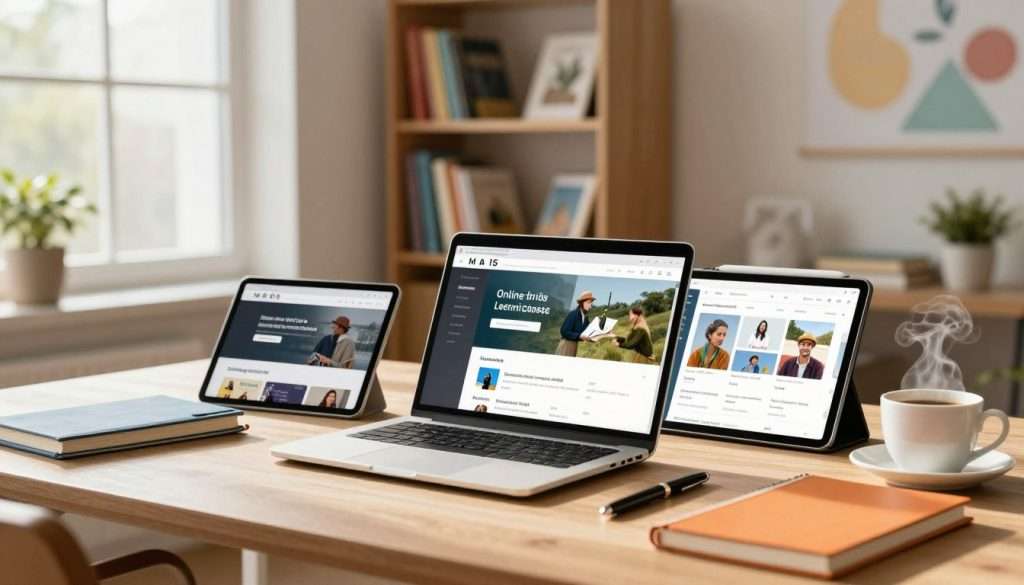
We think the web is like a huge library, but you need the right tools to find what you need. It can be hard to find good information online, but it’s doable. With the right lifelong learning resources, you can make your screen time useful for learning.
Utilizing Online Courses and Platforms
The internet is full of chances to learn new things without spending a lot of money. Sites like Coursera, edX, and Khan Academy offer top-notch education from home. These lifelong learning resources let you learn at your own speed, fitting it into your busy life.
Whether you want to learn a new language or get into data science, there’s a course for you. Many of these sites have free or cheap options that are worth your time. Consistency is key, so pick one thing and stick with it until you feel sure about it.
Curating High-Quality Educational Content
Not all online content is good, and your time is valuable. You should pick what you follow online carefully. Follow good newsletters, educational YouTube channels, and use tools like Pocket or Notion. This way, your online feed will have high-quality information and not just random stuff.
Think of your online space like a garden that needs regular care. If something doesn’t interest you anymore, unfollow it. Keeping your online feed focused helps you stay on track with your goals.
Engaging with Digital Communities and Forums
Learning is better when you do it with others. Joining online communities on Reddit, Discord, or industry forums lets you share ideas and learn from others. These lifelong learning resources are great for asking questions, getting feedback, and staying motivated.
When you join these groups, you get to see different views that books might not offer. Don’t be afraid to join the conversation; your thoughts might help someone else. Making these connections can turn solo studying into a team effort.
| Platform Type | Best For | Cost Level | Community Access |
|---|---|---|---|
| MOOCs | Structured Courses | Low to Free | Moderate |
| Forums | Peer Discussion | Free | High |
| Newsletters | Curated Insights | Free | Low |
| Video Libraries | Visual Learning | Free | Low |
Overcoming Common Barriers to Self-Improvement
Life often gets in the way of our plans for continuous self-improvement. We tend to stick to what we know, even if it’s not the best. When you feel stuck, remember it’s a normal part of the journey.
Managing Time Constraints and Busy Schedules
You don’t need a lot of free time to grow. Look for small moments in your day. Even just fifteen minutes can make a big difference if you do it every day.
- Use your morning coffee time for reading.
- Listen to educational podcasts while doing chores.
- Break down large goals into tiny, manageable tasks.
Combating Information Overload
In today’s world, we face a lot of information. It’s easy to feel overwhelmed. But focus on quality over quantity to keep your lifelong learning motivation up.
“The secret of getting ahead is getting started. The secret of getting started is breaking your complex overwhelming tasks into small manageable tasks, and starting on the first one.”
Choose a few reliable sources to follow. Instead of reading everything, pick a few good newsletters or books. Less is truly more when you want to learn well.
Staying Motivated During Plateaus
Plateaus are not failures; they mean you’re getting better. When you don’t see results right away, it’s easy to lose motivation. Remember the long-term benefits of lifelong learning, like a healthier brain and personal growth.
To stay motivated, keep a journal of your progress. Seeing how far you’ve come can help you keep going. Remember, continuous self-improvement is a long journey, and you’re doing great!
Integrating Learning into Your Daily Routine
We think the best way to grow is by adding new knowledge to your daily life. You don’t need to change your whole life to learn more. Small changes can turn everyday moments into chances to grow.
Transforming Commutes into Educational Opportunities
Your daily commute is a chance to learn, not just a waste of time. Try listening to educational podcasts or audiobooks instead of music. Nurturing your passions by listening to experts is a great way to learn.
This habit shows the importance of continuous education without needing a desk. Whether on a train or in traffic, you can learn something new every day. It makes your commute more productive and fun.
Establishing Evening Reflection Habits
The end of the day is great for reflecting on what you’ve learned. Take ten minutes before bed to write down your thoughts in a journal. Think about new ideas you’ve learned or how to apply them tomorrow.
This practice helps you remember what you’ve learned. It also lets you see how you’ve grown over time. Reflection is the secret ingredient that makes information valuable.
Creating a Dedicated Learning Environment
A special place for studying can make a big difference. You don’t need a fancy office; a cozy corner with good light is enough. When you sit there, you’ll focus better on learning.
Keep your favorite books or tools nearby to stay motivated. By creating a space that excites you to study, you show the importance of continuous education in your home. Small changes like these make learning a natural and enjoyable part of your routine.
Conclusion
We hope this guide makes learning exciting, not a chore. Knowledge is the most valuable thing in our world today. Your drive to grow is your biggest asset.
Every day, aim to be your best self. Keep exploring and learning about the world. This journey of self-improvement opens doors you never knew existed.
We’re excited to see where your path leads. Use tools like Coursera or read books. Start small and watch your potential grow.
Your journey of self-improvement begins now. What new thing will you learn today? Share your goals with us and keep moving forward.