

Creating the perfect study space is more than just making it look good. It’s about building an environment that fosters effective learning. Studies show that things like where you sit, the light, noise, and colors can really affect how well you learn and remember things.
Imagine having a personalized study area that makes studying easy and fun! By understanding what makes a great learning environment, we can optimize our study space to fit our needs.
We’re here to help you create your dream study zone. Let’s look at how to make your study space help you, not hinder you!
Key Takeaways
- Understand the psychology behind a perfect learning environment
- Learn how to optimize your study space for better productivity
- Discover the importance of a personalized study area
- Explore how factors like light, noise, and color impact learning
- Create a study zone that fosters effective learning
The Science Behind Effective Learning Spaces
The psychology of a perfect learning environment is about how our surroundings affect our brain. When we create a productive study space, we’re doing more than just setting up furniture. We’re building a place that can really help us learn better.
How Environment Affects Cognitive Function
Our surroundings greatly impact how we think. For example, natural light can make us feel better and reduce stress. Studies show that students do better in bright, natural light than in dark classrooms.
Research on Optimal Study Conditions
Research has found important factors for an efficient study zone design. These include the right lighting, comfortable temperatures, and little noise. Knowing these, we can make our study areas better for learning.
- Optimal lighting conditions, preferably natural light
- A comfortable temperature range
- Minimal noise levels
The Connection Between Space and Productivity
The design of our study space can either help or hurt our productivity. By creating a space that’s both cozy and engaging, we can focus better and learn more. It’s not just about the layout but also how the environment makes us feel.
Assessing Your Learning Style and Study Needs
Figuring out your learning style is the first step to creating a personalized study area that fits you. Studies show people learn in different ways, like seeing, hearing, or doing. Knowing how you learn best is essential for enhancing your learning environment.
Visual, Auditory, and Kinesthetic Learning Preferences
Let’s look at the three main learning styles:
- Visual learners do well with diagrams, charts, and pictures.
- Auditory learners learn best from listening, like in lectures or audio.
- Kinesthetic learners learn by doing, through hands-on activities.
Finding out your main learning style helps you set up your study area for the best results.
Matching Your Environment to Your Learning Style
After figuring out your learning style, you can make changes to your study space. For example, if you’re a visual learner, add more pictures and colors. If you’re an auditory learner, get a good sound system or use audio apps.
Identifying Your Peak Performance Conditions
Knowing when you’re most focused is also key. Are you more alert in the morning or at night? Plan your study time around when you’re most productive. Make your study area support your best work times.
Location Matters: Choosing the Right Space
Finding the perfect spot for your study zone can change your learning journey. The physical environment greatly affects your focus and productivity. We’ll look at how location impacts your study space, including evaluating spaces, setting boundaries, and dealing with limited options.
Evaluating Available Spaces in Your Home
When picking a study spot, check your home’s available areas. Look at the noise level, natural light, and proximity to distractions. A quiet corner away from the living room and kitchen is often best. Make a list of possible spots and judge them based on these criteria.
Creating Boundaries Between Study and Relaxation Areas
It’s key to keep your study area separate from relaxation spaces for a good balance. Use room dividers or different lighting to mark these areas. This separation helps you focus better and avoid procrastination.
Dealing with Limited Space Options
Even with limited space, you can still create a great study zone. Here are some tips:
- Use vertical space with wall-mounted shelves or storage units.
- Choose multi-functional furniture that does more than one thing.
Convertible Study Spaces
A convertible study space is perfect for small homes or shared areas. Think about using a murphy desk or a storage ottoman that can be changed or stored when not needed.
Multi-purpose Furniture Solutions
Investing in furniture that does more than one thing can save space. For example, a desk with built-in storage or a comfortable chair with a lap desk is useful. These items not only save space but also keep your area tidy.
By choosing and optimizing your study space wisely, you can greatly improve your learning. The main goal is to make a space that helps you focus and be productive.
Ergonomics: Setting Up for Physical Comfort
Ergonomics is key in making a study space comfy and productive. Long study hours mean our bodies need support to avoid pain.
Selecting the Right Desk and Chair
A good desk and chair are the base of an ergonomic study space. Choose a chair that adjusts in height and has lumbar support for your spine. Your desk should be at a height that lets you work with elbows at 90 degrees.
Proper Posture and Positioning
Good posture is vital to avoid physical strain. Ensure your feet are flat on the floor or on a footrest, and your monitor is at eye level. Your keyboard should be right in front of you to avoid reaching.
Preventing Study-Related Physical Strain
Long study hours can cause back pain, eye strain, and repetitive injuries. It’s important to take breaks and move around to prevent these issues.
Movement Breaks and Stretches
Stand up, stretch, and move every 30-60 minutes. Simple stretches can ease tension and boost blood flow. Adding light exercises or yoga can also help.
Ergonomic Accessories Worth Investing In
Good desk and chair are just the start. Ergonomic accessories like a document holder, keyboard tray, and footrest can also help. They make your study space more comfortable and productive.
Investing in ergonomic furniture and accessories can make your study space better. It improves your comfort and productivity, enhancing your learning environment.
The Psychology of Color in Your Study Zone
Colors greatly affect your study environment, shaping your mood and brain function. The right colors can help you focus better, feel happier, and remember more. Let’s see how color psychology can make your study area perfect.
Color Theory and Cognitive Performance
Studies show that colors can change how we feel and think. Blue makes us calm and trustful, while red makes us alert. Knowing this can help you pick colors that help you study better.
Best Color Schemes for Focus and Retention
Choosing the right colors for studying is key. Soft blues and greens are great because they calm yet focus us. Stay away from very bright or bold colors that might distract you.
Implementing Color Psychology in Your Space
To use color psychology in your study area, first figure out its main purpose. For deep focus, pick muted tones. Use colors on walls, furniture, or accessories to enhance your space.
Accent Colors vs. Main Colors
When picking colors, separate main colors from accent colors. Main colors should cover most of the space. Accent colors add interest or highlight certain spots. For example, use a soothing blue as your main color and yellow accents to spark creativity.
Lighting Solutions for Enhanced Focus and Reduced Fatigue
Lighting is key to a good study space. It affects your focus and how tired you feel. Choosing the right lighting can make your study area more productive and comfortable.
Natural vs. Artificial Light
Natural light is great for your brain and mood. But, it’s not always there, like at night or in dark rooms. Artificial light helps fill in the gaps. Mixing natural and artificial light makes your study area better for learning.
Benefits of natural light include:
- Increased alertness and energy
- Improved mood and reduced stress
- Enhanced visual comfort
Color Temperature and Its Effects on Alertness
The color of your light affects how alert you feel. Cool white light (around 5000K) is best for staying focused. Warm white light (around 2700K-3000K) is more relaxing, good for reading or unwinding.
Use:
- Cool white light for focused work
- Warm white light for relaxing
Strategic Lighting Placement
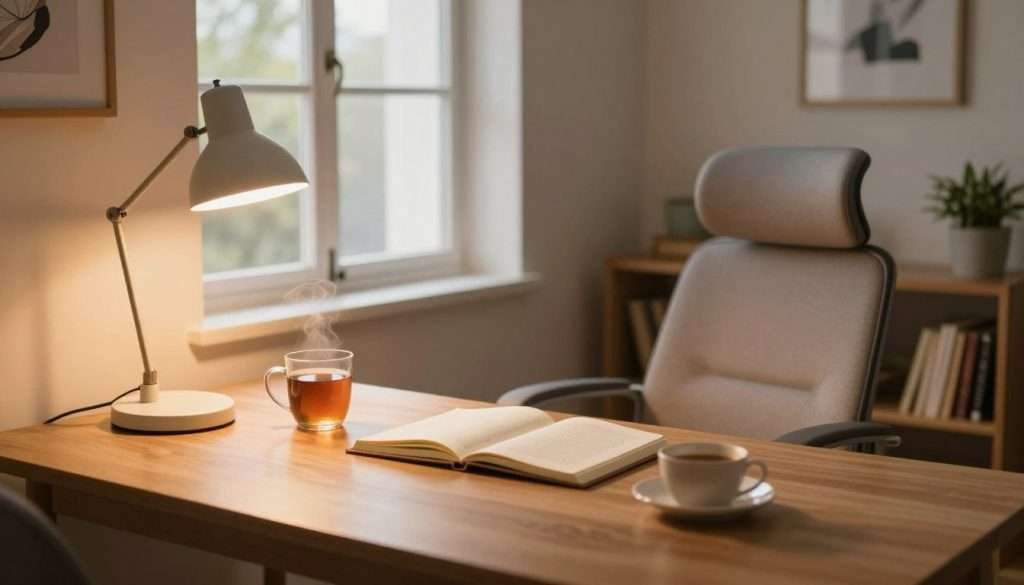
Where you put your lights is important. Don’t place them where they glare or create shadows on your work.
Here are some tips:
- Put desk lamps where they light your work without glare.
- Use floor lamps for soft, ambient light to reduce eye strain.
- Install dimmers to change light levels as needed.
Combating Seasonal Light Changes
Seasons change, and so does the light in your study space. Adjust your lighting to keep your study area optimal all year.
Strategies include:
- Use lighter window treatments in summer to block too much sun.
- Add more artificial light in winter.
- Move your study space to catch more natural light when you can.
With these lighting tips, you can create a productive study space that helps you learn better and feel better.
Design Your Dream Study Zone: The Psychology of a Perfect Learning Environment
A well-designed study space can boost your motivation and enhance your learning experience. Creating a personalized study area is crucial for academic success. It’s not just about having a quiet corner; it’s about crafting a space that inspires you to learn and grow.
Essential Elements of an Ideal Study Setup
So, what makes an ideal study setup? It involves several crucial elements that work together to create an environment conducive to learning. These include:
- A clutter-free space that minimizes distractions
- Ergonomic furniture for comfort and productivity
- Proper lighting that enhances focus
- Study zone aesthetics that inspire and motivate
Balancing Functionality and Inspiration
Striking the right balance between functionality and inspiration is vital. Your study area should be both practical and pleasing to the eye. Consider incorporating elements that reflect your personality and interests, making your study space a place you enjoy spending time in.
Creating a Space That Motivates Learning
The psychological impact of your study environment cannot be overstated. A space that is visually appealing and organized can significantly enhance your motivation to learn. Think about adding motivational quotes, plants, or artwork that stimulate your mind.
Personalizing Your Space for Emotional Connection
Personalizing your study area helps create an emotional connection to the space, making you more inclined to spend time there. This could involve displaying personal items, using colors that you love, or incorporating textures that are pleasing to you. By doing so, you’re not just creating a study zone; you’re crafting a personalized learning sanctuary.
By focusing on these aspects, you can create a study environment that not only supports your academic goals but also nurtures your love for learning.
Multi-Sensory Considerations for Optimal Learning
Creating a great learning space is more than just about what you see. It’s about using all your senses to improve how you think. Studies show that sound, smell, touch, and temperature play big roles in learning and remembering things.
Sound Management and Acoustic Solutions
It’s important to manage sound well in your study area. You might use noise-cancelling headphones or background music that helps you focus. Some people like silence, while others prefer soft sounds. Try different things to see what works for you.
Tip: Try apps that make white noise or nature sounds. They can help create a steady sound environment.
Scent and Air Quality for Cognitive Enhancement
The smell and air quality in your study area can really affect your brain. Scents like peppermint and lavender can help you focus and relax. Make sure your space has good air and think about using an air purifier.
Did you know? Some research says that certain essential oils can help with memory and thinking.
Texture and Touch Elements in Your Study Space
Adding different textures can make your study area feel welcoming and comfy. Think about the feel of your chair, desk, and even your notes. A cozy space can help you stay focused longer.

Temperature Control for Comfort and Focus
Keeping the right temperature is key for feeling good and thinking clearly. A room that’s too warm or cold can be a distraction. Aim for a temperature between 68-72°F (20-22°C) for the best comfort and focus.
Pro Tip: Use a programmable thermostat to keep your study area at the perfect temperature.
By thinking about these different senses, you can make a study space that looks good and feels great. It will help you do well in school and feel good too.
Organization Systems That Reduce Cognitive Load
A cluttered study space can make your mind feel the same. It’s important to have an organized study area. This helps you stay focused and avoid distractions. We’ll look at ways to organize your study space effectively.
Decluttering Strategies for Better Focus
Decluttering is key to a tidy study area. Begin by removing anything you don’t need. Sort your study materials and throw away what’s no longer useful. Regular decluttering sessions keep your space clean.
To declutter well, follow these steps:
- Sort items into keep, donate, and discard piles.
- Use storage containers for items you need to keep.
- Follow a “one in, one out” rule to avoid clutter.
Storage Solutions for Study Materials
Good storage is essential for an organized study area. Use stackable shelves, desk organizers, and filing cabinets to keep things handy.
| Storage Solution | Benefits |
|---|---|
| Stackable Shelves | Maximizes vertical space, keeps frequently used materials accessible |
| Desk Organizers | Keeps essential items within easy reach, reduces clutter on the desk |
| Filing Cabinets | Provides secure storage for important documents, keeps them organized and easily accessible |
Digital Organization for Modern Learners
In today’s world, digital clutter is as important as physical clutter. Use digital note-taking apps and cloud storage services to organize your digital files.
Paper vs. Digital Organization Methods
Paper and digital notes both have their advantages. Paper notes are tactile and easy to review. Digital notes are easier to search and share. Mix both to fit your learning style.
Visual Organization Systems
Visual systems like color-coding and mind mapping help you organize information. They’re great for visual learners.
“The way we organize our environment affects our ability to learn and be productive.”
By using these organization systems, you can make a study space that supports your goals.
Conclusion: Creating and Maintaining Your Ideal Learning Environment
We’ve looked at how to design your dream study zone. It’s not just about looks; it’s about making your learning space better for success.
Understanding the psychology of a perfect learning environment is key. We’ve talked about ergonomics, color, lighting, and more. These help make a space that boosts productivity and motivation.
Creating your dream study zone is an ongoing journey. Be ready to tweak things as you find what works best for you. This will improve your learning space and help you succeed.
Your perfect learning environment is just a step away. Start making your study space today. It will inspire learning and help you reach your goals. Investing in your study space is a big step towards academic success.