
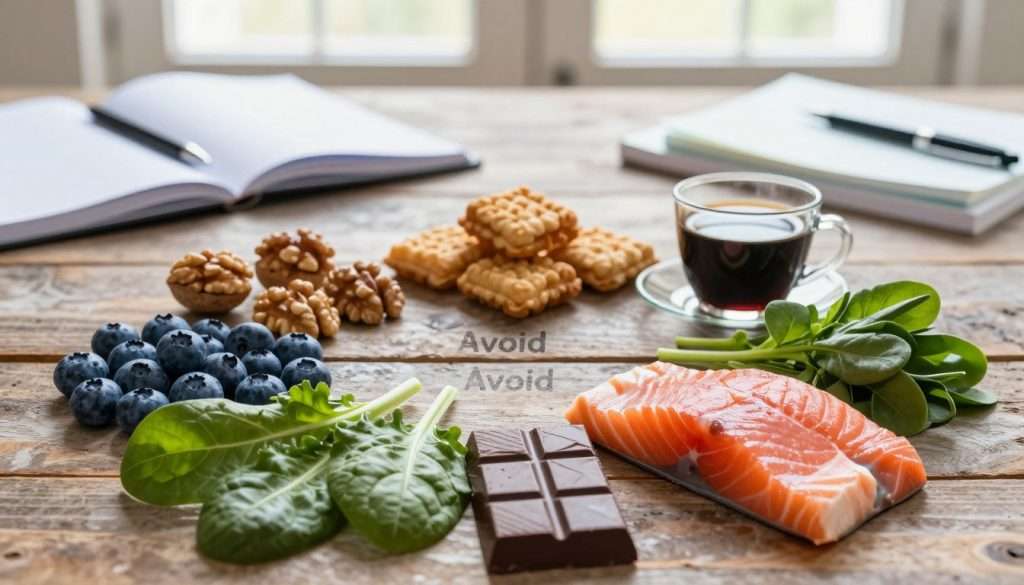
Ever feel like staring at a textbook is a grueling marathon? We get it. Sometimes, mental fatigue hits hard, making every page feel like a mountain climb. But, what you eat can be a secret weapon in your academic journey.
By choosing better snacks, you can sharpen focus, boost memory, and crush those goals. We are here to help you master Fuel your brain: the top 5 foods (and 3 to avoid) for peak study performance in a way that feels simple and fun.
Science-backed nutrition does not have to be boring or complicated. Let us turn those long sessions into an enjoyable experience that actually works. Ready to upgrade your habits?
Key Takeaways
- Nutrition directly influences cognitive function and memory retention.
- Smart snacking prevents mid-afternoon energy crashes during long sessions.
- Specific nutrients support long-term mental clarity and focus.
- Identifying harmful dietary habits is just as important as choosing healthy options.
- Small, consistent changes lead to significant improvements in academic results.
The Science of Cognitive Nutrition and Academic Success
Think of your brain as a high-performance engine that needs the right fuel to run smoothly. While you might focus on study hours, the quality of your intake is just as vital for your grades. Incorporating brain-boosting foods into your daily routine is the smartest way to keep your mental gears turning.
How Glucose and Micronutrients Impact Neural Pathways
Your brain is a hungry organ that demands a steady supply of energy to maintain focus. Glucose serves as the primary fuel, but it works best when paired with essential micronutrients that keep your neural pathways firing correctly. Without these, you might experience that dreaded afternoon fog that makes reading a single page feel like a marathon.
To keep your mind sharp, focus on these key elements:
- Complex Carbohydrates: Provide a slow, steady release of glucose.
- B-Vitamins: Essential for energy production and nerve health.
- Antioxidants: Protect your brain cells from daily stress.
The Connection Between Gut Health and Mental Clarity
Did you know your gut is often called your second brain? It is true! Your digestive system communicates directly with your mind through powerful hormones like GLP1 and ghrelin. These messengers do more than just tell you when you are hungry; they significantly influence your mood and cognitive ability.
When you choose brain-boosting foods, you are actually sending positive signals to your brain. A healthy gut environment helps stabilize these hormones, which prevents the mood swings that often derail a productive study session. By nourishing your body with the right ingredients, you are setting yourself up for long-term academic success and better mental clarity every single day.
Fuel Your Brain: The Top 5 Foods and 3 to Avoid for Peak Study Performance
Think of your brain as a hungry machine that needs constant, steady energy to function at its best. It consumes a lot of energy compared to the rest of your body. So, it needs a reliable supply of nutrients to maintain peak study performance.
Understanding the Role of Sustained Energy
When you’re deep into studying, you need fuel that lasts. Quick fixes can lead to a sudden drop in concentration. This is the last thing you want when deadlines are looming.
To keep your mental engine running smoothly, focus on foods that release glucose slowly. This helps you avoid the mid-afternoon slump and keeps your focus sharp for hours. Consistency is truly the secret weapon for anyone looking to improve their academic output.
Why Avoiding Spikes and Crashes Matters
It’s tempting to reach for a sugary snack when tired, but it often backfires. These foods cause your blood sugar to spike rapidly, followed by a crash that leaves you feeling foggy and unmotivated.
By choosing better snacks, you can protect your brain from these sudden stops and starts. Here are a few ways to ensure you maintain peak study performance throughout the day:
- Choose complex carbohydrates that digest slowly to provide lasting energy.
- Pair your snacks with healthy fats or proteins to stabilize your blood sugar levels.
- Stay hydrated, as even mild dehydration can mimic the symptoms of a sugar crash.
Ultimately, your goal is to keep your energy levels balanced. Avoiding sugar spikes gives your brain a stable environment to process complex information effectively.
Top Food One: Fatty Fish for Omega-3 Enrichment
Did you know your brain is about 60% fat? Choosing the right fats is key for foods for studying in your diet.
High-quality fats give your brain what it needs to stay sharp. It’s a simple way to boost your mental performance during long study sessions.
The Role of DHA in Brain Cell Membrane Integrity
Omega-3 fatty acids, like DHA, are crucial. They act as the structural glue for your brain cell membranes.
Fluid membranes help signals move quickly between neurons. This leads to better memory and focus during tough study times.
“The brain is a complex organ that thrives on specific nutrients, and omega-3s are the cornerstone of cognitive health.”
Recommended Varieties Like Salmon and Sardines
Not all fish is good for brain health. Look for oily, cold-water fish rich in essential fatty acids.
Salmon is a great choice because it’s versatile and easy to find. Sardines pack a lot of nutrients in a small size.
| Fish Variety | Omega-3 Content | Best For |
|---|---|---|
| Wild Salmon | Very High | Main Meals |
| Sardines | High | Quick Snacks |
| Mackerel | High | Budget Friendly |
Preparation Tips for Busy Students
Life is busy, so you can’t spend hours cooking. Keep things simple with these foods for studying.
Use canned sardines for a quick snack in salads or on crackers. Salmon sheet-pan bakes with veggies are fast and easy.
Choosing these nutrient-rich foods sets you up for success. Your brain will thank you during exams!
Top Food Two: Blueberries and Antioxidant Power
Blueberries are more than a tasty snack; they are brain-boosting foods that pack a serious punch. They are the perfect fuel for when you’re pushing through a tough chapter. You need something that works as hard as you do.
Combating Oxidative Stress During Intense Study Sessions
When you’re deep in study mode, your brain is working overtime. This can lead to oxidative stress, which slows down your thinking. Blueberries are your best friend here, as they are full of antioxidants that protect your brain.
“Nature’s medicine is often found in the most vibrant colors, and the deep blue of a berry is a sign of its protective power.”
Incorporating Berries into Morning Smoothies
Mornings can be hectic, but adding blueberries to your smoothie is a quick, delicious start to your day. Here’s how to make the perfect study smoothie:
- One cup of fresh or frozen blueberries.
- A scoop of Greek yogurt for protein.
- A splash of almond milk or water.
- A sprinkle of chia seeds for extra texture.
The Impact of Flavonoids on Memory Retention
The secret behind blueberries is their high concentration of flavonoids. These compounds improve blood flow to the brain, keeping your focus steady. By choosing these brain-boosting foods, you support your memory in storing information effectively.
It’s a simple, tasty way to keep your brain energized and ready for the next challenge. Adding these berries to your routine is a small change that makes a big difference in your academic performance.
Top Food Three: Walnuts and Cognitive Longevity
Have you ever noticed that walnuts look like tiny, wrinkled brains? It’s as if nature made them to help us learn. These crunchy treats are among the best foods for studying because they support your mental health for a long time.
Healthy Fats for Sustained Concentration
The secret to their success is their high omega-3 fatty acids. These healthy fats are essential for keeping your brain cells healthy. When your cells are healthy, your brain can process information faster.
By adding these nuts to your routine, you give your mind a steady fuel supply. This prevents the mid-afternoon slump that can ruin your day. It’s a simple way to stay focused during long study sessions.
Why Walnuts Outperform Other Nuts for Brain Health
While many nuts offer protein, walnuts are special because of their antioxidants. They have more polyphenols than almost any other common nut. These compounds help protect your brain from oxidative stress during long study hours.
Portion Control for Optimal Energy Levels
Even though they are healthy, you should still control your portions. A small handful, roughly one ounce, is the perfect amount to keep your energy stable. Eating too many can make you feel sluggish, which is not what you want when studying.
Keep a small container of walnuts at your desk for a quick, brain-boosting snack. It’s one of the most effective foods for studying that you can easily carry. Your future self will thank you for choosing such a smart, portable option.
Top Food Four: Dark Chocolate for Immediate Focus
Believe it or not, your favorite sweet treat can actually help you ace that upcoming exam. While many people reach for chips or candy, we suggest keeping dark chocolate on your list of go-to study snacks. It provides a delightful boost that keeps your mind engaged when the material gets tough.

The Benefits of Flavonoids and Caffeine Content
Dark chocolate is packed with natural compounds called flavonoids. These plant-based nutrients help increase blood flow to the brain, which can sharpen your memory and attention span. You also get a gentle lift from a small amount of naturally occurring caffeine.
This combination creates a perfect synergy for those long hours at your desk. Unlike the jittery feeling from energy drinks, the boost from chocolate feels smooth and sustained. It is the perfect way to stay alert without the dreaded crash later on.
Choosing High-Percentage Cocoa for Maximum Impact
Not all chocolate is created equal when it comes to brain health. To get the most out of your study snacks, you should aim for bars with at least 85% cocoa. This ensures you are getting a high concentration of beneficial antioxidants rather than just empty calories.
Lower percentages often contain more milk and sugar, which can lead to brain fog. By sticking to the darker varieties, you ensure your brain gets the fuel it truly needs to process complex information effectively.
Moderation Strategies to Avoid Sugar Overload
Even with the healthiest options, moderation is the name of the game. We recommend breaking your bar into small, bite-sized squares before you start your session. This simple trick helps you control your portions and prevents mindless snacking while you read.
Try pairing a single square with a glass of water or a cup of green tea. This ritual turns your break into a mindful moment, allowing you to recharge before diving back into your notes.
Top Food Five: Broccoli and Vitamin K Support
Remember broccoli from your childhood? It’s more than just a veggie; it’s a brain-boosting superfood. When searching for the best foods for studying, broccoli should be at the top. It gives your mind the fuel it needs to stay sharp during long study sessions.
The Importance of Vitamin K for Cognitive Function
Broccoli is full of Vitamin K, a key nutrient for brain health. This vitamin supports cognitive function and keeps your mind clear under pressure. Adding broccoli to your diet is like giving your brain a shield against academic stress.
Simple Ways to Steam or Roast for Quick Meals
Life is busy, so cooking should be quick. Steaming broccoli is fast and keeps it crunchy. For more flavor, roast it in the oven with salt and pepper for a crispy texture.
Pairing Broccoli with Healthy Fats for Absorption
To maximize the benefits of your foods for studying, pair them right. Vitamin K works better with healthy fats. Try drizzling olive oil over broccoli or adding sliced almonds for extra flavor.
| Method | Time Required | Flavor Profile | Best Pairing |
|---|---|---|---|
| Steaming | 5 Minutes | Fresh & Crisp | Lemon & Olive Oil |
| Roasting | 20 Minutes | Nutty & Caramelized | Parmesan & Garlic |
| Sautéing | 8 Minutes | Savory & Soft | Butter & Toasted Nuts |
Three Foods to Avoid for Peak Study Performance
To achieve peak study performance, it’s crucial to know which foods to avoid. Not all snacks are good for your brain. Some can actually hinder your focus when you need it most.

The Dangers of Refined Sugars and Energy Crashes
Ever felt a sudden energy boost from sugary foods, only to crash later? Refined sugars cause your blood sugar to spike and then drop. This leaves you feeling tired and unfocused.
Instead of sugary treats, choose snacks that give you steady energy. Making small changes can help you stay focused all day.
Trans Fats and Their Link to Brain Fog
Diets rich in saturated and trans fats harm your brain. They make it hard to focus and remember things. It’s like trying to run a top engine on bad fuel.
To stay sharp, avoid these foods:
- Fried fast foods that sit heavy in your stomach.
- Commercial baked goods like donuts or pastries.
- Non-dairy coffee creamers that often hide trans fats.
Highly Processed Snacks and Nutrient Depletion
Processed snacks lack the vitamins and minerals your brain needs. Eating them means you’re not giving your brain the fuel it needs. These snacks might be easy to grab, but they’re not good for your brain.
Think of your brain as a high-end computer. It needs the right software to work well. Processed snacks are like outdated programs that slow you down. Eating whole, nutrient-rich foods supports your brain’s performance.
Strategic Meal Planning for Long Study Sessions
Think of your body as a high-performance engine. It needs the right fuel at the right time. For long study days, skipping meals can lead to a slump. Plan your meals to keep your brain sharp and focused.
Use the MIND and Mediterranean diets as guides. They focus on whole grains, leafy greens, berries, nuts, fish, and olive oil. These foods are better than sugary snacks that can crash your energy.
Building a Balanced Plate for All-Day Energy
A balanced plate is key for mental clarity. Fill half with colorful veggies, a quarter with lean protein, and the last quarter with complex carbs. This mix keeps your blood sugar steady, preventing brain fog.
The Importance of Hydration and Electrolyte Balance
Don’t underestimate the power of water. Even mild dehydration can hurt your focus. Keep a water bottle handy and add sea salt or lemon for electrolyte balance.
Timing Your Meals Around Peak Focus Windows
Your brain works in cycles. Time your meals to match. Eat a protein-rich meal before your toughest study block for consistent energy. Healthy snacks like walnuts or blueberries can help if you lose focus.
Be intentional with your meal schedule. Your kitchen can be your best study tool. Small changes in eating can lead to big improvements in learning. Stay consistent, stay hydrated, and watch your productivity soar!
Conclusion
Changing your study habits starts with what you eat. We encourage you to make brain-friendly food choices today. Eating nutrient-rich foods helps improve focus and memory.
Small, consistent choices lead to long-term success in learning. You now have the tools to boost your mental performance. Try wild blueberries or walnuts for your next study session.
We love hearing about your progress with these dietary shifts. What’s your favorite snack for a big exam? Share it with us and join our community of focused learners.
You have the power to change your brain’s function with simple, delicious habits. Fuel your brain and ace your next study session!
# Fuel Your Brain: The Top 5 Foods (and 3 to Avoid) for Peak Study Performance
Think of your brain as a high-performance machine, like a Tesla or Ferrari. You wouldn’t put low-grade fuel in a supercar and expect it to break records, right? Your neural pathways work the same way! We’ve spent a lot of time looking at how what you eat dictates how well you learn.
## The Science of Cognitive Nutrition and Academic Success
### How Glucose and Micronutrients Impact Neural Pathways
Your brain is an energy-hungry organ, consuming about 20% of your daily calories. When we talk about brain-boosting foods, we aren’t just talking about “health food”; we’re talking about the precise glucose levels required to keep your synapses firing. If your blood sugar is a roller coaster, your focus will be too.
### The Connection Between Gut Health and Mental Clarity
Have you ever had a “gut feeling”? It’s more literal than you think. We now know that gut hormones like GLP-1 and ghrelin act as messengers between your digestive system and your brain. When your gut is happy—thanks to a balanced diet—your mental clarity stays sharp, making those marathon library sessions feel a whole lot shorter.
## Fuel Your Brain: The Top 5 Foods and 3 to Avoid for Peak Study Performance
### Understanding the Role of Sustained Energy
To achieve peak study performance, you need a steady stream of fuel. If you rely on quick fixes, you’re setting yourself up for a crash. We want to help you maintain that “flow state” where hours fly by and information actually sticks.
### Why Avoiding Spikes and Crashes Matters
Ever grabbed a Red Bull and a candy bar, only to feel like you need a nap an hour later? That’s the sugar crash in action. By choosing the right foods for studying, you prevent these sudden stops and starts, keeping your mental engine running smoothly from the first page of your textbook to the last.
## Top Food One: Fatty Fish for Omega-3 Enrichment
### The Role of DHA in Brain Cell Membrane Integrity
Did you know your brain is roughly 60% fat? To keep it healthy, you need the good stuff. We highly recommend incorporating fatty fish like Wild Planet Salmon or Safe Catch Sardines into your weekly rotation. These are packed with DHA, a type of omega-3 that keeps your brain cell membranes flexible and resilient. If you’re in a rush, a quick tuna salad with Starkist pouches is a literal lifesaver for your cognitive health.
## Top Food Two: Blueberries and Antioxidant Power
### Combating Oxidative Stress During Intense Study Sessions
When you’re deep in the books, your brain is working overtime, creating “oxidative stress.” Enter the blueberry. These little blue dynamos are loaded with flavonoids that protect your neurons. We love tossing a handful of fresh berries into a morning smoothie or a bowl of Quaker Oats. It’s a simple, tasty way to keep your memory sharp while you tackle complex subjects.
## Top Food Three: Walnuts and Cognitive Longevity
### Healthy Fats for Sustained Concentration
Walnuts even *look* like little brains, which is a pretty good hint from nature! They are unique among nuts because they contain high amounts of DHA-promoting alpha-linolenic acid. We find that a small palmful of Diamond of California walnuts is the perfect study snack. They provide a crunch that satisfies your cravings while giving you the healthy fats needed for sustained concentration.
## Top Food Four: Dark Chocolate for Immediate Focus
### The Benefits of Flavonoids and Caffeine Content
Yes, we are giving you permission to eat chocolate! The catch? It needs to be dark. We suggest a square or two of Lindt Excellence 85% Cocoa or Ghirardelli Intense Dark. The small hit of caffeine and the rush of flavonoids can give you that extra nudge of focus when you’re hitting a wall. Just remember—moderation is your best friend here.
## Top Food Five: Broccoli and Vitamin K Support
### The Importance of Vitamin K for Cognitive Function
Broccoli might have been the “enemy” when you were five, but as a student, it’s your best ally. It’s a superstar source of Vitamin K, which is essential for forming sphingolipids—a type of fat that’s packed into your brain cells. Try roasting it with a little olive oil to help your body absorb all those nutrients. It’s a game-changer for keeping your cognitive function at its peak.
## Three Foods to Avoid for Peak Study Performance
### The Dangers of Refined Sugars and Energy Crashes
We’ve all been there—reaching for a Coca-Cola or a pack of Skittles for a quick boost. But refined sugars are the ultimate enemy of peak study performance. They lead to brain fog and a massive energy dip right when you need to be at your best.
### Trans Fats and Their Link to Brain Fog
Avoid heavily fried “fast foods” like those from Burger King or KFC during finals week. Trans fats can cause inflammation that literal “fogs up” your thinking. You want your neural pathways to be clear highways, not congested city streets!
### Highly Processed Snacks and Nutrient Depletion
Snacks like Cheetos or Doritos are designed to be “crave-able,” but they offer zero nutritional value for your brain. These foods to avoid for studying are often loaded with artificial dyes and preservatives that can leave you feeling sluggish and distracted.
## Strategic Meal Planning for Long Study Sessions
### Building a Balanced Plate for All-Day Energy
Planning is your secret weapon. We suggest following the principles of the MIND Diet—which combines the best of Mediterranean and DASH eating. Build a plate with a lean protein, a healthy fat, and plenty of greens. Don’t forget to hydrate with plenty of water or a cup of Bigelow Green Tea to keep everything moving!
## Conclusion
Transforming your study sessions from a struggle into a success story starts in the kitchen. By choosing the right fuel, you aren’t just eating; you’re investing in your GPA and your future. Now, go grab some walnuts and hit the books!
## FAQ
### Q: What are the best brain-boosting foods for a quick snack?
A: When you’re in a hurry, the best brain-boosting foods are those that combine protein and healthy fats. We recommend a handful of blueberries with some walnuts, or a quick apple slice with almond butter. These provide the sustained energy you need without the sugar crash.
### Q: Are there specific study snacks that won’t make me sleepy?
A: Absolutely! The best study snacks are low-glycemic options. Instead of chips, try celery sticks with hummus or a piece of Lindt 85% Dark Chocolate. These provide “slow-burn” energy that keeps you alert rather than making you feel heavy and tired.
### Q: What are the main foods for studying I should keep in my dorm?
A: Keep it simple! Stock up on foods for studying like canned sardines or tuna, bags of walnuts, frozen blueberries, and broccoli. These are easy to prep and provide the essential DHA and Vitamin K your brain craves during exam season.
### Q: Can you list the top foods to avoid for studying?
A: You should steer clear of highly processed items like Oreos, sugary sodas, and greasy fast food. These foods to avoid for studying cause rapid spikes in blood sugar followed by a “brain fog” crash that can ruin an entire afternoon of productivity.
### Q: How can I achieve peak study performance through my diet?
A: To reach peak study performance, focus on consistency. Eat small, balanced meals every 3-4 hours that include omega-3s, antioxidants, and complex carbs. Staying hydrated and avoiding refined sugars will keep your mental clarity sharp and your focus unwavering.