
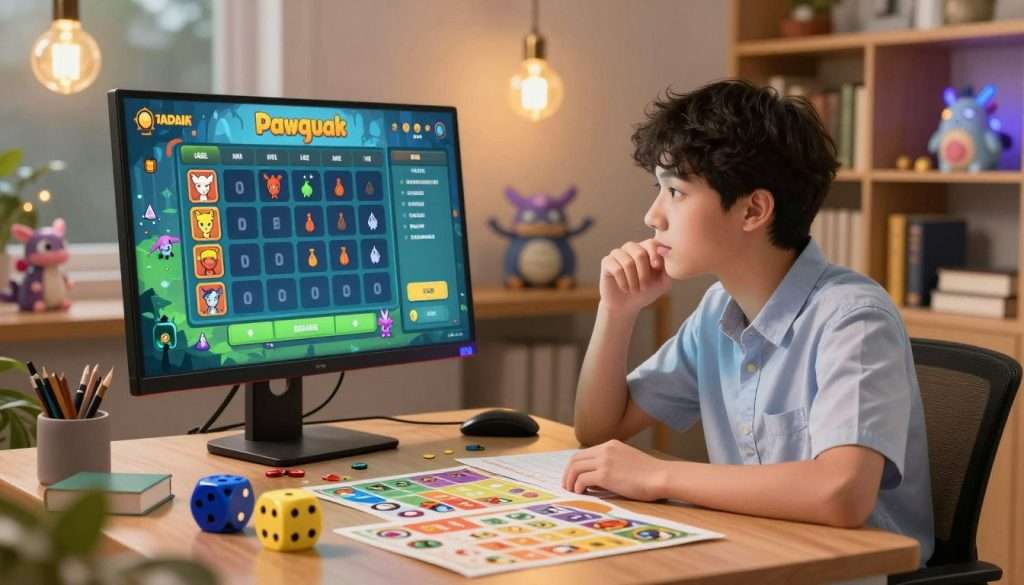
Does your academic life feel like a constant cycle of deadlines and stress? It is time to change the game.
When you gamify your grades, school becomes an adventure instead of a chore. Treating your study routine like an RPG creates feedback that keeps you moving forward.
This approach is more than a trend. In 2025, the gamified education market reached $1.55 billion because it works with careful design.
This method goes beyond chasing points. It builds a structure where each assignment feels like a quest and each exam becomes a boss battle.
Ready to level up? We will explore seven practical systems that can transform your habits. If you want more, my free book, How to Become the Smartest Student in the Classroom, shares memory techniques and strategies that stick.
You can find it at www.studyingmachine.com/free-books/. It costs nothing, with no catch.
Key Takeaways
- Gamification creates momentum by turning tasks into rewarding missions.
- Effective systems focus on visible progress rather than just collecting points.
- Research shows that thoughtful design is essential for academic success.
- You can build your own character stats and energy systems to manage focus.
- Treating exams as boss battles helps reduce test-day anxiety.
Gamify Your Grades: 7 Ways to Turn Your Study Routine Into an RPG
Imagine your study routine feeling as rewarding as your favorite RPG adventure. Textbooks can be hard to start, while virtual worlds keep us playing for hours. Game design can turn schoolwork into a quest instead of a chore.
Why RPG Mechanics Make Studying More Engaging
Games succeed through quick feedback and clear goals. Duolingo, for example, has over 128 million monthly active users. It keeps people returning through small, steady wins that feel naturally rewarding.
When you use these mechanics, studying becomes active and can build student engagement. Each page or problem becomes one step toward a higher level. This change forms the heart of effective grades gamification.
How Educational Gamification Can Support Academic Performance
Educational gamification means more than adding badges or leaderboards. It makes your effort visible and real. Tracking progress gives you more control over your academic performance, which traditional classrooms may not provide.
Seeing your growth helps you stay motivated when lessons become hard. Instead of only preparing for a test, you build skills for years ahead. This method makes “getting better” a clear, real journey.
Set Rules That Reward Consistent Effort Instead of Perfect Scores
Many students feel successful only after earning an A. That mindset can cause burnout and anxiety. Instead, gamify your grades by rewarding actions you control, such as showing up to study or completing a practice set.
Avoid systems based on guilt or random rewards that do not support learning. Choose consistency because it drives mastery. When you reward the process, results often follow.
Choose a Simple Tracking System for Your Study Routine
You do not need a complex app to begin. Use a notebook or digital spreadsheet to track daily progress. Keep the system simple, so you spend more time learning and less time managing it.
| Feature | Traditional Studying | Gamified Studying |
|---|---|---|
| Motivation | External (Grades) | Internal (Progress) |
| Feedback | Delayed (Exam) | Immediate (Daily) |
| Focus | Passive Reading | Active Challenges |
| Outcome | Stressful | Rewarding |
If this article resonated with you, my free book How to Become the Smartest Student in the Classroom offers a complete system. It covers memory techniques, study routines, and strategies that actually stick. Find it at www.studyingmachine.com/free-books/ with no cost and no catch.
Build Your Student Character With Clear Academic Stats
To master your studies, stop seeing yourself only as a student. See yourself as a developing character. With study gamification, you move beyond letter-grade pressure and enjoy personal growth. Think of your academic journey as an rpg, where each session adds experience to your unique profile.
Turn Classes and Skills Into Character Attributes
Instead of treating class as a chore, see it as a skill tree. You build skills that shape what you can do in the classroom. Like games, you can assign points to different parts of academic life.
- Knowledge: The depth of your understanding in a specific subject.
- Focus: Your ability to maintain deep work without distractions.
- Recall: How effectively you can retrieve information during exams.
- Time Management: Your efficiency in balancing assignments and rest.
Measure Knowledge, Focus, Recall, and Time Management
You can track these stats with a simple system, like gaming for learning platforms such as Khan Academy. When you understand a concept, you “unlock” the next difficulty level. This keeps you engaged because you can see progress in real time.
“The secret to success is not in the talent you are born with, but in the stats you choose to level up every single day.”
Identify Strengths and Weaknesses Without Treating Grades as Your Identity
Remember that a grade is only data. It shows performance at one moment, not a permanent label on your character sheet. If a math test challenges you, treat it as a “low stat” you can improve through practice.
You are not your grades. You are a dynamic learner who can upgrade skills whenever you choose. My free book How to Become the Smartest Student in the Classroom offers this full system at www.studyingmachine.com/free-books/.
Create a Baseline Before You Start Improving
Before you level up, learn where you stand. Honestly assess your current habits. Are you strong in recall but weak in time management? Write these areas down as your starting stats.
After setting your baseline, set small, achievable goals to raise those numbers. Remember, consistency is the key to leveling up your character. Tracking your growth turns studying’s grind into a rewarding adventure.
Turn Assignments Into Quests With Specific Objectives
Have you ever faced a massive term paper like a final boss with no health bar? When a project feels too big, it is easy to lose motivation. Shift your perspective, and transform your study routine into challenges that keep you moving forward.
Convert Large Projects Into Main Quests and Side Quests
Think of your semester as a long campaign. A major research paper or final exam unit is your Main Quest, but you cannot finish it in one sitting. Break it into smaller Side Quests so your progress stays visible.
- Main Quest: Complete the final lab report.
- Side Quest 1: Gather five primary sources.
- Side Quest 2: Outline the introduction and methodology.
- Side Quest 3: Draft the data analysis section.
Write Objectives That Are Concrete and Measurable
Vague goals like “study biology” can weaken student engagement. Write objectives that name the action, the output, and the finish line. For example, aim to “complete ten practice problems” or “draft one section of the essay.”
This approach mirrors the interactive, step-by-step design found on platforms like Brilliant. Focus on active tasks, not passive reading, to build your skills. Your brain stays sharper when you have a clear target to hit.
Use Quest Difficulty to Prioritize High-Value Assignments
Not every task has the same value in your academic journey. Give each quest a difficulty level to help prioritize your energy. Tackle the “Hard” quests when your focus is highest, and save “Easy” administrative tasks for when you feel tired.
Define What “Quest Complete” Means Before You Begin
Procrastination often grows in the gray area when you are unsure whether you have done enough. Define exactly what “Quest Complete” means before you start to remove guesswork. When you reach the finish line, stop and celebrate your win without guilt.
If you want to explore these systems, check out my free book at www.studyingmachine.com/free-books/. It offers a full system of memory techniques and strategies that stick. There is no cost and no catch—only tools to help you become the smartest student in the classroom.
Earn Experience Points for Study Actions You Control
Why wait for a report card when you can earn experience points for success right now? With grades gamification, focus less on outcomes you cannot control and celebrate daily habits that drive success.
This approach turns your desk into a training ground. Treating study sessions like a game builds momentum and encourages you to return.
Reward Active Recall, Practice Problems, and Finished Study Blocks
The key to effective study gamification is rewarding difficult work. Award points for mental effort, such as closing your textbook to recite a concept or solving a complex practice problem.
A finished, focused study block is another major win. When you complete a session without checking your phone, you earn your XP for the day.
Create an XP Scale That Reflects Effort and Difficulty
Study tasks vary, so your point system should reflect their effort and difficulty. Give higher values to tasks that challenge your brain, with smaller rewards for simple administrative tasks.
| Study Action | Difficulty Level | XP Reward |
|---|---|---|
| Reviewing notes (passive) | Easy | 5 XP |
| Completing a focus block | Medium | 20 XP |
| Active recall session | Hard | 50 XP |
| Solving practice problems | Hard | 50 XP |
Avoid Giving More Points for Passive Reading Than for Retrieval Practice
Giving points for sitting with a book open may seem fair, but it can mislead you. Passive reading often feels productive but may produce little retention.
Instead, prioritize retrieval practice. If you spend an hour reading but cannot explain the material, earn fewer points. Spend twenty minutes testing yourself on core concepts, and earn more points.
Use Weekly XP Totals to Make Progress Visible
Tracking weekly XP totals shows growth, even when your grades have not changed. This progress can help maintain your academic performance over time.
For a deeper guide, my free book, How to Become the Smartest Student in the Classroom, provides a complete framework. You can find it at www.studyingmachine.com/free-books/. It covers memory techniques and routines that stick, with no cost and no catch.
Spend Energy Points to Manage Focus and Prevent Burnout
Think of focus as a limited resource, like mana in your favorite game. Instead of forcing every subject into one exhausting schedule, treat your day as energy-draining encounters. By managing your study routine with care, you can work with your biology instead of fighting it.
Match Difficult Tasks to Your Highest-Energy Hours
Everyone has times when their brains feel sharpest, either early in the morning or late at night. Reserve demanding tasks—like complex problem sets or essay drafting—for these peak windows. Matching hard work with high energy helps you finish more in less time.
Use Focus Blocks, Breaks, Sleep, and Movement as Recovery Mechanics
Treat breaks and sleep as essential recovery mechanics; your brain needs downtime to consolidate information, like a character visiting an inn. Movement, such as a quick walk or stretch, clears mental fog during long sessions. These actions are not lost points; they invest in long-term consistency.
Set a Daily Energy Budget for Classes, Homework, and Exam Preparation
A balanced study routine needs a budget. Use tools like Habitica to track daily, weekly, and monthly goals, so you do not overspend your focus. After a heavy class schedule, plan lighter homework tasks to avoid burnout before the day ends.
| Energy Level | Best Task Type | Recovery Action |
|---|---|---|
| High | Complex Problem Solving | Short Water Break |
| Medium | Note Review & Reading | Light Stretching |
| Low | Organization & Planning | Sleep or Meditation |
Recognize When Rest Is Part of the Strategy Rather Than a Failure
Stepping away from your desk can cause guilt, but rest is vital to your academic strategy. You cannot maintain high performance without time to recharge. As the saying goes:
“Rest is not idleness, and to lie sometimes on the grass under trees on a summer’s day, listening to the murmur of the water, or watching the clouds float across the sky, is by no means a waste of time.”
For more, my free book How to Become the Smartest Student in the Classroom gives you a full system. It covers memory techniques, study routine optimization, and strategies that truly stick. Find it at www.studyingmachine.com/free-books/ with no cost and no catch.
Unlock Skills With a Study Skill Tree
Imagine your academic journey as a map where each new skill opens a path to success. Treating education like character progress turns abstract goals into clear milestones. This approach to study gamification shows your progress and your next goal.

Start With Foundational Skills Before Advanced Techniques
You cannot reach the endgame without mastering the basics. Begin with core skills like focused reading, active retrieval, and error correction. These skills support every other part of learning.
Platforms like Brilliant use interactive problem models to confirm your understanding before complex logic. When you master basics first, you build a foundation and avoid feeling overwhelmed later.
Connect Memory Techniques to Specific Academic Challenges
Advanced methods help only when they solve a specific problem. If vocabulary is hard, unlock a “Mnemonic” branch. If essays are hard to organize, practice “Structural Outlining” techniques.
This focused approach drives effective gaming for learning. Matching each tool to a specific hurdle helps you stop wasting time on weak strategies.
Build Branches for Note-Taking, Memorization, Writing, and Problem Solving
Create separate branches on your skill tree. Each branch covers one academic area and helps you track growth in real time. Use these essential categories:
- Note-Taking: Methods like Cornell or mind-mapping to capture information.
- Memorization: Spaced repetition and flashcard systems.
- Writing: Drafting, editing, and peer-review workflows.
- Problem Solving: Logical deduction and practice-based drills.
Unlock New Methods Only After Testing the Basics
Trying every new app or hack can leave you with unused strategies. Test one technique at a time until its results seem clear. Like RPG-linked math practice in Prodigy Math, seek immediate feedback to check each method.
After mastering a basic skill, you can “unlock” the next level of complexity. Explore further with my free book, How to Become the Smartest Student in the Classroom, a guide to these memory techniques. You can find it at www.studyingmachine.com/free-books/.
Embracing educational gamification means finding what works for you and building a system that sticks!
Defeat Boss Battles With Exam and Deadline Strategies
Think of your next big exam as a final boss battle. This view changes high-stakes testing from fear into strategic preparation. It can boost your student engagement during stressful weeks of the semester.
Break Exams Into Smaller Practice Encounters
Do not tackle an entire exam in one overwhelming session. Break your study material into smaller encounters that match the real test. Mastering each piece builds confidence for the final challenge and supports gaming for learning.
Use Mock Tests as Boss-Battle Simulations
Use mock tests with strict time limits to copy the pressure of the real event. Like a fast-paced game, they give you quick feedback on your results. This shows where your academic performance needs improvement before exam day.
“The secret to winning is not just in the strength of your character, but in the quality of your preparation.”
Prepare a Battle Plan for Difficult Questions and Time Limits
Create a plan with a skip-and-return rule for questions that stump you. If a prompt seems too hard, mark it and move on. Return after earning points from easier sections.
This keeps your momentum high and stops you from wasting time on one obstacle. A preset plan helps you stay calm while the clock is ticking.
Review Mistakes as Intelligence Reports for the Next Attempt
When you answer incorrectly, do not see it as failure. Treat the mistake as an intelligence report showing which skill needs more training. This approach turns each error into a lesson that supports future success.
For deeper guidance, my free book, How to Become the Smartest Student in the Classroom, offers a full system of memory techniques and study routines that stick. Find it at www.studyingmachine.com/free-books/. There is no cost or catch—only tools to level up your learning.
Collect Rewards, Complete Streaks, and Level Up Responsibly
When you gamify your grades, celebrate wins without losing focus. You built your character and faced hard quests, so make rewards support progress instead of stopping it.

Choose Immediate Rewards That Do Not Disrupt Your Momentum
The best rewards give a quick dopamine boost without keeping you from your desk for hours. Think of this as an RPG where loot boosts your stats instead of ending your study session.
Use simple offline rewards like a favorite snack, a ten-minute music break, or a quick walk outside. Digital tools like Habitica let you earn pets or gear for your avatar. Keep each reward short and sweet so you can return to your next study block.
Use Streaks to Reinforce Habits Without Creating Guilt
Streaks can build consistency, but they should not cause anxiety. Platforms like Duolingo use “streak freezes” to protect progress when life gets busy.
Give yourself grace when you miss a day. Consistency is about the long-term trend, not perfection every day. If you break a streak, start a new one and keep moving forward.
Celebrate Mastery, Improved Accuracy, and Consistency
Reward yourself for the right things. Rather than focusing only on the final grade, celebrate the process of improving your work.
Did you solve a practice problem faster than last week? Did you finally understand a concept that once confused you? These moments deserve celebration because they show true academic growth.
Adjust the System When Rewards Stop Motivating You
Even the best gaming for learning strategies can lose their spark over time. When rewards stop exciting you, change the rules of your game.
Swap your snacks, try a new playlist, or set a higher goal for your next level-up. For deeper help, read my free book, How to Become the Smartest Student in the Classroom. It offers a full system of memory techniques and study routines that actually stick. Find it at www.studyingmachine.com/free-books/ with no cost and no catch.
Conclusion
You now have a complete toolkit for turning your study habits into an engaging adventure. Define character stats, tackle assignments as quests, and manage your energy to make schoolwork feel rewarding. Educational gamification works best when game mechanics support real learning, not mere distraction.
Your academic performance depends on how well these game elements match your personal goals. Start small today by tracking just one habit or turning a single project into a quest. Soon, these changes can make your daily workload feel lighter and more purposeful.
To explore this system further, check out my free book, How to Become the Smartest Student in the Classroom. It offers a full guide to memory techniques, study routines, and strategies that actually stick. You can grab your copy at www.studyingmachine.com/free-books/ to take your skills to the next level.
Let us make your education a quest worth winning.