

Have you ever read a chapter and felt like a total expert? You close the book, feeling like a genius. But then, you blank out on a practice quiz.
We’ve all been there. It’s a sneaky trap that makes us think we get a topic just by seeing the words. This is called The ilusion of competence. It’s the silent enemy of deep learning.
When your brain sees information, it tricks you into thinking you’ve got it. It feels so easy, but that comfort is often a lie. This common hurdle makes study sessions frustrating for everyone.
By spotting this bias early, you can stop wasting time on just reading. Understanding The ilusion of competence is your first step. It helps you build smarter, more effective habits that last.
Key Takeaways
- Familiarity with text is not the same as true mastery.
- Passive reading often creates a false sense of security.
- Recognizing this mental bias helps you adjust your study strategy.
- Active recall is the best way to bypass this common trap.
- You can transform frustrating study sessions into productive learning.
Understanding the Illusion of Competence
We’ve all been there: nodding along, feeling like we’ve got it, and then forgetting everything later. It’s frustrating to feel ready for a challenge, only to find out we’re not as prepared as we thought. This feeling of being ready but not really knowing is what we call the ilusion of competence.
Defining the cognitive bias
This bias tricks your brain into thinking you understand something just because you see it. Looking at a textbook or notes makes you think you know it because the words are familiar. It’s a false sense of security that hides a lack of real learning.
When you experience the ilusion of competence, you confuse recognizing information with actually remembering it. You see the words on the page and think you can explain them. But your brain is just processing the visuals, not really storing the information in your memory.
Why familiarity is often mistaken for mastery
The problem lies in how we store information. Reading something over and over keeps it in your short-term memory, making it seem like you know it. But true mastery comes from moving that information into your long-term memory, which takes effort.
If you just read passively, you’re likely falling into this trap. Here are a few ways it happens:
- You highlight whole paragraphs, making the text seem familiar but not really understood.
- You keep re-reading your notes, which only helps you recognize the words better.
- You think you can explain something just because you can follow an explanation.
Realizing that familiarity is not the same as true understanding is the first step to growth. By moving from passive reading to active learning, you can overcome the ilusion of competence and build knowledge that lasts.
The Psychology Behind the Illusion of Competence
Let’s explore the mental tricks that make us think we’re more ready than we are. Our brains like to save energy by taking shortcuts. These shortcuts help us daily but can make us think we’re more skilled than we are when learning new things.
The role of cognitive fluency in learning
Ever felt like you got a textbook and understood it all? That’s cognitive fluency. It’s when information seems easy, making you think you’ve got it all down.
Because it feels familiar, your brain thinks it’s stored in your long-term memory. But you’ve only scratched the surface. This cognitive bias makes students think they’ve learned more than they have just because it’s easy to read.
How the brain shortcuts complex information
Your brain is great at saving energy, but it does so by simplifying complex topics. It breaks down big ideas into smaller pieces to avoid getting overwhelmed. While this helps you get the basics, it can hide the deeper details of a subject.
To avoid this trap, try these simple habits:
- Avoid re-reading the same notes over and over.
- Ask yourself if you can explain the concept without looking at the book.
- Look for the “why” behind the facts rather than just memorizing them.
The Dunning-Kruger effect and its influence on self-perception
In 1999, psychologists David Dunning and Justin Kruger found a cognitive bias that shows why we struggle to judge our skills. The Dunning-Kruger effect says people with little knowledge in an area often can’t see their own lack of skill.
Essentially, if you don’t know much about a topic, you might not know how much you’re missing. This can make you feel more confident than you should. By understanding the Dunning-Kruger effect, you can start to doubt your assumptions and get a clearer view of your true abilities.
How the Illusion of Competence Impacts Professional Performance
Ever felt like an expert in a meeting, only to realize you were way out of your league? It’s a common feeling, often due to the illusion of competence. We often think we know more than we do, leading to awkward moments at work.
The danger of overestimation of abilities in the workplace
When we think we’re better than we are, we take on too much. This overestimation of abilities brings stress and can harm our reputation. Studies show how off our self-image can be:
In the original Dunning-Kruger study, participants who scored in the 12th percentile ranked their own abilities in the 62nd percentile.
This huge gap shows that those who know the least are often the most confident. If you don’t question your abilities, you might struggle to meet expectations.
Stagnation caused by a lack of self-awareness
Growth comes from knowing where you are now. A lack of self-awareness holds you back from seeing where you need to improve. Believing you’re already skilled stops you from seeking feedback to grow.
- You stop asking for mentorship.
- You ignore constructive criticism from peers.
- You repeat the same mistakes without realizing it.
By not learning, you miss out on sharpening your skills. True professionals know that stopping learning means falling behind.
The hidden costs of poor preparation
The biggest risk is feeling too secure. You might skip deep work for a presentation because you feel you know the topic. This lack of self-awareness leads to poor preparation and unclear presentations.
The costs affect not just you but your team and projects. Being honest about your skills is a superpower. It lets you prepare well, ask for help, and perform better than those trapped by the illusion of competence.
The Link Between Metacognition and Self-Perception Bias
Metacognition might seem like a big term, but it’s really about thinking about your thinking. It helps you see how you process information. This way, you can fight the self-perception bias that often gets in the way.
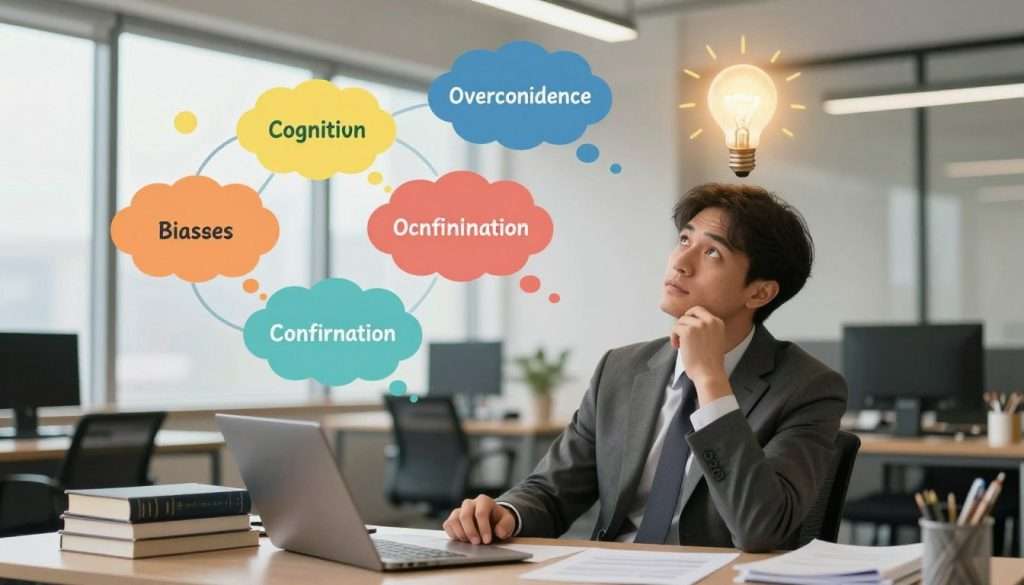
Developing the ability to think about your thinking
To improve, treat your brain as a separate thing. Ask yourself if you really get the material or just recognize the words. This helps you avoid the lack of self-awareness that holds many back.
Try talking out loud while solving problems. If you struggle with your logic, it’s a chance to grow. This makes learning more than just reading words.
Identifying gaps in your knowledge base
It’s hard to admit we don’t know something, but it’s key to overcoming cognitive bias. Seeing a gap is a chance to learn, not a failure. It’s the first step to filling that gap.
Make a checklist of what you can explain well and what’s unclear. If you can’t explain something simply, you don’t really get it. This honest check is the quickest way to improve.
Why objective assessment is difficult for the human brain
Our brains like to save energy by taking shortcuts. Unfortunately, these shortcuts make it hard to judge ourselves objectively. We tend to think we’re better at things than we really are because it’s easier.
This leads to a lack of self-awareness without us even noticing. The trick is to know that our brains aren’t naturally impartial. By recognizing this cognitive bias, we can create systems that help us see things more clearly.
Recognizing the Signs of Inaccurate Self-Assessment
It’s easy to think you’ve mastered a skill when you haven’t. We often make inaccurate self-assessment mistakes. This can lead to poor choices and ignoring our limits. Spotting these signs is key to personal growth.
Common indicators that you are overestimating your skills
How do you know if you’re really good at something? The signs might be right in front of you. If you avoid feedback or are shocked by poor results, you might be overestimating your abilities.
Watch out for these warning signs:
- You feel defensive when someone offers constructive criticism.
- You assume that because a task feels familiar, you have already mastered it.
- You are frequently surprised by poor performance reviews or low test scores.
- You rarely seek out external validation to confirm your progress.
The role of ego in masking incompetence
Your ego can be tricky. It protects your self-image but can also hide your weaknesses. When your ego is in charge, it tells you you know enough, stopping you from learning more.
By not admitting your knowledge gaps, you stay stuck. True growth comes from humility and saying, “I don’t know everything yet.” Embracing this vulnerability helps you overcome ego barriers.
How to spot the difference between confidence and competence
Confidence is good, but it’s not the same as skill. The dunning-kruger effect shows why people with little knowledge feel very confident. They just don’t see how much they don’t know.
To tell confidence from competence, look at your results. Genuine competence shows in consistent success and a desire to learn more. If your confidence isn’t backed by facts, it’s time to reassess.
Strategies to Overcome the Illusion of Competence
You might think you know a topic really well, but your brain might be tricking you. Reading notes over and over can make you think you’re a master when you’re not. This is where metacognition—thinking about your own thinking—comes in handy.

Active recall as a tool for truth
Don’t just re-read your textbook. Make your brain work hard to remember information. Active recall is the best way to check what you really know. Research shows that frequent quizzes help you learn more and spot where you need to improve.
Spaced repetition to solidify genuine understanding
Cramming might seem like a quick fix, but it doesn’t last. Spaced repetition helps you review material at longer intervals. This method moves information from short-term to long-term memory, so you remember it for good.
The importance of testing yourself under pressure
Testing yourself under pressure shows what you really know. Simulating exam conditions without your notes builds metacognition and confidence. It’s key to understanding your true abilities.
| Learning Method | Effort Level | Retention Quality |
|---|---|---|
| Passive Re-reading | Low | Poor |
| Active Recall | High | Excellent |
| Spaced Repetition | Medium | High |
Practical Techniques for Accurate Self-Evaluation
Ever felt you knew something well, but couldn’t explain it to a friend? This is a common issue that leads to inaccurate self-assessment. It makes us think we know more than we really do. To avoid this, we should use proven methods, not just our gut feelings.
Implementing the Feynman Technique for clarity
The Feynman Technique is a great tool for checking your understanding. Just write down a concept as if you’re teaching it to a kid. If you use hard words or get stuck, you know you need to learn more.
True mastery means making complex ideas simple. By cutting out unnecessary words, you focus on the core idea. This shows you where you need to study more.
Using objective metrics to track progress
Feelings can be misleading, so we should rely on concrete data. Whether learning a new language or coding, use numbers to see how you’re doing. Track your progress or time yourself on tasks.
Looking at numbers helps you see things clearly. It shows your real progress, not just how you feel. This keeps you honest and avoids inaccurate self-assessment.
The value of peer review and external validation
It’s hard to see our own mistakes. That’s where others come in. Getting feedback from peers or mentors helps you see if you’re as good as you think.
Don’t be shy about asking for honest feedback. It might feel scary at first, but it’s the best way to find your weak spots. This feedback makes learning a team effort and very effective.
Leveraging Feedback Loops to Improve Performance
To stop fooling yourself, let the outside world help you learn. We often think we know something just because we’ve read about it. But this is a self-perception bias. To overcome this, create systems that show you what you don’t know.
Creating a culture of constructive criticism
Learning by teaching others is very effective. When you explain a concept to someone, you find out what you don’t know. This lets others point out your mistakes, helping you grow.
Seek out people who know more than you. By sharing your work, you get valuable insights you might have missed. The goal is to improve each day, not to be perfect.
“Feedback is the breakfast of champions.”
How to interpret feedback without defensive bias
It’s normal to feel hurt by criticism. But you must separate your ego from your work. If you see every critique as a personal attack, you’ll never overcome your self-perception bias.
Instead, see criticism as a diagnostic tool. Ask yourself these questions when you get feedback:
- Is there a specific part of my process that caused this error?
- What is one small change I can make to improve this result?
- Am I listening to understand, or am I listening to defend my position?
Iterative improvement through continuous learning
Growth is not a straight line; it’s a series of small, iterative loops. You learn, test, get feedback, and adjust. This keeps your skills sharp and knowledge accurate.
By embracing continuous learning, every mistake becomes a lesson. You stop fearing the truth and use it to grow. Keep iterating, asking questions, and refining your approach to stay ahead.
Conclusion
Breaking free from the illusion of competence is a lifelong journey. It requires honesty, consistent practice, and a willingness to be wrong. You have the power to change your learning habits today.
Try using active recall and seeking honest feedback to keep your ego in check. Stay mindful of your own thought processes as you tackle new subjects. True mastery comes from admitting what you don’t know. This is where the real work begins.
We want you to feel empowered to take control of your education. Every challenge you face is just another chance to grow stronger. Keep pushing your boundaries and stay curious about the world around you. What is one new skill you plan to test today?