
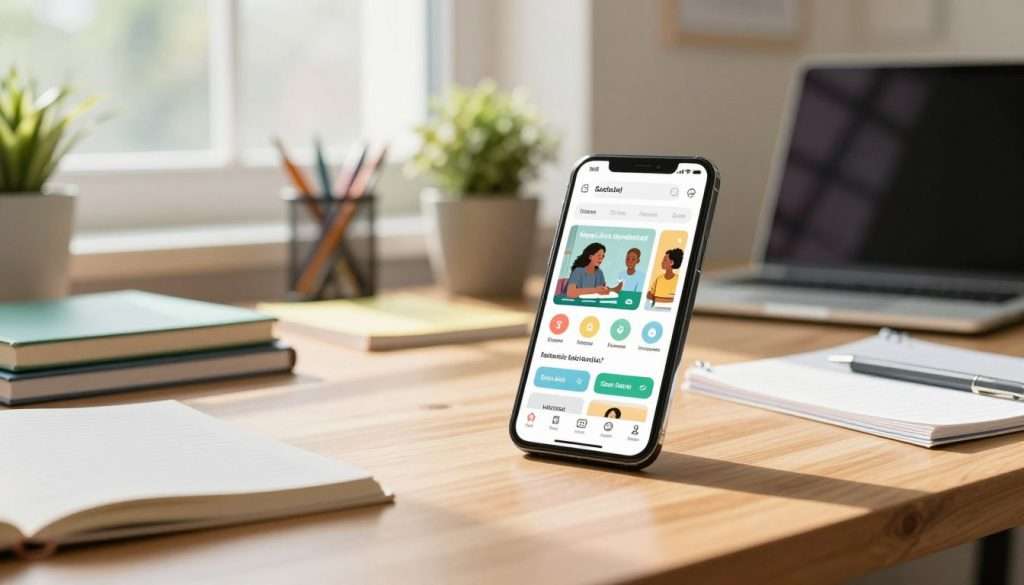
Do you feel like your device is just for scrolling through social media? We’ve all lost hours to endless feeds. But what if you could change that right now?
Your phone is more than a gaming console. By changing how you see it, you can how to turn your phone into a learning machine every day.
We think your smartphone as educational tool is incredibly powerful. Since you carry it everywhere, you have a classroom in your pocket. Whether waiting for coffee or riding the bus, you can learn new skills easily.
Let’s see how to use this technology to reach your goals. It’s simpler than you think to make every spare minute count!
Key Takeaways
- Your device is a powerful asset for daily growth.
- Shift your mindset from entertainment to active education.
- Use spare moments to build new skills anywhere.
- Leverage existing technology to reach your personal goals.
- Consistency matters more than long, draining study sessions.
Assessing Your Current Digital Habits
Most of us carry a supercomputer in our pockets, yet we often use it for nothing more than mindless entertainment. Smartphones have evolved from simple communication devices into powerful tools for continuing education. If you want to know how to turn your phone into a learning machine, you must first understand your current relationship with your screen.
Identifying Distraction Patterns
Take a moment to check your phone’s built-in screen time report. You might be surprised to see how many hours disappear into social media feeds or endless notification loops. It is easy to lose track of time when an app is designed to keep you scrolling.
We suggest categorizing your apps into two groups: those that add value and those that drain your energy. By identifying these patterns, you can start utilizing phone for learning instead of letting it dictate your mood. Awareness is the first step toward reclaiming your focus.
“The secret of your future is hidden in your daily routine.”
Setting Clear Educational Goals
Once you have cleared the digital clutter, you need a roadmap. Without a clear destination, it is far too easy to drift back into old, unproductive habits. Setting specific, measurable goals helps you stay on track when things get busy.
Try to define exactly what you want to achieve this month. Whether you are mastering a new language or learning to code, keep your objectives simple and attainable. When your phone becomes a purposeful tool for your personal development, you will find that learning feels less like a chore and more like an exciting adventure.
Curating Your Digital Learning Environment
Think of your smartphone as a digital study desk that needs a little spring cleaning. Just as you wouldn’t study in a room filled with toys and clutter, you shouldn’t learn on a phone packed with distractions. Turning phone into study device setups require a bit of intentional design to keep your brain focused on the task at hand.
Organizing Your Home Screen for Focus
Your home screen is prime real estate, so don’t waste it on apps that steal your attention. We suggest moving your most important learning tools to the very first screen you see when you unlock your device. By placing your dictionary, flashcard apps, or course portals front and center, you make learning the path of least resistance.
Try grouping your educational apps into a single folder labeled “Growth” or “Study.” This simple trick keeps your home screen clean while ensuring your tools are always just one tap away. When you are turning phone into study device, visibility is your best friend for building consistent habits.
Removing Non-Educational Social Media Apps
Let’s be honest: mindless scrolling is the ultimate enemy of deep work. If you find yourself opening Instagram or TikTok the second you feel a moment of boredom, it is time to take action. We recommend deleting these apps or moving them to a hidden folder on the last page of your phone.
By creating friction between you and your social media feeds, you reclaim your precious time and mental energy. Turning phone into study device means prioritizing your goals over the endless loop of viral videos. You will be surprised at how much more you can accomplish when your phone is designed to help you grow rather than just entertain you.
Selecting the Best Educational Apps for Your Needs
Imagine having a world-class library and expert tutors in your pocket. With the right phone learning apps, you can learn on the go. We aim to make learning fun, not a chore.
Language Learning Platforms Like Duolingo
If you dream of speaking a new language, Duolingo is a great start. It offers short lessons that fit into your busy life. The game-like approach keeps you eager to learn every day.
Skill-Based Learning Through Coursera and LinkedIn Learning
Ready to boost your career? Coursera and LinkedIn Learning are your go-to. They offer courses from top experts and universities. Whether it’s data analysis or leadership, these apps help you succeed.
Academic Support via Khan Academy
Need help with tough subjects like calculus or history? Khan Academy is here for you. It provides video tutorials and exercises that simplify complex topics. It’s a must-have for students looking to improve on the move.
| App Name | Primary Focus | Best For |
|---|---|---|
| Duolingo | Language Fluency | Casual Daily Practice |
| Coursera | Professional Skills | Career Advancement |
| Khan Academy | Academic Subjects | Deep Concept Mastery |
How to Turn Your Phone Into a Learning Machine Using Productivity Tools
We think the secret to learning a lot is organizing your digital space well. Your phone can do so much more than just social media and notifications. With the right educational phone tools, it can become a portable classroom in your pocket.
Utilizing Note-Taking Apps Like Notion and Obsidian
Deep learning needs a place to store your thoughts and research. Apps like Notion and Obsidian are like your second brain. They let you jot down ideas anytime. You can sync these notes with cloud services like Google Drive or Evernote for easy access.
Managing Study Schedules with Google Calendar
Being consistent is key to learning anything new. Use Google Calendar to schedule study times. Treating your learning sessions like work meetings helps keep your progress steady and highly effective.
Using Flashcard Systems Like Anki
To keep information in your memory, you need a system for recalling it. Anki is a top phone learning app for this. It uses spaced repetition to test you when you’re about to forget something.
| Tool Category | Primary Benefit | Best For |
|---|---|---|
| Note-Taking | Organization | Structuring complex ideas |
| Scheduling | Time Management | Consistency and habits |
| Flashcards | Memory Retention | Active recall practice |
By using these tools together, you create a smooth workflow that keeps you motivated. The goal is to build a system that helps you, not hinders you. Start small, stay consistent, and watch your knowledge grow every day.
Mastering Mobile Reading and Research
Your smartphone is a portable research lab. You don’t need a physical library anymore. With the right mobile learning resources, you can learn anywhere, anytime.
Optimizing Browser Settings for Research
Most mobile browsers have hidden features for easier reading. Start by enabling Reader Mode. It removes ads and sidebars, letting you focus on the text.
Also, use the “Request Desktop Site” option for complex websites. This shows the full website layout, just like on a laptop. These changes make your phone a powerful research tool.
Using Pocket for Offline Reading
Ever found an article but couldn’t read it right away? Apps like Pocket are key mobile learning resources. Save any webpage and read it later, even offline.
- Save articles from your browser instantly.
- Sync across devices so your reading list is always ready.
- Listen to articles using the text-to-speech feature while you walk.
Leveraging E-book Readers Like Kindle and Libby
Carrying heavy textbooks is outdated. Apps like Kindle and Libby let you carry a library in your pocket. They’re great mobile learning resources for on-the-go readers.
Libby is awesome because it links to your local library card. Borrow e-books and audiobooks for free. Whether commuting or waiting, your next lesson is just a tap away.
Implementing Focus Techniques for Mobile Study
Staying focused during study sessions is more than just wanting to. It needs a solid plan. Your phone can easily become a distraction, even with good intentions. With the right educational phone tools, you can regain your focus and make every study minute count.
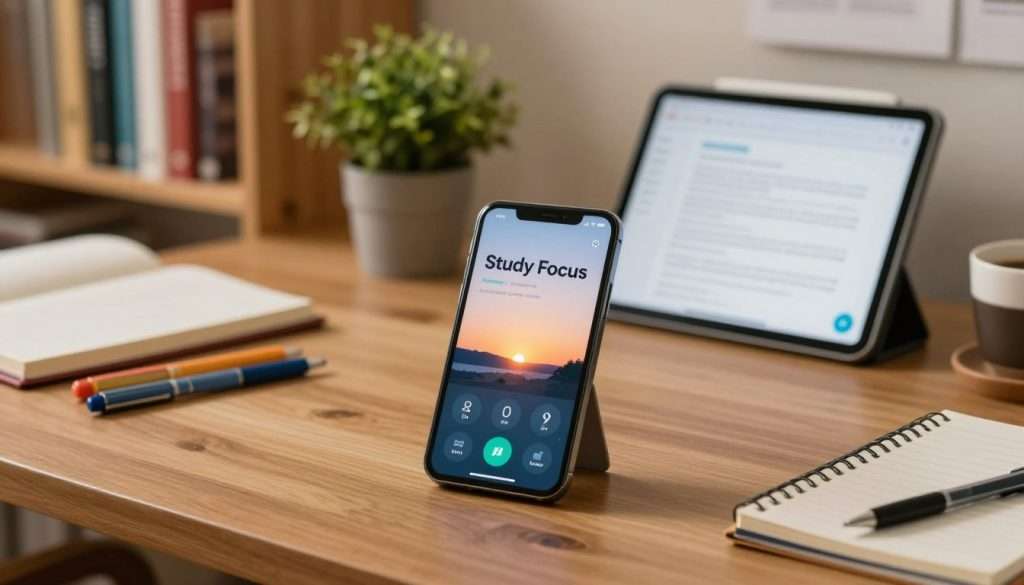
Applying the Pomodoro Technique with Forest
The Pomodoro technique is great for keeping your mind sharp. It involves working in 25-minute bursts, followed by short breaks. This method helps avoid burnout and keeps your energy up.
Forest app makes this technique fun. It lets you grow a virtual tree while you stay off your phone. If you check social media, your tree dies. It’s a fun way to stay focused and reach your goals.
Utilizing Do Not Disturb and Focus Modes
Your smartphone has features to help you succeed. Most devices have Focus modes that silence non-essential notifications during study times.
Setting up a custom profile is a good idea. It lets only important alerts through. This helps you avoid distractions and get into deep work mode.
Blocking Distracting Websites During Study Sessions
At times, you might need extra help to stay focused. If you find yourself scrolling aimlessly, consider blocking distracting websites during study.
The Brick device is a great physical solution. It blocks distracting apps, forcing you to focus on your tasks. These educational phone tools keep your device focused on learning, not distractions.
Integrating Audio Learning Into Your Daily Routine
Your ears are great for learning, even when your eyes get tired. Use mobile learning resources to make waiting times valuable. This turns boring moments into learning opportunities.
“The beautiful thing about learning is that no one can take it away from you.” — B.B. King
Changing how you think can help you grow. Utilizing phone for learning through audio is a great way to stay on track.
Curating Educational Podcasts for Commutes
Podcasts make long drives educational. You can find shows on many topics, from science to history.
Make a playlist for your commute. It helps you avoid wasting time on social media and learn instead.
Using Audible for Active Listening
Audiobooks are great for complex subjects. Use platforms like Audible to listen while doing other things.
Practice active listening by pausing and summarizing what you heard. This helps you understand better.
Converting Text to Speech for On-the-Go Review
Need to review notes but don’t have time? Text-to-speech technology is a big help for utilizing phone for learning.
- Use built-in features to have your phone read PDFs aloud.
- Apps like Speechify can turn your notes into audio.
- Listen to summaries while exercising or cooking.
By using these mobile learning resources daily, learning becomes part of your life. You’ll be amazed at what you can learn by listening.
Building Sustainable Learning Habits
Consistency is key to transforming your phone into a learning aid. It’s not about staring at screens for hours. It’s about showing up for yourself every day. Small, manageable changes create a natural rhythm.
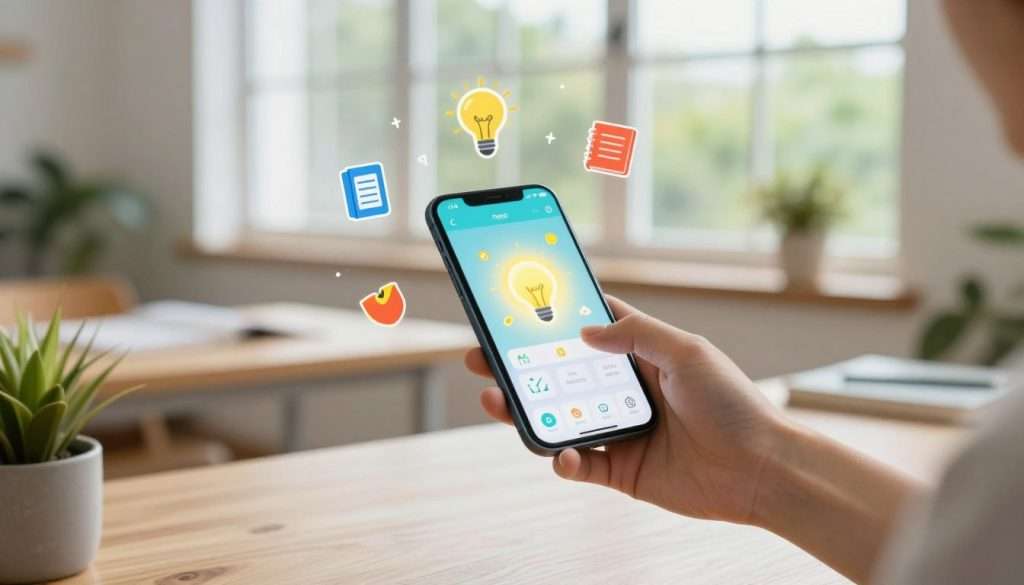
Establishing Daily Micro-Learning Sessions
You don’t need a lot of free time to learn. Break your study into bite-sized chunks that fit your schedule. Use these five-minute sessions to keep your mind sharp.
Think of these sessions as mini-workouts for your mind. Using educational apps for phone during these moments prevents burnout. It’s easier to stay motivated with short commitments.
Tracking Progress and Celebrating Milestones
Seeing your progress is rewarding. Use a habit tracker or digital journal to log your daily wins. Visualizing your progress helps you stay on track during tough times.
Don’t forget to celebrate small wins! Reward yourself for milestones like finishing a module or a seven-day streak. These celebrations reinforce positive behavior and make learning fun.
Accountability Through Digital Study Groups
Learning is better with a team. Join digital study groups to share wins and solve challenges with others. A supportive community makes it harder to skip a day.
These groups are great for asking questions and staying inspired. Sharing your goals creates a sense of shared responsibility. You’re never alone with a digital network cheering for you.
Troubleshooting Common Mobile Learning Challenges
You might face some hurdles while turning phone into study device, but we have the solutions. It is completely normal to hit a few bumps in the road when you are building a new digital learning habit. We want to ensure your experience remains positive and productive.
Managing Eye Strain and Digital Fatigue
Staring at a screen for long periods can leave your eyes feeling tired and dry. To combat this, try the 20-20-20 rule: every 20 minutes, look at something 20 feet away for 20 seconds. This simple habit helps reset your focus and reduces strain significantly.
You should also check your device settings for a blue light filter or “Night Mode.” These features warm up the colors on your screen, making it much easier on your eyes during late-night study sessions. Using your smartphone as educational tool should never come at the cost of your comfort.
Balancing Screen Time with Physical Activity
It is easy to get glued to your phone, but your body needs movement to stay sharp. We recommend pairing your study sessions with short bursts of physical activity. Try doing a few stretches or taking a quick walk after you finish a module.
If you find yourself feeling restless, take your phone outside. Reading or listening to educational content while walking can actually help you retain information better. Movement keeps your brain engaged and prevents that sluggish feeling that comes from sitting still for too long.
Maintaining Motivation During Difficult Subjects
When you hit a tough topic, it is tempting to put the phone down and walk away. Instead, try breaking the material into tiny, manageable chunks. Focusing on just one small concept at a time makes the mountain feel like a series of small hills.
Remember to celebrate your small wins along the way. Whether you finished a difficult chapter or mastered a tricky concept, acknowledging your progress keeps your motivation high. Using your smartphone as educational tool is a marathon, not a sprint, so be kind to yourself.
| Challenge | Quick Fix | Benefit |
|---|---|---|
| Eye Strain | 20-20-20 Rule | Reduced Fatigue |
| Sedentary Habits | Active Breaks | Better Focus |
| Low Motivation | Micro-Goals | Consistent Progress |
Conclusion
Your smartphone is more powerful than the computers used for the first moon landing. You can turn your phone into a learning tool with a few simple steps. Just make a few changes to your daily routine.
See your phone as a doorway to knowledge, not just a place for endless scrolling. By choosing the right apps and staying focused, studying becomes a natural part of your life. It’s time to see your screen as your personal classroom.
You can turn your phone into a learning aid anytime you have a spare moment. Whether waiting for a bus or relaxing at home, your next big breakthrough is just a tap away. We’re excited to see how you use these strategies to reach your goals.
What subject will you master first? Share your progress with us or join a study group to keep the momentum going. Your journey toward becoming a lifelong learner starts right now, with the device already in your pocket!