

Ever felt like your brain is too full? Like a browser with too many tabs open? We’ve all been there, watching information pass us by. It’s time to slow down and find a better way to learn.
Let’s dive into the power of writing by hand. By moving from just recording to really engaging, you’ll learn How to Think on Paper: The Lost Art of Real Note-Taking. This change makes studying easier and more fun.
Learning this skill is the ultimate key to unlocking your full potential. Whether you’re in school or always learning, writing down ideas helps you understand them better. Let’s make those study sessions into a fun journey that really sticks!
Key Takeaways
- Active writing boosts memory retention compared to typing.
- Analog methods help clear mental clutter and improve focus.
- Engaging with material manually makes complex topics easier to grasp.
- Personalized note-taking styles foster a deeper love for learning.
- Consistent practice turns study time into a rewarding habit.
The Cognitive Benefits of Handwriting
There’s something magical when ink meets paper. It’s different from a glowing screen. Handwritten notes offer a unique way to understand things better. When you write, your brain gets more involved in learning.
Why Your Brain Prefers Pen and Paper
Your brain is more than just a storage unit. It’s a complex machine that loves physical interaction. Using a pen engages your motor skills in a way typing can’t.
This tactile feedback strengthens the connection between your hand and mind. By mastering note-taking techniques, you make learning a full-body experience. Your brain remembers letters and pen pressure better, keeping you present while learning.
The Science of Encoding Information
Studies show handwriting helps us process information better than typing. Typing often means just copying words without thinking. But writing makes you summarize and synthesize ideas on the spot.
This effective note-making acts as a filter for your brain. It helps you decide what’s truly important, strengthening your neural pathways. You’re not just recording data; you’re building a lasting map of knowledge.
Reducing Cognitive Load Through Tactile Engagement
Complex subjects can feel overwhelming when trying to capture every detail. Using your handwriting skills simplifies your notes to the core concepts. This reduces clutter and helps manage your cognitive load better.
By focusing on the relationships between ideas, your stress levels drop. You gain clarity, making study sessions more enjoyable. Trust the process—your notebook is the best tool for turning confusion into insight.
Essential Tools for Analog Thinking
Building a personal toolkit is the first step to better study habits. Treating your supplies with care makes studying a chance for growth. This approach helps you create better study notes that aid in learning.
Choosing the Right Notebook for Your Needs
Your notebook is where ideas come to life. It should feel welcoming. Look for paper that prevents ink from bleeding through. This keeps your pages clean and easy to read.
Also, think about the binding. A lay-flat notebook lets you write across the page without issues. Choose a format that excites you, whether it’s dot grid for diagrams or lined paper for writing.
| Notebook Type | Best For | Key Benefit |
|---|---|---|
| Dot Grid | Diagrams & Lists | Versatile structure |
| Lined | Long-form writing | Keeps text organized |
| Blank | Free-form sketching | Total creative freedom |
Selecting Pens That Enhance Your Writing Flow
The right pen can turn studying into a pleasure. Try out gel pens or fountain pens to find your favorite. A smooth pen reduces hand fatigue, letting you focus on your notes.
Don’t hesitate to try different colors. Using specific colors for headers or key terms makes your notes easier to follow. When your tools support you, improving note-taking becomes second nature.
Creating a Distraction-Free Environment
Your study space greatly affects how you learn. Preview your reading assignments to spot the main points before you start. This helps you focus on what’s important, making your paper-based note-taking strategies more effective.
Keep your desk clean to stay focused. Remove digital distractions like phones to create a space for deep work. With the right tools and a clear space, every study minute is an investment in your success.
How to Think on Paper: The Lost Art of Real Note-Taking
True learning comes when you engage with what you read, not just copy it. It’s about capturing the essence, not every word. By using a structured approach, you can make sense of a lot of information.
Step 1: Active Listening and Information Filtering
Don’t just record everything. Instead, focus on the main message. These note-taking techniques help you find the important stuff.
Step 2: Translating Concepts into Your Own Words
After finding the key points, try to write them in your own words. If you can’t explain it simply, you don’t get it yet. This makes you think deeply about the information.
“The act of writing is the act of thinking. If you want to clarify your thoughts, you must put them on paper.”
Step 3: Mapping Relationships Between Ideas
Look for connections between your notes. How does this idea relate to what you already know? By mapping these connections, you move beyond just memorizing.
Step 4: Reviewing and Refining Your Thought Process
Don’t let your notes collect dust. Take time to review and refine them. This step helps your knowledge stick in your long-term memory.
Structuring Your Thoughts with Proven Frameworks
Ever feel like your brain is a browser with too many tabs open? On those days, effective note-making is your best ally. It helps keep your thoughts organized and prevents them from getting lost.

The Cornell Method for Academic Success
The Cornell system is a timeless favorite. It divides your page into zones for notes, questions, and summaries. This setup is great for making better study notes because it makes you review your notes twice.
First, you jot down the main points during a lecture or reading. Then, you turn that information into questions and a summary. This process deepens your understanding and ensures you’re not just copying words.
“The secret of getting ahead is getting started.”
Mind Mapping for Creative Brainstorming
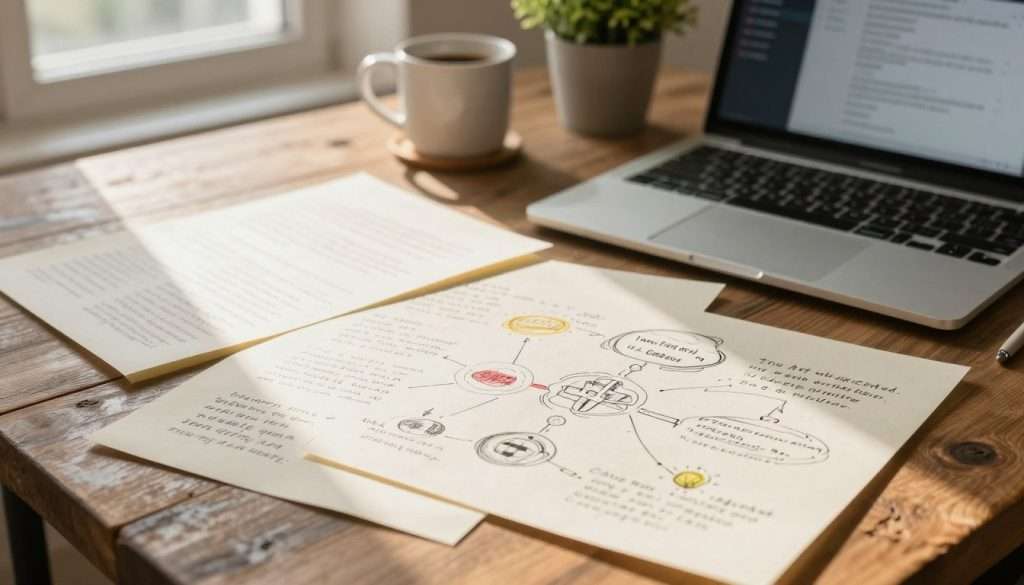
When you’re trying to connect ideas, a simple list won’t do. Mind mapping lets you start with a central idea and add related concepts. This visual approach reveals patterns you might overlook in text.
The Zettelkasten Method for Knowledge Management
The Zettelkasten method is perfect for building a library of ideas. It involves creating individual notes that you link together. These paper-based note-taking strategies make your notebook a dynamic conversation with yourself.
Using Bullet Journaling for Daily Clarity
Bullet journaling is more than just a fancy planner. It’s a tool for organizing your daily life. With simple symbols, you can quickly sort tasks, events, and notes. It offers the structure you need to stay focused without feeling overwhelmed.
Developing Your Personal Shorthand and Visual Language
Creating a personal shorthand is like making a secret code for your notes. It makes them faster and smarter. When you improve your handwriting skills, you start to capture the essence of ideas instead of writing every word. This lets your mind stay fresh and focused while your hand keeps up with the speaker.
Creating Custom Symbols and Abbreviations
You don’t need to be a pro stenographer to save time. Start by using symbols for common words, like an arrow for “leads to” or a plus sign for “and.” These small changes make your notes much faster during quick talks.
Make a legend at the top of your notebook to keep track of your symbols. Once you learn these shortcuts, your brain will process information more efficiently and meaningfully.
Using Color Coding to Categorize Information
Color is great for organizing complex thoughts without extra text. Assign colors to different themes to quickly spot important ideas when reviewing your notes. Visual organization makes it easy for your brain to categorize data.
- Use blue for definitions or technical terms.
- Use green for examples or real-world applications.
- Use red for urgent reminders or critical questions.
Incorporating Sketches and Diagrams for Spatial Understanding
A quick doodle can explain a concept better than words. Drawing simple flowcharts or mind maps turns static pages into dynamic maps that are easier to remember. This spatial approach to note-taking enhances your handwriting skills and deepens your understanding.
| Feature | Traditional Notes | Visual Shorthand |
|---|---|---|
| Speed | Slow/Linear | Fast/Dynamic |
| Recall | Low Retention | High Retention |
| Clarity | Often Cluttered | Highly Organized |
| Engagement | Passive | Active |
Integrating Paper Notes with Digital Workflows
Your handwritten notes are powerful, but they don’t have to stay on paper forever. We think you can enjoy the feel of writing while still keeping your ideas online. This mix of old and new makes your system both creative and reliable.
Digitizing Your Notes for Long-Term Storage
Today’s tech makes it easy to turn your paper into digital files. Apps like Adobe Scan, Microsoft Lens, or Evernote can capture your work in high quality. They use OCR to make your handwriting searchable.
Once digital, your notes are safe from damage or loss. Keep them organized in a folder or cloud service. This way, your best ideas are always at your fingertips.
The Hybrid Approach: Combining Analog and Digital
Many people use paper-based note-taking strategies for brainstorming and digital tools for storing. You might write ideas in a notebook and then move them to a digital task manager.
- Use paper for messy, non-linear brainstorming sessions.
- Use digital apps for long-term project tracking and reminders.
- Keep a small notebook for quick thoughts while on the go.
This mix lets you focus without digital distractions. You get the benefits of writing by hand and the efficiency of digital storage.
Establishing a Routine for Reviewing Physical Notebooks
Consistency is key to a great system. Review your notes within 24 hours. This helps organize your thoughts and spot what’s important.
Highlight key points or add new connections during review. If something’s worth keeping, take a photo to add it to your digital archive. Doing this daily keeps your handwritten notes useful for a long time.
Overcoming Common Barriers to Consistent Note-Taking
Starting with a blank page can be daunting. We often feel the need to make our first note perfect. But, with a few note-taking techniques, you can turn that blank page into a space for creativity.
Dealing with the Fear of the Blank Page
One way to overcome the fear is to use the structure of your source material. Introductory sections often summarize main points, giving you a great starting point. You don’t have to start from scratch. Just write down these summaries to get started.
Once you’ve got those initial points down, the rest of the information flows more easily. This method helps you avoid worrying about missing important details. It’s a solid way to improve note-taking without the stress of capturing every word.
Managing Perfectionism in Your Notebook
Perfectionism can stifle creativity. We might worry about our handwriting or diagrams not being perfect. Remember, your notebook is for your thoughts, not for display.
Letting go of the need for perfection makes note-taking easier. It turns from a chore to a source of genuine joy. Embrace the imperfections as signs of active thinking.
Staying Consistent When You Feel Uninspired
Even dedicated learners have days when they don’t feel like writing. On uninspired days, focus on the process, not the outcome. You don’t have to create a masterpiece every time.
Try short sessions on slow days. Even five minutes of writing can keep the habit alive. By taking small steps, your notebook stays a helpful tool, not a source of guilt.
Advanced Techniques for Critical Thinking on Paper
Your notebook is more than just a place to store facts. It’s a place to explore your mind. By going beyond just writing down information, you unlock the power of critical thinking on paper. This approach turns your study time into a conversation with what you’re learning.
Using Socratic Questioning in Your Margins
The margins of your notebook are perfect for engaging with your material. Instead of just writing down what you hear, ask yourself probing questions. If something seems unclear, ask “Why is this the case?” or “How does this relate to what I already know?”
This method makes you slow down and really think about what you’re learning. By treating your notes as a conversation, you gain a deeper understanding. You also find out where you need to learn more. It’s a simple way to make sure you’re not just memorizing, but really analyzing the subject matter.
Synthesizing Multiple Sources into a Single View
True mastery comes when you connect different ideas together. When you combine different sources, you get a deeper understanding. You start to see how different pieces fit together, rather than looking at them separately.
Try making a summary page that compares different views on a topic. This way of critical thinking on paper helps you spot patterns and differences. It turns your notebook into a place of original insights.
Reflective Journaling to Deepen Understanding
At times, the best way to learn is to reflect on your own learning process. Take a few minutes to write about what you learned. Think about what was hard and why some ideas were easier to grasp.
This habit of metacognition—thinking about your thinking—helps solidify your memory. It also improves how you study in the future. It makes your notebook a personal growth journal. Below is a comparison of these advanced techniques with standard note-taking.
| Technique | Primary Goal | Best For |
|---|---|---|
| Socratic Margins | Deep Inquiry | Complex Concepts |
| Source Synthesis | Pattern Recognition | Research Projects |
| Reflective Journaling | Self-Awareness | Long-term Retention |
Conclusion
Your journey to sharper thinking begins when you start writing. We hope you feel ready to use a Moleskine or a simple pad. Start your path to more effective and enjoyable learning.
Mastering these analog techniques does more than just record facts. You actively grow your mind. Every mark you make clarifies your view and deepens your connection to the material.
The art of thinking on paper grows over time. Be patient as you build these new habits. Your notebook is a private space for discovery and creative expression.
Start small today. Choose a topic that excites you and let your thoughts flow freely. You’ll soon see how this simple change transforms your relationship with information. We’re excited to see where your curiosity takes you next.