
Ever thought of making your daily routine exciting? It’s simpler than you think. By changing how you see things, you can find growth in every moment.
Our world moves fast, and staying curious is key. This mindset keeps you sharp and makes life exciting.
This article is your guide. We’ll show you how to make learning a part of your life. Let’s see how to make education fun and natural.
Key Takeaways
- Continuous growth turns daily habits into meaningful discoveries.
- Curiosity acts as a powerful tool in our rapidly changing world.
- Small, consistent steps lead to significant personal development.
- Learning should feel like an adventure rather than a chore.
- Practical strategies help you integrate new skills into your busy schedule.
Understanding the Roadmap to Lifelong Learning
In today’s fast-paced world, growing continuously is key. The 2024 LinkedIn Workplace Learning Report shows that most people feel learning boosts their job satisfaction. This highlights the need to understand lifelong learning.
Defining the Philosophy of Continuous Growth
The idea of continuous growth sees learning as a lifelong journey. It’s about facing challenges, welcoming new experiences, and overcoming hurdles. This mindset is vital for personal and professional growth. It helps you stay flexible and competitive in a changing job market.
Embracing continuous growth means always learning and improving. It’s about actively seeking ways to grow and being open to feedback and new ideas.
Why Lifelong Learning Matters in the Modern Economy
Lifelong learning is crucial for staying relevant in your career. With longer careers, the need for ongoing education is greater. The fast pace of technology and changing job needs make it essential to keep learning.
Creating effective learning strategies is vital for a successful continuous education plan. This way, you can stay ahead and reach your career goals.
Assessing Your Current Knowledge and Interests
The first step in making your educational development roadmap is to check your skills and interests. You need to do a self-assessment to see where you are and what to focus on.
Conducting a Personal Skills Audit
Start by doing a personal skills audit. This means listing your current skills, both hard and soft, and seeing how they match your goals.
Ask yourself:
- What are my strengths?
- What skills have I developed over time?
- Which areas do I need to improve or expand upon?
Identifying Passion Projects and Professional Gaps
Then, find your passion projects and professional gaps. Passion projects are areas you love and want to learn more about. Professional gaps are skills or knowledge you need for your career but lack.
Consider:
- What topics do I find most engaging?
- Are there any areas where I feel a lack of competence or confidence?
- How do my passions align with my professional goals?
By knowing your current knowledge, interests, and gaps, you can make a personal growth roadmap that fits your needs and dreams.
Setting Clear Educational Goals
To make the most of lifelong learning resources, you need clear goals. This focus helps you use resources wisely.
Setting educational goals is more than picking what to learn. It’s about planning your learning journey. This way, you can focus and make real progress.
Applying the SMART Framework to Learning
Using the SMART framework is a great way to set goals. SMART means Specific, Measurable, Achievable, Relevant, and Time-bound. This makes your goals clear and doable.
- Specific: Clearly define what you want to achieve.
- Measurable: Quantify your goals so you can track progress.
- Achievable: Ensure your goals are realistic based on your resources and constraints.
- Relevant: Align your goals with your broader learning objectives.
- Time-bound: Set deadlines to maintain momentum and focus.
For example, instead of saying “I want to learn a new language,” a SMART goal would be “I will achieve conversational fluency in Spanish by dedicating 30 minutes each day to language learning apps for the next 6 months.”
Short-Term Milestones versus Long-Term Vision
Long-term goals guide you, but breaking them into short-term milestones is key. This keeps you motivated and lets you adjust as needed.
| Goal Type | Description | Example |
|---|---|---|
| Long-Term Vision | Overarching objective that guides your learning journey | Become proficient in a new programming language |
| Short-Term Milestones | Specific, achievable steps towards your long-term goal | Complete an introductory course on programming within the next 3 months |
By balancing long-term goals with short-term milestones, you get a flexible yet structured plan. This balance keeps you moving and adaptable to changes or new opportunities.
Selecting the Right Learning Resources
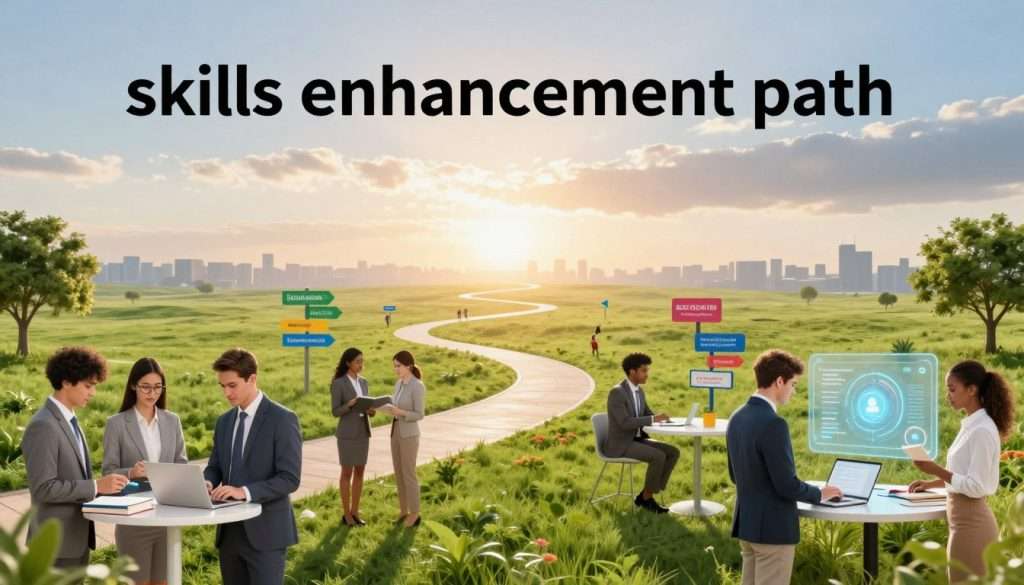
As you work on your skills enhancement path, finding the right learning resources is key. The right ones keep you interested and push you to grow. They give you the tools you need to reach your goals.
Finding the right learning resources can seem hard. But knowing how you learn and what you want to achieve helps. This way, you can pick the best resources for you.
Curating High-Quality Online Courses and Platforms
Online courses are a great way to learn new things. They’re flexible and easy to get to. Here’s what to look for in online courses:
- Choose courses from trusted sites like Coursera, edX, and Udemy.
- Check who teaches the course and read what others say about it.
- Make sure the course matches what you want to learn.
Popular courses include data science, digital marketing, and coding. They’re a good place to start if you want to improve your job skills.
Utilizing Books, Podcasts, and Academic Journals
Books, podcasts, and academic journals also offer valuable insights. Here’s how to use them well:
- For books, look for authors or topics you like and find more like them.
- Podcasts are great for learning while you’re on the move. Find ones that interest you.
- Academic journals offer deep research. They help you understand a subject better.
Evaluating Credibility in Digital Content
It’s important to check if digital content is trustworthy. Ask yourself:
- Is the author an expert in the field?
- Are the sources they use reliable?
- Is the information current?
Being careful about what you learn from helps you learn better and more effectively.
Developing Effective Learning Strategies
Learning isn’t just about knowing stuff. It’s about using that knowledge too. That’s why effective learning strategies are key. They help you understand and remember new things better.
Let’s look at some great ways to learn. Using these methods can make studying easier and more effective.
Mastering Active Recall and Spaced Repetition
Active recall and spaced repetition are top strategies. Active recall means you try to remember info without just reading it. You can use flashcards, quizzes, or write it in your own words.
Spaced repetition helps you remember stuff for a long time. It involves reviewing what you’ve learned at longer intervals. Together, these methods help you keep complex info in your memory.
The Feynman Technique for Deep Understanding
The Feynman Technique is named after physicist Richard Feynman. It’s about teaching what you’ve learned to someone else, like a kid. This makes you understand and simplify complex ideas.
The Feynman Technique has four steps:
- Choose a concept you want to learn about.
- Explain it in simple terms as if teaching it to someone else.
- Identify any gaps in your explanation and review the material.
- Simplify your explanation further and repeat the process.
This technique helps you understand and share complex ideas well. It’s a powerful way to learn and communicate.
By using these effective learning strategies every day, you’ll reach your educational goals. You’ll become more confident and a lifelong learner.
Creating a Sustainable Continuous Education Plan
A good continuous education plan is key to lifelong learning. It makes learning a regular and fun part of your life, not just something you do now and then.
To make such a plan, think about your learning goals, how much time you have, and what you enjoy. Look at your schedule and see where you can fit in learning.
Time Blocking for Dedicated Study Sessions
Time blocking is a great way to start. Set aside certain times each day or week just for learning. It could be 30 minutes in the morning or an hour at night for online courses.
Consistency is key. By always learning at the same time, it becomes a habit. This makes learning a big part of your daily routine.

Balancing Professional Development with Personal Interests
It’s important to balance learning for work and for fun. Learning for work helps you advance, but learning for fun keeps you happy and motivated.
For example, if you love photography, use one of your study times to learn new techniques or editing software. This improves your life and might even lead to new career chances.
By mixing work learning with fun learning, your education plan stays balanced and lasting.
Overcoming Common Barriers to Personal Growth
As we travel on our personal growth path, we face obstacles that slow us down. These hurdles can seem overwhelming, but with the right approach, we can move past them. This way, we keep learning and growing for life.
Managing Time Constraints and Busy Schedules
Many busy people say they don’t have time for personal growth. But, with smart time management, you can fit learning into your schedule. Here are some tips:
- Set clear learning goals and plan specific times for studying.
- Use a planner or calendar to book study sessions.
- Use downtime, like commutes or breaks, for learning.
Time-blocking is a great method. It lets you set aside a block of time for learning. This way, learning won’t get lost in your busy life.
“You don’t have time to learn? That’s like saying you don’t have time to stop for gas because you’re too busy driving.”
Combating Imposter Syndrome and Fear of Failure
Imposter syndrome and fear of failure often hold us back. They make us doubt our skills and shy away from new challenges. Here’s how to fight these feelings:
| Strategy | Description |
|---|---|
| Reframe Failure | See failures as chances to grow and learn. |
| Seek Support | Share your feelings with mentors, peers, or a therapist. |
| Focus on Progress | Be proud of your achievements, no matter how small. |
Remember, feeling like an imposter is common. Many successful people have felt this way and still achieved great things. As Valerie Young, an imposter syndrome expert, says, “You’re not alone, and these feelings don’t define your abilities.”
By facing and tackling these common barriers, you can stay on your personal growth path with confidence and clarity.
Leveraging Technology for Skills Enhancement
Technology is a big help in lifelong learning. It gives us access to lots of learning resources. It also helps us organize and improve our learning.
Now, you can set up a learning space that fits you. This makes learning both better and more fun.
Using Productivity Apps to Organize Your Studies
Productivity apps change how we manage our time and tasks. They are great for organizing study plans, reminders, and tracking your progress.
Apps like Trello, Evernote, and Todoist are popular for this. They let you make boards, notes, and lists for your learning goals. For example, Trello can help you organize your studies by subject or project.
These apps also have features like calendar integration and notifications. They help you stay on schedule and meet deadlines.
Exploring Artificial Intelligence as a Learning Assistant
Artificial Intelligence (AI) is making learning better. AI tools give personalized advice, adaptive tests, and feedback right away.
For instance, AI can look at how you learn and suggest the best content for you. It can also find areas where you need to improve and offer exercises to help.
AI chatbots can also be your virtual learning buddy. They answer questions, explain things, and guide you through tough topics. This is super helpful when you’re studying alone.
By using these tech tools, you can make a skills enhancement path that works well and is fun. Whether you want to get better at work or learn something new, technology can help you get there faster.
Building a Community of Fellow Learners
Surrounding yourself with like-minded people can greatly enhance your learning journey. Being part of a community of learners offers more than just education. It opens up new opportunities and keeps you motivated.
Learning with others who share your passion can keep you engaged and inspired. This shared energy helps you face challenges and celebrate your wins.
Professional Networks and Study Groups
Joining professional networks and study groups is a great way to meet others with similar interests. These groups can be online or in-person. They provide a space to share ideas, resources, and work on projects together.
- Attend conferences and seminars related to your field of interest.
- Participate in online forums and discussion groups.
- Join local study groups or book clubs.
Engaging with these networks can offer valuable insights and feedback. You’ll also stay updated on the latest in your field.
The Value of Mentorship and Peer Feedback
Mentorship and peer feedback are key to a supportive learning community. A mentor can guide you, share their experience, and help you overcome obstacles.
Peer feedback, on the other hand, lets you learn from others and see your work from different angles. This exchange can be very valuable. It helps you spot areas for improvement and grow your skills.
| Benefits | Mentorship | Peer Feedback |
|---|---|---|
| Guidance and Support | Provides personalized guidance and support. | Offers diverse perspectives and insights. |
| Skill Development | Helps in setting goals and achieving them. | Enhances critical thinking and problem-solving skills. |
| Networking Opportunities | Introduces you to new contacts and opportunities. | Expands your professional network through collaborative learning. |
Building a community of learners enriches your educational journey and helps others grow. This collective learning approach can make your lifelong learning journey more fulfilling and successful.
Tracking Progress and Reflecting on Achievements
As you keep learning, it’s key to watch your progress and think about what you’ve achieved. This helps you stay excited, find areas to get better, and make smart choices about your learning path.
To track your progress well, think about keeping a learning journal. It could be a simple spreadsheet, a notebook, or a learning app. By writing down what you do and achieve, you’ll see how much you’ve grown and what you still need to do.
Maintaining a Learning Journal
A learning journal is more than just a log of your activities. It’s a tool for reflection that helps you solidify your learning and spot patterns in your progress. By regularly writing about what you’ve learned, you can:
- Make your understanding of new ideas stronger
- Find out where you need more practice or review
- Celebrate your wins and stay motivated
Adjusting Your Educational Development Roadmap
As you track your progress and think about your achievements, you might need to tweak your learning plan. This is a natural part of learning. Your goals and what’s important to you can change, and your plan should too.
To update your plan, regularly check your progress and ask yourself:
- Are my current goals still right for me?
- Have I reached my short-term goals?
- Do I need to change how I learn or my resources?
By regularly thinking about your progress and updating your learning plan, you’ll stay on track and reach your lifelong learning goals.
Conclusion
Investing in lifelong learning is a wise choice. It makes you more adaptable and enhances your problem-solving abilities. It also brings new chances for growth.
Starting your journey means focusing on progress, not being perfect. Many successful people, like Elon Musk and Arianna Huffington, learned continuously. You can too, by staying focused and ready for new challenges.
So, start today. Set your goals, pick your learning tools, and work on your skills. With hard work and commitment, you’ll reach your dreams and find new paths. The lifelong learning roadmap is your guide. Now, it’s time to drive your future forward.